

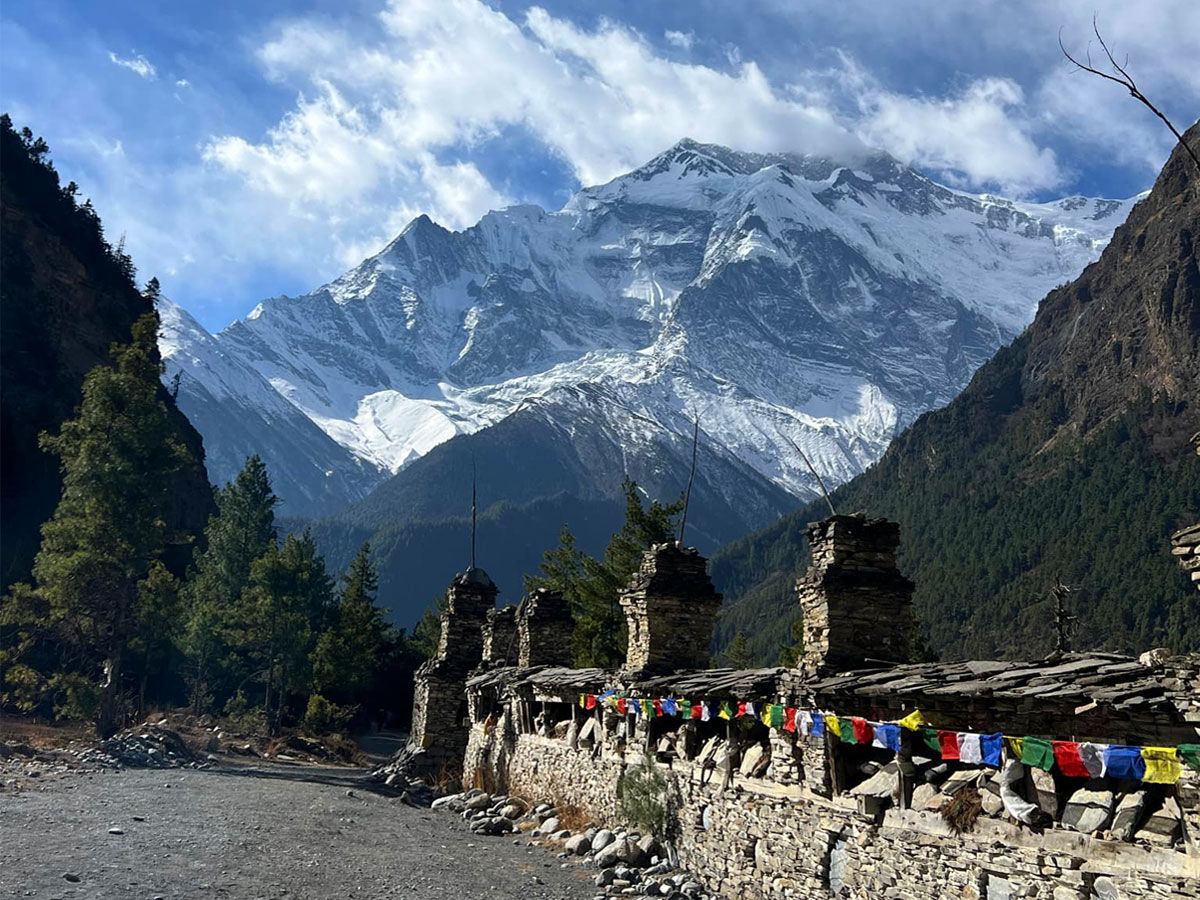
The Annapurna Circuit Trek is widely regarded as one of the most famous treks in the world. The circuit, which encircles the Annapurna Massif in Nepal’s central Himalayas, provides trekkers with a one-of-a-kind combination of natural diversity, cultural immersion, and high-altitude adventure.
With peaks over 8,000 metres, deep valleys, and ancient villages, this trek is more than just a physical one; it’s also a journey through time, geography, and Himalayan culture.
Geographical Facts About the Annapurna Circuit
- The trek takes place within Nepal’s largest protected area, the Annapurna Conservation Area, which covers 7,629 square kilometres.
- The route crosses a wide range of altitudes, from approximately 800 metres at Besisahar to 5,416 metres at Thorong La Pass.
- The circuit passes through the Kali Gandaki Gorge, the world’s deepest gorge, flanked by Dhaulagiri (8,167m) and Annapurna I (8,091m).
- The region has a wide range of climates and ecosystems, including subtropical forests, terraced fields, alpine deserts, and glaciers.
Cultural and Historical Facts
- The Annapurna Circuit passes through the traditional lands of the Gurung, Thakali, and Tibetan communities.
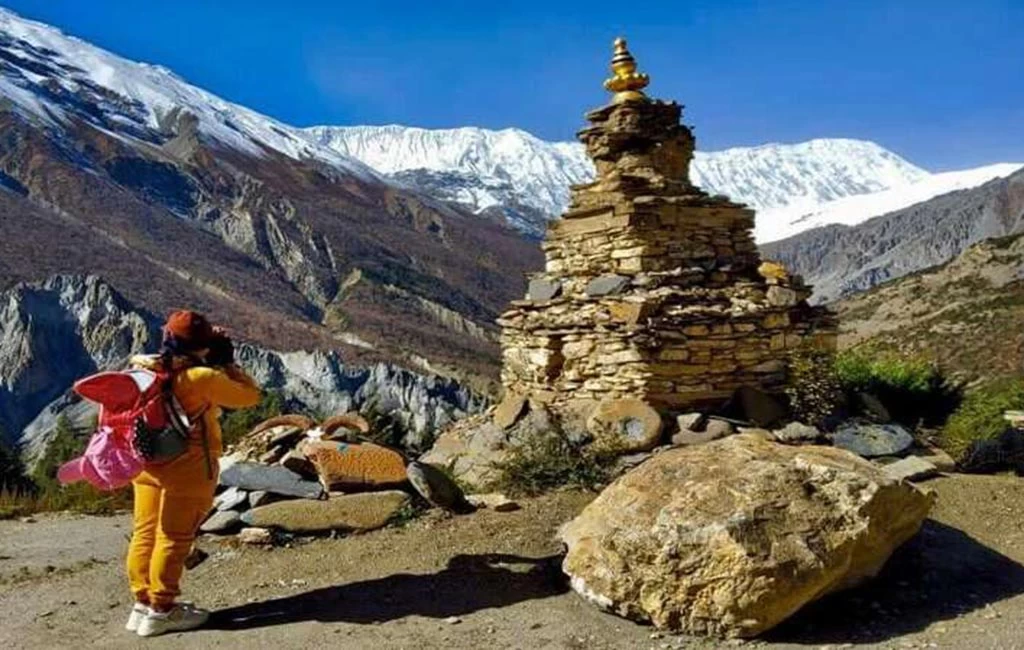
- Monasteries, stupas, and ancient Mani walls dot the trail, reflecting Tibetan Buddhist influences.
- For centuries, villages such as Manang, Pisang, and Braga served as trading hubs, connecting Nepal and Tibet.
- Muktinath Temple, located at the summit of the high pass, is a sacred site for both Hindus and Buddhists, known for its 108 water spouts and perpetual flame.
Trekking Statistics and Facts
- The circuit length ranges from 160 to 230 kilometres, depending on the starting and ending points.
- Most trekkers complete the circuit in 14-21 days, though shorter versions are available for 7-10 days.
- The highest point, Thorong La Pass (5,416 m), is regarded as one of the most difficult yet rewarding passes in the world.
- In order to avoid altitude sickness, trekking, which is typically moderate to strenuous, requires acclimatisation.
Environmental Facts
- Rare animals like snow leopards, Himalayan tahr, red pandas, and snowcocks can be found in the Annapurna Conservation Area.
- The area is home to rivers that supply the Kali Gandaki River, which is essential for regional agriculture, as well as glacial lakes and alpine meadows.
- In order to protect the environment and sustain their way of life, local communities engage in sustainable farming and yak, goat, and sheep herding.
- The trek focusses on the effects of climate change in the Himalayas, such as retreating glaciers and shifting rainfall patterns.
Trekking Trail Facts
- The circuit passes through several biomes, resulting in a diverse landscape: tropical lowlands, subtropical forests, temperate zones, alpine zones, and high-altitude deserts.
- Suspension bridges across rivers are a common sight, reflecting centuries of traditional Nepalese engineering.
- Traditional stone houses with flat roofs and wooden windows dominate villages such as Ghasa, Chame, and Manang.
- Tea houses along the circuit offer a unique glimpse into Nepali hospitality, with locals serving dal bhat, momos, and butter tea.
Facts About Weather and Seasons
- Spring (March-May): Rhododendrons bloom, moderate temperatures, and good visibility.
- Autumn (September–November): Clear skies, stable weather, and peak trekking season.
- Winter (December–February): Cold and snowy at high altitudes, with fewer trekkers.
- Monsoon season (June-August): There is a risk of landslides, heavy rain, and slippery trails.
Fun and Unique Facts
- The Annapurna Circuit was popularised in the 1970s and has since become a bucket-list trek for adventurers worldwide.
- The trek strikes a balance between accessible villages and isolated wilderness despite its widespread popularity.
- One of the highest trekking passes in the world, Thorong La Pass draws photographers from all over the world with its sunrise views.
- Many trekkers use the trail to learn about Himalayan culture, geology, and biodiversity, making it both a scientific and recreational journey.
Interesting Facts About Villages Along the Route
- Besisahar: Most trekkers begin their journey here, which is known for its rice terraces and views of the river.
- Manang: A high-altitude town with Buddhist monasteries, yak pastures, and access to Gangapurna and Ice Lake excursions.
- Muktinath: A sacred pilgrimage site that combines spirituality with natural wonders such as an eternal flame and hot springs.
- Jomsom and Tatopani: The trek ends in traditional lowland areas with hot springs and relaxation after weeks of trekking.
Safety and Trekking Facts
- Altitude sickness is a common concern, so gradual ascent and acclimatisation days are essential.
- The area is geologically active, so hikers should be wary of landslides and falling rocks.
- Trekking with local guides provides safety, cultural understanding, and knowledge of weather patterns.
- Communication is limited in high-altitude areas, so satellite phones or local SIM cards are recommended.
Fun Fact: Annapurna Circuit in Numbers
- Total distance: 160-230 kilometres
- Highest point: 5,416 metres (Thorong La Pass)
- Number of peaks above 7,000 metres: thirteen
- Number of villages along the circuit: More than 40
- Estimated walking days: 14-21
- Deepest gorge crossed: Kali Gandaki Valley

Conclusion
The Annapurna Circuit trek combines geography, culture, adventure, and natural beauty. From subtropical valleys to high-altitude deserts, ancient monasteries to sacred temples, the trek provides information and experiences that will appeal to adventurers, geographers, historians, and nature lovers alike.
Whether you’re interested in mountain photography, Himalayan biodiversity, cultural exploration, or high-altitude trekking, the Annapurna Circuit offers a unique glimpse into Nepal’s diverse landscapes and traditions.
Trekkers who understand the facts about terrain, climate, villages, and wildlife can appreciate not only the adventure but also the richness and depth of the region’s natural and cultural heritages.
Frequently Asked Questions
What makes the Annapurna Circuit Trek different from other Himalayan treks in Nepal?
The Annapurna Circuit Trek is unique in that it circles the entire Annapurna Massif, passing through diverse landscapes, remote villages, and the high-altitude Thorong La Pass, all while providing cultural and natural diversity unparalleled in the Himalayan region.
How difficult is the Annapurna Circuit Trek for first-time trekkers?
It is moderately difficult, with long walking days and altitude challenges, but many beginners succeed with proper acclimatisation and preparation.
What is the best season to trek the Annapurna Circuit for clear mountain views?
Autumn and spring provide excellent visibility, stable weather, and breathtaking views of Annapurna, Dhaulagiri, and the Manang valley.
How long does it take to complete the full Annapurna Circuit Trek?
Most trekkers complete the circuit in 14-21 days, depending on the route, fitness level, and acclimatisation requirements.
Is altitude sickness common on the Annapurna Circuit Trek?
Yes, particularly around Manang and Thorong La Pass, so gradual ascent, rest days, and hydration are required.
Do I need permits for the Annapurna Circuit Trek?
Before beginning the trek, trekkers must obtain the Annapurna Conservation Area Permit (ACAP) as well as the TIMS card.
What kind of accommodation is available along the Annapurna Circuit route?
The circuit is a traditional teahouse trek, with basic lodges featuring private rooms, hot meals, and communal dining halls.
How cold does it get near Thorong La Pass during the Annapurna Circuit Trek?
Temperatures can drop below -10°C, particularly early in the morning or in the winter, so warm layers and appropriate gear are required.
Can I trek the Annapurna Circuit without a guide or porter?
Yes, independent trekking is permitted, but many hikers prefer guides for navigation, altitude support, and cultural knowledge.
What food is available on the Annapurna Circuit Trek?
Dal bhat, noodles, soups, Tibetan bread, porridge, eggs, and basic Western fare such as pasta and pancakes are all available at tea houses.
Is the Annapurna Circuit Trek safe during the monsoon season?
The monsoon season brings heavy rain, landslides, and leeches to the lower sections, making it less safe and recommended.
Which villages are the cultural highlights of the Annapurna Circuit?
Manang, Pisang, Braga, Chame, Marpha, and Muktinath all have Tibetan influences, including monasteries, apple orchards, and ancient traditions.
How fit do I need to be for the Annapurna Circuit Trek?
General fitness and the ability to walk for 5-7 hours per day are sufficient, but altitude endurance and leg strength are especially beneficial.
Is transportation along the Annapurna Circuit improving the route?
Road expansions have changed some trail sections, but most hikers prefer off-road paths and upper trails for authentic Himalayan scenery.
Can the Annapurna Circuit Trek be combined with other Annapurna region routes?
Yes, trekkers frequently combine Tilicho Lake, Poon Hill, and the Annapurna Base Camp trek to expand their adventure in the region.