
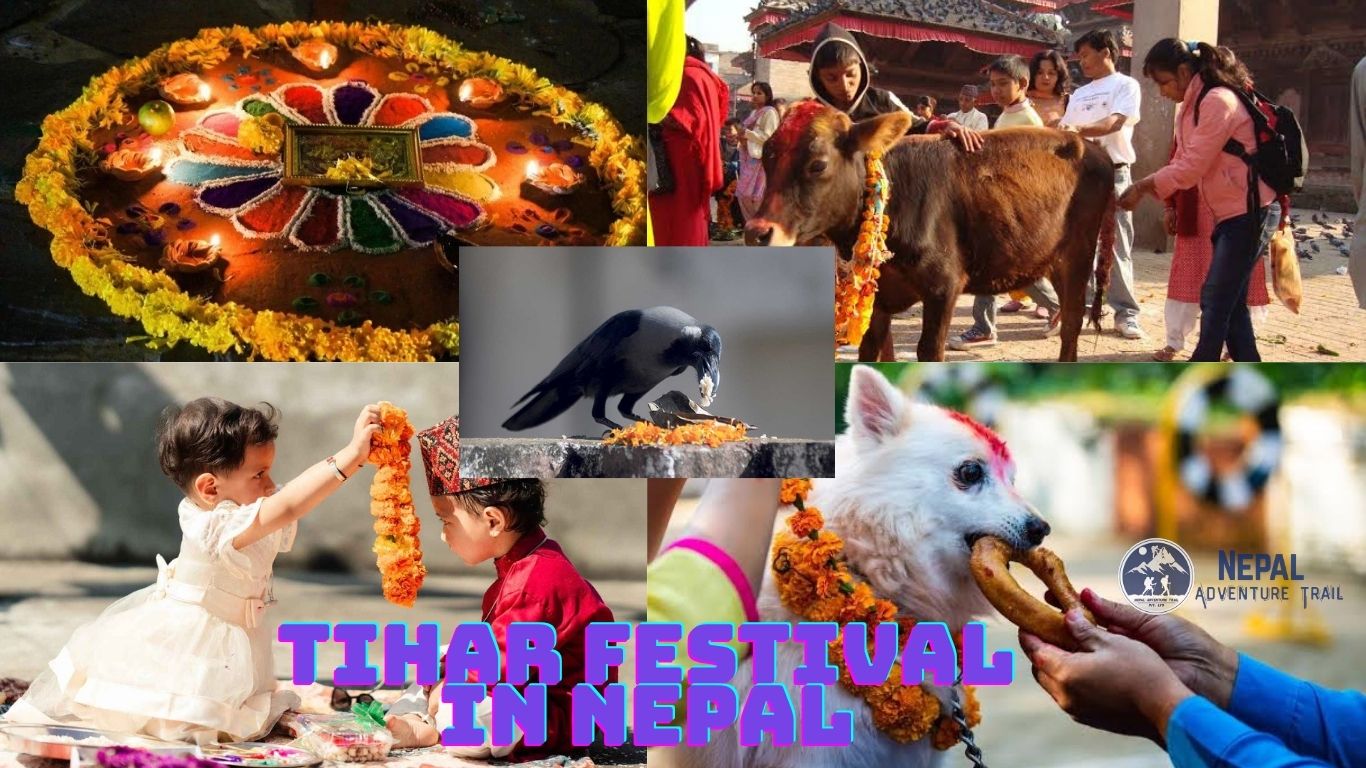
Walk through any Nepali neighborhood on the third night of the Tihar festival and you’ll understand the name instantly. Every doorway glows. Marigold garlands hang from windows, rows of diyo oil lamps line the rooftops, and the smell of incense drifts down alleys that were ordinary and grey the day before. This is Tihar, and for five days it turns the entire country into something close to a living shrine.
Most travelers arrive in Nepal knowing Everest or Annapurna by name and little else. That’s a shame, because the Tihar festival offers something the trekking routes can’t: a direct, unfiltered look at how Nepali families think about gratitude, luck, and the bonds that hold a household together. If Dashain is Nepal’s festival of family reunion, the Tihar festival is its festival of gratitude, and it happens to double as the country’s biggest Hindu festival dedicated to light itself.
Understanding what is Tihar, and why it sits so close to the center of the Nepali festival calendar changes how you experience Nepal even if you’re only passing through for a week.
Understanding Tihar: Why It Is the Second Biggest Festival in Nepal
Tihar usually falls in late October or early November, timed to the lunar calendar the way most Hindu festivals in Nepal are, and it ranks just behind Dashain in national importance. Where Dashain centers on ancestral blessings and family hierarchy, Tihar is built around a different idea entirely: that human survival depends on a web of relationships, some of them with creatures most cultures never think to thank.
The festival draws from Hindu cosmology, but its rituals feel remarkably grounded and domestic. There’s no distant temple pilgrimage required. Tihar happens on your own doorstep, in your own courtyard, with whatever crows, dogs, and cows happen to live nearby. That accessibility is part of why the celebration resonates so widely across Nepal’s different ethnic communities, from Newar households in the Kathmandu Valley to hill villages scattered through the mid-hills region.
Each of the five days carries its own deity, its own animal, and its own small ceremony. Together they trace a kind of gratitude that widens outward, from wild crows to household pets to farm animals to human siblings, before circling back home on the final night.
The Five Days of Tihar: A Day-by-Day Breakdown
Day 1: Kaag Tihar (Crows)
The festival opens quietly. Families set out rice, sweets, and bits of roti on rooftops and windowsills for crows, who in Hindu tradition serve as messengers of Yama, the god of death. Feeding them is thought to keep misfortune and bad news at bay for the coming year.
It’s a small ritual, easy to miss if you’re not looking for it, but it sets the tone for everything that follows. The Tihar festival begins by acknowledging a creature most people consider a nuisance, and treating it as worthy of respect anyway.
Day 2: Kukur Tihar (Dogs)
This is the day most visitors remember long after they’ve left Nepal. On Kukur Tihar, dogs, from beloved family pets to stray street dogs wandering temple courtyards, are garlanded with marigold flowers, marked on the forehead with a red tika, and fed a proper meal, sometimes their best of the year.
The reasoning behind Kukur Tihar runs deeper than affection. In Hindu belief, dogs are considered the vehicle of Bhairava, a fierce form of Shiva, and also guardians of the underworld’s gates, mythologically tied to Yama’s watchdogs. Honoring dogs is a way of honoring loyalty and vigilance itself, the qualities dogs have offered humans since long before recorded history. Nepal essentially built a national holiday around thanking humanity’s oldest companion, which is a rare thing for any country to formalize into its festival calendar.
Walk through Kathmandu or Bhaktapur on this day and you’ll see street dogs, often ignored the rest of the year, wearing garlands and looking mildly confused by the sudden attention. It’s oddly moving to watch, and it’s one of the clearest windows into Nepali festival traditions a short-term visitor can stumble into by accident.
Day 3: Laxmi Puja (Goddess of Wealth)
Laxmi Puja Nepal observes on the third day is the visual centerpiece of the entire celebration, and the reason Tihar earned its nickname as the festival of lights Nepal celebrates so vividly. Homes are cleaned meticulously in the days beforehand, since Laxmi, goddess of wealth and prosperity, is believed to enter only spotless households.
As dusk falls, families line their doorsteps, windowsills, and rooftops with rows of diyo, small clay oil lamps, alongside strings of electric fairy lights in more modern homes. Rangoli patterns made from colored powder, rice flour, and flower petals are drawn at entrances, often with a trail leading from the street to the family altar, meant to guide Laxmi’s footsteps inside.
Cows are also honored on this day in many households before the evening puja begins, since the cow is associated with Laxmi’s abundance. After dark, groups of children and young adults go door to door performing Bhailo, a traditional song-and-dance ritual, in exchange for small gifts of money or sweets. In villages outside the Kathmandu Valley, Bhailo groups can wind through an entire settlement, voices carrying between houses lit only by lamp flame, and it’s genuinely one of the most atmospheric things you can witness anywhere during a Kathmandu Tihar celebration or a quieter village one.
Day 4: Goru/Govardhan Puja (Cows/Oxen)
The fourth day shifts focus to cows and oxen, animals central to Nepal’s agrarian life for centuries. Cows are worshipped as sacred, garlanded and fed much like the dogs two days earlier, in recognition of the milk, labor, and companionship they provide to farming households.
In Newar communities within the Kathmandu Valley, this day overlaps with Mha Puja, a ritual of self-worship marking the Newari New Year, where individuals honor their own body and spirit as a site worthy of blessing. It’s also when Deusi groups, similar to Bhailo but performed mainly by men and boys, go house to house singing and dancing, often with far more elaborate choreography and instruments than the quieter Bhailo processions the night before.
Day 5: Bhaitika (Siblings’ Day)
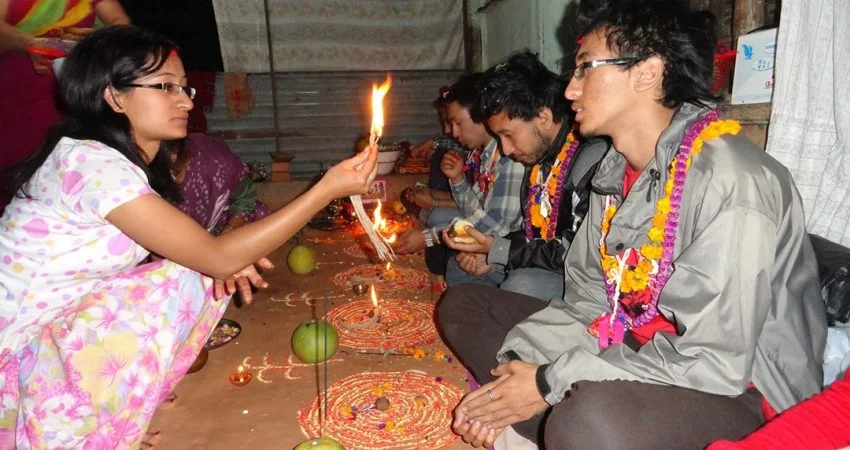
Tihar closes on its most emotionally resonant day. Bhaitika Nepal celebrates as a ritual between sisters and brothers, where sisters apply a multicolored tika to their brothers’ foreheads, wishing them long life and protection, while brothers offer gifts and promise to look after their sisters in return.
The ceremony draws from a legend involving Yamuna and her brother Yama, the god of death himself, who was so moved by his sister’s devotion that he granted a boon: any brother who receives tika from his sister on this day will be protected from death for that year. It’s a striking origin story for what has become, in practice, a warm and often tearful family reunion, since siblings living far apart, sometimes abroad, will travel considerable distances just to be tika’d by a sister on this single day of the Tihar festival.
Experiencing Kukur Tihar: A Unique Cultural Highlight
Of all five days, Kukur Tihar tends to surprise visitors the most, partly because nothing in most travelers’ home cultures prepares them for a public holiday centered on dogs. It’s worth sitting with why this tradition has endured for as long as it has.
Dogs occupy a genuinely different social position in Nepal than in many Western countries. Street dogs are a constant presence in Kathmandu, Pokhara, and smaller towns, largely tolerated and, on this one day each year, actively celebrated rather than simply ignored. The ritual reframes an everyday, often overlooked relationship as something sacred, which says as much about Nepali worldview as any temple visit could.
For travelers, Kukur Tihar offers a rare window into how deeply Hindu cosmology in Nepal extends compassion beyond the human world. Watching a family carefully garland their dog, murmuring blessings while the animal sits patiently through the whole process, tells you more about local values than most museum exhibits ever will.
Tihar Traditions and Symbolism: Rangoli, Lights, and Offerings
The visual language of Tihar repeats certain symbols with real intention behind each one. Oil lamps represent the triumph of light over darkness and ignorance, a theme the Tihar festival shares with Diwali in India, though the two celebrations diverge significantly in structure and ritual sequence, and Nepalis are quick to point out the differences if you ask.
Rangoli designs, drawn fresh each year at household entrances, serve as an invitation rather than mere decoration. The specific patterns vary by region and family tradition, but the underlying purpose stays consistent: marking a threshold as welcoming to prosperity and good fortune.
The Bhailo and Deusi songs carry their own layered symbolism too. Their lyrics traditionally invoke blessings for the household being visited, and the exchange of song for small gifts mirrors a broader theme running through Tihar traditions, that generosity given freely returns to the giver in some form. Even the tika ceremony on the final day, using colored powders in red, yellow, and white, encodes specific wishes for protection, prosperity, and long life within its layered pattern.
Cultural Etiquette for Travelers During the Festival
Tihar is a family-centered time, and visitors who approach it with a bit of awareness get a far richer experience than those who treat it purely as a photo opportunity.
Ask before photographing a household’s private puja, especially inside a courtyard or home. Many families are happy to explain their rituals to a curious outsider, but a camera raised without a word first can feel intrusive during a moment that’s fundamentally spiritual, not performative.
If a Nepali friend or homestay host invites you to join a Bhaitika ceremony, treat it as a genuine honor rather than a tourist activity. Dress modestly, remove your shoes before entering the puja area, and follow your host’s lead on when to sit, when to receive tika, and when to offer a small gift in return. Bringing sweets or fruit as a token gesture is always appreciated and rarely expected to be elaborate.
Expect a slower, quieter public life during these five days. Many shops, especially small family-run businesses, close entirely so owners can observe the rituals at home. This isn’t an inconvenience aimed at travelers; it reflects how central the Tihar celebration for tourists and locals alike really is to family life here.
Practical Tips for Visitors During the Festival of Lights
Book transport and accommodation well ahead of the Tihar festival. Domestic flights and long-distance buses fill quickly as Nepalis travel home from Kathmandu and abroad to celebrate with family, and prices climb accordingly in the week surrounding Laxmi Puja.
Carry cash. ATMs can run out during the festival rush, and many small vendors selling flowers, sweets, and puja items in the days leading up to Tihar won’t have card readers.
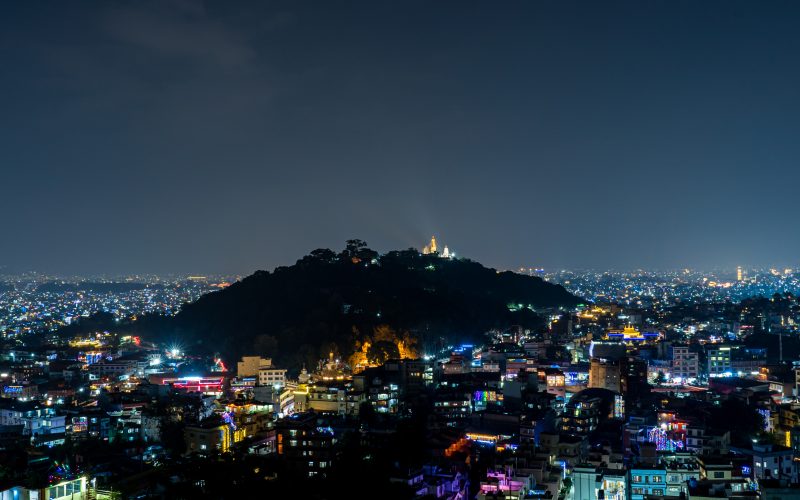
Time your city sightseeing carefully. Major squares in Kathmandu, Patan, and Bhaktapur are genuinely stunning on Laxmi Puja night, packed with lamplight and Bhailo singers, but daytime hours on the third and fourth days can find shops and offices closed unexpectedly. Building in flexibility around your itinerary saves real frustration during the Tihar festival window.
Learn the dates before you land. The Tihar festival shifts on the lunar calendar each year, so what falls in late October one year might land in mid-November the next. A quick check against the current year’s Nepali festival calendar before booking flights will save you from arriving a week too early or too late.
If you can, spend at least one evening outside the capital. Villages in the hills around Pokhara or in the Kathmandu Valley’s outskirts often celebrate with less crowding and more warmth, and Deusi-Bhailo groups moving between houses under open sky, away from city light pollution, offer a genuinely different experience than watching the same tradition play out in a dense urban alley. For anyone weighing when to visit Nepal for festivals, the stretch spanning Dashain and Tihar remains the single richest cultural window on the calendar.
Plan Your Tihar Experience the Right Way
Experiencing the Tihar festival is one of the most rewarding ways to connect with Nepali culture. However, traveling during the festival requires careful planning regarding permits, domestic transport, and finding local homestays.
At Nepal Adventure Trail, we help you navigate the festival schedule to ensure you aren’t stuck in a city while the villages are lit by lamps. Let us help you plan a cultural immersion that respects local traditions, so the five days of Tihar become something you take part in, not just something you happen to witness from a hotel window.