
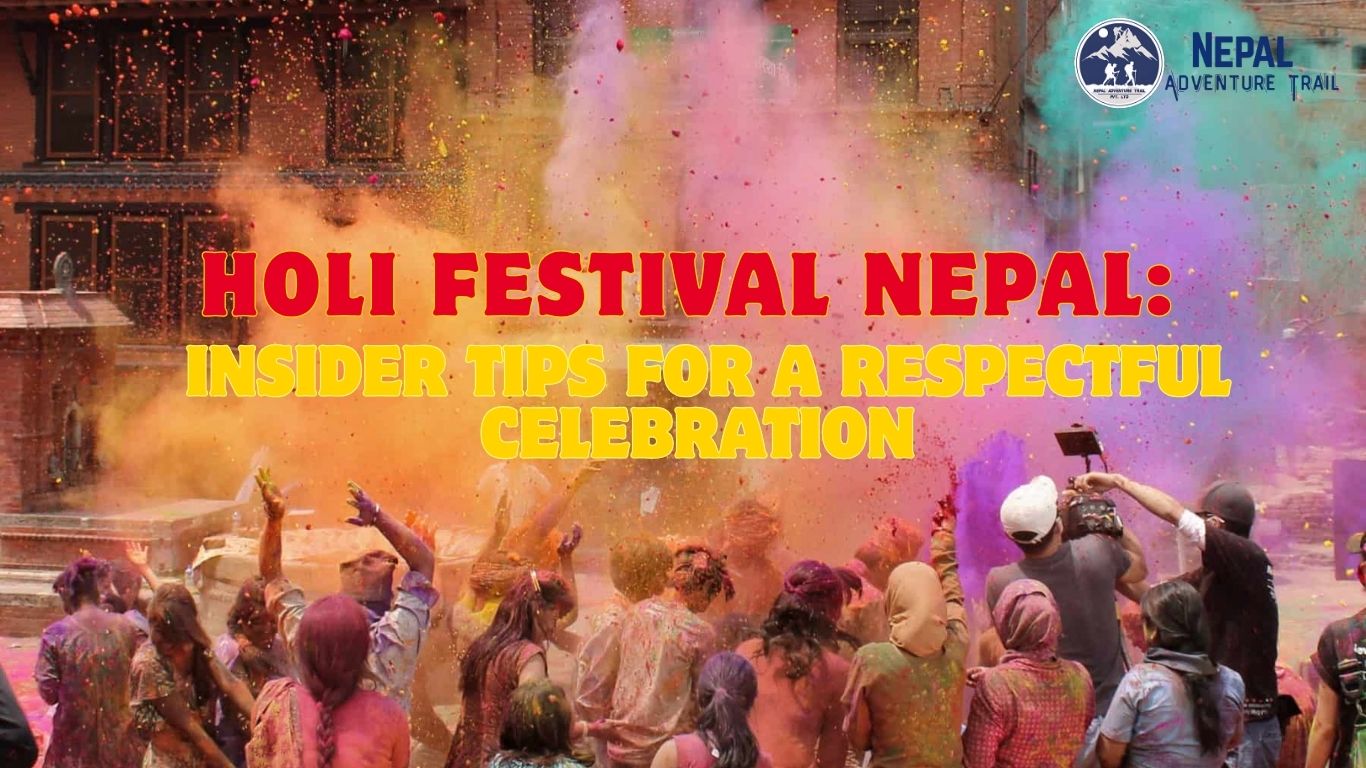
You’ll smell the Holi festival before you see it. Clouds of gulal powder drift over rooftops in shades of magenta and electric blue, the bass from a sound system somewhere in Durbar Square rattles windows three streets away, and the first water balloon of the morning explodes against a stranger’s shoulder to a burst of laughter. This is Kathmandu in the last week of March, and there’s genuinely nothing else on the Nepali calendar quite like it.
Holi festival in Nepal runs on its own logic, distinct from India’s version despite sharing the same mythology and the same full moon. Locally it’s known as Phagu Purnima, and Phagu Purnima Nepal traditions carry their own regional flavor that separates them from the festival’s better-known counterpart across the border. In 2027 the celebration lands during the tail end of the dry season, when the city is dusty, the air is warm, and everyone seems ready for an excuse to get soaked. If you’re planning a trip around it, understanding what is Holi in Nepal beyond the postcard image of colored powder will save you a fair amount of confusion, and possibly a ruined phone.
This guide covers the mythology behind the day, exactly when Holi 2027 falls in each region of the country, where to find the best place to celebrate Holi in Nepal depending on the experience you’re after, and the Holi festival safety for tourists details that most travel blogs skip entirely.
Understanding Holi: Why Phagu Purnima Matters in Nepal
Phagu Purnima falls on the full moon of the Nepali month of Falgun, and it marks the turn from winter into spring on the lunar calendar. The name itself comes from two words: “phagu,” referring to the red powder scattered during the celebration, and “purnima,” meaning full moon. Long before it became an excuse for citywide water fights, the day was tied to the harvest calendar and to fertility rites marking the changing season.
In Nepal, the Holi festival unfolds over two separate days depending on region, a detail that catches a lot of first-time visitors off guard. The hill districts, including the entire Kathmandu Valley, celebrate first, while the Terai plains bordering India observe it the following day. Both dates are declared public holidays by the government, with schools, offices, and most businesses closing so people can take part.
That two-day structure isn’t a quirk of scheduling. It reflects two distinct lunar calendrical traditions that developed separately across Nepal’s geography, with the hill calendar and the Terai calendar tracking the full moon by slightly different regional conventions. Understanding this split matters more than most guides let on, because a traveler who assumes the whole country celebrates simultaneously can easily miss the day entirely in one region while catching it in another.
Holi traditions Nepal has built up over generations extend well past the color throwing itself. Sweets like gujiya, a fried pastry filled with khoya and dried fruit, appear in nearly every household in the days leading up to the festival, and thandai, a chilled, spiced milk drink sometimes mixed with bhang, gets passed around family gatherings as part of the celebration’s social rhythm.
The Mythology: Prahlad and Holika
The religious backbone of the Holi festival comes from the story of Prahlad, a devotee of Vishnu, and his father Hiranyakashipu, a king so consumed by his own arrogance that he demanded worship for himself instead. When Prahlad refused to abandon his devotion, the king ordered his sister Holika, who possessed a boon of immunity to fire, to carry the boy into a bonfire and burn him alive.
Holika sat in the flames holding Prahlad on her lap, certain she’d walk out unharmed. Instead, her power failed her at the crucial moment, and Prahlad emerged from the fire untouched while Holika perished. The lesson embedded in the story, that devotion and righteousness outlast cruelty and arrogance, is why the night before Holi is called Holika Dahan in most of South Asia, marked by ceremonial bonfires.
Nepal folds its own local flavor into this shared mythology. In Kathmandu, the celebration traditionally opens with the raising of a ceremonial bamboo pole called a chir in Basantapur Durbar Square. Strips of cloth are tied to it as good luck offerings, and the pole stands through the following days before eventually coming down, a physical marker of the festival’s opening and close that visitors rarely see explained anywhere else.
Holi 2027: Planning Your Visit to Nepal
For anyone mapping out a trip around the Holi festival in 2027, the hill region including Kathmandu, Pokhara, and Bhaktapur celebrates on March 21, a Sunday, while the Terai region observes it a day later on March 22. That single-day gap follows a lunar calculation that differs slightly between the two zones, and it’s worth building into your itinerary rather than treating as a scheduling error.
Flights into Kathmandu and hotel rooms near the old city fill up fast in the days surrounding the festival, so book well ahead if you want anything close to Basantapur or Thamel. Domestic transport also tightens, since plenty of Nepalis travel to celebrate with family, similar to the crush around Dashain and Tihar a few months earlier.
Give yourself a buffer day on either side. The morning after Holi, much of Kathmandu is still cleaning colored powder off walls and pavement, and the general pace of the city runs noticeably slower than usual.
Where to Celebrate Holi in Nepal
Finding the best place to celebrate Holi in Nepal really depends on what kind of day you’re after: full sensory chaos, a tourist-friendly middle ground, or something quieter and more personal. Kathmandu Valley offers all three within a short taxi ride of each other, which is part of why so many travelers base their entire festival trip here.
Basantapur Durbar Square: The Center of the Storm
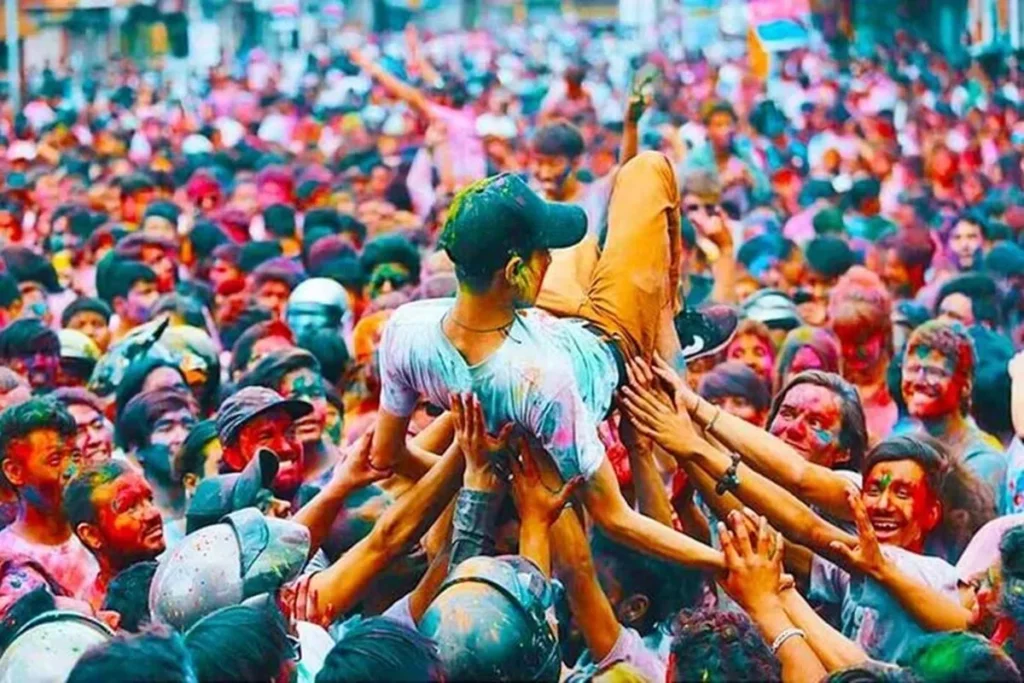
If you want the full, chaotic version of the Holi festival that Kathmandu is known for, Basantapur Durbar Square is where it happens. Crowds pack in from mid-morning, sound systems blast a mix of Nepali pop and Bollywood tracks, and color gets thrown with genuine enthusiasm rather than restraint.
Expect to be soaked within the first twenty minutes. This is the spot for travelers who want the postcard version of the festival, dancing crowds dyed head to toe, powder hanging thick enough in the air to catch the sunlight. It’s also the spot where pickpocketing and overly aggressive color throwing happen most, so leave anything valuable at your hotel.
Thamel: Tourist-Centric Play
Thamel offers a slightly more contained version of the same Holi celebration Kathmandu built its reputation on, popular with travelers staying in the tourist quarter’s guesthouses. Streets here fill with a mix of foreigners and locals, water balloons known locally as lola arc overhead constantly, and several rooftop bars run their own organized color parties with music and drinks included.
It’s a reasonable middle ground for visitors who want real Holi energy without navigating the sheer density of Basantapur’s crowd. Just know that Thamel’s version leans more festival-for-tourists than deeply traditional, which isn’t a bad thing, just a different thing.
Local Neighborhoods and Family Traditions
The quieter, arguably more meaningful version of Holi happens away from the main tourist circuits entirely, in residential courtyards and smaller town squares like those in Bhaktapur or Patan. Families gather, smear a gentle dab of color on each other’s cheeks rather than launching full assaults, and share sweets like gujiya and thandai afterward.
If you have any local connection, even a homestay host or a guide you’ve built rapport with over a few days, ask whether you can join their family’s version of the day. It’s a completely different rhythm from the street parties, and honestly the better introduction to what is Holi in Nepal at its roots.
Bhaktapur in particular is worth the half-hour trip from Kathmandu if you want this quieter register. The ancient brick squares fill with a gentler version of the celebration, families circling the neighborhood shrine before settling into courtyards for food and music, and the crowd density stays far more manageable than anything you’ll find in the capital’s main tourist zones.
Essential Holi Etiquette for Tourists
Good Holi festival etiquette starts with one simple rule: ask before you apply color to anyone, always. A quick gesture, holding up a pinch of powder with a questioning look, is enough, and most people will happily agree. Plenty of locals, particularly older residents, working professionals headed somewhere formal, or people simply not in the mood that day, prefer not to play, and that choice deserves respect rather than a face full of unwanted gulal.
Public intoxication is common during Holi, especially where bhang, a cannabis-infused drink, circulates among older crowds. Keep some awareness of your surroundings in dense areas like Basantapur, where the mix of alcohol, bhang, and packed crowds can occasionally tip into rowdier behavior later in the day. Traveling in a small group rather than alone is a sensible call, particularly for solo women travelers.
If someone declines to play or visibly steps back when you approach with color, accept it immediately and move on. And if you find yourself on the receiving end of an unwanted dousing, the best response is almost always a laugh and a shrug. Genuine irritation rarely improves the situation and tends to draw more attention, not less.
Solid Holi festival safety for tourists comes down to a handful of simple habits repeated consistently through the day. Stick to main streets and well-lit squares rather than narrow back alleys, where crowd behavior can shift unpredictably and there’s less foot traffic to notice if something goes wrong. Keep your accommodation’s address written down somewhere, since phones get soaked and battery life drops fast when you’re constantly checking them for photos. Agree on a meeting point with anyone you’re traveling with before the crowds swell, because cell signal in the densest parts of Basantapur can get unreliable once thousands of people are packed into the square at once.
Practical Tips for a Successful Holi
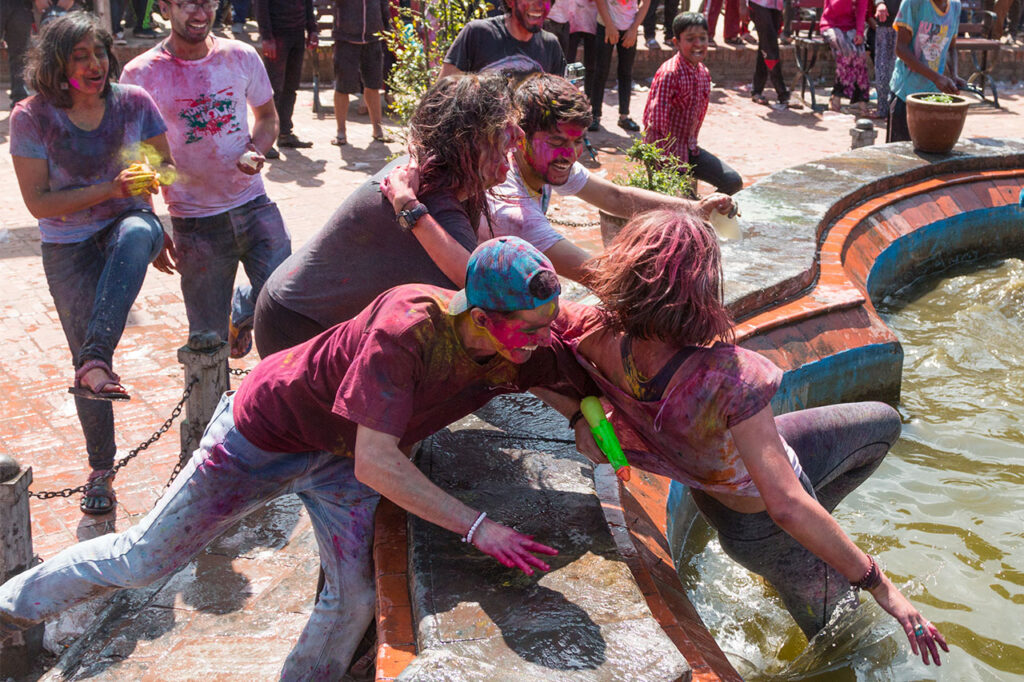
A successful Holi festival day comes down mostly to preparation. Protect your camera and phone before you leave your hotel room, not after the first splash lands. A cheap waterproof pouch or dry bag does the job, and plenty of vendors around Thamel sell them in the days leading up to the festival specifically because so many tourists forget. If you’re shooting with a proper camera, consider leaving it behind entirely and renting or borrowing something disposable for the day, since powder finds its way into every seam and dial eventually.
Wear clothes you’re fully prepared to throw away. White cotton is the traditional choice because it shows color most vividly, but anything old, loose, and expendable works. Skip anything you’d be upset to ruin, including shoes, since gulal and mud together create a stain that essentially never comes fully out.
Oil your skin and hair before heading out, ideally with coconut or mustard oil, which locals have relied on for generations specifically because it creates a barrier that makes the powder rinse out far more easily afterward. Sunglasses or safety glasses help keep color and errant powder out of your eyes, which is a more common irritation than most first-timers expect. Bring a change of clothes and simple flip-flops for the walk home, since your festival footwear will likely be unsalvageable by the end of the day.
Plan Your Holi Experience the Right Way
Holi in Nepal is an unforgettable sensory experience, but it can be chaotic for the unprepared. Whether you want to join the main crowd in Durbar Square or find a more authentic local experience, Nepal Adventure Trail helps you navigate the logistics, safety, and timing of the festival.
Let us help you plan a trip that balances excitement with local respect, so your Holi festival in Nepal turns into the kind of story you tell for years rather than a scramble to save your phone and your favorite shirt.