
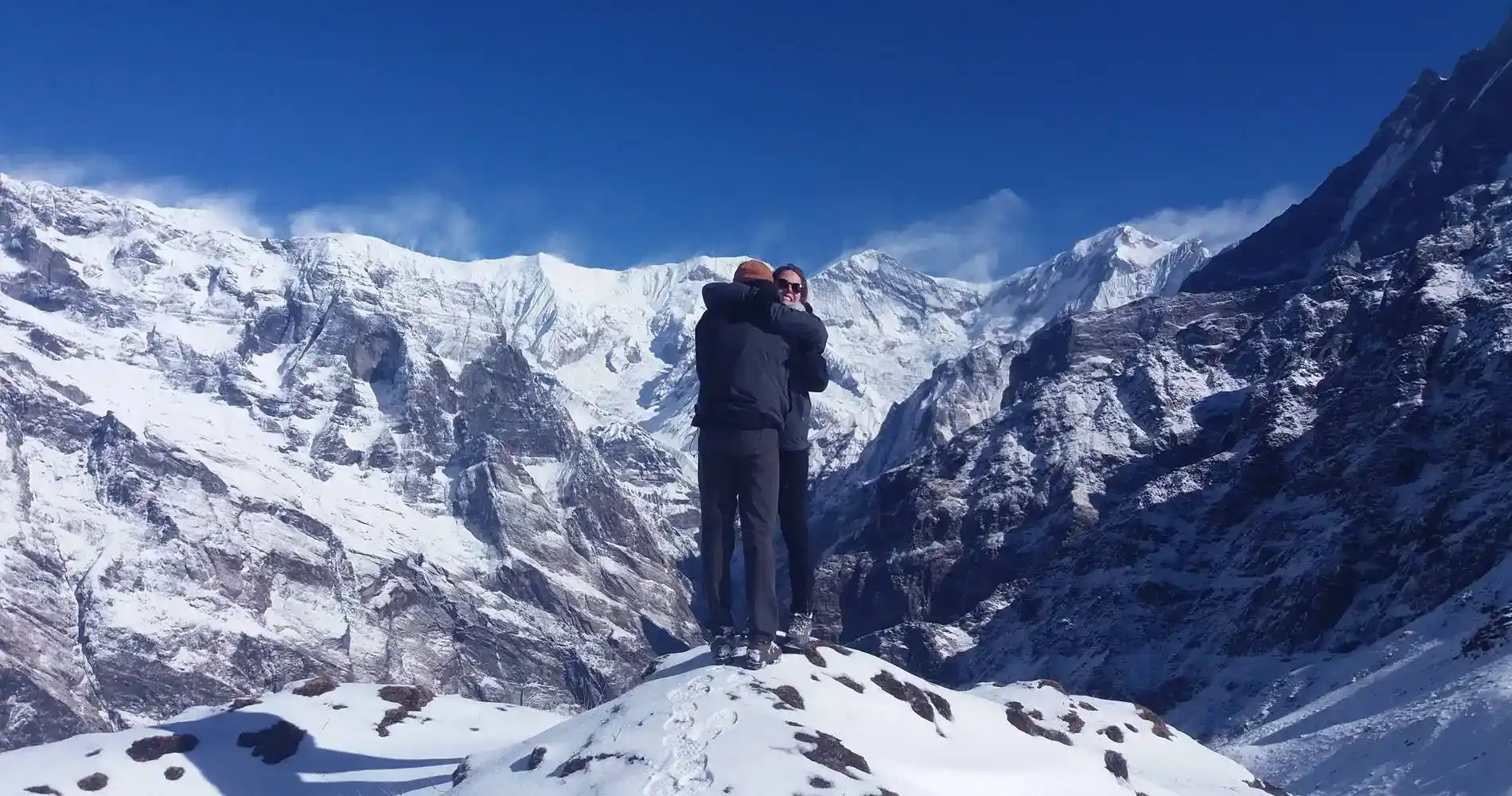
The Mardi Himal Trek doesn’t announce itself loudly. It starts in warm forest air near Pokhara, then quietly turns into a ridge walk where wind replaces conversation and every step starts costing more energy than expected.
Most people misread this route. They see the short duration and assume it’s light work. That assumption gets corrected somewhere between Forest Camp and High Camp, when breathing gets heavier and the trail stops forgiving rushed pacing.
This is not a technical climb. It’s a controlled altitude grind wrapped in changing weather, narrow ridges, and fast elevation gain.
Mardi Himal Route Breakdown (What Actually Happens on the Trail)
The Mardi Himal route looks simple on paper. It is not complicated navigation-wise, but the elevation curve does the damage.
Key sections:
- Kande to Forest Camp (1,770m → 2,600m)
- Stone steps through humid forest
- Sweat-heavy climbing
- First signs of leg fatigue
- Forest Camp to Low Camp (2,600m → 3,050m)
- Dense forest breaks into partial ridge views
- Temperature drops fast after sunset
- Clothes stop drying properly
- Low Camp to High Camp (3,050m → 3,580m)
- Open ridge exposure begins
- Wind becomes a constant factor
- Oxygen drop becomes noticeable
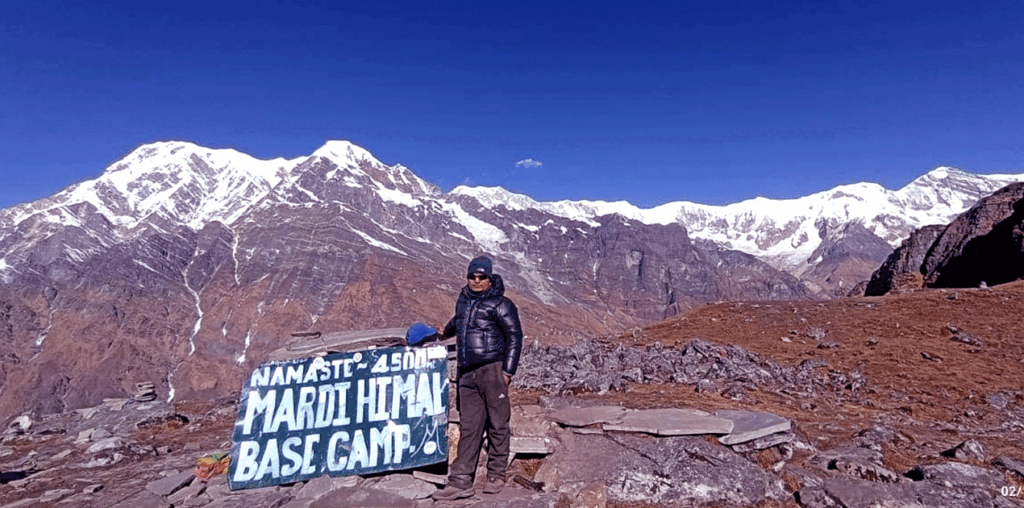
- High Camp to Viewpoint / Base Camp (3,580m → 4,500m)
- Thin air section
- Slow movement becomes normal
- Weather decides visibility, not schedule
Guide’s Pro-Tip:
If you feel strong at Low Camp, don’t rush. That’s where most trekkers accidentally overestimate their body’s altitude tolerance.
Mardi Himal Difficulty: The Misread Route
The Mardi Himal difficulty is not technical. No ropes. No climbing sections. But that’s where people get careless.
The real challenge is stacked in three things:
- Fast altitude gain
- Ridge exposure to wind
- Limited recovery time between camps
At High Camp, even basic movement feels slightly delayed. Not painful at first. Just slow. That slowdown is the warning sign.
If ignored, headaches, nausea, and fatigue follow.
Guide’s Pro-Tip:
Fitness helps your legs. Altitude ignores your gym routine. If your breathing stays heavy while sitting, you’re already pushing your limit.
Mardi Himal Altitude: Where the Body Starts Talking Back
The Mardi Himal altitude line crosses 4,000m fast. That’s the threshold where oxygen availability drops sharply.
Typical reactions above 3,500m:
- Short breathing cycles
- Reduced appetite
- Mild dizziness during steep climbs
- Broken sleep at night
Above 4,000m:
- Walking slows without choice
- Conversation becomes optional
- Focus narrows to breathing rhythm
This isn’t fear-based writing. It’s physiology. Less oxygen per breath means slower recovery between steps.
Guide’s Pro-Tip:
Drink water even when you don’t feel thirsty. At altitude, thirst signals arrive late. By then, dehydration has already started.
Mardi Himal Weather: The Ridge Doesn’t Stay Stable
The Mardi Himal weather system shifts fast because of ridge exposure.
Typical daily pattern:
- Morning: clear sky, strong sun
- Midday: cloud build-up begins
- Afternoon: visibility drops
- Evening: wind strengthens sharply
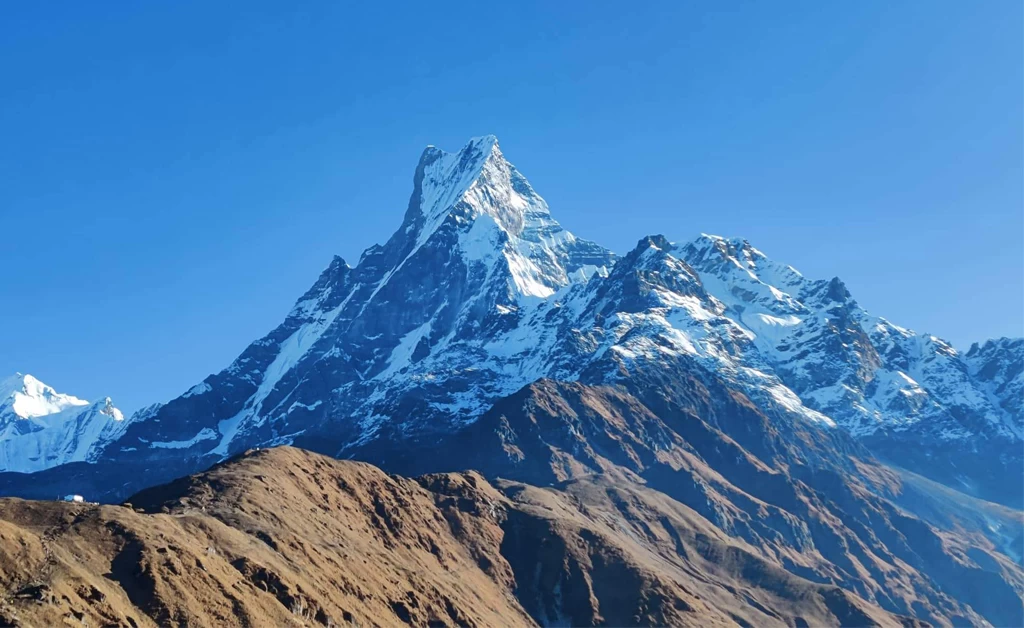
The ridge line near High Camp acts like a funnel for wind currents. One moment you see Annapurna South clearly, next moment everything turns into white movement.
Wet gear is the real problem here. Once wind hits damp clothing, body heat loss accelerates quickly.
Guide’s Pro-Tip:
If clouds start building before lunch, treat it as your climbing window closing. Don’t wait for “better visibility” that may never return that day.
Mardi Himal Trek Packing List: What Works and What Fails
A proper Mardi Himal packing list is not about quantity. It’s about resistance to cold, wind, and moisture.
Clothing system:
- Base layer (moisture-wicking only)
- Mid layer fleece or light insulation
- Down jacket (real cold rating, not marketing claims)
- Windproof outer shell
Critical gear:
- Trekking boots with grip (stone + frost mix sections)
- Gloves (thermal, not fashion gloves)
- Headlamp (low Camp nights are dark and early)
- Water bottles (minimum 2L capacity)
Common failures:
- Cotton hoodies → trap sweat, freeze later
- Cheap rain jackets → fail under wind pressure
- Soft sneakers → unstable on rocky ascent/descent
If gear fails at High Camp, there is no easy fix. You either descend or suffer through cold exposure.
Guide’s Pro-Tip:
Lay your gear out at night and ask one question: “Will this block wind at 3,500m?” If the answer is uncertain, it’s not reliable.
Mardi Himal Itinerary: Why Pacing Matters More Than Speed
A typical Mardi Himal itinerary runs 5 to 7 days depending on pace and acclimatization.
Common structure:
- Day 1: Pokhara → Kande → Forest Camp
- Day 2: Forest Camp → Low Camp
- Day 3: Low Camp → High Camp
- Day 4: High Camp → Viewpoint → return
- Day 5–6: Descent to Pokhara
The mistake is rushing. Cutting days sounds efficient until altitude response kicks in.
Fast itineraries reduce adaptation time. That increases headache risk and fatigue accumulation.
Guide’s Pro-Tip:
Add buffer time, not speed. The mountain doesn’t reward rushed schedules. It rewards stable pacing.
Annapurna Region Trek Context: Why This Route Feels Different
The Annapurna region trek network includes everything from long circuits to short ridge routes. Mardi sits in a strange position: short distance, high altitude gain.
Unlike longer treks, you don’t get gradual conditioning days. You go from forest to alpine ridge in a compressed timeline.
That compression is what surprises trekkers.
The terrain also shifts quickly:
- Dense forest → open ridge → exposed summit zone
- Humid air → cold wind → thin dry air
There is no long buffer phase where your body slowly adapts. It’s fast transition, repeated elevation stress.
Guide’s Pro-Tip:
Short treks are not automatically easier. Compression increases intensity per day.
Why People Misjudge the Mardi Himal Trek
Three repeated errors show up every season:
- Treating it like a scenic walk
- Ignoring early altitude symptoms
- Underestimating wind exposure on ridges
The result is always the same: slowed pace, forced rest stops, or early descent.
The route doesn’t punish loudly. It reduces efficiency quietly until you notice everything feels heavier than it should.
Final Field Reality
On High Camp mornings, before sunrise, the ridge is silent except for wind dragging across rock. Boots feel stiff from cold. Breathing is visible. Movement is slow but deliberate.
There’s no romantic framing here. Just a high ridge, thin air, and the need to keep moving carefully.
The Mardi Himal Trek rewards those who respect pacing, gear discipline, and weather timing. It penalizes assumptions. At Nepal Adventure Trail, we handle the logistics so you can focus on the climb. Contact us to start planning.