Everest Base Camp Trek 14 Days | 2026/27 Cost & Itinerary

The World's Most Iconic Trek
From$1,545
Booking Form
Enquiry Form
Full Name*
Email Address*
Phone Number*
Your Country*
Your Enquiry*
Accommodation*
* I agree with Terms of Service and Privacy Statement.
Please agree to all the terms and conditions before proceeding to the next step
Available: 16 seats
* Please select all required fields to proceed to the next step.

Proceed Booking

Save To Wish List

Adding item to wishlist requires an account

13446
  • DestinationNepal
  • Accommodation4 Star Hotel in Kathmandu / Tea House during the trek
  • RegionEverest Region
  • Best SeasonFeb, March, April, May, June, Sep, Oct, Nov & Dec.
  • Days14
  • Group2-15 Persons
  • DifficultyModerate
  • PickupTIA Airport
  • Activity Per DayApprox. 4-6 hrs Walking
  • Max. Altitude5,364 m
  • Meals IncludedBreakfast in Kathmandu / All Meals (Breakfast, Lunch, Dinner) during the trek
  • TransportationKathmandu to Luka via Flight and Back
Everest Base Camp Trek — Complete Route Overview

5,364m
Max Altitude
14 Days
Duration
~130 km
Total Distance
Moderate+
Difficulty
Oct–Nov
Best Season
From $850
Per Person

At 5,364 metres above sea level, Everest Base Camp sits at the foot of the world’s highest mountain — and reaching it on foot, through the heart of the Khumbu, is one of the most transformative journeys a person can make. Nepal Adventure Trail’s 14-day Everest Base Camp Trek covers approximately 130 kilometres of trail through the Sagarmatha National Park, ascending from Lukla (2,860m) through a sequence of iconic Sherpa villages before arriving at Base Camp — with an early-morning summit to Kala Patthar (5,545m) for the single greatest view of Everest on Earth.

This is a non-technical trekking route — no ropes, crampons, or mountaineering experience required. What it demands is solid cardiovascular fitness, mental resilience, and the right preparation. Nepal Adventure Trail’s licensed Sherpa guides manage every permit, tea house booking, and acclimatisation assessment, monitoring each trekker’s oxygen saturation daily from Namche onwards so that your safety is never left to chance.

Trek along ancient paths, immersed in the Sherpa culture of the Khumbu — stopping at prayer flag-draped passes, mani stone walls inscribed with Buddhist mantras, and centuries-old monasteries — while jaw-dropping panoramas of Mt. Everest (8,849m), Lhotse (8,516m), Nuptse (7,861m), Ama Dablam (6,812m), Pumori (7,161m), and dozens more snow-covered giants unfold around every ridge.

Your journey begins with a thrilling scenic mountain flight to the legendary airstrip at Lukla — departing from Kathmandu (January, February, June–August, December) or from Manthali/Ramechhap after a short drive (March, April, May, October, November) — one of the most adrenaline-charged landings in aviation. From Lukla, the trail descends into the lush Dudh Koshi Valley before rising steadily into the pristine Sagarmatha National Park, a UNESCO World Heritage Site home to snow leopard, Himalayan tahr, and the endangered red panda.

The bustling Namche Bazaar (3,440m) marks the first major acclimatisation stop — a vibrant Sherpa trading hub with mountain bakeries, trekking gear shops, rooftop cafés, and sweeping views of the Everest massif on clear mornings. Above Namche, the trail winds through rhododendron and fir forest to the dramatically situated Tengboche Monastery (3,860m) — the largest gompa in the Khumbu, where butter lamps flicker inside ancient prayer halls and Ama Dablam towers overhead like a cathedral spire.

Deeper into the Khumbu region, the vegetation thins and the landscape takes on the raw, windswept character of high altitude. The tranquil villages of Dingboche (4,410m) and Lobuche (4,940m) offer glimpses of authentic high-altitude Sherpa life — stone-walled fields, yak herders, and the constant sight of six- and seven-thousanders dominating the horizon in every direction. A second acclimatisation day in Dingboche includes an optional hike to Nangkartshang Peak (5,083m) — a ridge walk with sweeping views of Makalu, Island Peak, and the entire Khumbu valley.

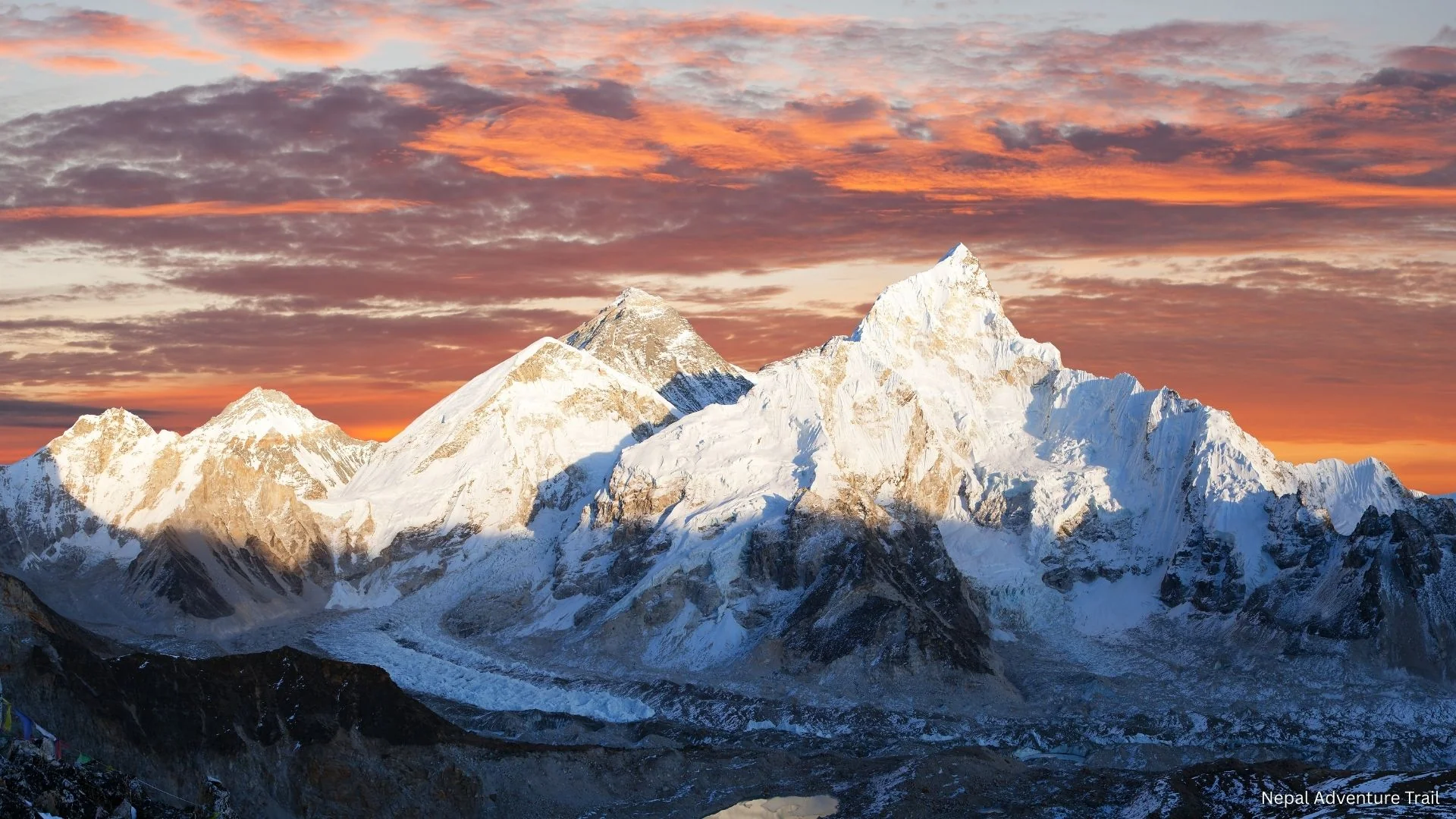
The trek’s defining moment arrives at Gorak Shep (5,164m), the final tea house stop, from which a rocky path picks through glacial moraine to Everest Base Camp itself — walking beside the awe-inspiring Khumbu Glacier, the world’s highest glacier, with the thundering Khumbu Icefall visible above. The following pre-dawn ascent to Kala Patthar (5,545m) rewards every step with the most iconic mountain sunrise available without technical climbing: Everest, Lhotse, and Nuptse bathed in golden alpenglow as the sun breaks the horizon.

One fact that surprises every first-time trekker: Everest itself is not visible from Everest Base Camp. The Nuptse and Lhotse ridgelines block the view from 5,364m — which is precisely why the Kala Patthar climb is the indispensable highlight of the itinerary, not an optional add-on.

The descent retraces your steps through Pheriche, Tengboche, and Namche — days of quiet reflection on everything the Khumbu has given — before a final Lukla flight returns you to Kathmandu, carrying memories, photographs, and a perspective that will stay with you for the rest of your life.

Everest Base Camp Trek Difficulty & Fitness Requirements

The Everest Base Camp Trek is rated Moderate to Challenging — demanding enough that under-prepared trekkers struggle, yet achievable by any person with solid fitness and the right mindset. No technical climbing, mountaineering certification, or prior high-altitude experience is required. The route is a continuous walking trail from start to finish.

The primary challenges are aerobic endurance (long days at altitude where oxygen is ~50% of sea-level concentration), cumulative fatigue across back-to-back days with limited recovery, and the psychological test of the pre-dawn Kala Patthar climb when you are already exhausted from Base Camp the day before.

Daily Trek Statistics at a Glance

Metric Detail
Daily walking time 4–8 hours (varies by stage)
Daily distance 9–18 km per active day
Total elevation gain (Lukla → Kala Patthar) ~2,685 metres net ascent
Highest sleeping altitude Gorak Shep: 5,164m
Highest point reached Kala Patthar: 5,545m
Trail surface Rocky, stone-paved, moraine. No vertical faces.
Acclimatisation rest days 2 full rest days (Namche + Dingboche)

Who Can Complete the EBC Trek?

Age is not a barrier — trekkers aged 12 to 76 have successfully completed this route with Nepal Adventure Trail. The only genuine prerequisites are cardiovascular fitness and the willingness to walk slowly and consistently (“bistari bistari” — the Sherpa mantra). Trekkers with prior hiking experience above 3,000m have an advantage, but it is not required.

Recommended 12-Week Pre-Trek Training Plan

  • Weeks 1–4: Walk 5–8 km daily on varied terrain, 4–5 days/week, with a 7–10 kg daypack. Prioritise uphill sections. Add cycling or swimming for cardio base.
  • Weeks 5–8: Increase to 10–15 km hikes with elevation gain. Introduce gym training: squats, lunges, step-ups, and stair machine for leg strength and knee stability.
  • Weeks 9–12: Back-to-back weekend hikes of 20–25 km with full trek pack loaded. Simulate consecutive day fatigue. Aim for 5–6 hours of sustained walking pace.
  • Year-round: 4–5 cardio sessions per week. High-altitude trekking rewards aerobic base above all else.

Minimum fitness benchmark: If you can walk comfortably for 5–6 hours on two consecutive days carrying a 7–10 kg pack, you are physically ready for this trek. Nepal Adventure Trail guides monitor all trekkers daily via SpO₂ oximeter readings and make all acclimatisation decisions in consultation with each trekker.

14-Day Everest Base Camp Trek: Itinerary Highlights

Day 01: Arrival in Kathmandu (1,400 m), transfer to hotel.

Day 02: Fly/Drive to Lukla, trek to Phakding (2,610 m).

Day 03: Trek to Namche Bazaar (3,440 m).

Day 04: Acclimatization at Namche; hike to Hotel Everest View.

Day 05: Trek to Tengboche (3,860 m).

Day 06: Trek to Dingboche (4,410 m).

Day 07: Acclimatization hike to Nangkartsang Peak (5,083 m).

Day 08: Trek to Lobuche (4,910 m).

Day 09: Trek to Everest Base Camp (5,364 m), overnight at Gorak Shep.

Day 10: Gorakhsep / Kalapatthar / Pheriche

Day 11: Trek back to Namche Bazaar.

Day 12: Trek to Lukla.

Day 13: Fly/Drive back to Kathmandu.

Day 14: Final departure.

 ▶️Need help booking your trip? Watch our step-by-step video guide.


Everest Base Camp Trek Reviews

What Our Trekkers Say (Google Verified)?

EXCELLENT
Google star 1Google star 2Google star 3Google star 4Google star 5
Based on 20 reviews
Posted on Google Google
David Hanke profile picture
David Hanke
Google star 1Google star 2Google star 3Google star 4Google star 5Trustindex verifies that the original source of the review is Google.
Our travel with Nepal Adventure Trail was outstanding. Porgi was the best guide one could ask for. And the way we experienced Tibet as a family was one of our favorite trips ever. I would highly recommend this company for the full experience of traveling in Tibet. David U.S.A.
Posted on Google Google
Michael Eisenbach profile picture
Michael Eisenbach
Google star 1Google star 2Google star 3Google star 4Google star 5Trustindex verifies that the original source of the review is Google.
I went to Nepal with two of my sons, and the 12-day trip organized by Nepal Adventure Trail was absolutely fantastic. The itinerary was diverse and well-balanced, including guided tours of Kathmandu and Pokhara, a thrilling jungle safari on foot in Chitwan, and a breathtaking 3-day trek to the Australian Camp in the Himalayas. We were fortunate to have two superb guides, one for Kathmandu and Chitwan, and another for Pokhara and the trek. Both of them were knowledgeable, friendly, and attentive. This journey left us deeply impressed and eager to return to Nepal. Highly recommended!
Posted on Google Google
markov40plus profile picture
markov40plus
Google star 1Google star 2Google star 3Google star 4Google star 5Trustindex verifies that the original source of the review is Google.
Хорошая компания исполняющая взятые на себя обязательства. Путешествовать с ними большое удовольствие!
Posted on Google Google
suzanne leza benadie profile picture
suzanne leza benadie
Google star 1Google star 2Google star 3Google star 4Google star 5Trustindex verifies that the original source of the review is Google.
I have had a long standing business relationship with the team at Nepal Adventure Trail. A very porfessional company that offers a wide range of tourism services. I highly recommend them for planning and executing unique itineraries.
Posted on Google Google
Purushottam Dawadee profile picture
Purushottam Dawadee
Google star 1Google star 2Google star 3Google star 4Google star 5Trustindex verifies that the original source of the review is Google.
Nepal Adventure Trail is one of the best companies I’ve ever worked with. We had an incredible experience with this trail, During our trip to Annapurna Base Camp on April-May, 2025. Very good experience, robust knowledge and friendly staff who helped us every aspect of our journey and mission. Mr. Sapkota, pragya & his entire team is dedicated and very professional. I would strongly recommend that if you’re interested doing something interesting like Hiking, trekking or exploring nature of virgin mountain, please go ahead with this company.
Posted on Google Google
Sanjeeb Subedi profile picture
Sanjeeb Subedi
Google star 1Google star 2Google star 3Google star 4Google star 5Trustindex verifies that the original source of the review is Google.
Amazing EBC trek was organised by Nepal Adventure Trail for us (a group of friends from London) in March 2025. As you can imagine, when there are 8 individuals, 16 different ideas pop ups and the company was accommodating our changes while going through such as change from standard route to Cho La Pass and via Gokyo Lake, arranging helicopter ride back Kathmandu and getting refund to airline ticket from Lukla.... It was an once in lifetime achievement for me and thanks for making my dream true and helping on the way through.
Posted on Google Google
Gregory Bolotin profile picture
Gregory Bolotin
Google star 1Google star 2Google star 3Google star 4Google star 5Trustindex verifies that the original source of the review is Google.
My wife, our friends, and I had the most unforgettable adventure trip to Mustang, Nepal last year, and it was all thanks to the exceptional organization and accompaniment of Nepal Adventure Trail. This company truly delivered everything they promised, seamlessly blending adventure, comfort and exploration. The 12 days itinerary was perfectly crafted, utilizing jeeps which allowed us to cover significant ground and witness the breathtaking landscapes of the region. The inclusion of a thrilling short rafting experience and hiking added exciting dimension to our trip. What truly set Nepal Adventure Trail apart was their incredible team. Our guide Progi and drivers were not just professionals, they were passionate, knowledgeable, and genuinely cared about ensuring every member of our group of 9 had a safe, enjoyable and enriching journey. They handled all logistics with remarkable efficiency, from accommodations to meals. Their local insights brought the history, culture and traditions of Nepal and specifically Mustang region to life, making every stop more meaningful. If you are planning a trip to Nepal, especially an adventure like exploring Mustang, I would definitely recommend Nepal Adventure Trail. They go above and beyond to create personalized and memorable travel experiences.
Posted on Google Google
piki dayan profile picture
piki dayan
Google star 1Google star 2Google star 3Google star 4Google star 5Trustindex verifies that the original source of the review is Google.
We had an unforgettable experience combining the Mustang Jeep Tour with the Ghorepani Trek, all arranged by Nepal Adventure Trail. The contrast between the rugged Mustang landscapes and the lush forests of Ghorepani was simply breathtaking. Everything was perfectly managed—from the comfy jeep rides to the peaceful mountain lodges. Our guide was knowledgeable, friendly, and made us feel safe and inspired every step of the way. Truly a once-in-a-lifetime journey!
Posted on Google Google
Karpachou / Карпачев Михаил profile picture
Karpachou / Карпачев Михаил
Google star 1Google star 2Google star 3Google star 4Google star 5Trustindex verifies that the original source of the review is Google.
Progi is excellent guide and travel organizer!!! We traveled with him twice and have a very good service!
Posted on Google Google
Ajay Agrawal profile picture
Ajay Agrawal
Google star 1Google star 2Google star 3Google star 4Google star 5Trustindex verifies that the original source of the review is Google.
Progi guided my group to Muktinath and was a thoughtful, considerate and knowledgeable guide. He was able to cater to all the diverse needs of the group expertly and always with a smile.
Verified by Trustindex
Trustindex verified that these reviews were published on Nepal Adventure Trail's Google Business Profile. Learn more

What's Included in Your Everest Base Camp Trek Package

Accommodation & Meals
  • 2 nights in Kathmandu (4-star hotel, breakfast included).
  • 11 nights in mountain teahouses (twin-sharing basis).
  • All meals during trek (breakfast, lunch, dinner).
  • Welcome dinners in Kathmandu.
  • 3 times Regular Tea/coffee during all meals on trek.
Transportation
  • Private Vehicles(arrival and departure), sightseeing as per itinerary.
  • Kathmandu to Lukla flights (both ways).
  • Alternative Ramechhap flights when required.
  • Ground transport for Ramechhap option on sharing basis.
Professional Guide & Porter Service
  • Experienced English-speaking Trekking guide.
  • English-speaking local guide for Kathmandu sightseeing
  • Porter service (1 porter for 2 trekkers, max 25kg).
  • Guide and porter insurance, meals, and accommodation.
  • Comprehensive first aid kit with guide.
Permits & Documentation
  • Sagarmatha National Park entry permits.
  • Khumbu Pasang Lhamu Rural Municipality permits.
  • TIMS (Trekkers' Information Management System) card.
  • All government taxes and fees.
  • Monuments Entrance fees.
Optional Add-Ons (Post- Trek Experience) 
  • Guided cultural sightseeing tour in Kathmandu with entrance fees.
  • Pokhara Relaxation Retreat (2 Nights / 3 Days)
  • Chitwan Jungle Safari Experience (2 Nights / 3 Days)
  • Nagarkot or Dhulikhel Himalayan View Stay (1–2 Nights)
  • Bhutan Cultural Discovery Extension (4–6 Days)

Not Included — Extra Costs to Budget For

Personal Expenses
  • International airfare to/from Nepal
  • Nepal entry visa fees ($30-50)
  • Travel and medical insurance (mandatory)
  • Personal trekking equipment and gear
  • Extra night accommodation due to early arrival/late departure
Additional Costs During Trek
  • Hot showers in teahouses
  • WiFi and battery charging
  • Laundry services
  • Hot drinks and snacks outside planned meals
  • Alcoholic beverages and soft drinks
Optional Services
  • Helicopter rescue in emergency (insurance should cover)
  • Additional porters for personal items
  • Tips for guide and porters (customary $100-150 total)
  • Photography/video fees at monasteries
  • Extra accommodation/meals due to flight delays
  • Alternative transportation costs
  • Additional permits for route changes
  • Emergency evacuation costs
  • Trip extension due to weather/personal reasons

All departure dates below are for the Standard 14-Day EBC Trek package. Private departures are available year-round — contact us for custom dates and group rates.

Start Date (2026) End Date (2026) Price Spots Action
Monday, Mar 2 Thursday, Mar 13 $1545 4 BOOK NOW
Saturday, Mar 7 Tuesday, Mar 18 $1545 5 BOOK NOW
Wednesday, Mar 11 Sunday, Mar 22 $1545 6 BOOK NOW
Monday, Mar 16 Friday, Mar 27 $1545 2 BOOK NOW

Itinerary for Everest Base Camp Trek

Day 1: Arrival in TIA airport, Kathmandu.

Upon arrival at Tribhuvan International Airport (TIA),
• Reception and Welcome with Garlands.
• Transfer to your hotel, rest, and prepare for adventure.
• Evening briefing on the trip.
Overnight at a Hotel in Kathmandu using 4* property on a BB plan

Day 2: FLY Ramechhap– Lukla (2840m, Approx. 30 min) trek to Phakding (2610m, Approx. 03-04 hrs. walk)

Early morning transfer to the Domestic airport at Manthali from Kathmandu
to connect with the Lukla flight. (Approx. 30 minutes fly)
Fly to Lukla, arrive at Lukla & trek to Phakding (2610M 03-04 hrs walk)


Highlights of the Day:
• Experience a thrilling flight into Lukla’s Tenzing-Hillary Airport,
renowned for its challenging approach.
• Begin your trek amidst the Dudh Kosi River’s scenic landscapes.
• Pass through traditional Sherpa villages, offering a glimpse into
local life.
• Cross suspension bridges adorned with vibrant prayer flags.
• Settle in Phakding, acclimating at 2,610 meters.

Lunch on the way,
Dinner & overnight at a local lodge in Phakding.

ramechhap manthali airport
Ramechhap Manthali Airport

lukla airport run way
Lukla Airport (2,846 m)


Day 3: Phakding / Namche

Trek from Phakding to Namche (3450 M – approx 6-7 hrs walk).

Highlights of the Day:
• Enter Sagarmatha National Park, a UNESCO World Heritage site.
• Navigate the Hillary Suspension Bridge over the confluence of Dudh Kosi and Bhote Kosi rivers.
• Ascend through pine forests with potential sightings of Himalayan wildlife.
• Catch your first glimpse of Everest on the trail.
• Arrive at Namche Bazaar, the vibrant Sherpa hub at 3,440 meters.

Lunch on the way,
Dinner & overnight at local lodge in Namche.

scenes from phakding

Phakding
View from Phakding

phakding

Day 4: Acclimatization day at Namche

Full day rest & explore in Namche for acclimatization.

Highlights of the Day:
• Hike to the Everest View Hotel for panoramic mountain vistas.• Visit the Sherpa Culture Museum to delve into local heritage.

• Explore bustling markets offering traditional crafts and gear.

• Enjoy cafes with unique high-altitude brews.
• Rest and adjust to the elevation, preparing for higher altitudes.

Lunch on the way,
Dinner & overnight at local lodge in Namche

namche bazar


Day 5: Namche / Tengboche

Trek from Namche to Tengboche (3864 M – approx. 6-7 hrs walk)
Highlights of the Day:
• Trek with views of Everest, Lhotse, and Ama Dablam.
• Descend to the Dudh Kosi River, then ascend through
rhododendron forests.
• Reach Tengboche Monastery, the region’s spiritual center at
3,867 meters.
• Witness evening prayers amidst serene mountain backdrops.
• Capture stunning photographs of the monastery framed by
towering peaks.

Lunch on the way,
Dinner & overnight at a local lodge in Tengboche.


dobuche

Day 6: Tengboche/ Dingboche

Trek from Tengboche to Dingboche (4410 M – approx. 5-6 hrs walk)
Highlights of the Day:
• Descend through lush forests to the Imja Khola River.
• Pass through Pangboche, the highest permanent Sherpa
settlement.
• Observe ancient Mani stones and chortens along the path.
• Ascend to Dingboche, a picturesque village at 4,410 meters.
• Enjoy views of the Imja Valley and surrounding peaks.

Lunch on the way,
Dinner & overnight at a local lodge in Dingboche.


Day 7: Acclimatization day at Dingboche

Full day rest & explore in Dingboche.
Highlights of the Day:
• Hike to Nangkartshang Peak, reaching approximately 5,100
meters – 4 to 5 hours.
• Gain panoramic views of Makalu, Lhotse, and other towering
summits.
• Explore local agricultural practices in high-altitude conditions.
• Visit local bakeries offering comfort amidst rugged terrains.
• Rest and prepare for the ascent towards higher elevations.
Lunch on the way,
Dinner & overnight at a local lodge in Dingboche.

Day 8: Dingboche / Lobuche

Trek from Dingboche to Lobuche (4930 M – approx. 6-7 hrs walk)
Highlights of the Day:
• Traverse the lateral moraine of the Khumbu Glacier.
• Pause at the memorials of climbers at Thukla Pass.
• Experience the stark beauty of alpine meadows and glacial
landscapes.
• Spot peaks like Pumori and Nuptse en-route.
• Arrive in Lobuche, situated at 4,940 meters, with its rugged
charm.

Lunch on the way,
Dinner & overnight at a local lodge in Lobuche.

Day 9: Lobuche/ Gorakshep - EBC/ Gorakshep

Trek from Lobuche to Gorakshep – EBC (5,364m)- Gorakshep (5164 M –
approx. 8-9 hrs walk)
Highlights of the Day:
• Follow the trail along the Khumbu Glacier’s edge.
• Reach Gorakshep, the last settlement before Everest Base Camp,
at 5,164 meters.
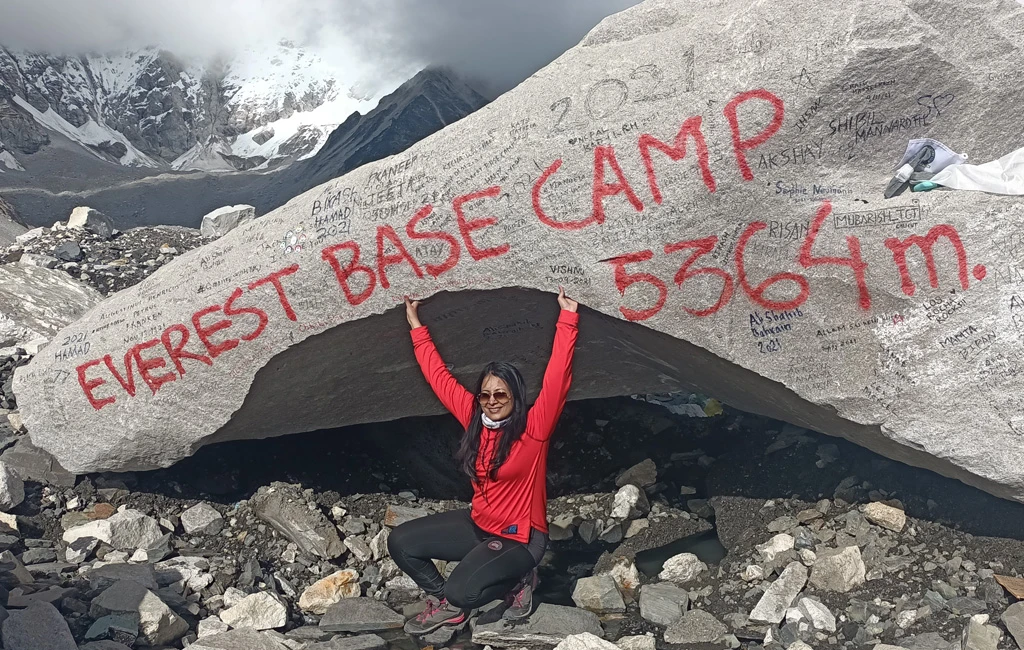
• Continue to Everest Base Camp, standing at 5,364 meters.
• Witness the Khumbu Icefall, a formidable feature for climbers.
• Celebrate the achievement amidst the world’s highest peaks.

Lunch on the way,
Dinner & overnight at a local lodge in Gorakshep

Everest Base Camp Trek | Gorakhshep

Everest Base Camp Trek | Gorakhshep

Everest Base Camp Trek | Gorakhshep


Day 10: Gorakshep /Kalapathar / Pheriche

Trek from Gorakshep to Kalapathar Summit (5,545m– approx. 4-5 hrs
walk) & descend back to Pheriche (4371m – Approx. 07-08 hrs)
Highlights of the Day:
• Embark on a pre-dawn hike to Kala Patthar, reaching 5,545
meters.
• Experience unparalleled sunrise views over Everest and
neighbouring peaks.
• Capture iconic photographs of the Everest massif bathed in
morning light.
• Descend through alpine terrains to Pheriche at 4,371 meters.
• Visit the Himalayan Rescue Association’s aid post, learning about
high-altitude medicine.

Lunch on the way,
Dinner & overnight at local lodge in Pheriche

Day 11: Pheriche / Namche

Trek to Namche Bazaar (3,440 m) from Pheriche – 07 to 08 hours.
Highlights of the Day:
• Retrace steps through rhododendron and juniper forests.
• Cross suspension bridges over the Dudh Kosi River.

• Pass through familiar villages, observing daily Sherpa life.
• Enjoy the warmer climate and increased oxygen levels.
• Return to Namche Bazaar, offering modern amenities and
comforts.

Lunch on the way,
Dinner & Overnight at a local lodge in Namche.

Day 12: Namche / Lukla

Trek from Namche to Lukla (2840 M – approx 7-8 hrs walk)
Highlights of the Day:
• Begin the final leg with a descent through dense forests.
• Reflect on the journey, passing by mani walls and prayer wheels.
• Celebrate the trek’s completion upon arrival in Lukla.
• Share experiences with fellow trekkers in local establishments.
• Prepare for the return flight to Ramechhap.

Lunch on the way,
Dinner & overnight at local lodge in Lukla

Day 13: Fly Lukla – Ramechhap. (Approx. 30 minutes)

Breakfast at the hotel.
Fly back to Manthali, Ramechhap. Drive back to Kathmandu.
Upon arrival, transfer to the hotel.
Free at leisure
Or,
PM: Visit Kathmandu Durbar Square
In this tour, visit the 17th Century Durbar complex
and Hanuman Dhoka, temple of living goddess,
Narayan Mandir and Kasthmandap, a wooden
temple built from a single tree, Shiva Paravati
temple, great Bell and Drum, Seto Bhairav, Kal
Bhairav and Taleju Temple. Visit Kumari Bahal at
16:00 hrs show.

Overnight at Hotel in Kathmandu using 4* property on BB plan

Day 14: Final Departure

Breakfast at hotel

Free time till departure

Transfer to the Airport to connect to the onward journey flight.

Photos of Everest Base Camp Trek

Why Trek to Everest Base Camp: 12 Unforgettable Highlights

  • See the world’s highest peak, Mount Everest, up close.
  • Enjoy stunning views of Himalayan giants like Ama Dablam and Lhotse.
  • Immerse yourself in authentic Sherpa culture and traditions.
  • Visit the historic Tengboche Monastery with spectacular mountain backdrops.
  • Trek through the UNESCO-listed Sagarmatha National Park.
  • Stay in cozy teahouses and enjoy traditional Nepali hospitality.
  • Take on a rewarding high-altitude physical challenge.
  • Benefit from experienced guides and porter support for a safe trek.
  • Option to witness vibrant Sherpa festivals (seasonal).
  • UNESCO heritage sightseeing in Kathmandu

Everest Base Camp Trek Cost 2026/2027: Transparent Package Pricing

Budget Package
$850
Guide + Permits only
⭐ Standard Package
$1,545
Fully inclusive — most popular
Comfort Package
$2,450
Luxury lodges + private porter

Best Time for Everest Base Camp Trek: Month-by-Month Season Guide

Planning your Everest Base Camp Trek? Choosing the right season is one of the most important decisions you will make — affecting visibility, safety, trail conditions, flight reliability, and the overall quality of your experience. Here is the complete month-by-month guide.

Season Months Temp at Namche (Day/Night) Temp at Gorak Shep (Night) Rating
Autumn Oct – Nov 8–15°C / 0 to -5°C -15 to -20°C ⭐⭐⭐⭐⭐ Best
Spring Mar – May 10–18°C / -2 to -8°C -10 to -18°C ⭐⭐⭐⭐ Excellent
Winter Dec – Feb 0–8°C / -10 to -18°C -20 to -30°C ⭐⭐ Experienced only
Monsoon Jun – Sep 12–20°C / 5–10°C -5 to -10°C ⭐ Not recommended

Altitude Sickness on the Everest Base Camp Trek: Symptoms, Prevention & Protocol

Altitude sickness (Acute Mountain Sickness / AMS) is the most significant health risk on the Everest Base Camp Trek — and understanding it before you arrive is the most important preparation you can do. At Everest Base Camp (5,364m), the available oxygen is approximately 50% of what it is at sea level. This physiological reality affects every trekker, regardless of age, fitness level, or prior experience. There is no way to predict who will be affected — Olympic athletes have been forced to turn back while sedentary first-timers have sailed through.

AMS Symptoms: Know What to Look For

  • Mild AMS (common above 3,000m): Headache on waking, fatigue, mild nausea, reduced appetite, dizziness, disrupted sleep. These are normal responses — they usually resolve with a rest day at the same altitude. Do not ascend while experiencing any of these symptoms.
  • Moderate AMS (requires action): Persistent severe headache not responding to paracetamol, vomiting, significant loss of coordination, extreme fatigue. Descend 300–500m immediately and/or take Diamox. Do not ascend further until fully recovered.
  • Severe AMS / HAPE / HACE (medical emergency): Confusion, loss of consciousness, inability to walk straight, gurgling or bubbling chest sounds (HAPE — fluid in the lungs), or persistent vomiting with confusion (HACE — fluid in the brain). Requires immediate descent and emergency helicopter evacuation. These conditions can be fatal within hours if untreated.

Nepal Adventure Trail’s Acclimatisation Protocol

Our 14-day itinerary is structured around the proven mountaineering principle of “climb high, sleep low” — ascending each day to a higher altitude for a day hike before returning to sleep at a lower elevation, allowing the body to adapt safely:

  • Day 4 — Namche Bazaar Rest Day (3,440m): Optional hike to Everest View Hotel (3,962m), sleeping back at Namche. Builds acclimatisation for higher stages without stress.
  • Day 7 — Dingboche Rest Day (4,410m): Optional climb to Nangkartshang Peak (5,083m), sleeping back at Dingboche. Critical preparation for Lobuche and Gorak Shep.
  • Daily SpO₂ monitoring: Guides use a pulse oximeter every morning and evening from Namche onwards. Blood oxygen readings below 75% at altitude trigger mandatory rest day assessment.
  • Emergency equipment: All Nepal Adventure Trail guides carry a portable pulse oximeter, a first aid kit with altitude medications, and are trained in wilderness first response. Gamow bags (portable altitude chambers) are available at key high-altitude points on the route.

Diamox (Acetazolamide) — Should You Take It?

Diamox is the most commonly prescribed altitude prophylaxis. The standard preventive dose is 125mg twice daily, starting 24 hours before ascending above 3,000m. It works by stimulating faster breathing, accelerating acclimatisation. Side effects include increased urination and mild tingling in the hands and feet — generally minor and manageable. Consult your GP or travel medicine clinic before departure — Diamox is contraindicated for those with sulfa drug allergies, kidney conditions, or certain other medical issues. It is available over the counter in Kathmandu pharmacies. Diamox does not substitute for proper acclimatisation scheduling — it assists it.

⚠️ Travel Insurance is Mandatory: Emergency helicopter evacuation from the Everest region costs USD $3,000–$6,000. Nepal Adventure Trail requires all trekkers to carry valid travel insurance explicitly covering helicopter evacuation from altitudes up to 6,000m. Standard credit card travel insurance typically covers only up to 4,000–4,500m and is insufficient. Recommended providers: World Nomads, True Traveller, Battleface.

Everest Base Camp Trek Permits 2026/2027: What You Need & Exact Costs

All foreign trekkers entering the Khumbu/Everest region require two mandatory permits. Nepal Adventure Trail obtains and manages all permits on your behalf as part of every package tier — no queuing at government offices, no risk of processing errors at trail checkpoints.

Permit 2026 Cost (Foreign) Issued At
Sagarmatha National Park Entry Permit NPR 3,000 (~$22 USD) NTB office Kathmandu or Monjo checkpoint
Khumbu Pasang Lhamu Rural Municipality Permit NPR 3,000 (~$22 USD) Lukla or Monjo checkpoint (Trek-Card system)
Total Permit Cost NPR 6,000 (~$44 USD) —

TIMS Card: The Trekkers’ Information Management System (TIMS) card is not required for the standard Khumbu/EBC route. The Khumbu Pasang Lhamu Rural Municipality replaced the regional TIMS requirement with its own permit system in 2018. You do not need a TIMS card for this trek.

Payment: All permit fees at trail checkpoints are cash only (Nepali Rupees). Nepal Adventure Trail handles full permit procurement and payment in advance — trekkers simply present their documents at checkpoints. Bring NPR cash for personal on-trail expenses above Namche where no ATMs exist.

Both permits are fully included in Nepal Adventure Trail’s Standard and Comfort packages. Budget package trekkers receive full permit coordination and assistance.

Map of Everest Base Camp Trek

Everest Base Camp Trek Packing List: Complete Gear Guide 2026/2027

Your pack weight directly affects your comfort, safety, and enjoyment on the Everest Base Camp Trek. Target 8–12 kg in your trekking pack (carried by you) and up to 12 kg in your duffel bag (carried by your porter in Standard and Comfort packages). Everything on this list has been field-tested by Nepal Adventure Trail guides on hundreds of EBC departures. Items marked (available for rent) can be hired from our Kathmandu office or in Thamel before departure.

Preparing for the Everest Base Camp trek? Here’s a comprehensive packing list to help you get ready. Please use this as a base checklist and adjust based on your personal needs and travel season. Warmer layers are especially important for colder months (November to March).

General Gear

  • Four-season (zero-degree) sleeping bag (available for rent)
  • Sleeping bag liner
  • Puffy down jacket (available for rent)
  • Daypack (35–45L) with rain cover

Upper Body

  • Sun hat or cap (Complimentary Nepal Adventure Trail cap provided!)
  • Warm beanie or knitted hat
  • Neck gaiter / Buff / Scarf (Highly recommended)
  • Headlamp with spare batteries
  • UV-protective sunglasses

Torso

  • Moisture-wicking base layers (lightweight or thermal, season-dependent)
  • 2 short-sleeve and 2 long-sleeve trekking shirts (technical fabric preferred)
  • Insulated fleece jacket or pullover
  • Waterproof, windproof shell/jacket

Lower Body

  • Thermal base layers (as per season)
  • 2 pairs of hiking/trekking pants
  • 1 pair of comfortable pants for lodge evenings
  • Waterproof over-pants or shell
  • 1 pair of hiking shorts (optional)

Hands

  • Liner gloves (wool or technical fabric)
  • Outer gloves (waterproof and insulated for winter treks)

Feet

  • Warm trekking socks (wool or synthetic)
  • Liner socks (optional)
  • Waterproof trekking boots (well-broken in)
  • Ice cleats/microspikes (Recommended Nov–Mar for icy sections)
  • Casual shoes for evenings in lodges
  • Gaiters (dust/lightweight or snowproof/heavy, depending on season)

Undergarments & Sleepwear

  • Quick-drying underwear
  • Sports bras (for women)
  • Pajamas or thermal sleepwear

 First Aid & Medications

(Guides carry a first aid kit, but personal supplies are encouraged.)

  • Sunscreen (SPF 30+)
  • Lip balm (SPF-rated)
  • Healing ointment or balm
  • Cough syrup (helpful for “Khumbu Cough”)
  • Mosquito repellent cream (for lower altitudes like Phakding or Kathmandu)

Toiletries & Essentials

  • Reusable water bottle (1L or more)
  • Water purification tablets or a UV sterilizer
  • Hydration bladder (2–3L capacity recommended)
  • Toiletry kit (toothbrush, paste, soap, etc.)
  • Quick-dry towel
  • Pillowcase
  • 2 rolls of toilet paper
  • Small dry bags/waterproof pouches (for passport, electronics, etc.)
  • High-protein snacks (energy bars, trail mix, nuts)
  • Earplugs (for noisy teahouses)
  • Trekking poles (highly recommended)

Travel Documents

  • Passport
  • Extra passport-sized photos
  • Airline tickets (leave a copy at our office in Kathmandu)
  • Optional Items

You can purchase or rent many of these items in Thamel, Kathmandu, before the trek. Our guides are happy to assist.

  • Power bank or extra batteries
  • Camera and mobile phone
  • Playing cards or a book
  • Binoculars
  • Pee bottle/pee funnel (for women)
  • Whistle
  • Thermos (for carrying hot water)
  • Small comb or brush

Frequently Asked Questions — Everest Base Camp Trek

How difficult is the Everest Base Camp Trek?

The Everest Base Camp Trek is graded Moderate to Challenging — demanding enough to require genuine preparation, yet achievable by any reasonably fit person without mountaineering experience. The trail is a non-technical walking route from start to finish: no ropes, crampons, or climbing skills are required at any point.

The challenge is primarily aerobic. At Base Camp (5,364m), you are breathing approximately 50% of the oxygen available at sea level. Combined with long daily walking hours (5–8 hours per active day), back-to-back trek days, and disrupted sleep at altitude, cumulative fatigue builds across the 14 days.

The hardest single day is typically Day 9: the hike from Gorak Shep to Everest Base Camp and back (approximately 9km round trip on rocky moraine at 5,100–5,364m), followed by the pre-dawn ascent of Kala Patthar (5,545m) on Day 10.

Nepal Adventure Trail guides conduct daily pulse oximeter (SpO₂) readings from Namche Bazaar onwards. If your oxygen saturation falls below safe thresholds, an additional acclimatisation day is recommended — your safety always overrides the schedule.

Minimum benchmark: If you can walk comfortably for 5–6 hours on consecutive days carrying a 7–10 kg pack, you are ready.

How much does the Everest Base Camp Trek cost in 2026?

Nepal Adventure Trail offers the 14-day Everest Base Camp Trek at three transparent price tiers for 2026/2027:

  • Budget Package — $850/person: Includes licensed guide, all permits, and Lukla flight coordination. Meals and accommodation on trail are self-funded.
  • Standard Package — $1,545/person (groups of 4–6): Fully inclusive — guide, shared porter (1 per 2 trekkers), all permits, Kathmandu–Lukla return flights, all teahouse accommodation, and three meals per day on trail.
  • Comfort Package — $2,450/person: Adds private porters, upgraded lodges, private vehicle transfers in Kathmandu, priority Lukla flight booking, and optional helicopter return from Gorak Shep.

Group size affects per-person pricing: solo trekkers pay $1,650 (Standard); pairs (2–3 people) pay $1,450; groups of 7–15 pay $1,350 per person.

Additional personal costs to budget: tips ($10–15/day for guide; $7–10/day per porter), hot showers on trail ($2–5 above 4,000m), WiFi cards ($10–20), bottled water, personal snacks, and travel insurance with helicopter evacuation coverage (approximately $80–150 for a 14-day policy).

What permits are required for the Everest Base Camp Trek?

Two permits are mandatory for all foreign trekkers in the Khumbu/Everest region in 2026:

1. Sagarmatha National Park Entry Permit — NPR 3,000 (~$22 USD) per person. This permit grants access to the UNESCO World Heritage Site encompassing the entire trekking route above Monjo. It is checked at the park entrance checkpoint in Monjo (Day 3). Available at the Nepal Tourism Board office in Kathmandu or at the Monjo checkpoint itself.

2. Khumbu Pasang Lhamu Rural Municipality Permit — NPR 3,000 (~$22 USD) per person. The local government entrance fee for the Khumbu region, which funds trail maintenance, waste management, and community services. Issued via the Trek-Card digital system at Lukla or Monjo.

Total permit cost: approximately NPR 6,000 (~$44 USD) per person. All payment at checkpoints is cash only (Nepali Rupees).

TIMS Card: Not required for the standard Khumbu/EBC route — the municipal permit replaced it in 2018.

Nepal Adventure Trail manages all permit procurement and checkpoint presentation on behalf of all trekkers. Both permits are fully included in Standard and Comfort packages.

What is the best time to do the Everest Base Camp Trek?

The two optimal windows are Autumn (October–November) and Spring (March–May). Autumn is widely considered the best overall season for first-time trekkers.

Autumn (October–November): October delivers the finest conditions of the year — stable, dry weather following the monsoon, clear blue skies, excellent mountain visibility, and comfortable daytime temperatures at lower elevations (10–15°C below 4,000m). November remains excellent for visibility but becomes progressively colder, particularly above Dingboche in the second half of the month. Kala Patthar temperatures in late November can reach -20°C with wind chill.

Spring (March–May): Warmer temperatures at lower elevations (up to 18°C at Namche in April), longer daylight hours, and spectacular rhododendron blooms through the lower Khumbu sections. April is peak Everest summit season — the trail to Base Camp buzzes with expedition energy. Clear mornings are reliable; afternoon clouds build but rarely disrupt trekking.

Monsoon (June–September): Daily rain, leeches at lower elevations, frequent Lukla flight cancellations, cloudy mountain views, and landslide risk on lower trail sections. Not recommended.

Winter (December–February): Possible for experienced cold-weather trekkers, but temperatures at Gorak Shep can drop to -30°C with wind chill. Some tea houses above Dingboche close for the season.

Do I need a guide for the Everest Base Camp Trek?

Yes — a licensed guide from a registered Nepali trekking agency is both legally required and strongly advisable for the EBC trek.

Nepal has implemented regulations requiring guide use for trekking regions including the Khumbu, with the goal of improving trekker safety and reducing altitude emergencies and fatalities on high-altitude trails. Nepal Adventure Trail is a fully licensed, government-registered trekking agency with TAAN affiliation — all EBC treks are fully compliant with current regulatory requirements.

Beyond the regulatory aspect, hiring a trained Sherpa guide is genuinely transformative. Our guides manage all permits and checkpoints, handle every tea house booking on the trail, conduct daily health monitoring with pulse oximeters, carry emergency first aid and altitude medications, provide cultural interpretation of monasteries and Sherpa customs, and pace your group safely through weather changes and acclimatisation challenges.

On a high-altitude trek where altitude sickness can escalate from a mild headache to a life-threatening emergency in hours, your guide is your most important safety system. Nepal Adventure Trail’s guides are government-licensed, TAAN-affiliated, and trained in wilderness first response protocols.

Can you see Everest from Everest Base Camp?

Surprisingly, no — Mount Everest’s summit is not visible from Everest Base Camp itself. The ridgelines of Nuptse (7,861m) and Lhotse (8,516m) block the direct line of sight to the Everest summit from Base Camp at 5,364m.

What you see from Base Camp is spectacular in its own right — the thundering Khumbu Icefall directly above, the enormous Khumbu Glacier beneath your feet, Camp I and II visible in the Western Cwm, and the towering walls of surrounding peaks — but the iconic pyramid-shaped Everest summit remains hidden behind Nuptse.

This is precisely why the Kala Patthar ascent (5,545m) on Day 10 is an essential highlight, not an optional extra. Kala Patthar sits on the western ridge of Pumori and provides the most famous unobstructed frontal view of Everest available without technical climbing — the exact angle featured in virtually every Everest documentary and National Geographic photograph.

The pre-dawn start for Kala Patthar (typically 4:30–5:00 AM) is deliberate: the alpenglow on Everest at sunrise begins around 6:00–6:30 AM and lasts approximately 15–20 minutes. Sleeping in to avoid the cold climb is the most commonly reported regret among EBC trekkers.

How do I get to Lukla for the Everest Base Camp Trek?

Lukla (Tenzing-Hillary Airport, 2,860m) is accessible only by small propeller aircraft — there is no road to Lukla. Flight options vary significantly by season.

Peak Season (March–May, October–November): Most Lukla flights operate from Ramechhap Airport (Manthali), approximately 5 hours east of Kathmandu, to reduce Kathmandu airspace congestion. Nepal Adventure Trail arranges the early-morning private vehicle transfer from Kathmandu (typically 3:00–3:30 AM departure to reach Ramechhap for a 6:00–7:00 AM flight). The flight from Ramechhap to Lukla takes approximately 25 minutes.

Off-Peak Season (January–February, June–August, December): Flights operate directly from Kathmandu’s Tribhuvan International Airport, taking approximately 35 minutes. More convenient, but weather-related delays and cancellations are common due to Lukla’s challenging approach.

Lukla flight disruptions are the most common source of itinerary adjustments on any EBC trek. Nepal Adventure Trail monitors weather forecasts from Day 12 of the trek and arranges contingency accommodation when needed. Always allow at least one buffer day before your international departure from Kathmandu.

What is altitude sickness and how do I prevent it?

Acute Mountain Sickness (AMS) is a physiological response to reduced oxygen at high altitude. Above 3,000m, the body struggles to oxygenate blood adequately, causing symptoms including headache (especially on waking), fatigue, nausea, loss of appetite, dizziness, and disrupted sleep. Mild AMS is common and generally resolves with a rest day at the same elevation.

Critical rule: never ascend while experiencing AMS symptoms.

More severe forms — High Altitude Pulmonary Edema (HAPE) and High Altitude Cerebral Edema (HACE) — are life-threatening emergencies requiring immediate descent and evacuation. Symptoms include extreme fatigue, loss of coordination, confusion, persistent vomiting, and in HAPE cases, a gurgling sound from the chest.

Prevention protocol:

  • Follow the 14-day acclimatisation schedule — never skip the Namche and Dingboche rest days
  • Drink 3–4 litres of water daily
  • Avoid alcohol for the first 5–6 days
  • Walk slowly and steadily (“bistari bistari”)
  • Inform your guide immediately of any symptoms
  • Consult your doctor before departure about Diamox (acetazolamide) at 125mg twice daily from 24 hours before ascending above 3,000m

Nepal Adventure Trail guides conduct twice-daily SpO₂ oximeter readings above 3,500m and carry emergency altitude medication on all treks.

How far is it from Lukla to Everest Base Camp?

The one-way trekking distance from Lukla to Everest Base Camp is approximately 65 kilometres, making the full round-trip trail approximately 130 km. This is spread across 14 days including two full acclimatisation rest days (Namche and Dingboche), so active trekking days average 9–18 km.

Key stage distances and approximate walking times:

  • Lukla to Phakding: 8 km, 2–3 hours (mostly downhill)
  • Phakding to Namche Bazaar: 11 km, 5–6 hours (significant 800m ascent — hardest lower-section day)
  • Namche to Tengboche: 10 km, 4–5 hours
  • Tengboche to Dingboche: 13 km, 5–6 hours
  • Dingboche to Lobuche: 12 km, 5–6 hours
  • Lobuche to Gorak Shep to Base Camp: 9 km to Gorak Shep + 4.5 km to Base Camp, 5–7 hours total
  • Gorak Shep to Kala Patthar and back: 4 km round trip, 3–4 hours

Elevation change matters more than raw distance. Total net elevation gain from Lukla (2,860m) to Kala Patthar (5,545m) is approximately 2,685 metres.

What food is available on the Everest Base Camp Trek?

Tea house menus on the EBC route are surprisingly varied, particularly below Namche Bazaar. Standard dishes available at almost every tea house include: dal bhat (Nepal’s national dish — lentil soup, rice, vegetable curry, pickles, with unlimited refills), pasta, fried rice, fried noodles, momos (Tibetan dumplings), tukpa (noodle soup), eggs, pancakes, porridge, toast with jam or peanut butter, and hot drinks including masala tea, ginger lemon tea, butter tea, coffee, and hot chocolate.

Above Namche, menu options simplify and prices increase significantly. A plate of dal bhat that costs NPR 350 in Kathmandu may cost NPR 900–1,200 at Lobuche or Gorak Shep. Most tea houses above Namche are cash-only.

Nepal Adventure Trail’s Standard and Comfort packages include all three daily meals on the trail. Budget package trekkers should budget approximately NPR 3,000–5,000/day ($22–37) for three meals at mid-trail elevations, more above 4,500m.

Vegetarian diets are very well catered for throughout the route. Vegan diets are manageable below Namche but challenging above. Gluten-free options are very limited — inform us before departure for guidance.

Is there WiFi and phone signal on the EBC trek?

WiFi is available at most tea houses from Lukla to Gorak Shep, but speed and reliability decrease significantly with altitude.

  • Lukla and Phakding: Reasonably fast WiFi, often free or $1–2/session. Ncell 4G mobile signal available.
  • Namche Bazaar: Best connectivity point on the trail — fast WiFi adequate for video calls. Ncell 4G available in town.
  • Tengboche to Dingboche: Slower, less reliable WiFi. Mobile signal intermittent.
  • Above Dingboche (Lobuche, Gorak Shep): Most tea houses sell Everest Link WiFi cards — a satellite service costing approximately NPR 1,500–2,500 ($10–18) providing data for messaging and social media. Video streaming is generally not possible. Mobile signal is non-existent above Tengboche.

Practical tips: Download offline maps (Maps.me or Google Maps) before leaving Namche. Charge all devices fully at Namche — charging above 4,000m costs NPR 300–500/device ($2–4). A 20,000–30,000 mAh power bank is strongly recommended.

What is the Khumbu Cough?

The Khumbu Cough — also called “trekker’s cough” or “high-altitude hack” — is an extremely common, persistent dry cough affecting most trekkers in the Everest region above 3,500m. It is caused by the cold, dry, thin air at altitude irritating and inflaming the bronchial lining. It is not contagious and not caused by infection.

Prevention and management:

  • Wear a buff, neck gaiter, or balaclava over your nose and mouth during cold and windy sections — this warms and humidifies inhaled air and is the single most effective prevention
  • Stay well hydrated — dehydration worsens airway irritation
  • Carry throat lozenges and cough sweets from Kathmandu
  • If severe at night, a codeine-based cough suppressant (available in Kathmandu pharmacies) can significantly improve sleep quality

Nepal Adventure Trail guides are experienced in distinguishing the Khumbu Cough from more serious conditions like HAPE, which produces a wet, gurgling cough and requires immediate action. If your cough produces fluid or is accompanied by breathlessness at rest, inform your guide immediately.

The Khumbu Cough typically resolves completely within 2–3 days of descending below 3,000m.

Is travel insurance mandatory for the EBC trek?

Yes — travel insurance is mandatory for all Nepal Adventure Trail trekkers and is a non-negotiable safety requirement for any trekker on the EBC route.

Your insurance policy must explicitly cover:

  • Emergency helicopter evacuation from high altitude — minimum 6,000m coverage
  • Emergency medical treatment for altitude-related illness

A helicopter evacuation from the Everest Base Camp region typically costs USD $3,000–$6,000 per flight. Without insurance, you are personally liable for this cost — and payment is typically required before the helicopter is dispatched.

Important: Standard travel insurance — including most credit card policies — caps rescue coverage at 4,000–4,500m and will NOT cover helicopter evacuations at EBC altitude. You must specifically purchase a policy declaring high-altitude trekking above 5,000m in Nepal.

Recommended providers: World Nomads, True Traveller, SafetyWing, Battleface. Bring a physical copy of your policy certificate — Nepal Adventure Trail records all trekker policy numbers before departure from Kathmandu.

What is the temperature on the Everest Base Camp Trek?

Temperatures vary dramatically by altitude, season, and time of day. Representative ranges for the two main trekking seasons:

Autumn (October–November) — Recommended Season:

  • Lukla/Phakding (2,600–2,860m): 12–18°C daytime, 2–8°C nights
  • Namche Bazaar (3,440m): 8–15°C daytime, 0 to -5°C nights
  • Dingboche (4,410m): 5–10°C daytime, -5 to -12°C nights
  • Lobuche/Gorak Shep (4,940–5,164m): 0–5°C daytime, -15 to -20°C nights
  • Kala Patthar pre-dawn (5,545m): -15 to -25°C with wind chill

Spring (March–May):

  • Generally 3–5°C warmer than autumn at lower elevations (up to 20°C at Namche in April)
  • High-altitude night temperatures similar to autumn: -10 to -18°C at Gorak Shep

Layering strategy: Mornings and evenings at altitude require your full insulation system — down jacket, fleece, thermal base layer. Active trekking in afternoon sun at lower elevations is often comfortable in a single mid-layer. Wind chill at Kala Patthar is severe regardless of season — windproof outer layer and warm gloves/balaclava are non-negotiable.

Are there ATMs on the Everest Base Camp trek route?

Namche Bazaar (3,440m) is the only place on the trekking route with ATMs — several machines from NIC Asia, Everest Bank, and NMB banks are located in town. However, ATM reliability in Namche is inconsistent during peak season: machines frequently run out of cash, and network connectivity can fail. Withdrawal limits are typically NPR 35,000–50,000 (~$260–370 USD) per transaction.

Above Namche, there are no ATMs anywhere on the trail to Base Camp. All transactions above Namche are cash-only — Nepali Rupees preferred, USD accepted at most tea houses for larger bills.

Nepal Adventure Trail strongly recommends bringing sufficient NPR cash from Kathmandu before departure. Budget approximately NPR 3,000–6,000/day above Namche for personal expenses (hot showers, WiFi, snacks, drinks), plus your guide and porter tip budget for the end of the trek.

Currency exchange in Kathmandu is straightforward — Thamel has dozens of exchange bureaus open 7 days/week accepting USD, EUR, GBP, AUD, and most major currencies at competitive rates. Carry small-denomination NPR notes above Namche — tea houses rarely have change for 1,000-rupee notes.

Can I customise the Everest Base Camp Trek itinerary?

Yes — Nepal Adventure Trail offers fully customisable EBC trek itineraries for private groups and individual bookings. The most requested customisations include:

  • Extended itineraries (16–18 days): A more relaxed acclimatisation schedule with additional rest days at Tengboche or Pheriche — particularly recommended for trekkers who have experienced AMS on previous high-altitude trips.
  • EBC + Island Peak Climbing (20–22 days): Combine the EBC trek with a guided summit attempt of Island Peak (6,189m) — accessible to fit trekkers with no prior climbing experience. Nepal Adventure Trail provides full climbing support and equipment.
  • EBC + Gokyo Lakes (18–20 days): The classic Three Passes Trek combining Everest Base Camp with the turquoise Gokyo Lakes, crossing Kongma La (5,535m), Cho La (5,420m), and Renjo La (5,360m).
  • Helicopter return from Gorak Shep: Skip the 3-day descent walk and fly directly from Gorak Shep to Kathmandu for a breathtaking aerial perspective of the Khumbu. Available as an add-on to any package.

Custom itineraries are priced individually based on route, duration, group size, and service tier. Contact Nepal Adventure Trail for a personalised quote with a 24-hour turnaround.

What should I know about Lukla flights and delays?

Lukla flight disruptions are the most common logistical challenge on the EBC trek. Tenzing-Hillary Airport operates only in Visual Meteorological Conditions (VMC) — any cloud, fog, or poor visibility at Lukla grounds all flights. Delays of 1–3 days are not uncommon during shoulder seasons.

During peak season (March–May, October–November), most Lukla flights operate from Ramechhap Airport (Manthali), approximately 5 hours east of Kathmandu. Nepal Adventure Trail handles all Ramechhap logistics including early-morning vehicle pick-up from your hotel (typically 3:00–3:30 AM) and flight check-in.

Nepal Adventure Trail monitors Lukla weather forecasts from Day 12 of each trek and makes contingency arrangements proactively — additional Kathmandu hotel accommodation is organised when delays are anticipated. If ground delays extend beyond 2–3 days, helicopter charter from Lukla to Kathmandu can be arranged at additional cost (approximately $350–500/person).

Our strong recommendation: Do not book your international departure flight from Kathmandu on the same day as your scheduled Lukla landing. Allow a minimum of one full buffer day in Kathmandu after your expected return from the trek.

What is included in Nepal Adventure Trail's Standard EBC package?

Nepal Adventure Trail’s Standard Everest Base Camp Trek Package ($1,545/person for groups of 4–6) includes:

✓ Included:

  • Licensed English-speaking Sherpa guide (throughout all 14 days)
  • One porter shared between two trekkers (carries up to 12 kg per trekker)
  • Sagarmatha National Park Entry Permit
  • Khumbu Pasang Lhamu Rural Municipality Permit
  • Kathmandu–Lukla return flights (via Ramechhap in peak season)
  • All teahouse accommodation on trail (twin-sharing standard rooms)
  • Three meals daily on trail (breakfast, lunch, dinner)
  • Airport pick-up and drop-off in Kathmandu
  • First aid kit and pulse oximeter
  • Nepal Adventure Trail branded trekking cap (complimentary)
  • All government taxes and agency service fees

✗ Not Included: Personal travel insurance (mandatory), international flights, Kathmandu hotel, alcoholic beverages, hot showers on trail ($2–5), WiFi cards ($10–18), bottled water, personal snacks, guide and porter tips, and personal medical costs.

How many trekkers go to Everest Base Camp each year?

Approximately 40,000–50,000 trekkers reach Everest Base Camp each year, with roughly 70–80% going during the two peak seasons: Autumn (October–November) and Spring (March–May). October alone typically sees 10,000+ trekkers on the EBC route, making Namche Bazaar and the trail to Tengboche extremely busy.

Despite the numbers, the trail never feels overcrowded — the Khumbu is an enormous area and above Tengboche the trekking population thins considerably. Nepal Adventure Trail groups make early starts (6:00–7:00 AM from tea houses) to move ahead of the day’s main trekking population, enjoying quieter sections and better photo opportunities.

The Base Camp plateau can feel busy on clear autumn days when multiple groups converge. Arriving in the early afternoon rather than peak midday timing (11 AM–1 PM) gives a more reflective experience. Spring Base Camp has the added atmosphere of dozens of active Everest summit expedition camps with brightly coloured tents spread across the glacier.

For genuine solitude, consider the Gokyo Lakes route (spectacular scenery with far fewer trekkers) or a winter trek — though the latter requires serious cold-weather preparation and gear.

How do I book the Everest Base Camp Trek with Nepal Adventure Trail?

Booking with Nepal Adventure Trail is straightforward and takes less than 10 minutes.

Step 1: Visit our inquiry page and submit your preferred departure date, group size, and package tier (Budget / Standard / Comfort). Our team responds within 24 hours with availability confirmation, a detailed pre-trek information pack, and a proforma invoice.

Step 2: A deposit of 20% of the total package cost confirms your booking and triggers permit procurement, Lukla flight reservation, and all pre-trek logistics. The balance is due 30 days before departure.

Payment options: Bank transfer (no fee), PayPal, and major credit/debit cards (3% processing fee applies — bank transfer is feeless and preferred).

Once your deposit is confirmed, you receive a comprehensive pre-trek documentation pack covering packing guidance, altitude preparation, Kathmandu logistics, emergency contact protocols, and your guide’s contact details. Nepal Adventure Trail is available via WhatsApp, email, and phone 7 days a week before, during, and after your trek.

Private departures for solo trekkers, couples, or exclusive group bookings are available on any date with a minimum of 2 weeks’ advance notice.

Get Latest Updates By Subscribing To Our Newsletter

From$1,545
Book Now