
- Nepal
- Tibet
- Bhutan
- Company
- Plan Your Trip
Nepal runs on more festivals than days on the calendar. Between the Hindu lunar calendar, the Buddhist calendar, and dozens of ethnic traditions, festivals in Nepal happen almost every month of the year, from the sacred thread renewal of Janai Purnima to the fifteen-day homecoming of Dashain. This guide covers every major festival in Nepal for 2026, when it falls, what it means, and how to plan a trip around it.
Festival dates below follow Nepal’s lunar Bikram Sambat calendar and are confirmed for 2026. Monastery festivals like Mani Rimdu and Tiji are set a few months in advance by local lamas, so we update those as soon as they are announced.
Here is a quick-reference table of Nepal’s major festivals for 2026, sorted by month.
| Festival | 2026 date | BS date | Region / community |
|---|---|---|---|
| Maghe Sankranti | January 14 | Magh 1, 2082 | Nationwide |
| Maha Shivaratri | February 15 | Falgun 3, 2082 | Nationwide, Pashupatinath |
| Losar (Tibetan / Sherpa / Tamang New Year) | February (date varies by community) | Sonam Losar (Tamang): ~Magh 6, 2082; Gyalpo Losar (Sherpa/Tibetan): ~Falgun 5, 2082 | Sherpa, Tamang, Bhutia communities |
| Holi | March 2 (hills), March 3 (Terai) | Falgun 18 (hills), Falgun 19 (Terai), 2082 | Nationwide |
| Buddha Jayanti | May 12 | Baisakh 18, 2083 | Lumbini, Kathmandu Valley |
| Tiji Festival | May 14 to May 16 | Baishakh 31 to Jestha 2, 2083 B.S. | Lo Manthang, Upper Mustang |
| Janai Purnima | August 28 | Bhadra 12, 2083 | Nationwide, Gosaikunda pilgrimage |
| Gai Jatra | August 29 | Bhadra 13, 2083 | Kathmandu Valley, Newar community |
| Teej | September 14 | Bhadra 29, 2083 | Nationwide, Pashupatinath |
| Indra Jatra | Mid-September | Ashoj 7 to 14, 2083 (main day Ashoj 9) | Kathmandu Durbar Square |
| Dashain | October 6 to 20 (Vijayadashami on Oct 20) | Ashoj 25 to Kartik 3, 2083 | Nationwide |
| Tihar | November 6 to 10 (Laxmi Puja on Nov 8) | Kartik 20 to 24, 2083 | Nationwide |
| Mani Rimdu | October / November (confirmed annually) | Not fixed yet (Tibetan Buddhist calendar) | Tengboche Monastery, Everest region |
Nepal’s festivals come from three overlapping traditions: Hindu festivals tied to the lunar calendar, Buddhist festivals rooted in the Tibetan calendar, and Newar and ethnic festivals unique to the Kathmandu Valley and the hills. Here is a closer look at the ones that matter most for travelers.
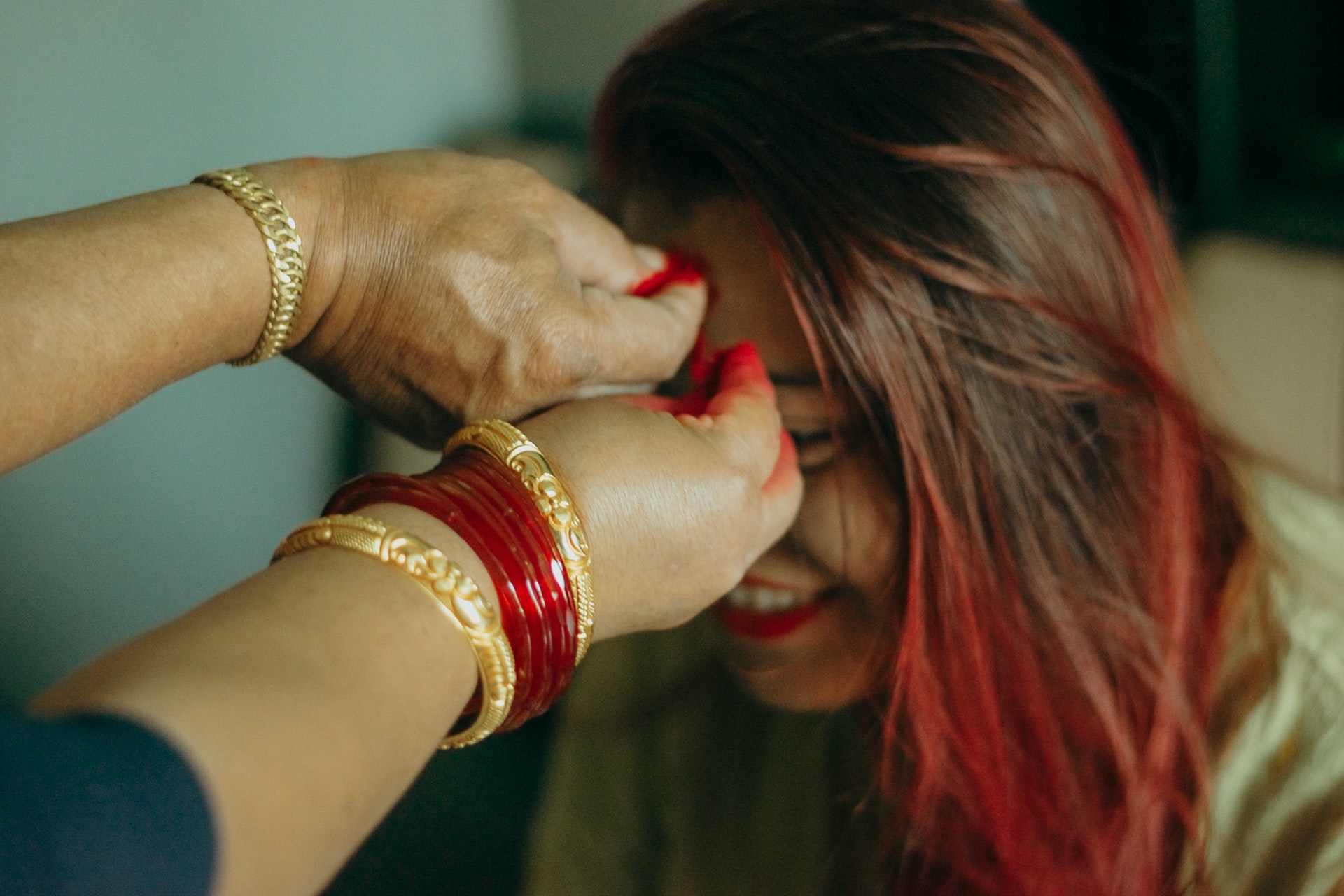
October 6 to 20, 2026. Nepal’s longest and biggest festival, honoring the goddess Durga’s victory over evil. Families reunite, elders give tika and blessings, and the whole country slows down for two weeks. Read our full Dashain Guide
-1624865574.jpg)
November 6 to 10, 2026. The festival of lights. Homes are lit with oil lamps, crows, dogs, and cows are honored, and sisters bless their brothers on the final day, Bhai Tika.
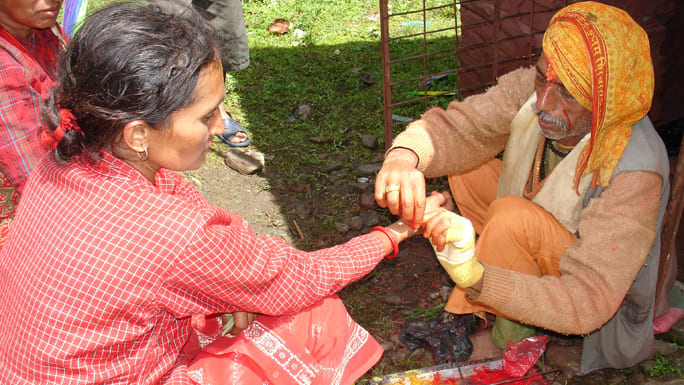
August 28, 2026. The sacred thread festival. Hindu men renew their Janai thread, and thousands of pilgrims trek to Gosaikunda Lake for a holy bath. Read our full Janai Purnima guide.

March 2 to 3, 2026. The festival of colors. Streets across Kathmandu, Pokhara, and Bhaktapur turn into color fights, water balloons, and music from morning to afternoon.
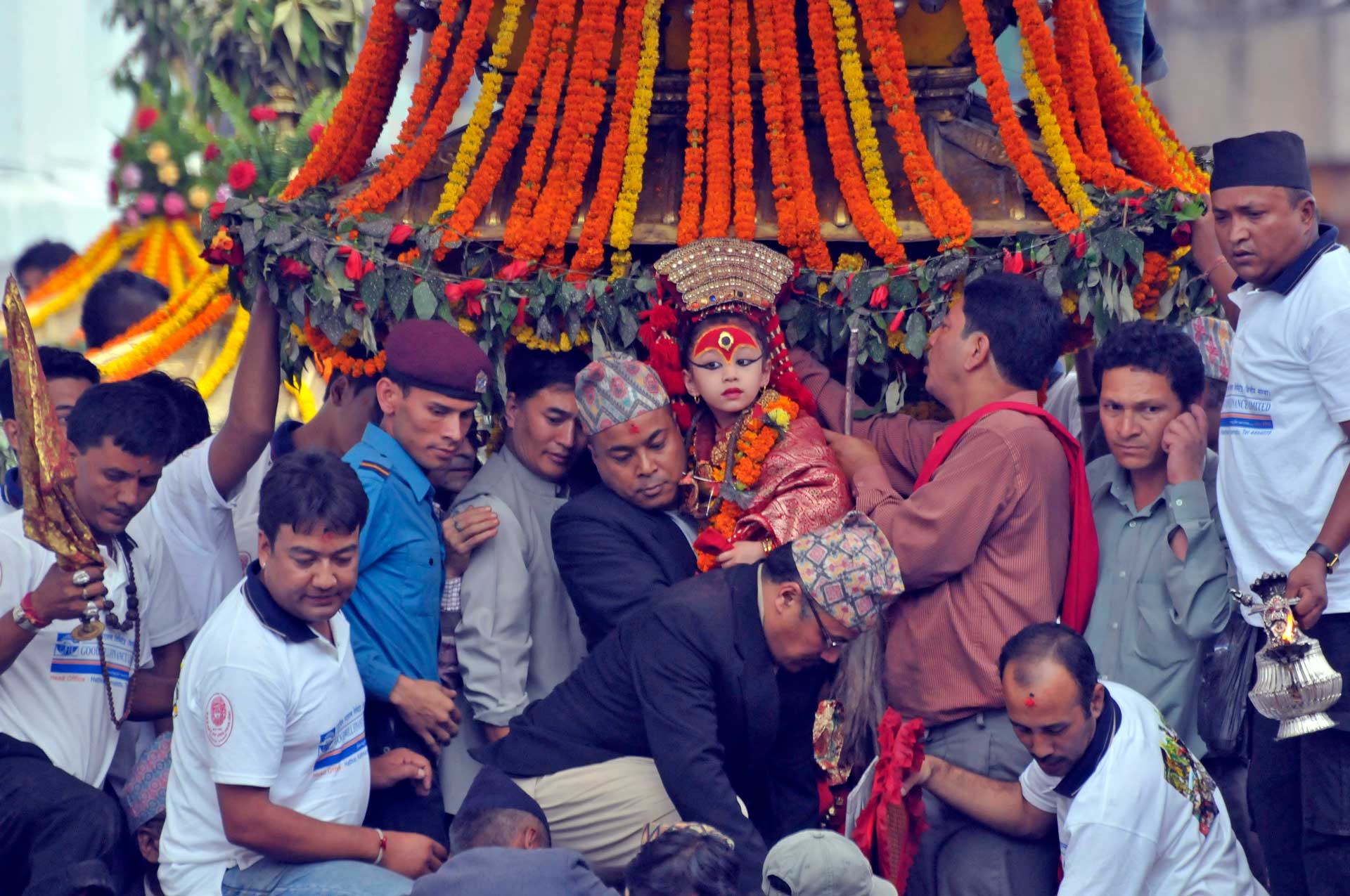
Mid-September 2026. An eight-day Newar festival in Kathmandu Durbar Square, featuring the Kumari’s chariot procession, masked Lakhey dances, and the god Indra honored as king of heaven.
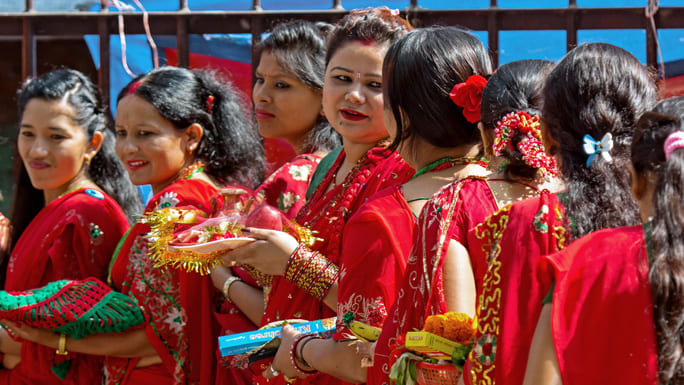
September 14, 2026. The festival of women. Hindu women fast, dress in red, and gather at Pashupatinath Temple to pray for marital happiness and family wellbeing.

May 12, 2026. Marks the birth of Lord Buddha. Boudhanath Stupa and Swayambhunath in Kathmandu, and the Maya Devi Temple in Lumbini, fill with monks, pilgrims, and butter lamps.
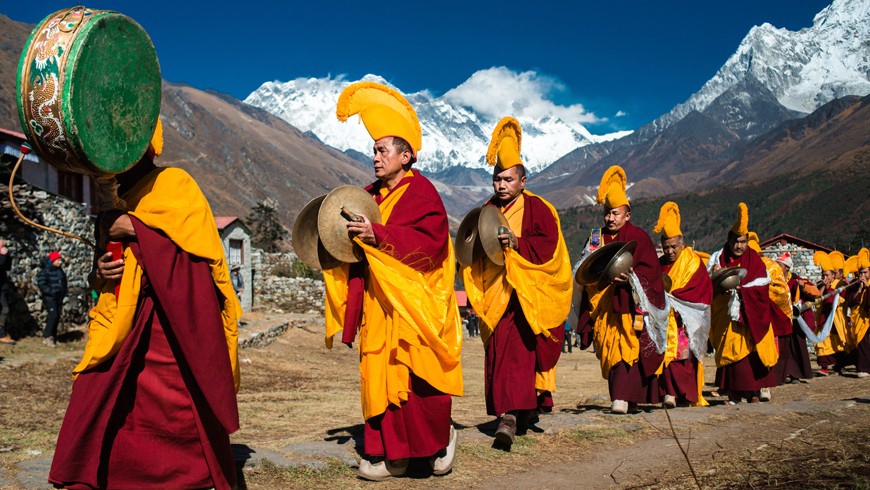
October or November 2026 (confirmed annually). A 19-day Sherpa Buddhist festival at Tengboche Monastery, culminating in masked Cham dances that depict Buddhism’s triumph over the old Bon spirits.
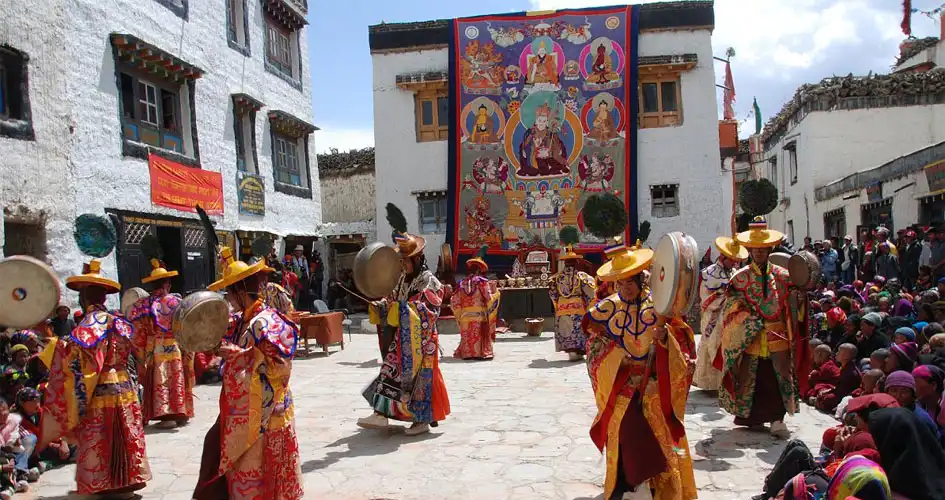
Mid-May 2026 (confirmed annually). A three-day festival in the walled city of Lo Manthang, Upper Mustang, reenacting the legend of a deity defeating a demon to save the kingdom. Read our full Tiji Guide
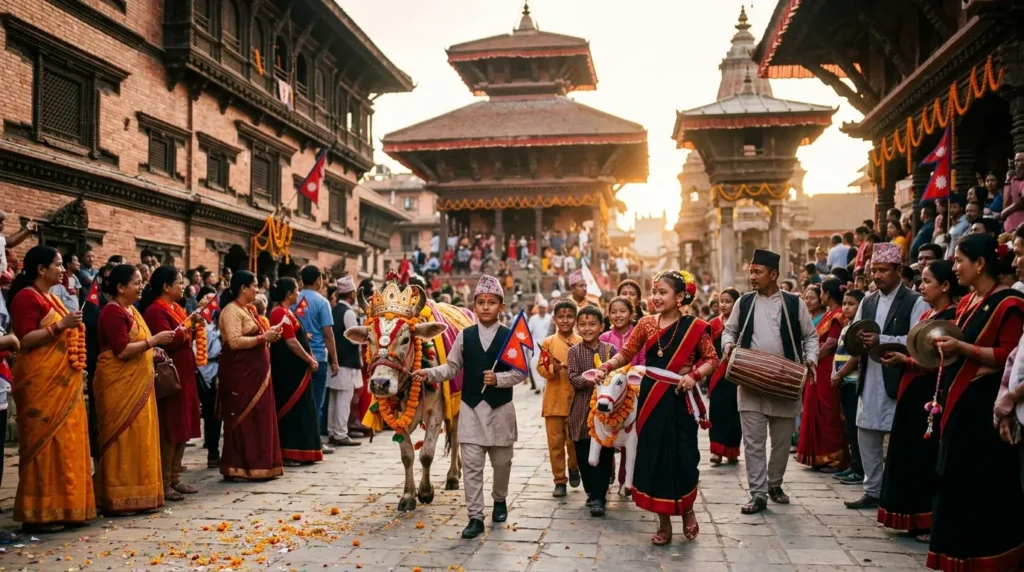
August 29, 2026. The cow festival, held the day after Janai Purnima. Families who lost a loved one during the year join a street procession, turning grief into shared laughter and satire.
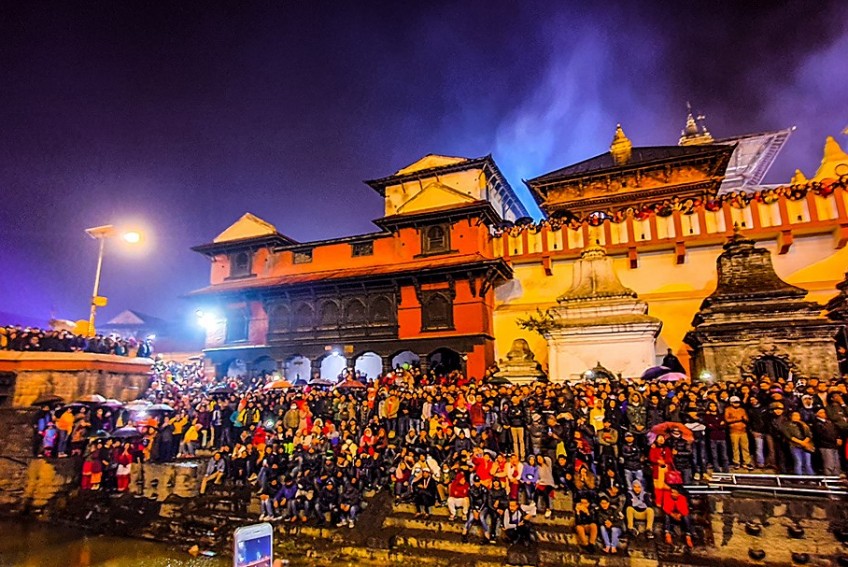
February 15, 2026. The great night of Shiva. Pashupatinath Temple fills with sadhus, bonfires, and devotees observing an all-night fast and vigil.

January 14, 2026. Marks the sun’s move into the northern hemisphere. People take holy river dips and share ghee, chaku, and sesame sweets. Celebrated as Maghi, the Tharu New Year, in the Terai. Read our full Maghe Sankranti Guide
Dashain is the longest and most important festival in the Nepali calendar, running for fifteen days and closing schools, offices, and most businesses outside tourist areas. In 2026, Dashain runs from around October 6 through Vijayadashami, the main tika day, on October 20.
The festival celebrates the goddess Durga’s victory over the demon Mahishasura, symbolizing the triumph of good over evil. Families travel home from across Nepal and abroad to reunite. On the main days, elders place a tika of rice, yogurt, and vermillion on the foreheads of younger family members along with a blessing, and Kathmandu’s skies fill with kites. If you are trekking during Dashain, expect quieter trails but also quieter teahouses, since many staff head home to celebrate with family.
Tihar follows Dashain by about three weeks and is Nepal’s second-biggest festival. In 2026, Tihar runs from roughly November 6 to 10, with Laxmi Puja, the main lamp-lighting night, falling on November 8.
Each of the five days honors a different figure: crows as messengers, dogs for loyalty, cows for prosperity, and finally Bhai Tika, when sisters bless their brothers with a seven-color tika and a garland of Makhamali flowers. At night, homes and streets are lined with oil lamps, candles, and fairy lights, making it one of the most photogenic festivals in Nepal.
Janai Purnima falls on the full moon of Shrawan, August 28, 2026. Hindu men of the Brahmin and Chhetri communities bathe in a holy river and replace their sacred thread, the Janai, in an act of purification and spiritual renewal. The same day is also Raksha Bandhan, when sisters tie a protective Rakhi thread on their brothers’ wrists.
The festival’s most dramatic expression happens far from the cities. Over 30,000 pilgrims trek to Gosaikunda Lake at 4,380 meters in the Langtang region for a holy bath believed to wash away sin. For a full breakdown of the rituals, mythology, and how to join the pilgrimage trek, see our complete Janai Purnima guide.
Holi falls on March 2, 2026 in the hills, including Kathmandu and Pokhara, and a day later, March 3, in the Terai. Streets, squares, and rooftops turn into color fights with powder and water balloons, and the celebration is open to everyone regardless of religion. Wear clothes you do not mind ruining, and expect the biggest crowds at Kathmandu Durbar Square, Patan Durbar Square, and Pokhara Lakeside.
Indra Jatra, also called Yenya, is an eight-day Newar festival centered on Kathmandu Durbar Square, falling in mid-September 2026. The festival honors Indra, the god of rain, and features the chariot procession of the Kumari, Kathmandu’s living goddess, alongside masked Lakhey dances and the display of Seto Bhairab.
Haritalika Teej falls on September 14, 2026. Married and unmarried Hindu women observe a fast, dress in red saris, and gather at Pashupatinath Temple and other Shiva temples to sing, dance, and pray for marital happiness and the wellbeing of their families. It is one of the most visually striking festivals in Nepal for travelers interested in cultural photography.
Nepal’s Buddhist festivals sit at the intersection of religion, mountain culture, and trekking. Mani Rimdu is a 19-day Sherpa festival held at Tengboche Monastery in the Everest region, culminating in a few days of masked Cham dances performed by monks. The exact 2026 dates are confirmed by the monastery closer to the event, typically landing in October or November.
The Tiji Festival takes place in Lo Manthang, the walled capital of Upper Mustang, over three days, usually in mid-May. Masked dances reenact the legend of Dorje Jono defeating a demon to save the kingdom, performed against the backdrop of Mustang’s desert-like cliffs and ancient monasteries.
Nepal Adventure Trail is a government-licensed trekking and tour company based in Kathmandu, operating since 2005. We plan festival trips and treks around Nepal’s lunar calendar, so you land exactly when a festival is happening, not a week too early or too late.
Dashain is Nepal’s biggest festival, running fifteen days and closing most schools and offices nationwide. Tihar, the festival of lights, follows about three weeks later as the second-biggest.
Nepal celebrates dozens of festivals each year across Hindu, Buddhist, Newar, and ethnic community calendars. Major national festivals include Dashain, Tihar, Holi, Janai Purnima, Teej, Indra Jatra, and Buddha Jayanti.
Most Nepali festivals follow the lunar Bikram Sambat calendar rather than the fixed Gregorian calendar, so their Gregorian dates shift by roughly 10 to 20 days each year.
Holi, Indra Jatra, and Janai Purnima are especially welcoming to foreign travelers, with open public celebrations at accessible sites like Kathmandu Durbar Square, Pashupatinath, and Gosaikunda.
Yes, and many trekkers time their trip specifically to combine trekking with Dashain or Tihar, since both fall during Nepal’s clearest autumn trekking weather.
Whichever festival draws you to Nepal, timing your trip right makes the difference between watching from the edge of a crowd and actually understanding what you are seeing. Reach out and we will build your trip around the dates that matter to you.