
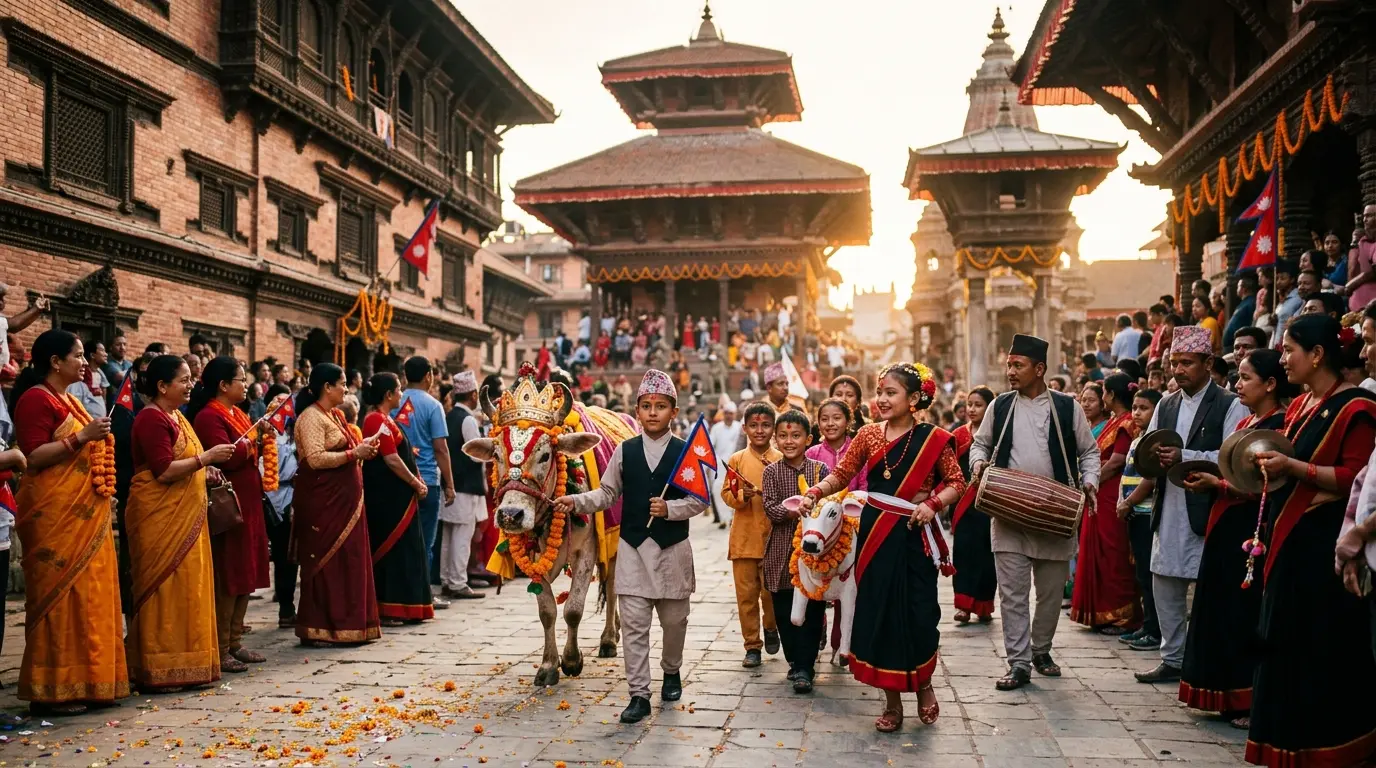
Gai Jatra is one of Nepal’s most emotionally powerful festivals — a day when grief and laughter walk side by side through the streets of the Kathmandu Valley. Celebrated mainly by the Newar community, Gai Jatra (literally the “Cow Procession” or “Cow Pilgrimage”) honors family members who have passed away in the previous year, while also turning the entire city into a stage for satire, comedy, and social commentary. In 2026, Gai Jatra falls on Saturday, 29 August, and if you’re planning a trip to Kathmandu, Patan, or Bhaktapur around this time, this guide covers everything you need to know — from its royal origins to how you can respectfully experience it as a visitor.

📲 Planning to witness Gai Jatra in person? Chat with our local travel experts on WhatsApp for a custom Kathmandu Valley festival itinerary. 💬 Chat with us on WhatsApp
Table of Contents
- What Is Gai Jatra? (Meaning & Quick Facts)
- Gai Jatra 2026 Date & Nepali Calendar Significance
- The History and Origin of Gai Jatra
- Why Is Gai Jatra Celebrated?
- How Is Gai Jatra Celebrated? Rituals & Traditions
- Where to Experience Gai Jatra in the Kathmandu Valley
- Gai Jatra vs Indra Jatra vs Janai Purnima
- Traveler Tips: How to Experience Gai Jatra Respectfully
- Frequently Asked Questions
What Is Gai Jatra?
In Nepali, Gai means “cow” and Jatra means “festival” or “procession” — together, Gai Jatra translates to the “Festival of Cows.” In Nepal Bhasa (the Newar language), it is known as Sa Paru, where “Sa” means cow and “Paru” refers to Pratipada Tithi, the first day of the lunar fortnight. At its core, Gai Jatra is a memorial festival rooted in Newar culture and tradition: families who have lost a loved one during the past year lead a cow — or a young boy dressed as a cow — through the streets, believing the animal will guide the departed soul safely into the afterlife.
| Quick Fact | Details |
|---|---|
| Also Known As | Sa Paru (Nepal Bhasa), Festival of Cows |
| 2026 Date | Saturday, 29 August 2026 (Bhadra Krishna Pratipada) |
| Celebrated By | Primarily the Newar community |
| Main Locations | Kathmandu, Patan (Lalitpur), Bhaktapur |
| Duration | 1 day (Kathmandu & Patan); 8 days (Bhaktapur) |
| Historical Origin | 17th century, reign of King Pratap Malla |
| Type | Public holiday, religious & cultural festival |
Gai Jatra 2026 Date & Nepali Calendar Significance
Gai Jatra does not have a fixed date on the Gregorian calendar because it follows the Nepali lunar calendar. It always falls on Bhadra Krishna Pratipada — the first day of the waning moon fortnight in the month of Bhadra — which typically lands in late August or early September. In 2026, Gai Jatra falls on Saturday, 29 August, one day after Janai Purnima (the sacred thread festival), with which it shares a close ritual connection. Schools, government offices, and most businesses in the Kathmandu Valley remain closed for the public holiday.
Because the date shifts every year with the lunar calendar, always double-check the current year’s Gai Jatra date before booking travel to Nepal.
The History and Origin of Gai Jatra
The Legend of King Pratap Malla
The most widely told origin story dates back to the 17th century, during the reign of the Malla king Pratap Malla. After the king and queen lost their young son, the queen fell into deep, unrelenting grief. Determined to console her, the king declared that anyone who could make her smile again would be richly rewarded. Citizens responded by organizing a lighthearted procession of cows, comedians, and costumed performers through the streets — and when the queen finally smiled at the spectacle, the tradition was born. From that year onward, every family that had lost a relative was encouraged to join the procession, transforming private mourning into shared, public healing.
Ancient Hindu Roots: Yamaraj and Brishotsarga
Beyond the royal legend, Gai Jatra is also rooted in older Hindu beliefs tied to Yamaraj, the god of death. According to the Garuda Purana, the soul of a deceased person must cross a mythical river to reach the afterlife, and the cow — considered sacred in Hindu tradition — is believed to help guide that crossing. The festival is also seen as an accessible alternative to Brishotsarga, an expensive ritual involving the release of an ox or bull to secure the deceased’s peace. Gai Jatra allows families of all economic backgrounds to honor their loved ones without financial strain.
Why Is Gai Jatra Celebrated?
Honoring the Dead
The primary purpose of Gai Jatra is remembrance. Families who lost someone in the past year walk in the procession as a public act of tribute, and the community gathers around them in solidarity rather than isolation.
Community Healing Through Humor
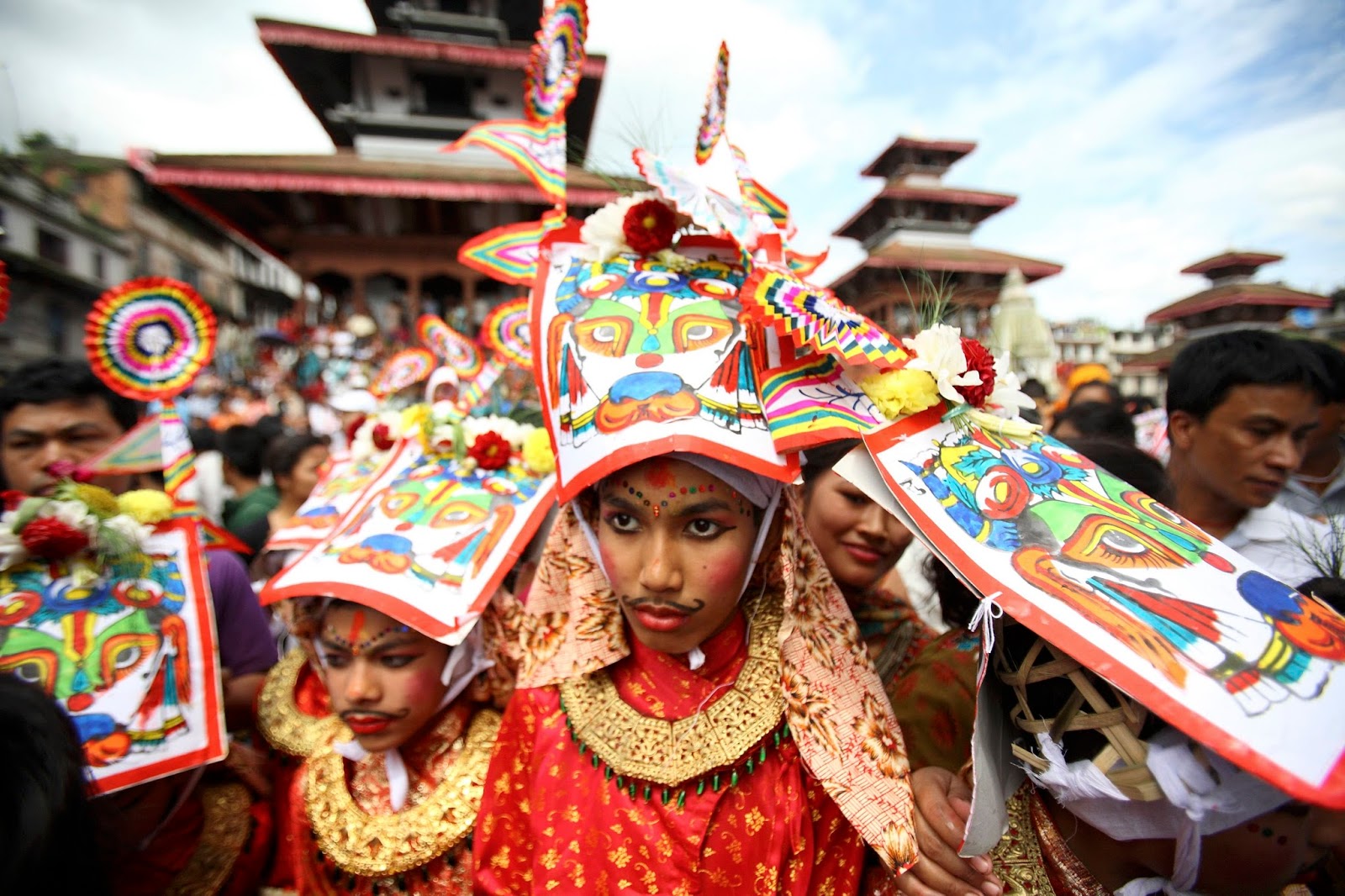
What makes Gai Jatra unique among the world’s mourning traditions is its use of comedy. Streets fill with satirists dressed as politicians, priests, and public figures, poking fun at the year’s events. Newspapers print special cartoon editions, and television and radio air satirical specials. The underlying philosophy: laughter and community support can heal grief just as effectively as solemn ritual.
The Cow as a Spiritual Guide
Cows hold a sacred place in Hindu culture, and during Gai Jatra, they symbolically escort the souls of the departed toward the afterlife. This spiritual symbolism is what gives the procession its emotional weight, even amid the surrounding festivity.
How Is Gai Jatra Celebrated? Rituals & Traditions
The Cow Procession
Grieving families lead a cow — or a child dressed in cow attire, complete with horns and a tail — through the neighborhood streets and toward the historic squares of the city. Onlookers offer sweets, fruit, and small gifts to the participants as blessings for the departed soul’s journey.
Satire, Comedy, and Political Cartoons
Gai Jatra has evolved into Nepal’s unofficial “festival of free speech.” Comedians, street performers, and ordinary citizens dress up in outrageous costumes to mock politicians and current events without fear of censorship. Newspapers publish special satirical Gai Jatra editions that are eagerly anticipated every year.
Gai Jatra and the LGBTIQ+ Community in Nepal
In recent decades, Gai Jatra has also become a significant day for Nepal’s LGBTIQ+ community. The festival’s tradition of costume, disguise, and free expression has made it a natural platform for pride parades and visibility marches, with organizations such as the Blue Diamond Society — which has led the Gai Jatra Third Gender March since 2010 — using the day to celebrate identity and push for social inclusion.

Where to Experience Gai Jatra in the Kathmandu Valley
Kathmandu
The capital hosts the largest and liveliest Gai Jatra celebration, centered around Kathmandu Durbar Square. Expect large crowds, music, cow processions, and satirical street theatre throughout the day.
Patan (Lalitpur)
Just across the river, Patan holds its own vibrant version of the procession through its Durbar Square, with a slightly more local, community-centered atmosphere.
Bhaktapur — The Eight-Day Celebration
Unlike Kathmandu and Patan, Bhaktapur extends Gai Jatra across eight days, featuring chariot processions, folk dances, and nightly cultural performances in its lit-up courtyards. Visiting Bhaktapur in the evening offers a quieter, more traditional experience of the festival.
Gai Jatra vs Indra Jatra vs Janai Purnima
Visitors often confuse Gai Jatra with two other Kathmandu Valley festivals that fall around the same season. Here’s a quick comparison:
| Festival | Focus | Typical Timing |
|---|---|---|
| Janai Purnima | Changing sacred threads; precedes Gai Jatra | Full moon of Bhadra (day before Gai Jatra) |
| Gai Jatra | Honoring the deceased through cow processions and satire | First day of Bhadra’s dark fortnight |
| Indra Jatra | Honoring the recently deceased and the god Indra; 8-day citywide festival | September, around the same season |
Traveler Tips: How to Experience Gai Jatra Respectfully
- Arrive early at Durbar Square — the main procession usually begins in the morning.
- Be mindful while photographing grieving families — always ask before taking close-up portraits.
- Dress modestly and comfortably — you’ll be standing and walking for hours in crowds.
- Try Bhaktapur in the evening for a calmer, more traditional cultural experience.
- Carry small cash for street food and to offer sweets to procession participants, a common local gesture.
- Hire a local guide if you want cultural context — many satirical elements are in Nepali and easy to miss as an outsider.
- Check official listings on the Nepal Tourism Board’s Gai Jatra page for any last-minute schedule updates, and see our best time to visit Nepal guide if you’re planning a longer trip around the festival.
🐄 Want a guided Gai Jatra experience in Kathmandu, Patan, or Bhaktapur? Message us on WhatsApp and we’ll build a custom Nepal travel itinerary around your festival day plan. 💬 Message Us on WhatsApp
Frequently Asked Questions About Gai Jatra
What does Gai Jatra mean?
Gai Jatra means “Cow Festival” or “Cow Procession” in Nepali — “Gai” means cow, and “Jatra” means festival or pilgrimage procession.
When is Gai Jatra 2026?
Gai Jatra 2026 falls on Saturday, 29 August 2026, corresponding to the first day of the dark fortnight of Bhadra in the Nepali lunar calendar.
Why do people dress as cows during Gai Jatra?
When a real cow is not available, families dress a young boy in a cow costume as a substitute for the procession, since the core ritual is about leading a “cow” to guide the departed soul.
Is Gai Jatra celebrated only in Kathmandu?
Gai Jatra is celebrated across the Kathmandu Valley, most notably in Kathmandu, Patan, and Bhaktapur, mainly by the Newar community, though awareness of it extends nationwide.
How is Gai Jatra connected to the LGBTIQ+ community?
The festival’s spirit of costume and free expression has made it a platform for LGBTIQ+ visibility events and pride marches in recent years.
What is the difference between Gai Jatra and Indra Jatra?
Gai Jatra is a one-to-eight-day festival honoring the recently deceased through cow processions and satire, while Indra Jatra is a larger, eight-day citywide festival honoring both the god Indra and the recently departed, typically celebrated a few weeks later.
Conclusion
Gai Jatra beautifully captures a truth that few festivals dare to express: grief and joy are not opposites, they can coexist. Through its cow processions, biting satire, and community-wide embrace of loss, Gai Jatra remains one of Nepal’s most moving cultural experiences — equal parts memorial, carnival, and act of collective resilience. Whether you’re a traveler planning your first trip to the Kathmandu Valley or simply curious about Nepal’s rich festival calendar, understanding Gai Jatra offers a rare window into how a culture turns sorrow into shared strength.
✅ Ready to plan your Nepal festival trip around Gai Jatra 2026? Our local experts are one message away. 💬 Start a WhatsApp Chat Now