
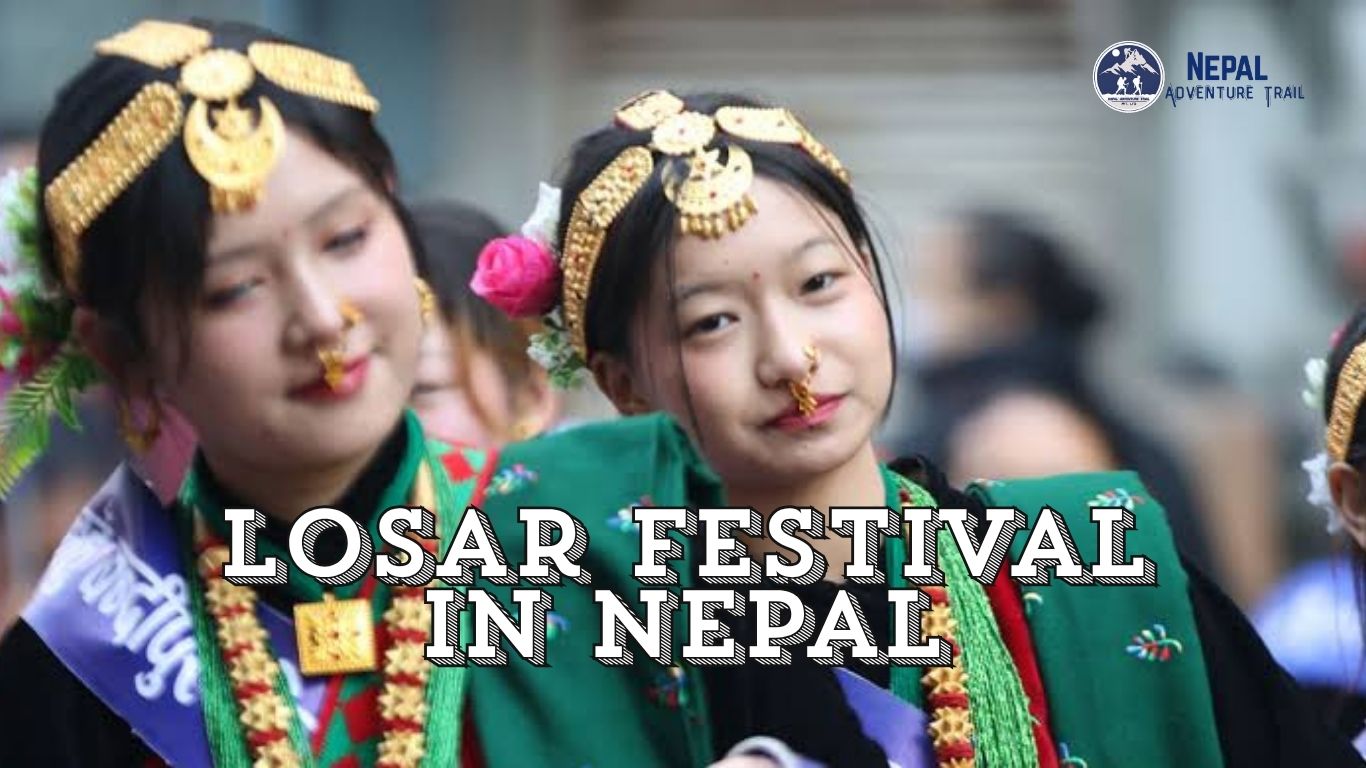
A monk sweeps ash out of a doorway in Boudhanath, one long stroke at a time, and does not look up once. Nobody photographs him. This is Losar festival, and most of it looks nothing like the postcards.
Losar festival marks the New Year for Nepal’s Tibetan Buddhist communities, though calling it one festival is already a small lie. There are three. They fall on three different dates, run by three different calendars, and belong to three different ethnic groups who would not appreciate being lumped together.
This guide is not a brochure. It is a field report on what is actually happening during Losar in Nepal, what your hands and feet should and should not do near a monastery, and why the date keeps moving every single year.
The Lunar Transition: Why Three Losars?
Nepal does not run on one calendar. It runs on several, stacked on top of each other, and Losar is where that stacking becomes visible to anyone paying attention.
Ask what is Losar festival in a Kathmandu teahouse and you will get three different answers depending on who is pouring the tea. A Gurung will point to December. A Tamang will point to late January. A Sherpa will point to February. All three are correct, and none of them are talking about the same event.
Distinguishing Tamu, Sonam, and Gyalpo (The chronological differences)
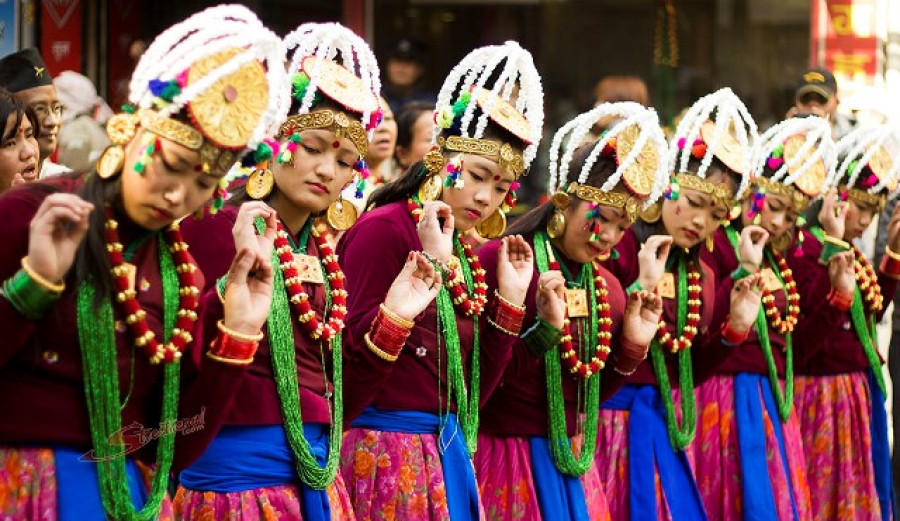
Tamu Losar comes first, and it belongs to the Gurung community. It lands on the 15th day of Poush, usually around December 30th, timed to the winter solstice. The shortest day of the year ends. The count of daylight starts climbing again.
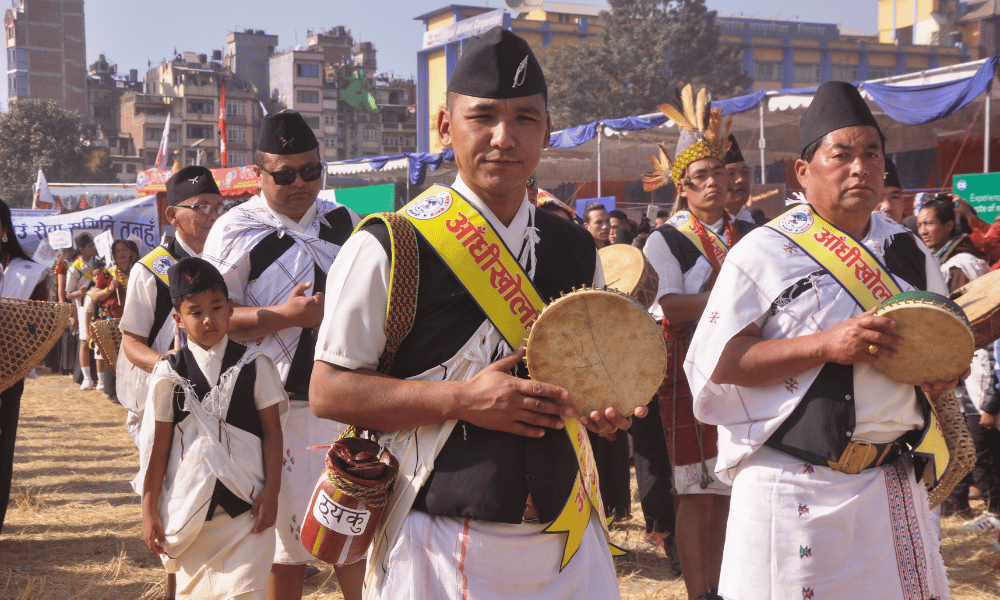
Sonam Losar belongs to the Tamang community, one of the largest ethnic groups in the country, and it arrives roughly a month later, following its own lunar calculation rather than the solstice. Expect late January into early February. The name translates to merit, and the timing follows the agricultural cycle rather than the sun.
Gyalpo Losar is last, and it is the one most visitors have actually heard of. Sherpa, Hyolmo, and Bhutia communities observe it in February, tied to the Tibetan Buddhist calendar used further north across the plateau. This is Gyalpo Losar, and it draws the biggest crowds in Kathmandu by a wide margin.
Each Losar technically runs fifteen days. Most of that stretch is quiet, domestic, unremarkable to an outsider. The visible part, the part worth planning a trip around, sits inside the first three days.
Geography splits along the same lines as the calendar. Tamu Losar clusters around Pokhara and the Gandaki hills, where Gurung households mark the night with the Ghatu and Kauda dances, plates of Sel Roti, and jars of home-brewed rice wine passed hand to hand. Sonam Losar belongs to the Kathmandu Valley and the central hill districts, where the Damphu drum sets the pace and groups sing Tamang Selo, a call-and-response style that can run for hours without repeating a verse. Gyalpo Losar pushes furthest into the high country, up into Namche Bazaar and the Khumbu, where the version of the festival has the least tourist polish on it of the three.
None of the three is a warm-up act for the others. A Gurung elder will tell you Tamu Losar is the real new year. A Tamang shopkeeper will tell you the same about Sonam. Pick a fight about which one matters most and you will lose it, because the honest answer is that all three matter, to different people, for different reasons rooted in different histories of the same mountains.
Rituals of the New Year
Strip away the color and the noise and Losar breaks into three physical acts: clean the house, feed the family, hang the flags. Everything else is variation on those three.
House Cleaning and The End of the Old Year
Before anything else happens, someone picks up a broom. Floors get swept corner to corner, old ash gets cleared from stoves, and window frames get wiped down with a wet cloth until the dust of the old year is gone.
This is not tidying for guests. Families treat the dirt itself as a physical stand-in for the year’s bad luck. Sweep it out the door, and the year goes with it.
In some households a Lama arrives before the cleaning is even finished. He burns incense in a small clay burner, walks the smoke through each room, and speaks a blessing over the doorway. The house gets clean twice: once with a broom, once with smoke.
The Feast: Kapse and the communal Guthuk
Kapse comes first, days before the new year proper. Dough gets twisted by hand into braided shapes, or cut into simple ribbons, then dropped into hot oil until it turns the color of dark honey. Whole trays of it sit out for a week straight, refilled as guests arrive and eat.
Guthuk is a different animal entirely, and it is eaten on the eve of the new year, not during it. It is a thick noodle soup, built from nine separate ingredients stirred into one pot. Nine is not arbitrary. It maps to nine categories of misfortune the soup is meant to symbolically clear.
Here is where it turns from meal into game. Small dough balls get dropped into individual bowls, each one hiding an object, a piece of chili, a scrap of wool, a coin. Bite into chili and the table laughs at you for having a sharp tongue this year. Bite into wool and you are the soft one. Nobody explains the joke to a visitor. You just watch faces and figure it out.
Lungta: The mechanics of prayer flags
Prayer flags do not decorate. That is the mistake most visitors make walking under a line of them for the first time. Each flag carries a printed mantra, and the mechanism is simple: wind moves the cloth, the cloth carries the prayer outward, the words scatter into the air whether anyone reads them or not.
Lungta means wind horse. Picture a string of small flags, faded red, yellow, green, white, blue, snapping hard in a gust off the mountains. The sound is not gentle. It is a dry, rapid snap, closer to a whip crack than a rustle, repeated fast when the wind picks up over open ground near a stupa.
Old flags fade to near-white before anyone replaces them. Losar is when that replacement usually happens. A family climbs onto a rooftop, ties a fresh string next to the bleached one, and leaves both up until the old one eventually falls apart on its own.
Cultural Etiquette: How to be a Ghost
The best compliment a visitor can get during Losar is being ignored. That means you did nothing to interrupt what was already happening.
When to watch and when to leave
Masked dances in a monastery courtyard are performance, built for an audience, and you are allowed to stand and watch. Cameras out, no problem, as long as you are not blocking the path of the dancers themselves.
A monk mid-prostration inside a prayer hall is not performance. Nobody is asking you to watch it. Step back, or better, step out entirely, and let the room stay his.
If you cannot tell which situation you are in, leave. That is the whole rule.
Volume is not your cue either. Losar gets loud in places that are still, technically, prayer. A room full of chanting monks with cymbals crashing on the downbeat is not a performance breaking for applause. It is liturgy that happens to be loud. Stand at the back, keep your voice down, and resist the urge to narrate what you are seeing to whoever is standing next to you.
The specific protocol for prayer wheels and stupas
Walk clockwise. Every time, no exceptions, around Boudhanath, around Swayambhunath, around any stupa in the country. Counter-clockwise is not a style choice. It reads as wrong, the way walking backward through a doorway reads as wrong.
Spin the prayer wheels with your right hand only, and only in the direction you are already walking. One touch, one spin, keep moving. Do not stop to spin a whole row back and forth like a row of slot machines. That is not how they work, and it looks exactly as bad as it sounds.
Shoes come off before stepping onto certain platforms and into certain prayer halls. Watch the row of shoes already piled at the entrance before you decide whether yours belong on or off. When in doubt, take them off. Nobody has ever been offended by an extra pair of bare feet on cold stone.
The Reality of Kathmandu: What to Expect
Boudhanath during Gyalpo Losar is loud, packed, and a little chaotic, and nobody there is apologizing for that. Monks in maroon move through crowds shoulder to shoulder. Dungchen horns, long enough that two men are needed just to hold one steady, let out a low blast that you feel in your chest before you consciously hear it.
Incense smoke sits low over the plaza in the cold morning air and does not clear until well past noon. Butter lamps line the inner walkways, dozens of small flames guttering in the wind every time the crowd shifts and breaks the airflow around them. The stone walkway itself gets slick fast, foot traffic wearing down whatever dust collected there overnight.
Swayambhunath draws a smaller crowd, though smaller is relative. It still means real crowding on the stairs, monkeys working the edges of the site for dropped food, and a longer, steeper climb than most visitors expect from photos alone.
Go early if you want to see anything clearly. By mid-morning the paths around both stupas are dense enough that movement itself becomes the main activity, more than observation. Vehicles cannot get near Boudhanath during peak hours. Plan to walk, and plan for it to take longer than a map suggests.
Bring cash in small bills. Vendors selling tea, Kapse, and roasted corn set up along the stupa’s outer ring, and none of them are running card machines. Bring a hat and gloves too. Mornings in the plaza sit close to freezing before the sun clears the surrounding rooftops, and the stone underfoot holds the cold long after the air has warmed.
Hotels within walking distance of Boudhanath book out fast in the days before Gyalpo Losar specifically, since Tibetan families travel in from outside the valley to be there for it. If the date matters to your trip, lock the room down weeks ahead, not days.
Experience Losar With Local Insight
Losar is a transition, not a spectator sport. It is a time of renewal marked by intense color and ancient chants. While the streets of Kathmandu transform into a sea of prayer flags, navigating the local customs requires insight. At Nepal Adventure Trail, we help you understand the deeper cycles of the Himalayan calendar. If you are planning a trip during the winter months, let us help you find the best way to witness the rituals of Losar with genuine respect and local guidance.
Frequently Asked Questions
Is the Losar festival a public holiday in Nepal?
Yes, the government of Nepal declares a public holiday for the Losar festival, though the specific date varies depending on whether it is Tamu, Sonam, or Gyalpo Losar. Schools, government offices, and many shops in Kathmandu will be closed.
Can tourists participate in the Losar festival celebrations?
Absolutely. The Losar festival is an inclusive event. You can visit monasteries like Boudhanath or Swayambhunath to observe the rituals, but always maintain a respectful distance during private family prayers.
Why are there three different Losar festivals in Nepal?
The Tamu, Sonam, and Gyalpo Losar variations are members of various ethnic groups, such as the Gurung, Tamang, Sherpa, or Tibetan people. Each follows its own lunar calendar calculation, resulting in different dates across the winter months.
What is the best place to witness the Losar festival in Kathmandu?
Boudhanath Stupa and Swayambhunath are the spiritual epicenters for the Losar festival. Expect massive crowds, thousands of new prayer flags being strung, and traditional music echoing through the surrounding alleyways.
How should I dress when visiting a monastery during Losar?
Dress modestly by covering your shoulders and knees. While many locals wear vibrant traditional clothing, as a traveler, clean and conservative clothing shows proper respect for the religious nature of the day.
Do businesses and restaurants close during Losar?
In areas heavily populated by the Tibetan community, expect many smaller shops and local eateries to close so families can celebrate together. Major tourist hotels and larger restaurants usually remain open.
Is it okay to take photos of the Losar festival rituals?
Yes, but always use discretion. Avoid getting in the way of monks or people performing offerings. If you want a close-up portrait of someone in traditional dress, it is polite to gesture and ask for permission first.
What does the Guthuk soup served during Losar symbolize?
Guthuk is a traditional noodle soup eaten on the eve of the new year. It often contains dough balls with hidden items inside, which represent good or bad omens for the coming year, adding a fun, communal element to the feast.
Why do people put up so many prayer flags during Losar?
New prayer flags known as Lungta are hung to replace old, faded ones. It is believed that as the wind blows through the flags, the prayers printed on them are carried across the world to bring peace, compassion, and good fortune.
Do I need a guide to experience the Losar festival?
You do not strictly need a guide, but having one can help you understand the deeper meanings behind specific offerings or chants you will see at the stupas. It turns an observational visit into a deeper cultural experience.