- Nepal
- Tibet
- Bhutan
- Company
- Plan Your Trip
EXCELLENT Based on 20 reviews
 Posted on Google
 David HankeOur travel with Nepal Adventure Trail was outstanding. Porgi was the best guide one could ask for. And the way we experienced Tibet as a family was one of our favorite trips ever. I would highly recommend this company for the full experience of traveling in Tibet. David U.S.A.Posted on Google
 Michael EisenbachI went to Nepal with two of my sons, and the 12-day trip organized by Nepal Adventure Trail was absolutely fantastic. The itinerary was diverse and well-balanced, including guided tours of Kathmandu and Pokhara, a thrilling jungle safari on foot in Chitwan, and a breathtaking 3-day trek to the Australian Camp in the Himalayas. We were fortunate to have two superb guides, one for Kathmandu and Chitwan, and another for Pokhara and the trek. Both of them were knowledgeable, friendly, and attentive. This journey left us deeply impressed and eager to return to Nepal. Highly recommended!Posted on Google
 markov40plusХорошая компания исполняющая взятые на себя обязательства. Путешествовать с ними большое удовольствие!Posted on Google
 suzanne leza benadieI have had a long standing business relationship with the team at Nepal Adventure Trail. A very porfessional company that offers a wide range of tourism services. I highly recommend them for planning and executing unique itineraries.Posted on Google
 Purushottam DawadeeNepal Adventure Trail is one of the best companies I’ve ever worked with. We had an incredible experience with this trail, During our trip to Annapurna Base Camp on April-May, 2025. Very good experience, robust knowledge and friendly staff who helped us every aspect of our journey and mission. Mr. Sapkota, pragya & his entire team is dedicated and very professional. I would strongly recommend that if you’re interested doing something interesting like Hiking, trekking or exploring nature of virgin mountain, please go ahead with this company.Posted on Google
 Sanjeeb SubediAmazing EBC trek was organised by Nepal Adventure Trail for us (a group of friends from London) in March 2025. As you can imagine, when there are 8 individuals, 16 different ideas pop ups and the company was accommodating our changes while going through such as change from standard route to Cho La Pass and via Gokyo Lake, arranging helicopter ride back Kathmandu and getting refund to airline ticket from Lukla.... It was an once in lifetime achievement for me and thanks for making my dream true and helping on the way through.Posted on Google
 Gregory BolotinMy wife, our friends, and I had the most unforgettable adventure trip to Mustang, Nepal last year, and it was all thanks to the exceptional organization and accompaniment of Nepal Adventure Trail. This company truly delivered everything they promised, seamlessly blending adventure, comfort and exploration. The 12 days itinerary was perfectly crafted, utilizing jeeps which allowed us to cover significant ground and witness the breathtaking landscapes of the region. The inclusion of a thrilling short rafting experience and hiking added exciting dimension to our trip. What truly set Nepal Adventure Trail apart was their incredible team. Our guide Progi and drivers were not just professionals, they were passionate, knowledgeable, and genuinely cared about ensuring every member of our group of 9 had a safe, enjoyable and enriching journey. They handled all logistics with remarkable efficiency, from accommodations to meals. Their local insights brought the history, culture and traditions of Nepal and specifically Mustang region to life, making every stop more meaningful. If you are planning a trip to Nepal, especially an adventure like exploring Mustang, I would definitely recommend Nepal Adventure Trail. They go above and beyond to create personalized and memorable travel experiences.Posted on Google
 piki dayanWe had an unforgettable experience combining the Mustang Jeep Tour with the Ghorepani Trek, all arranged by Nepal Adventure Trail. The contrast between the rugged Mustang landscapes and the lush forests of Ghorepani was simply breathtaking. Everything was perfectly managed—from the comfy jeep rides to the peaceful mountain lodges. Our guide was knowledgeable, friendly, and made us feel safe and inspired every step of the way. Truly a once-in-a-lifetime journey!Posted on Google
 Karpachou / Карпачев МихаилProgi is excellent guide and travel organizer!!! We traveled with him twice and have a very good service!Posted on Google
 Ajay AgrawalProgi guided my group to Muktinath and was a thoughtful, considerate and knowledgeable guide. He was able to cater to all the diverse needs of the group expertly and always with a smile.Verified by TrustindexTrustindex verified badge is the Universal Symbol of Trust. Only the greatest companies can get the verified badge who has a review score above 4.5, based on customer reviews over the past 12 months. Read more
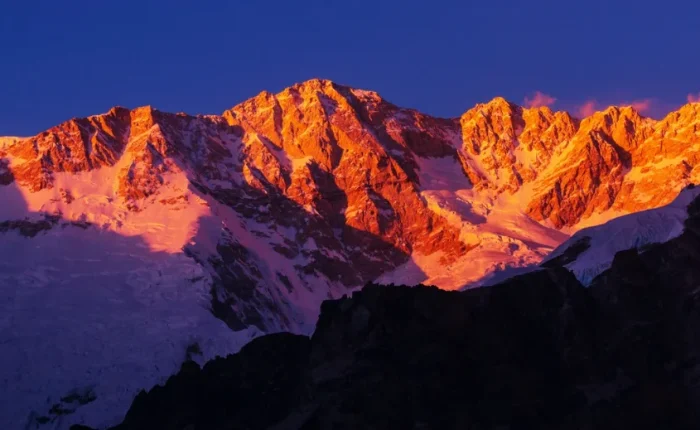
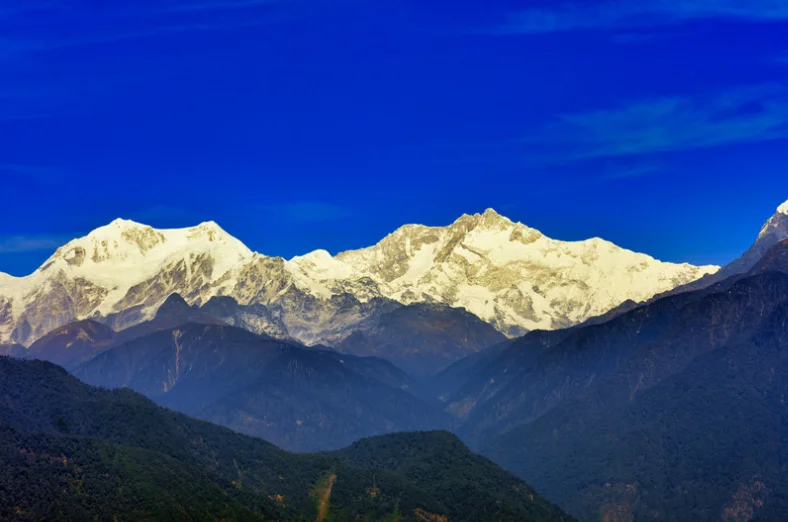
The Kanchenjunga Base Camp Trek is an extraordinary 16-day adventure into one of Nepal’s most pristine and remote wilderness regions. This challenging trek takes you to Pangpema (5,143m), the North Base Camp of Mount Kanchenjunga (8,586m), the world’s third-highest peak and Nepal’s sacred mountain.
Unlike the crowded trails of Everest and Annapurna, Kanchenjunga offers unparalleled solitude, untouched natural beauty, and authentic cultural encounters with Sherpa, Limbu, Rai, and Tibetan communities. The trek traverses the Kanchenjunga Conservation Area, home to rare wildlife including snow leopards, red pandas, Himalayan black bears, and over 250 species of birds.
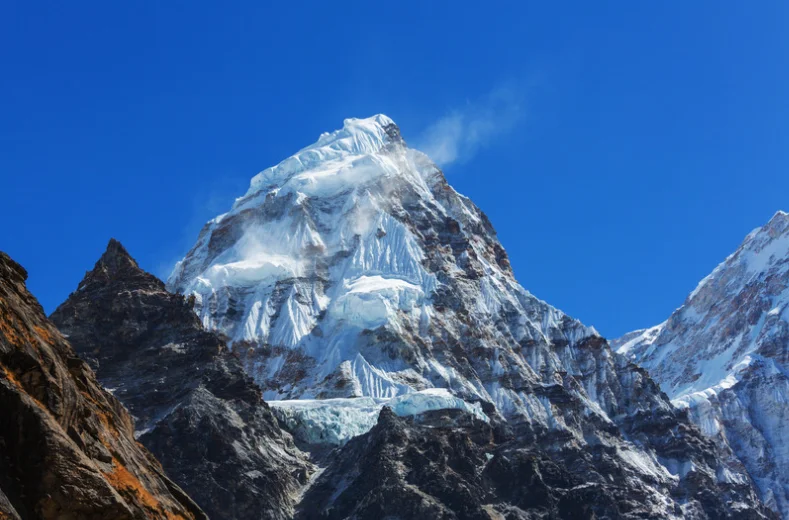
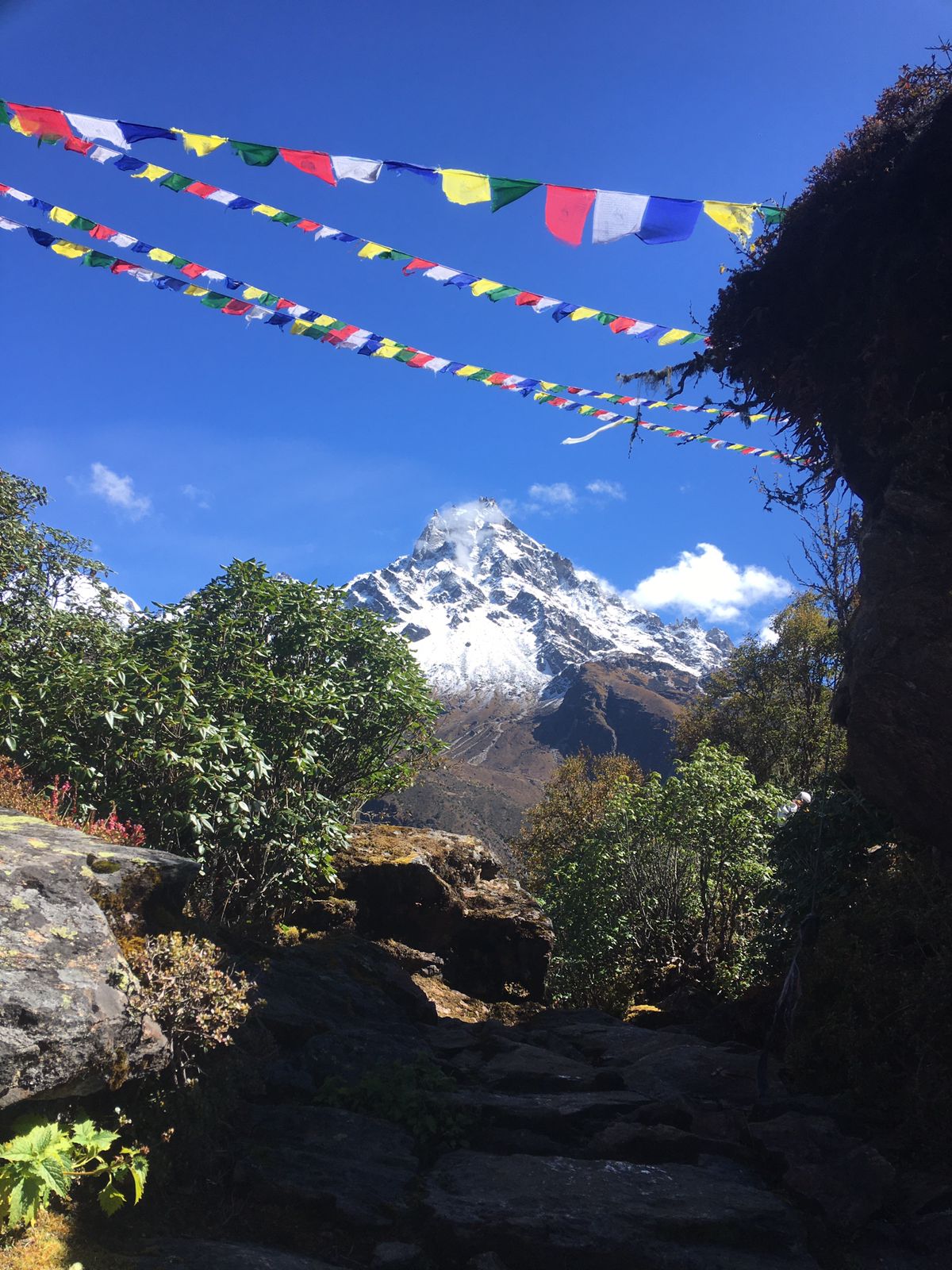
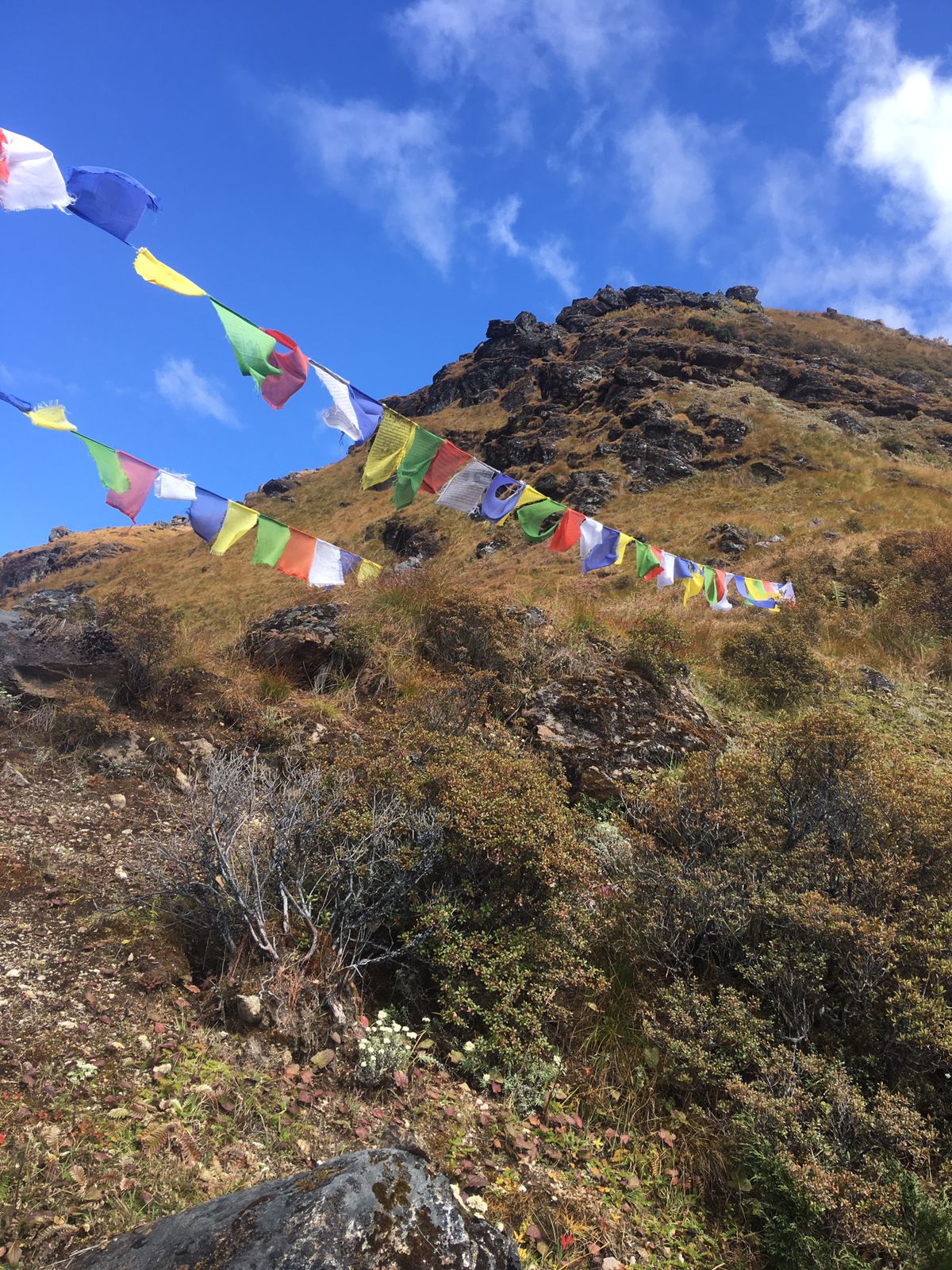
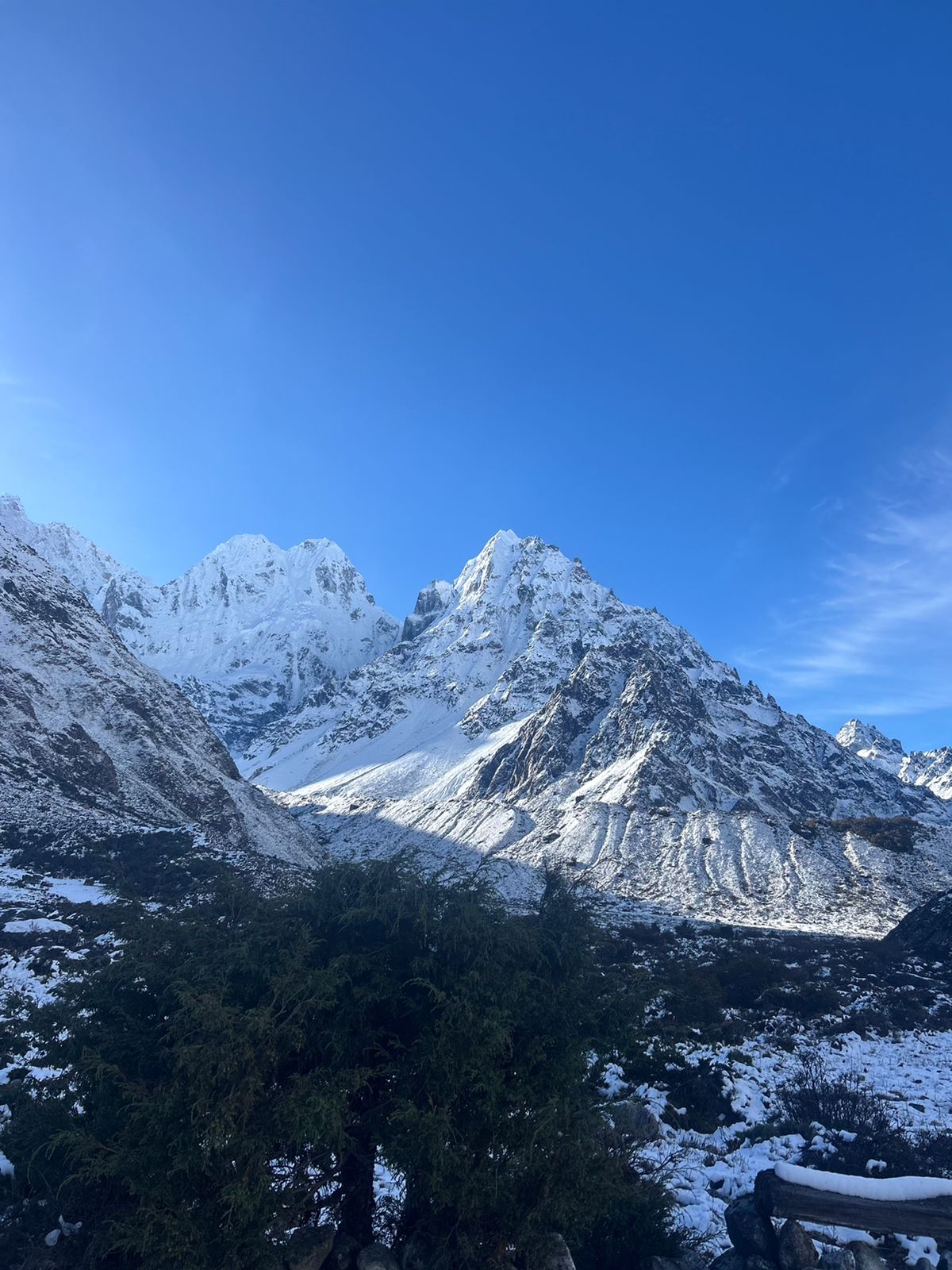
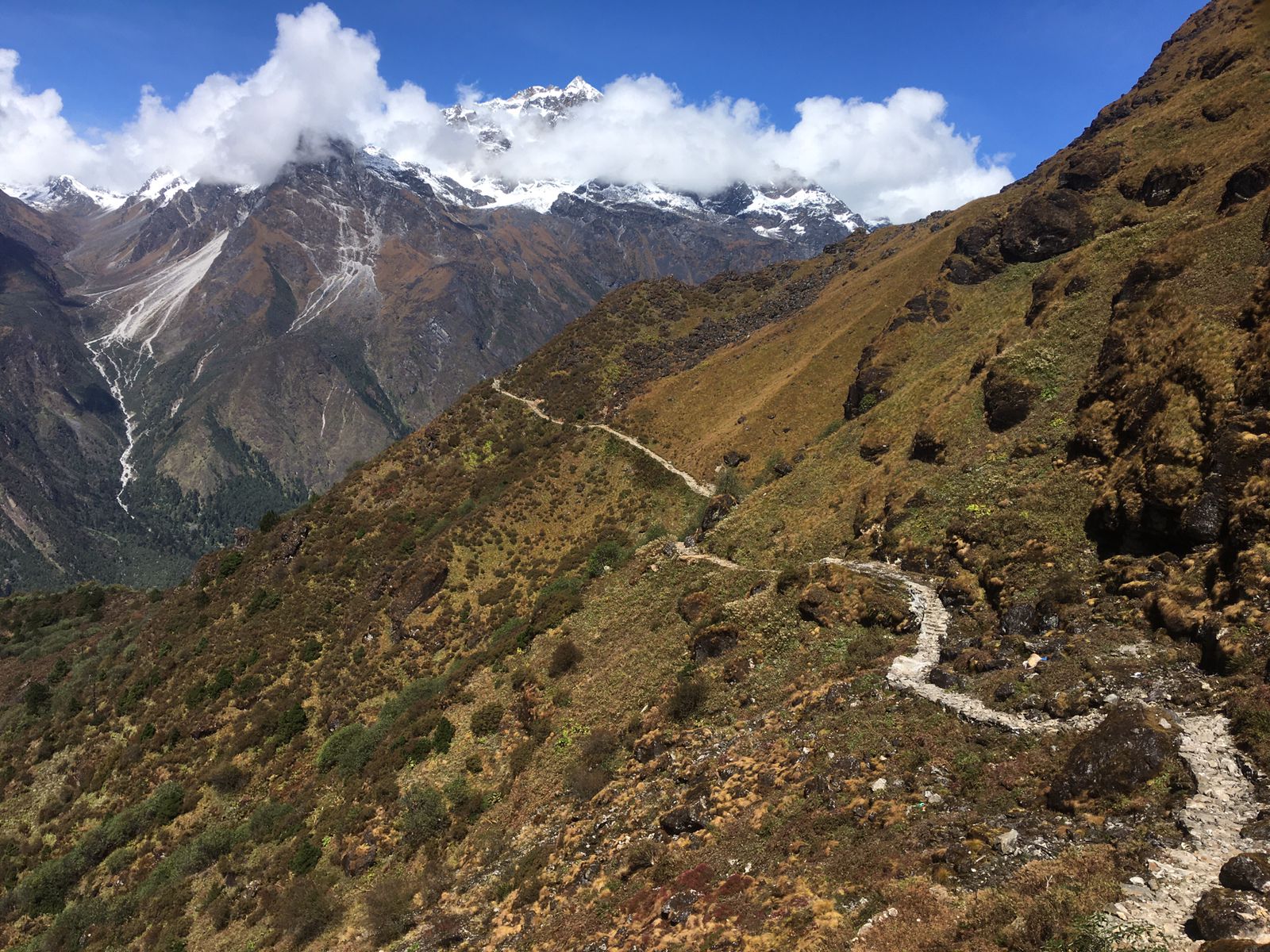
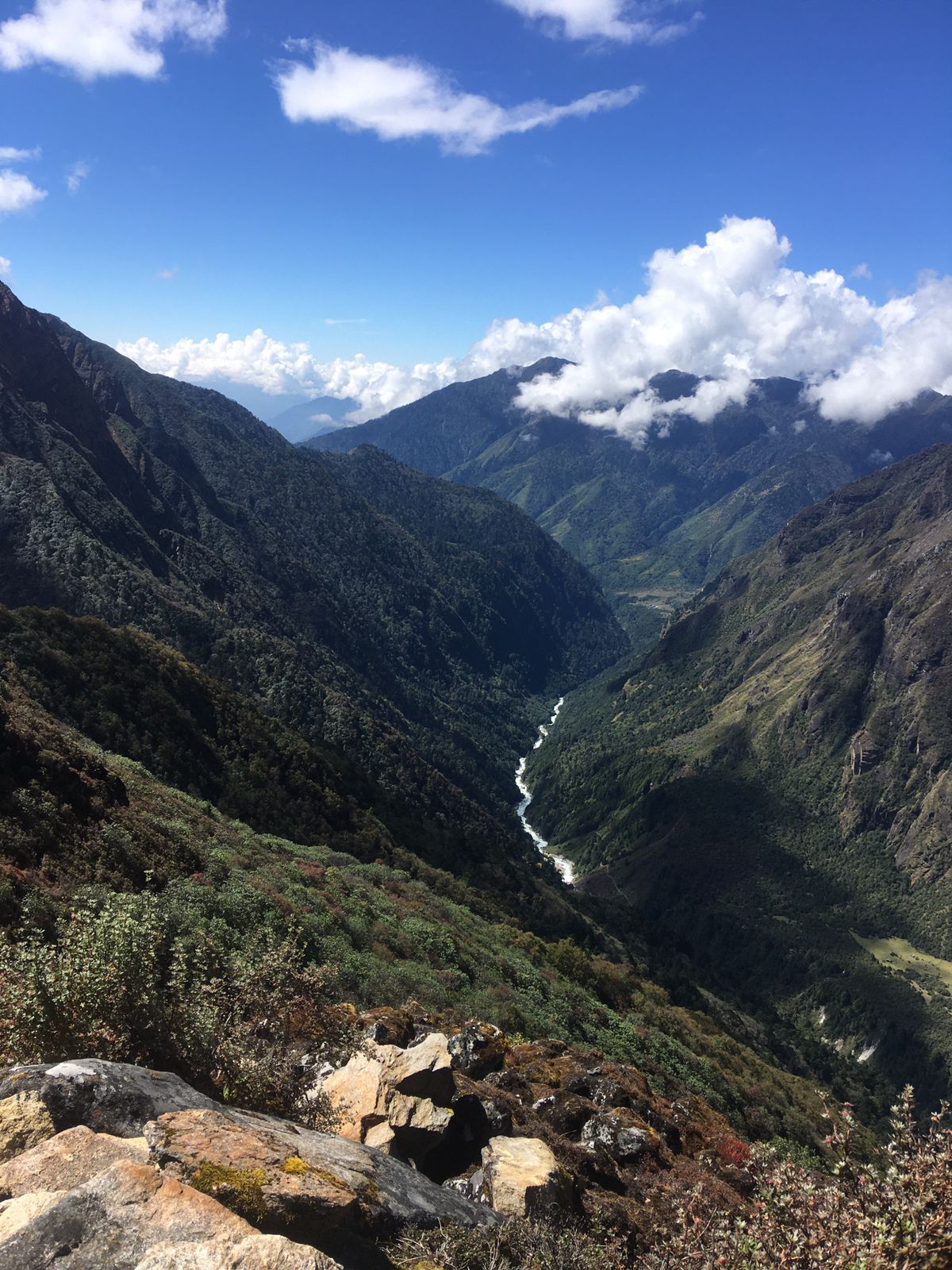
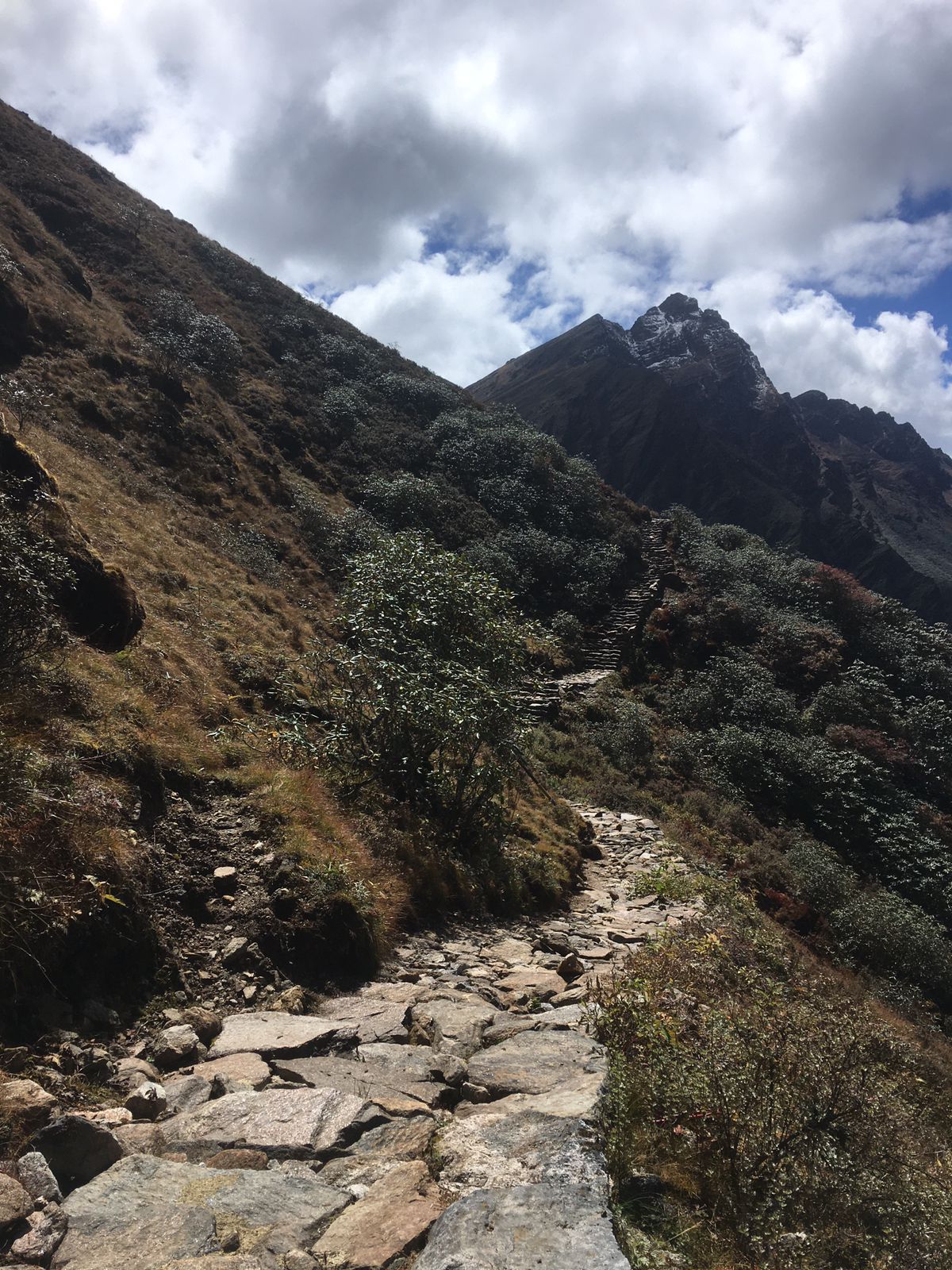
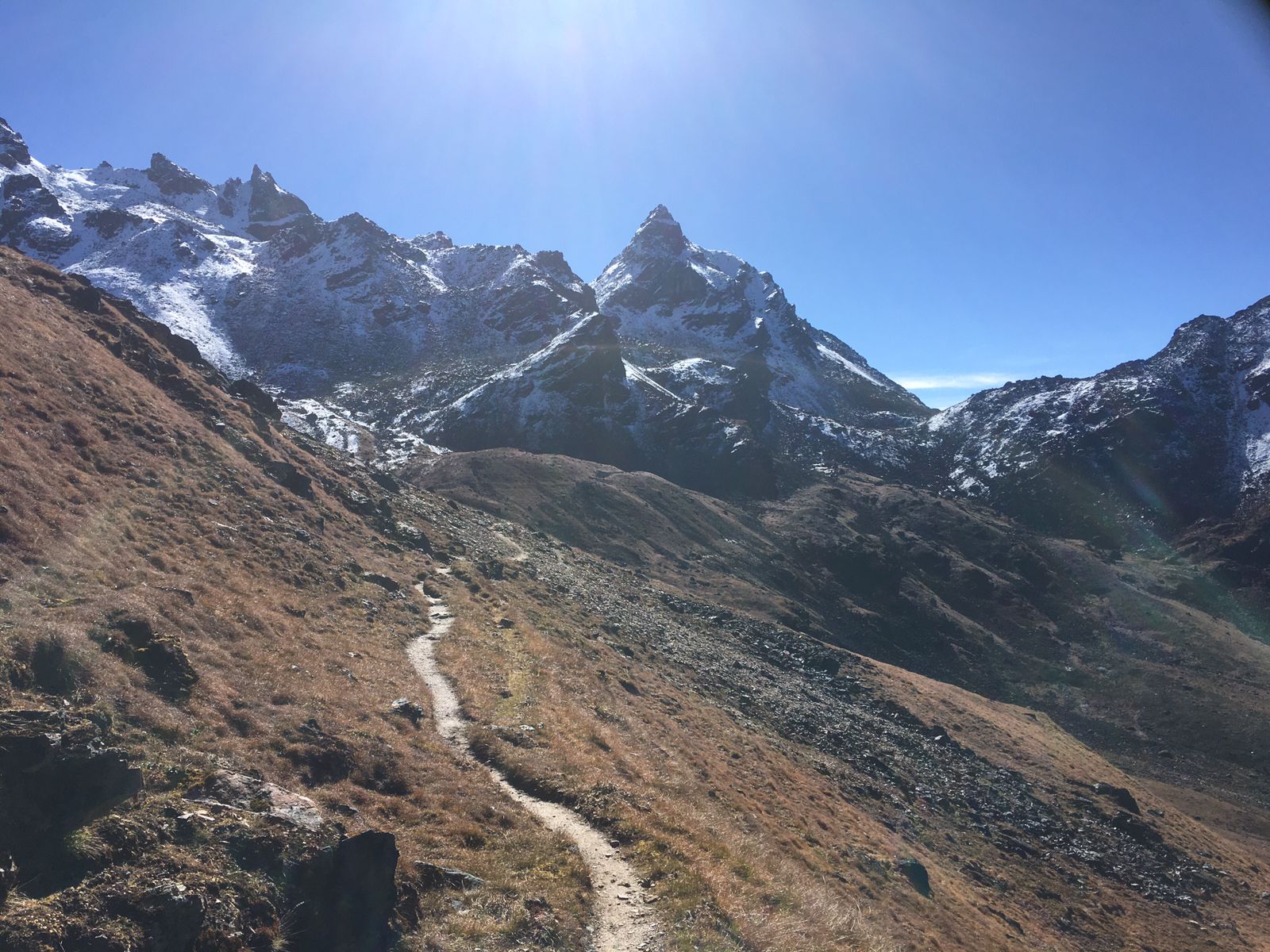
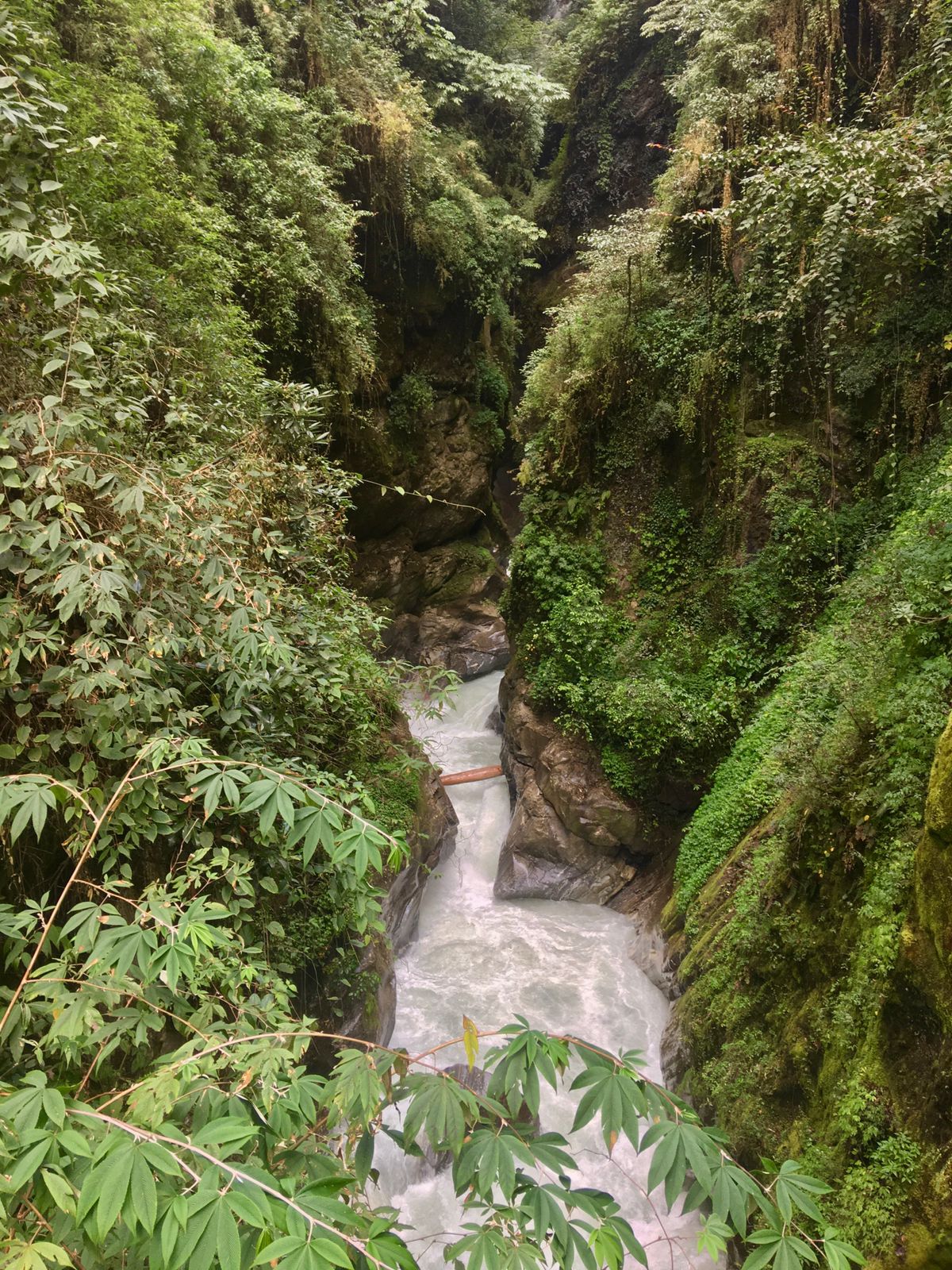
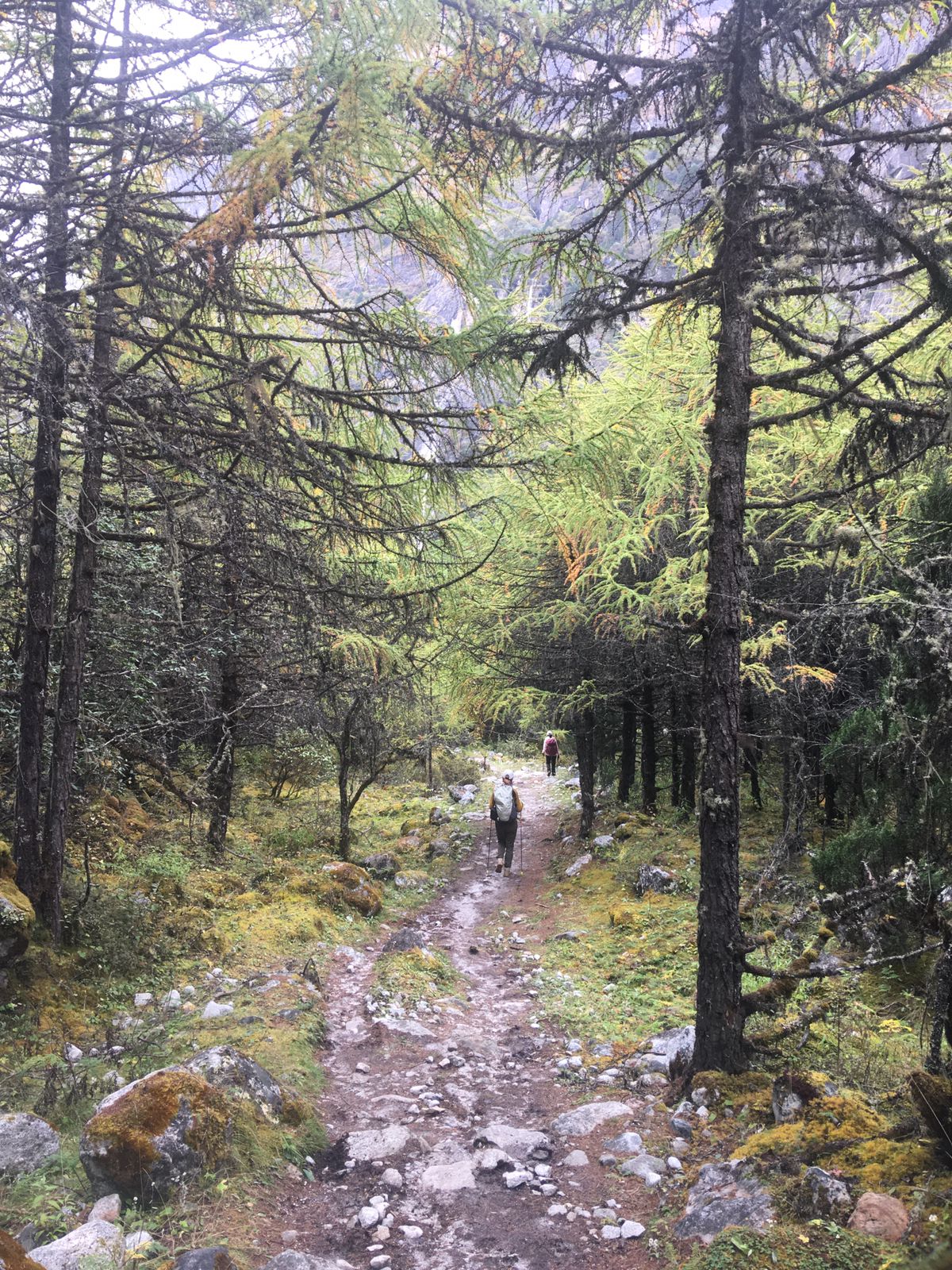
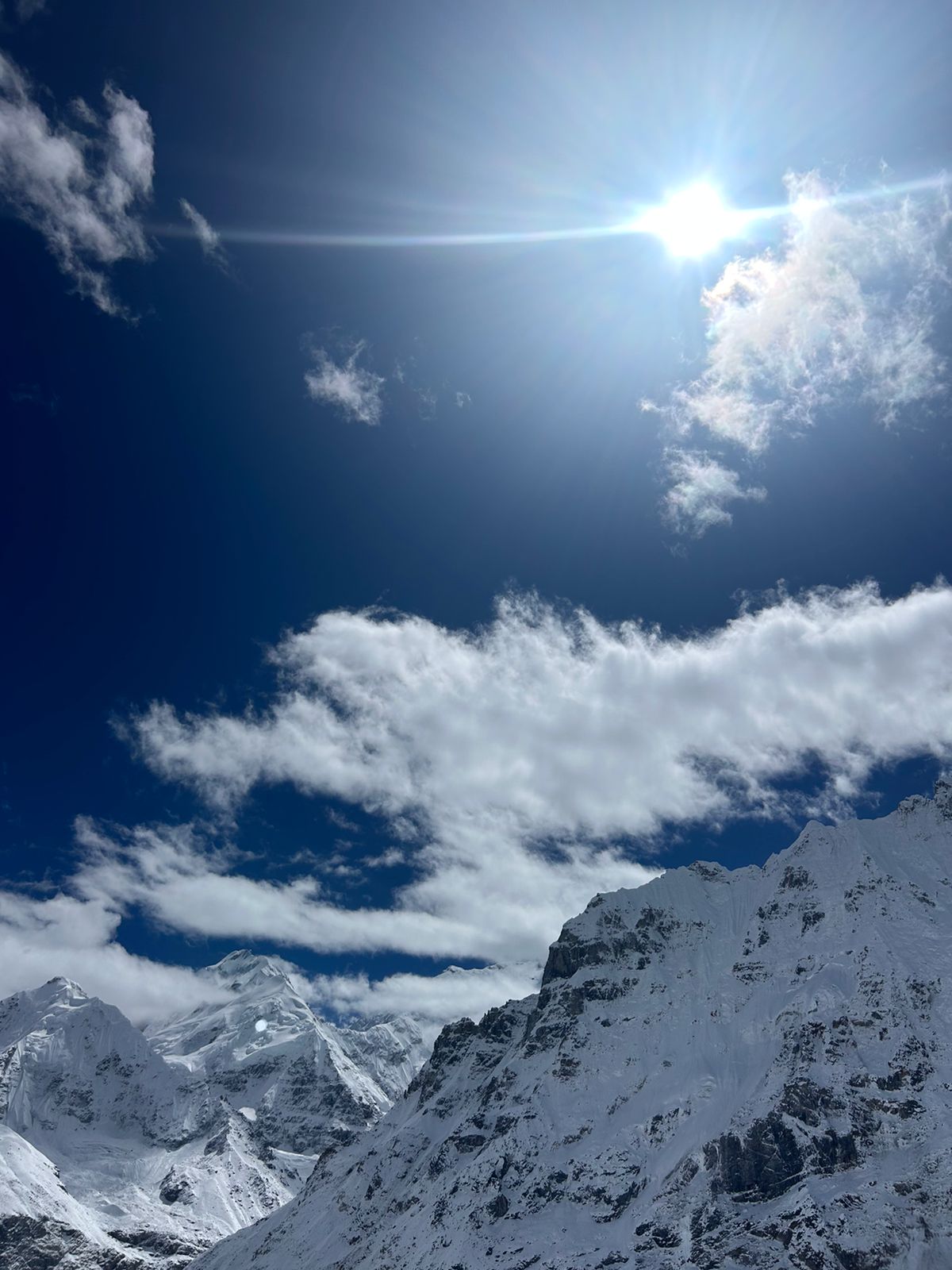
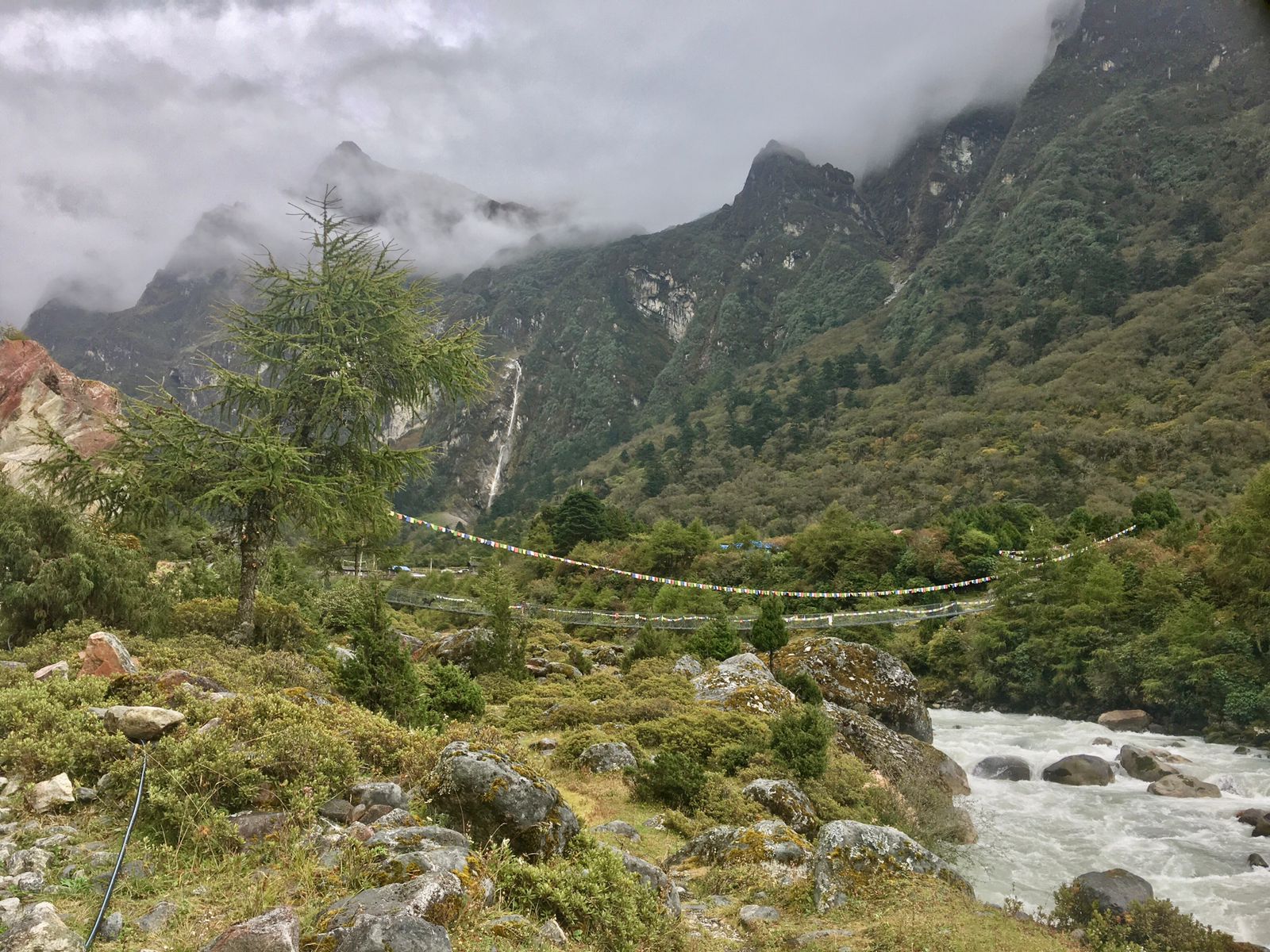
Starting from the sub-tropical forests of the lowlands, the trail ascends through rhododendron and bamboo forests, crossing glacial rivers on suspension bridges, passing traditional villages with prayer flags and Buddhist monasteries, before reaching the spectacular high-altitude landscapes of moraines, glaciers, and towering Himalayan giants. The views include Kanchenjunga’s five peaks (representing the five treasuries of snow), Jannu (7,710m), Mera Peak, and countless other summits.
This is a restricted-area trek requiring special permits, a licensed guide, and a minimum of two trekkers, ensuring the region remains protected and pristine for generations to come.
▶️Need help booking your trip? Watch our step-by-step video guide.
Upon your arrival at Tribhuvan International Airport in Kathmandu, our representative will greet you and transfer you to your hotel. After check-in and refreshment, we will conduct a pre-trek briefing where we’ll discuss the detailed itinerary, provide information about the trek, answer your questions, and check your trekking gear. If you need any equipment, we can arrange rentals in Kathmandu’s Thamel district.
Accommodation: Hotel in Kathmandu
Meals: Welcome dinner
Activities: Trip briefing, gear check, permit processing
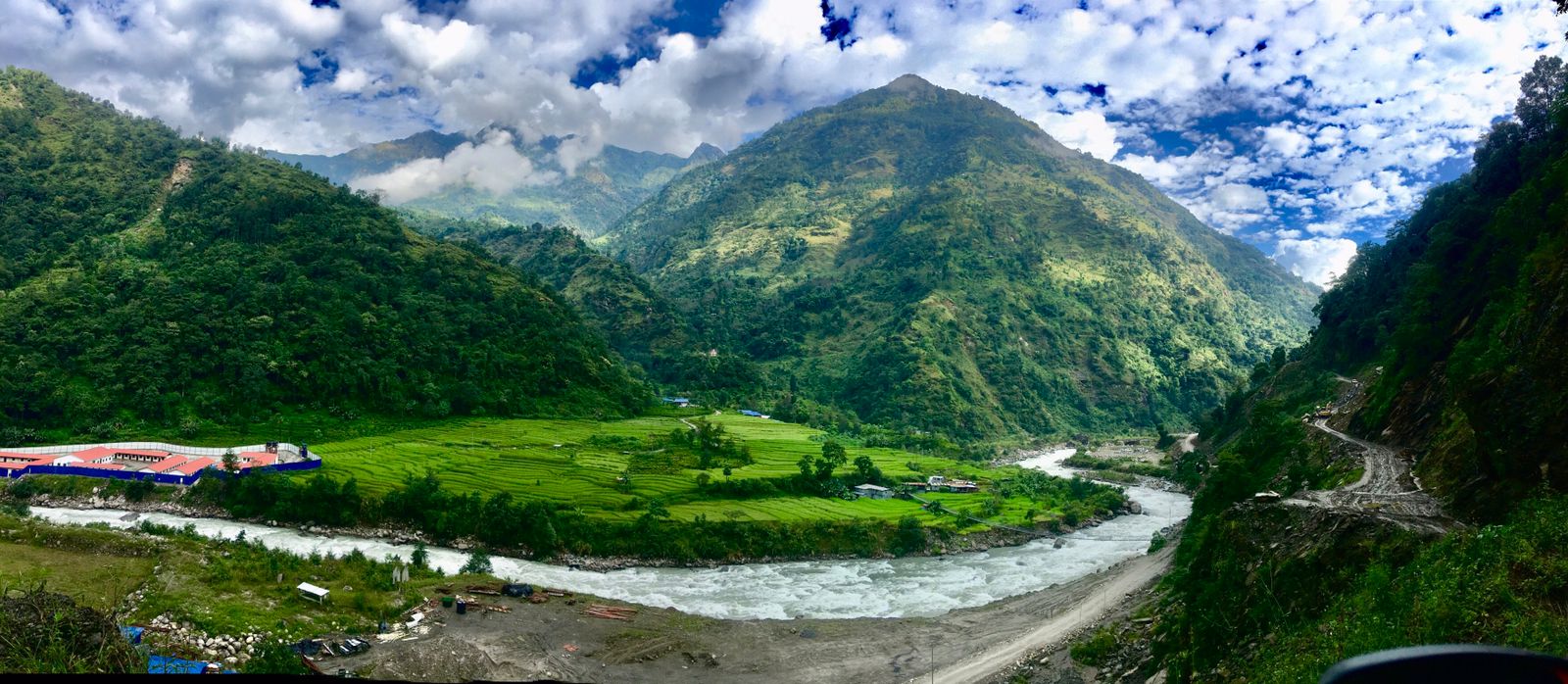
Early morning flight from Kathmandu to Bhadrapur in eastern Nepal takes approximately 45-50 minutes, offering aerial views of the terraced hills and the eastern Himalayas. From Bhadrapur, we begin a scenic drive to Taplejung, the starting point of our trek. The journey takes 8-10 hours along winding mountain roads, passing through lush tea estates, traditional villages, terraced fields, and alongside the Tamor River. We’ll have lunch en route and arrive in Taplejung by late afternoon.
Accommodation: Guesthouse in Taplejung
Meals: Breakfast, Lunch, Dinner
Drive Duration: 8-10 hours
Flight Duration: 45-50 minutes
After breakfast, we drive from Taplejung through Mitlung and Chirwa villages along a rough mountain road following the Tamor River valley. The journey offers stunning views of terraced farmlands, traditional settlements, and the rushing river below. This drive saves several days of walking and takes us directly to Sekathum, where our trekking adventure truly begins. Upon arrival, we’ll complete permit formalities at the checkpoint.
Accommodation: Lodge in Sekathum
Meals: Breakfast, Lunch, Dinner
Drive Duration: 7-8 hours
Permit Check: Kanchenjunga Conservation Area & Restricted Area Permit
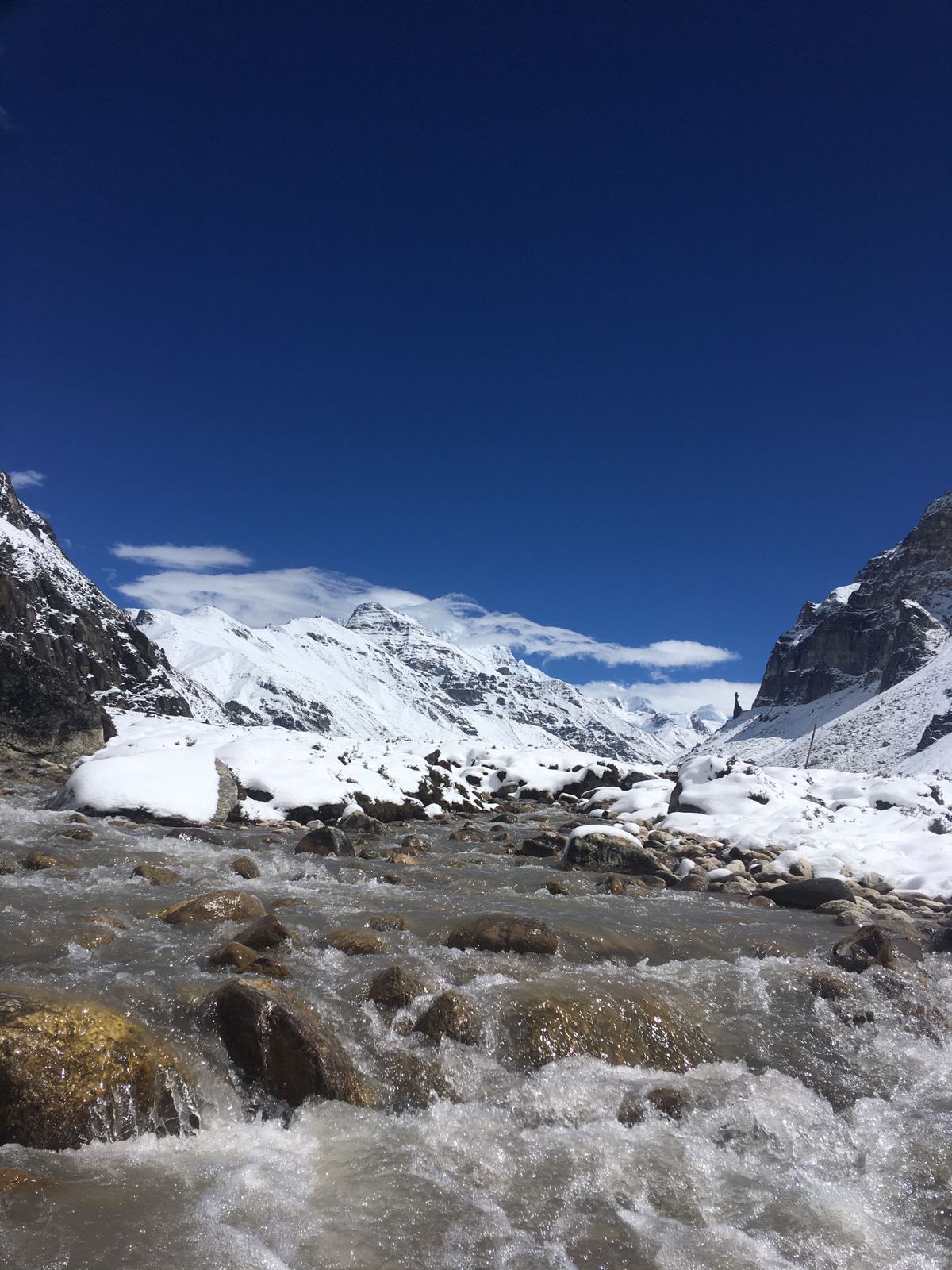
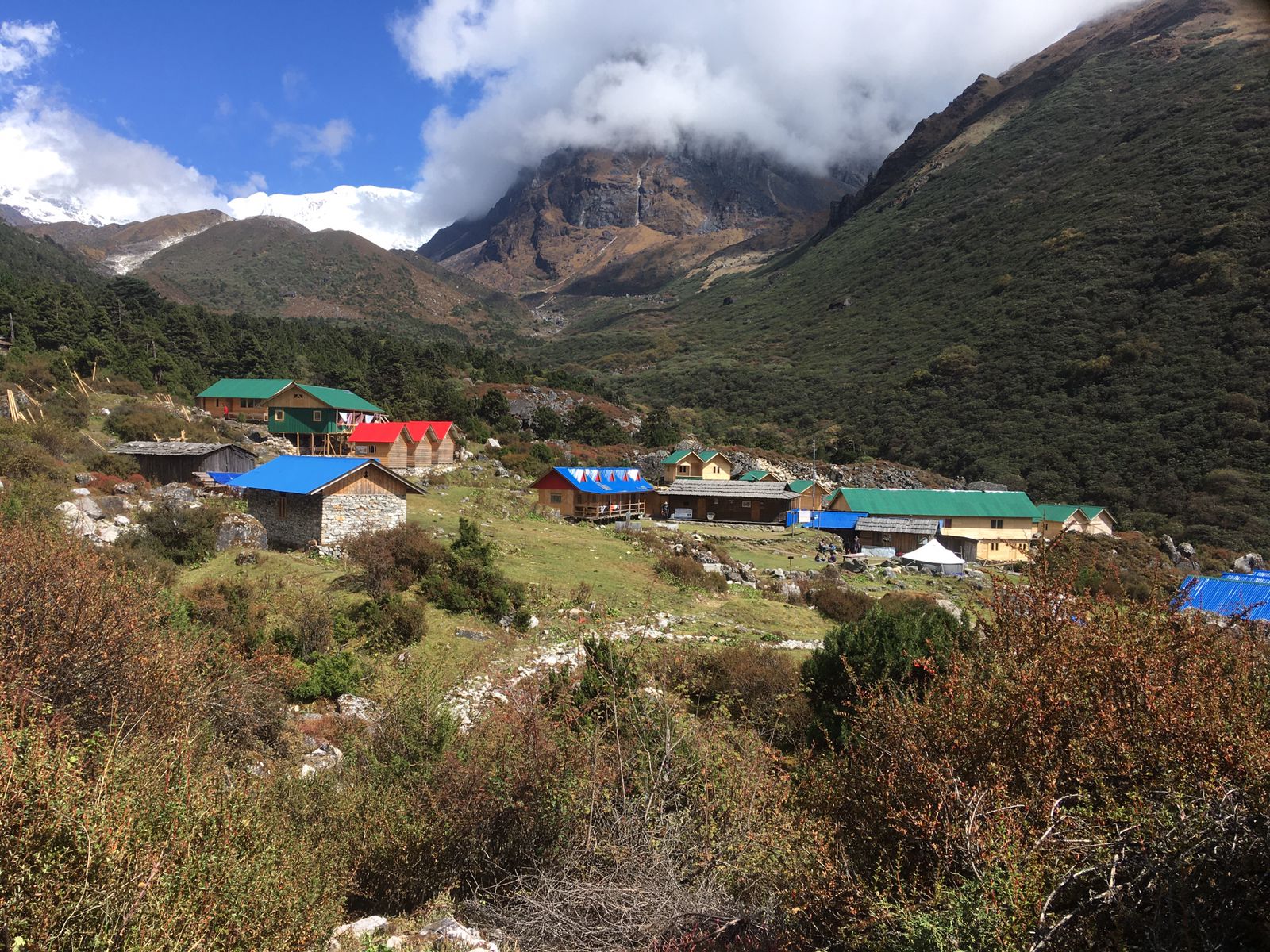
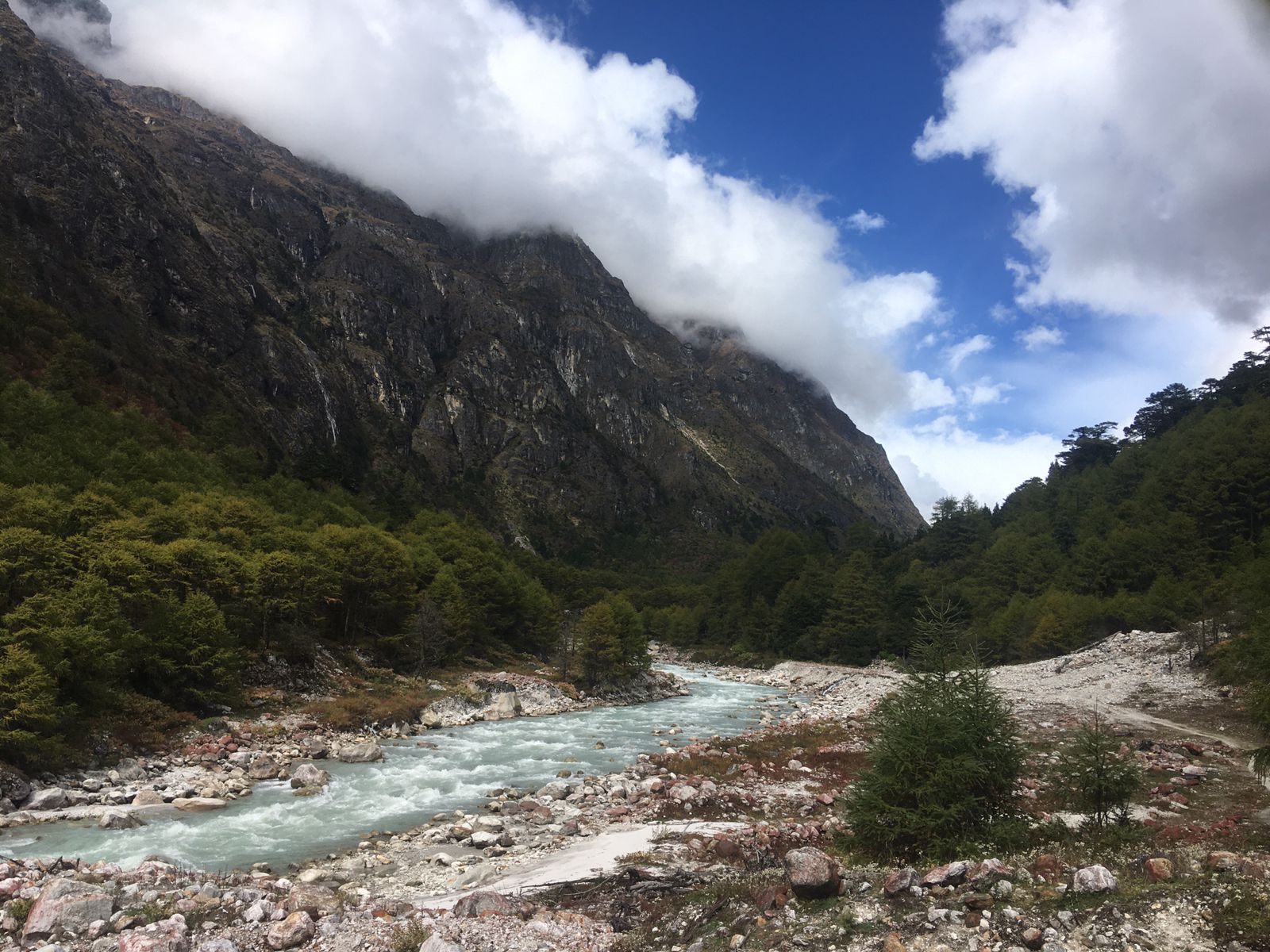
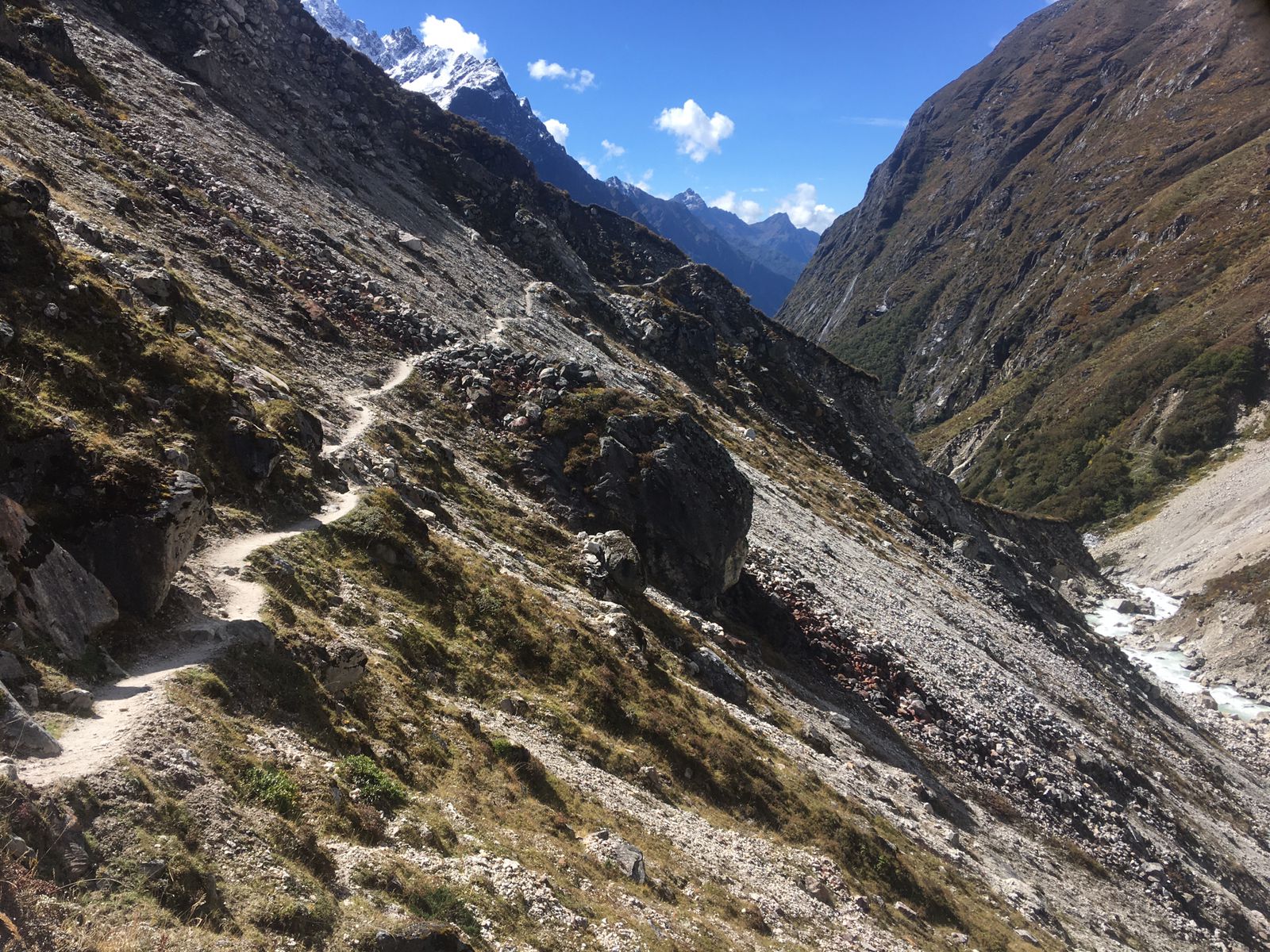
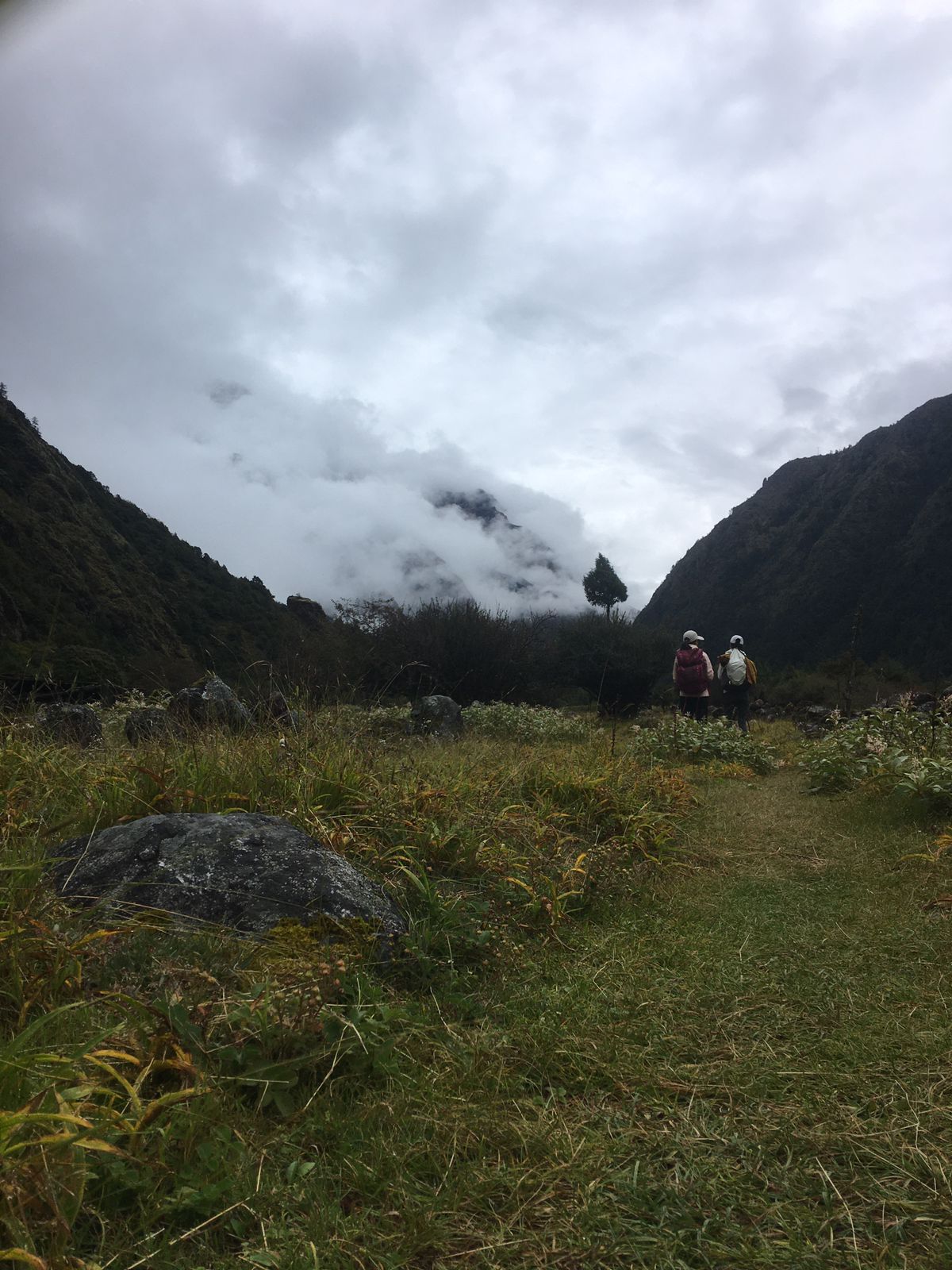
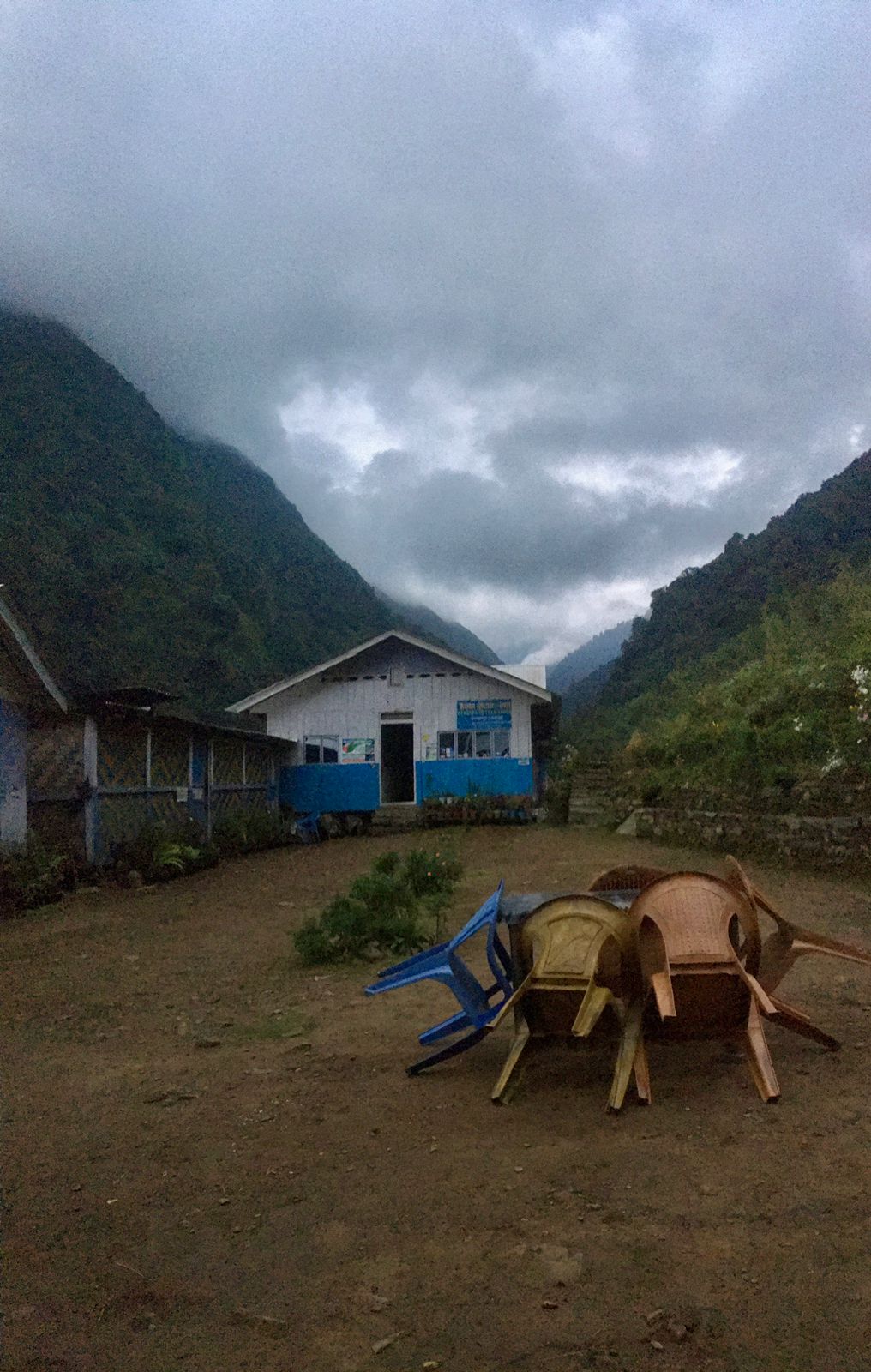
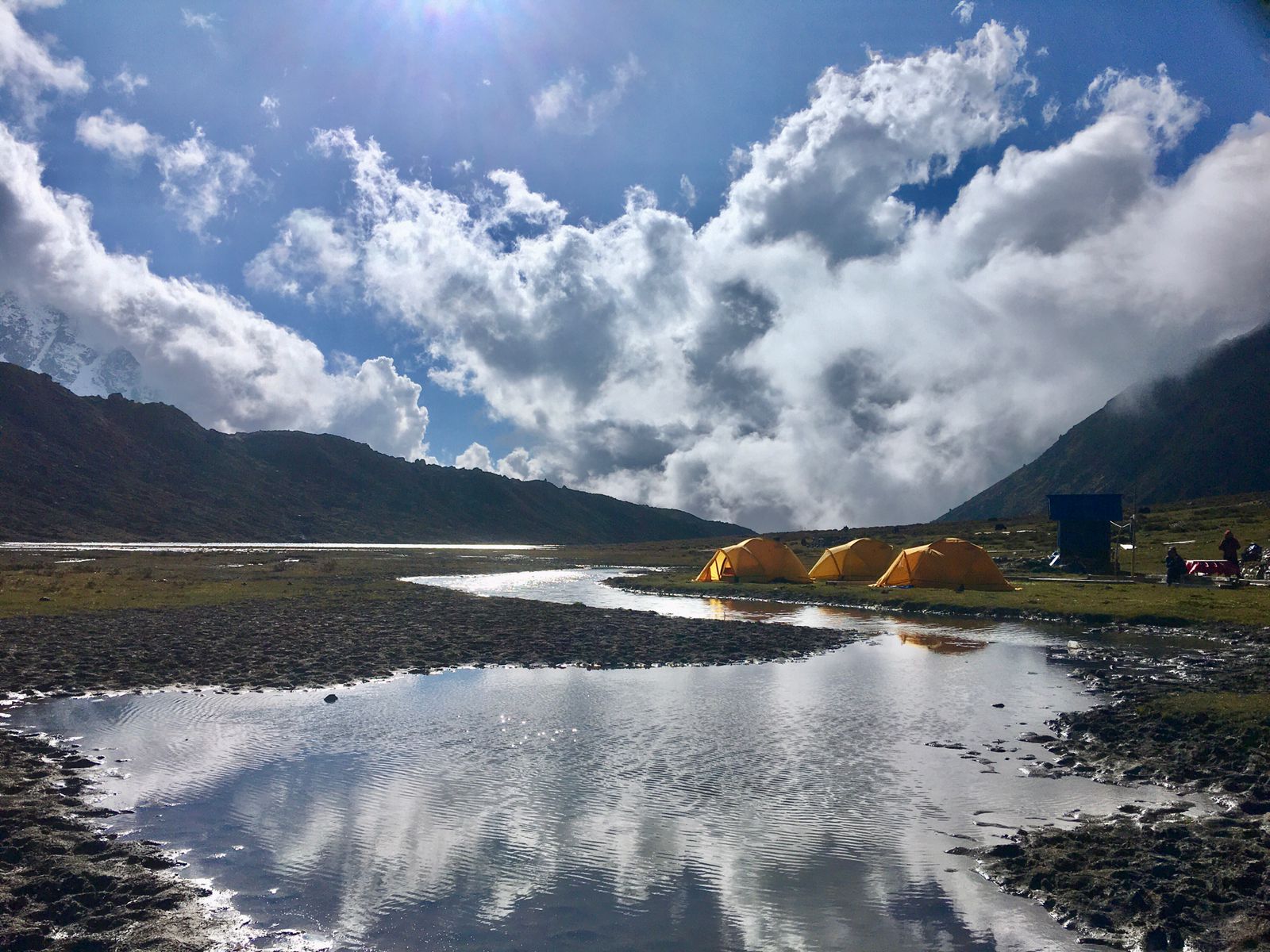
The first trekking day follows the Ghunsa Khola (river) upstream through subtropical forests. The trail crosses several suspension bridges swaying over the turquoise glacial river, passes through small settlements, and climbs gradually through dense bamboo and rhododendron forests. You’ll notice the landscape becoming more alpine as we gain altitude. The sound of the rushing river accompanies us throughout the day. Amjilosa is a small settlement with basic tea houses where we’ll spend the night.
Accommodation: Tea House
Meals: Breakfast, Lunch, Dinner
Walking Duration: 5-6 hours
Elevation Gain: 838m
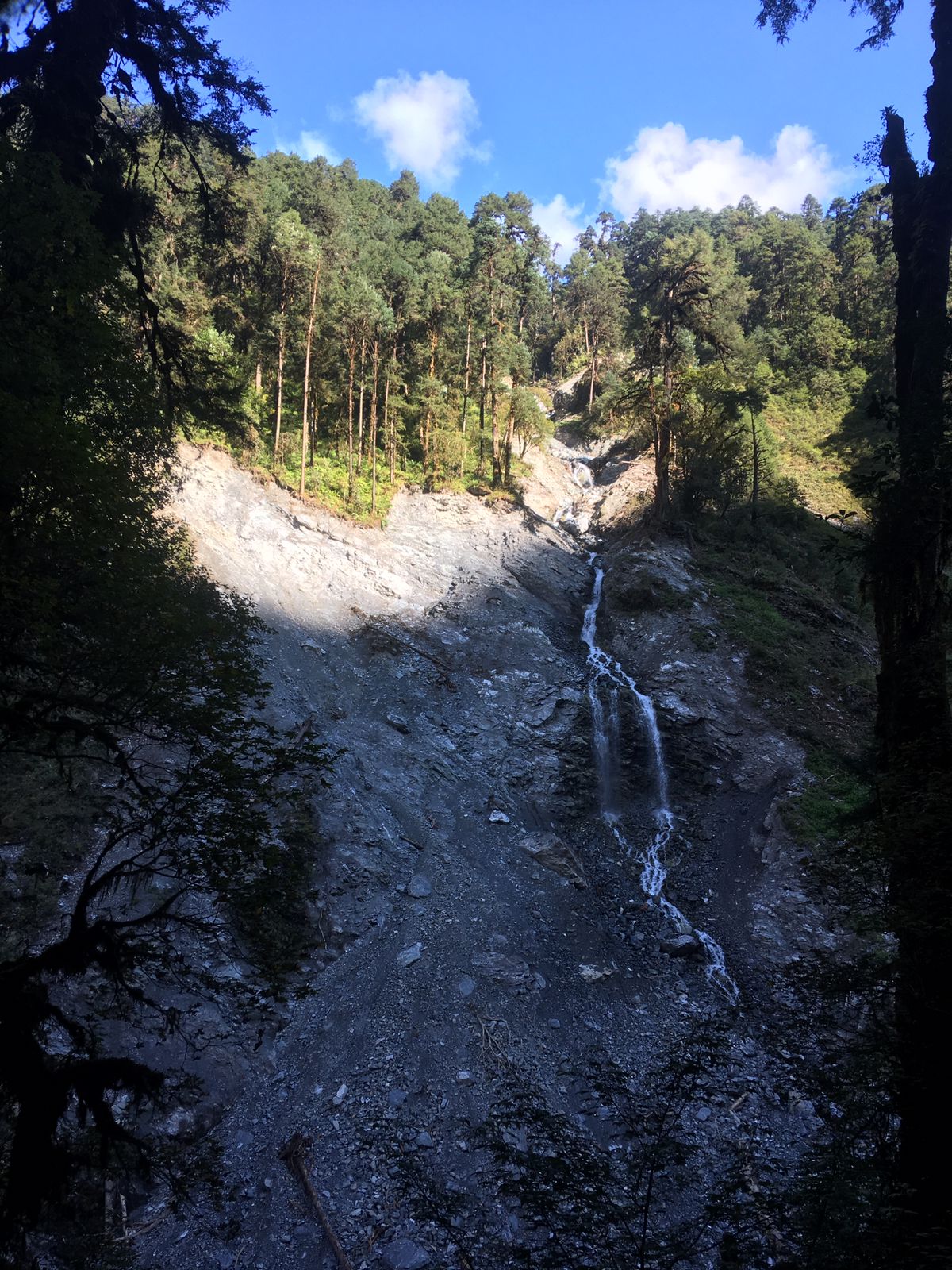
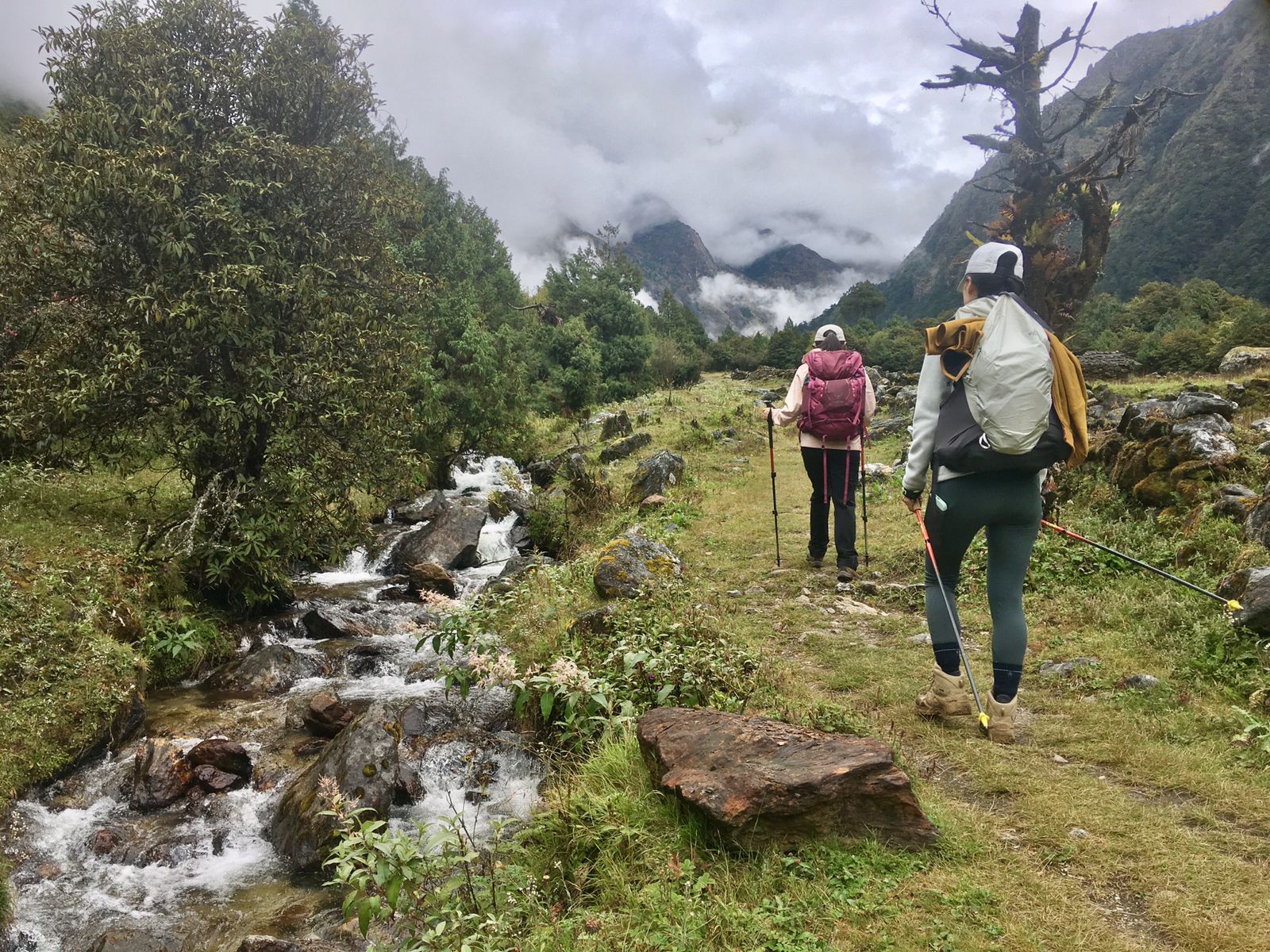
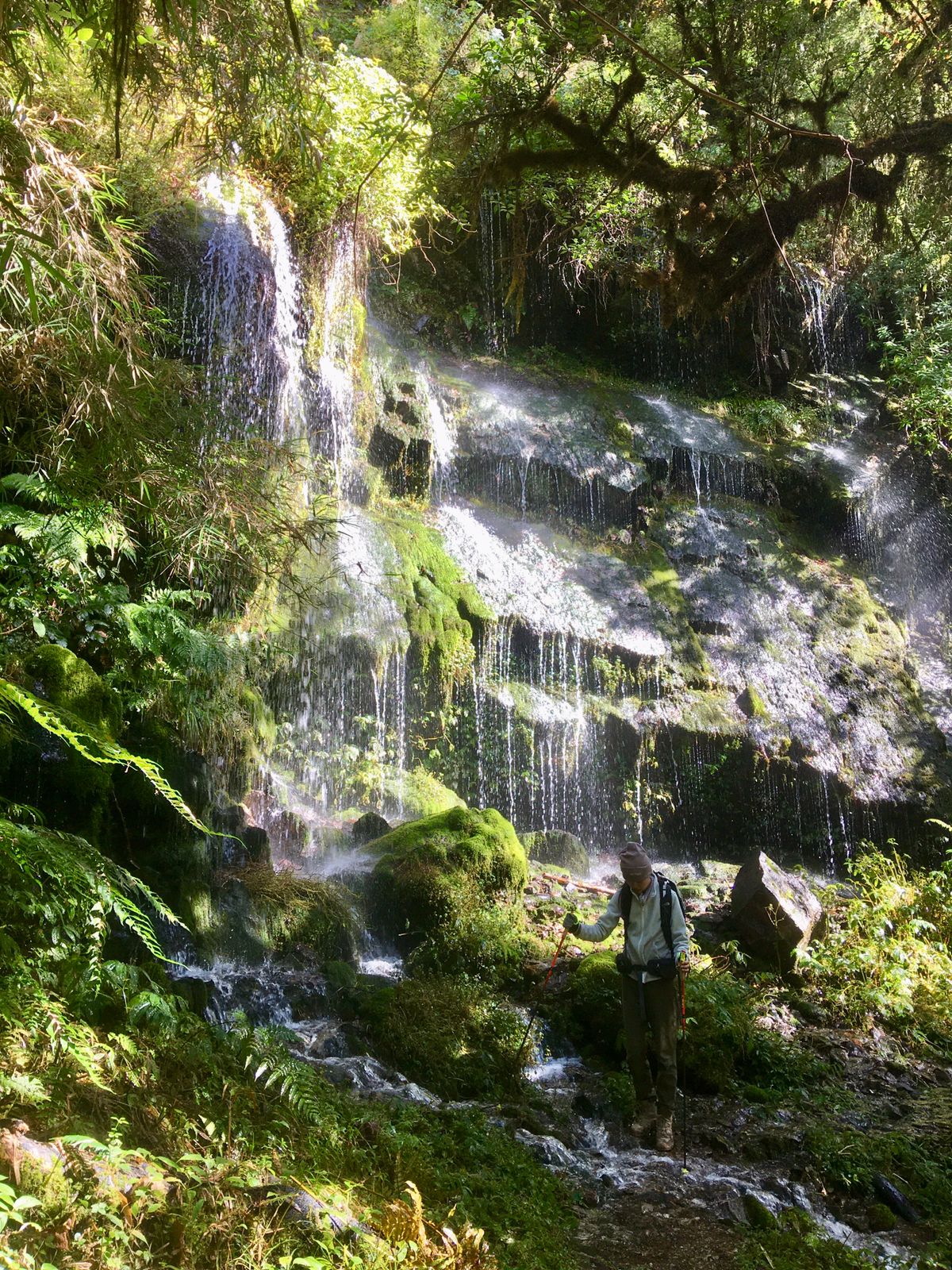
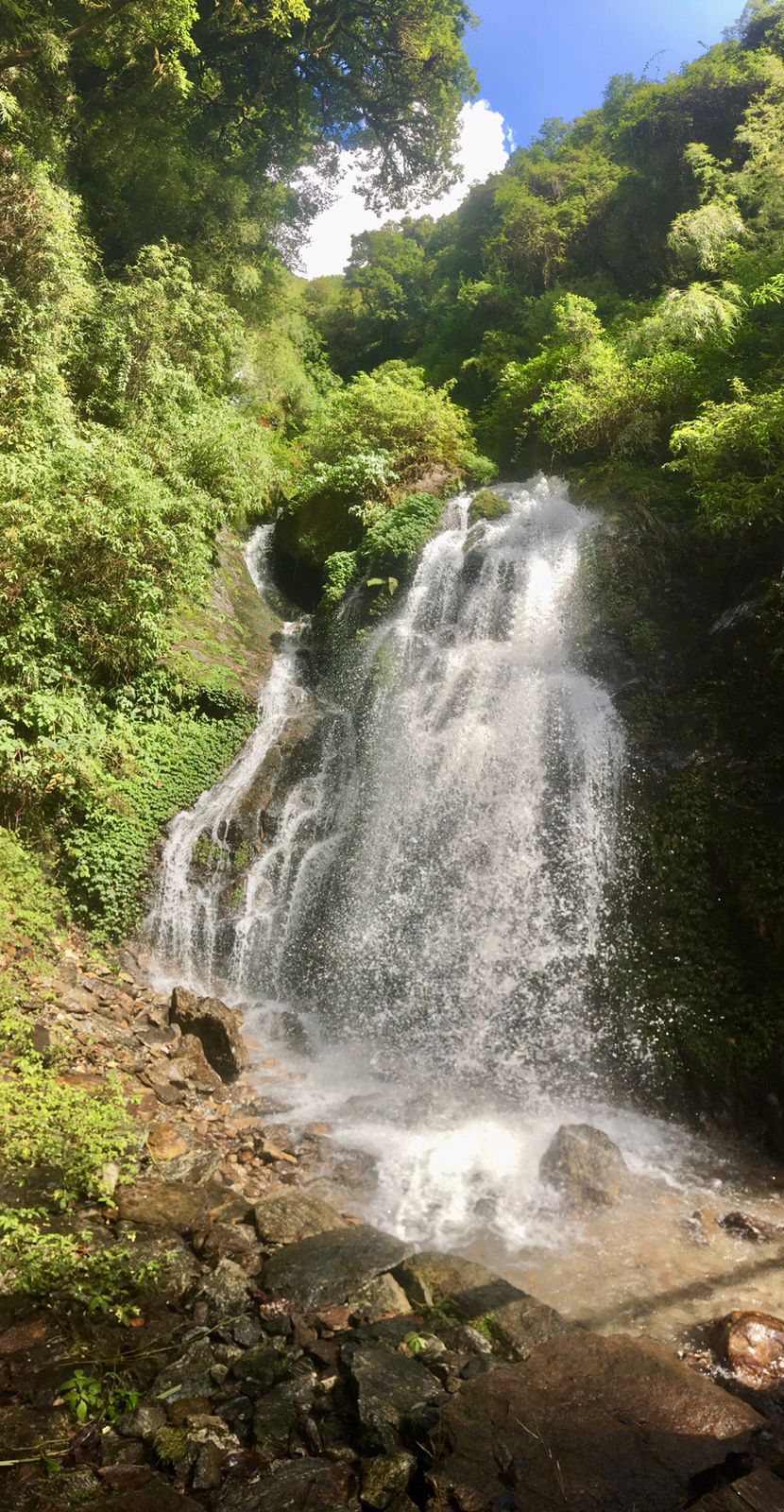
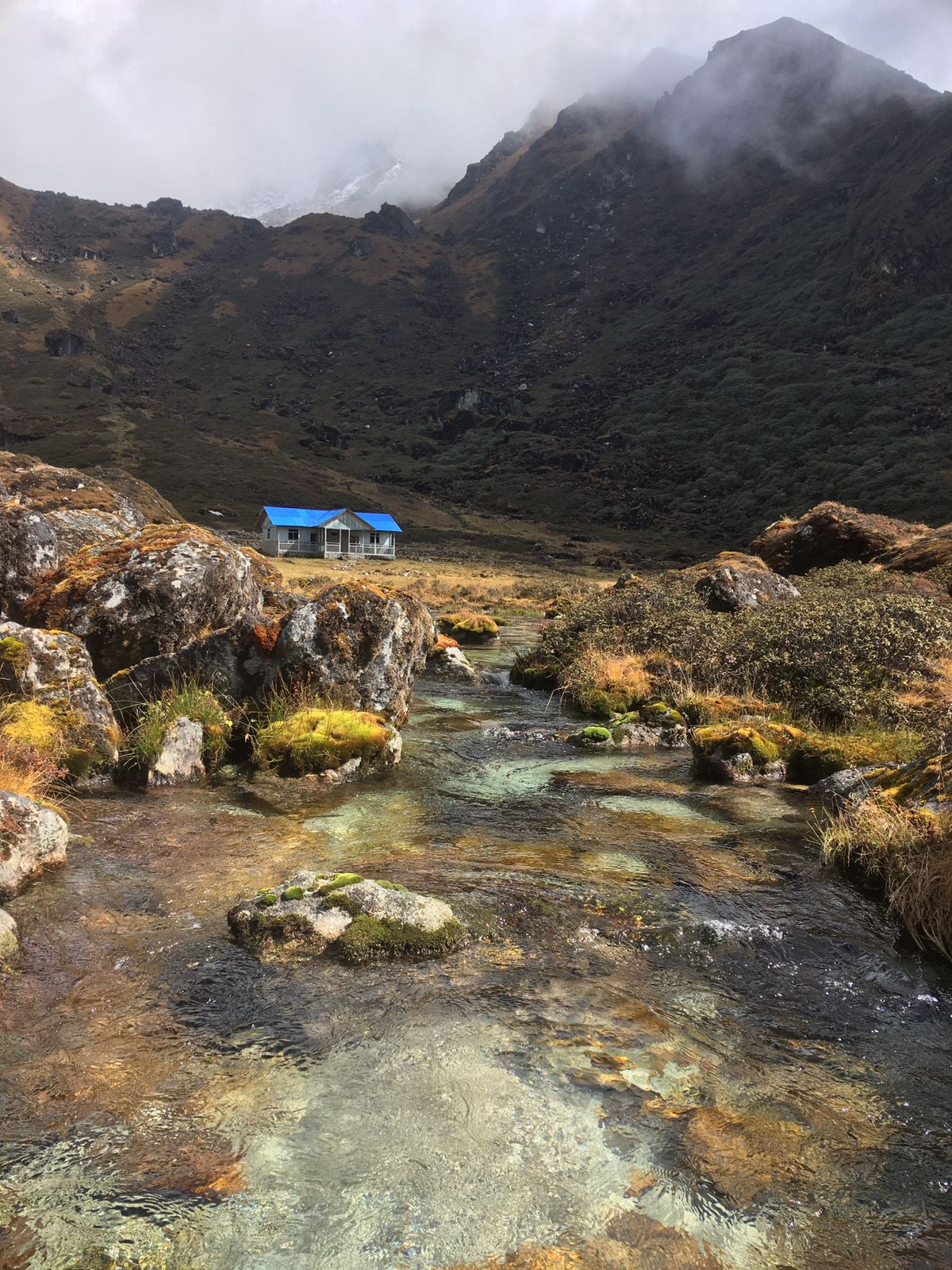
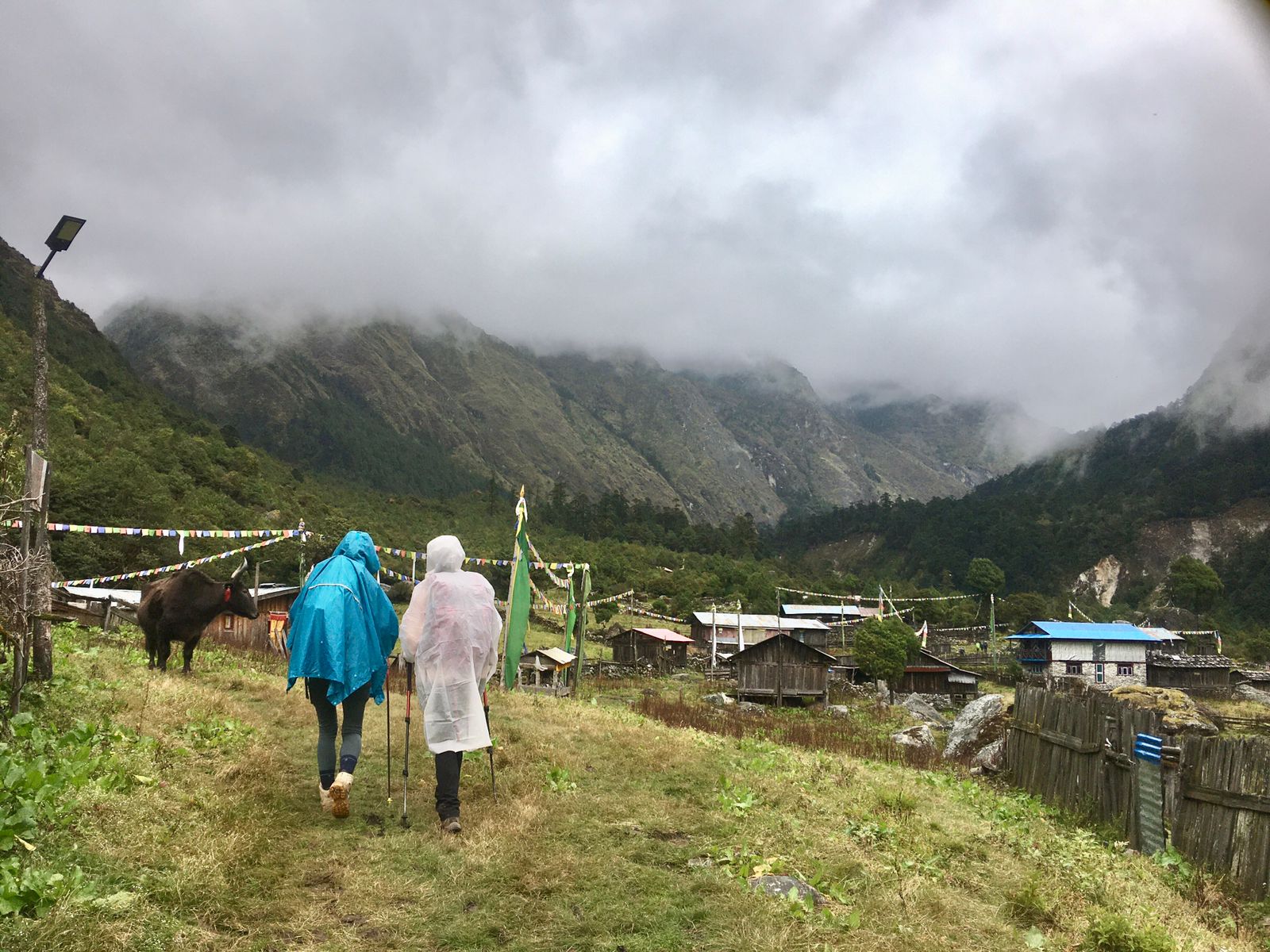
Today’s trek continues through enchanting forests of oak, rhododendron, and bamboo. During spring (March-May), the rhododendrons bloom in spectacular shades of red, pink, and white, creating a magical atmosphere. The trail is a moderate uphill climb with several rest stops at small clearings. We cross wooden bridges and pass waterfalls cascading down moss-covered rocks. Gyabla is a small village with stunning mountain views and basic lodge facilities.
Accommodation: Tea House
Meals: Breakfast, Lunch, Dinner
Walking Duration: 4-6 hours
Elevation Gain: 232m
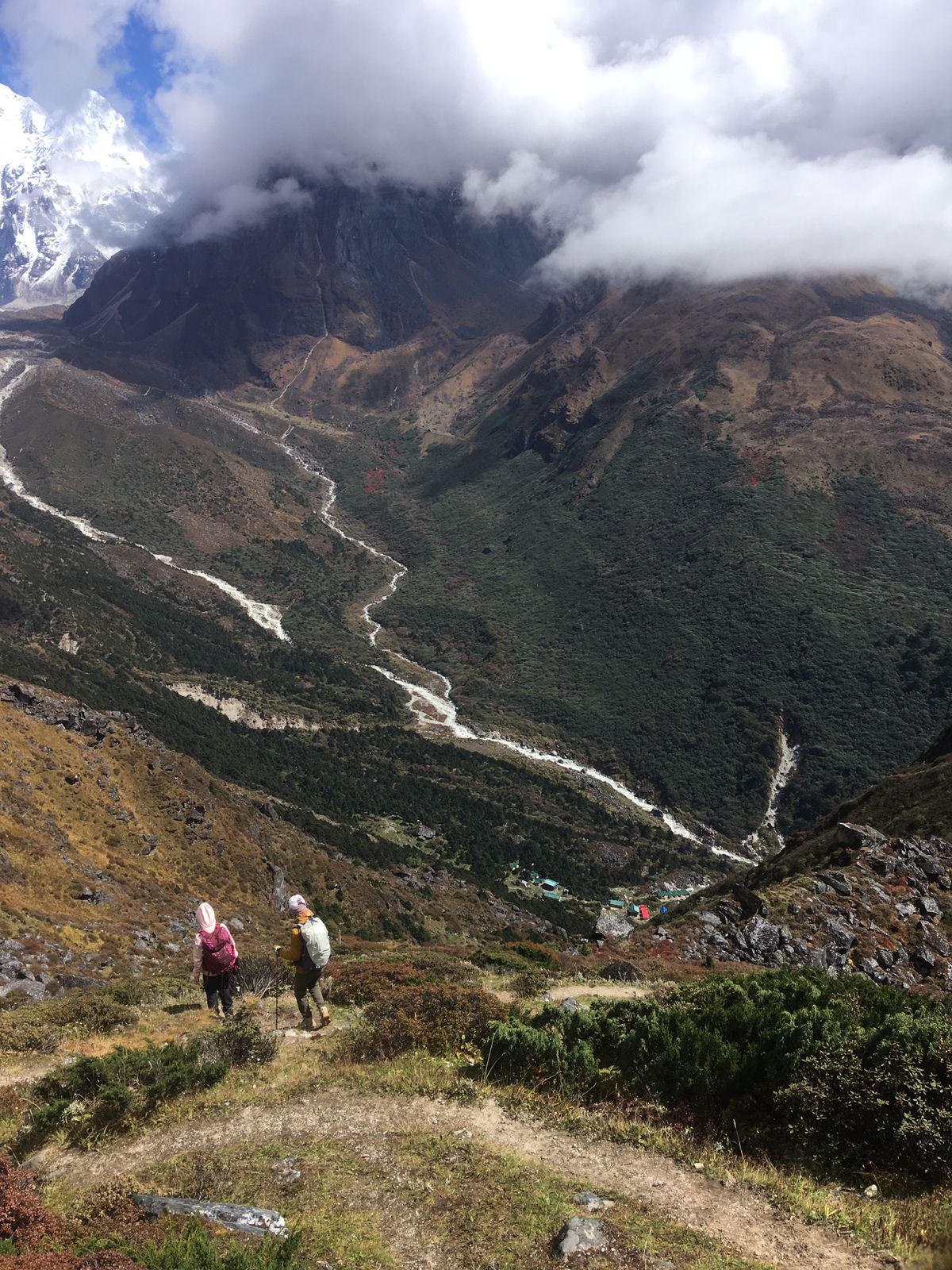
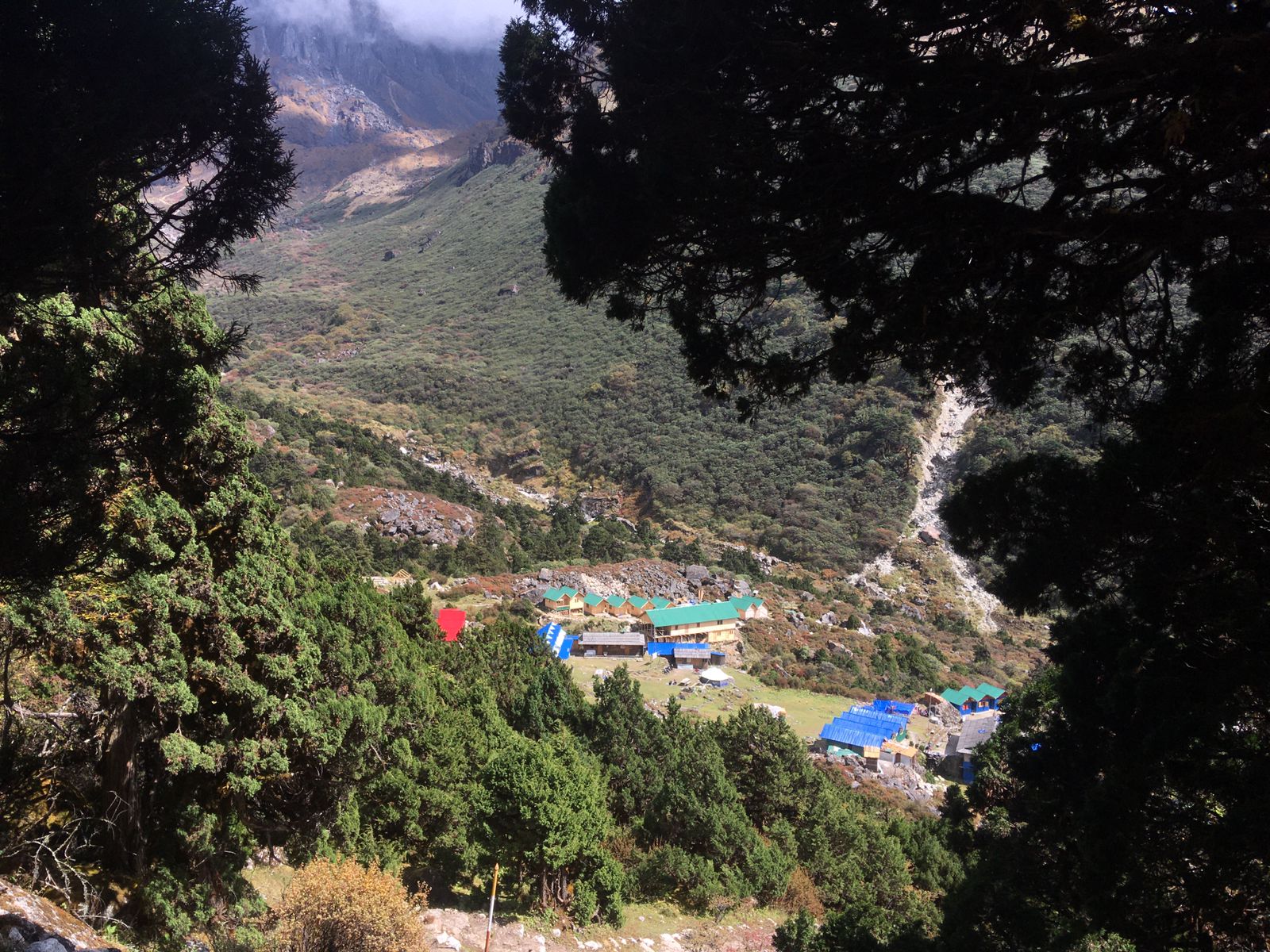
A longer trekking day takes us to Ghunsa, the largest settlement in this region and an important acclimatization stop. The trail follows the Ghunsa Khola through forests and crosses several streams on wooden bridges. As we approach Ghunsa, the landscape opens up and we get our first views of the snow-capped peaks ahead. Ghunsa is a beautiful Tibetan Buddhist village with a monastery, prayer wheels, and colorful prayer flags fluttering in the mountain breeze. The village offers relatively comfortable lodges and is an excellent place to rest and prepare for higher altitudes.
Accommodation: Tea House
Meals: Breakfast, Lunch, Dinner
Walking Duration: 5-6 hours
Elevation Gain: 685m
This is a crucial rest and acclimatization day to help our bodies adjust to the altitude before heading higher. We don’t stay completely idle—we’ll take a short acclimatization hike to higher elevations (possibly to viewpoints above the village or toward the monastery) before returning to Ghunsa for the night. This “climb high, sleep low” strategy significantly reduces the risk of altitude sickness. You can also explore the village, visit the local monastery, interact with friendly locals, and enjoy spectacular mountain views. This rest day is essential for a safe and successful summit to base camp.
Accommodation: Tea House
Meals: Breakfast, Lunch, Dinner
Activities: Acclimatization hike, village exploration, monastery visit
Importance: Critical for altitude adjustment
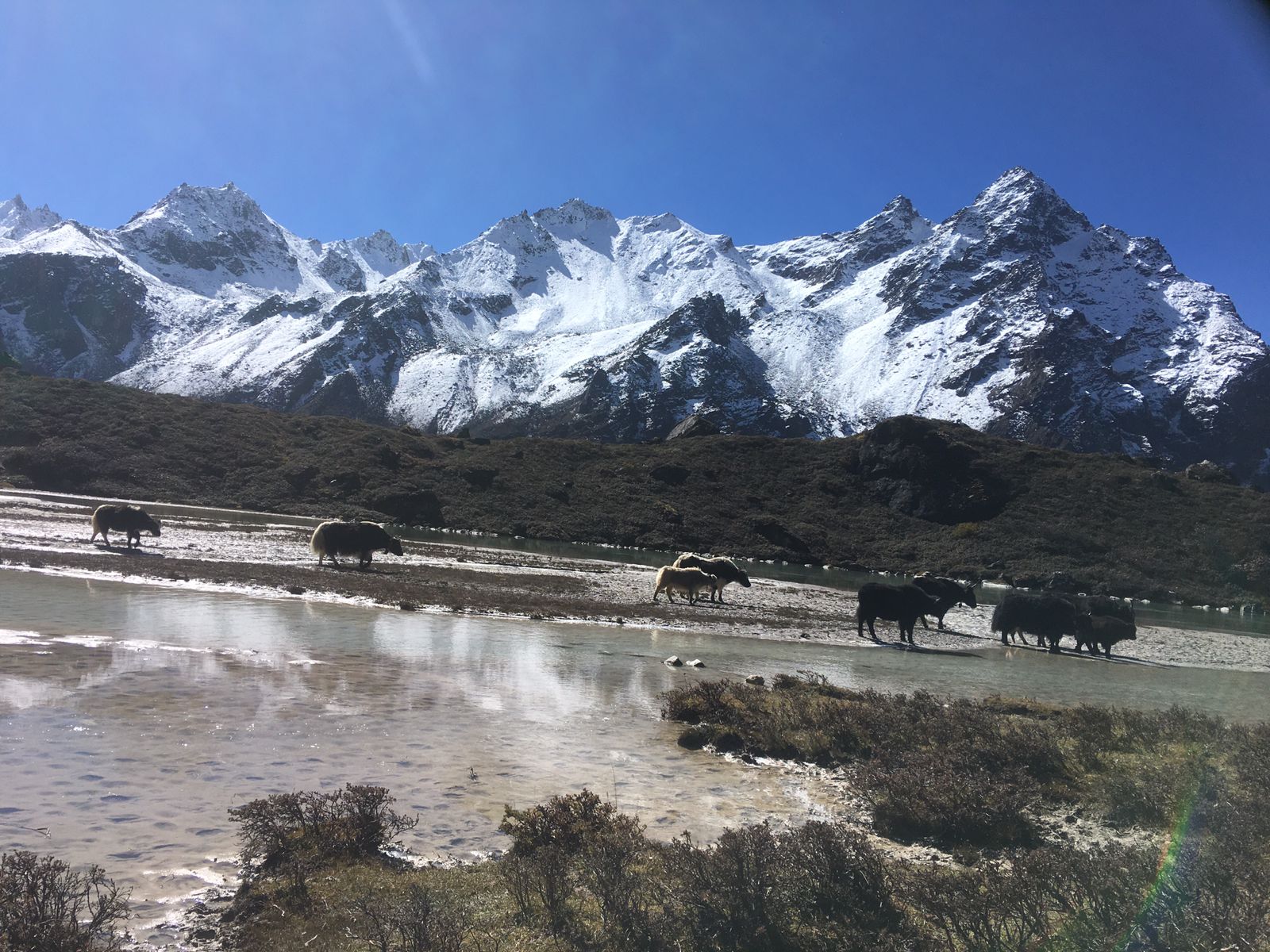
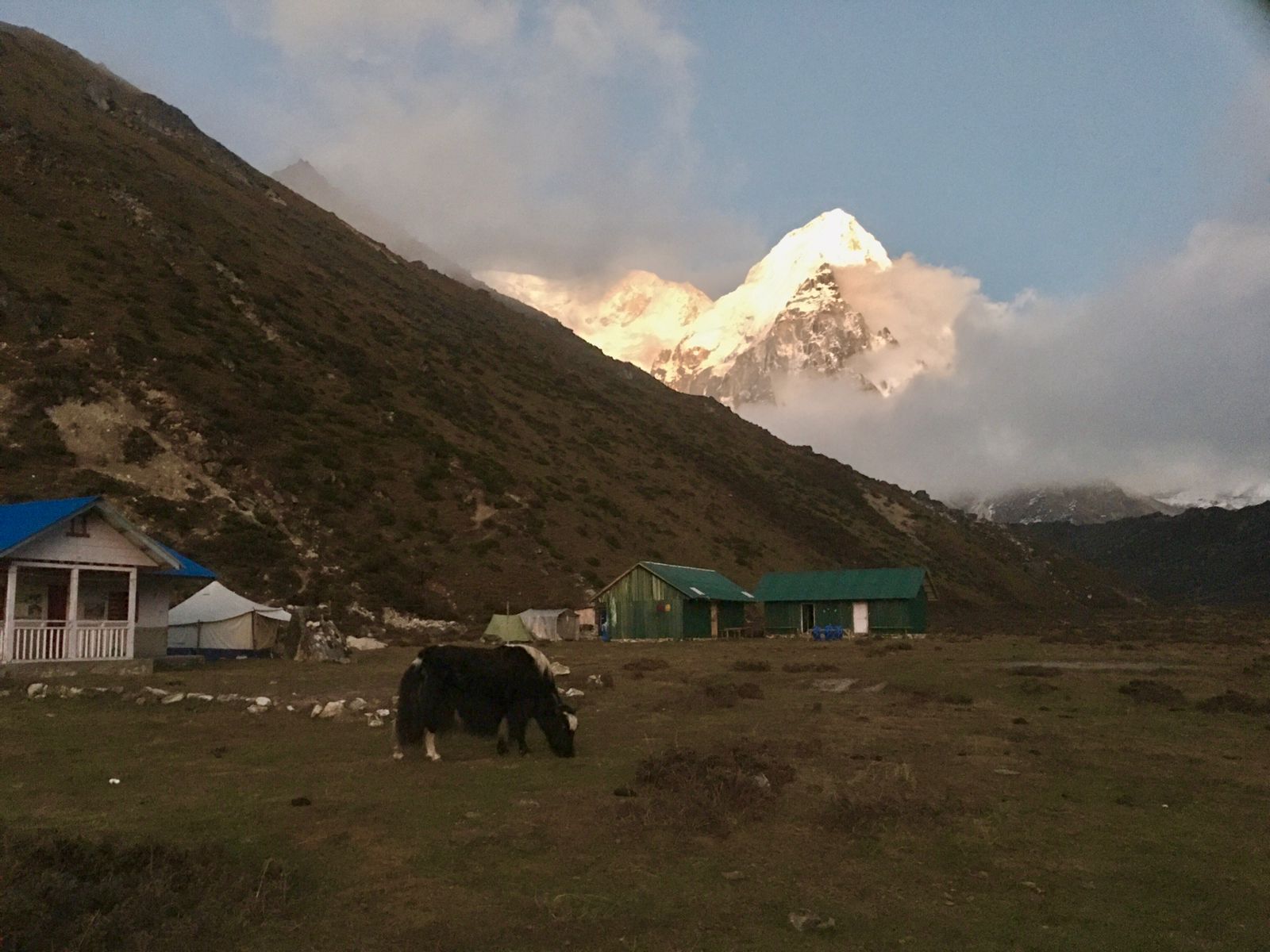
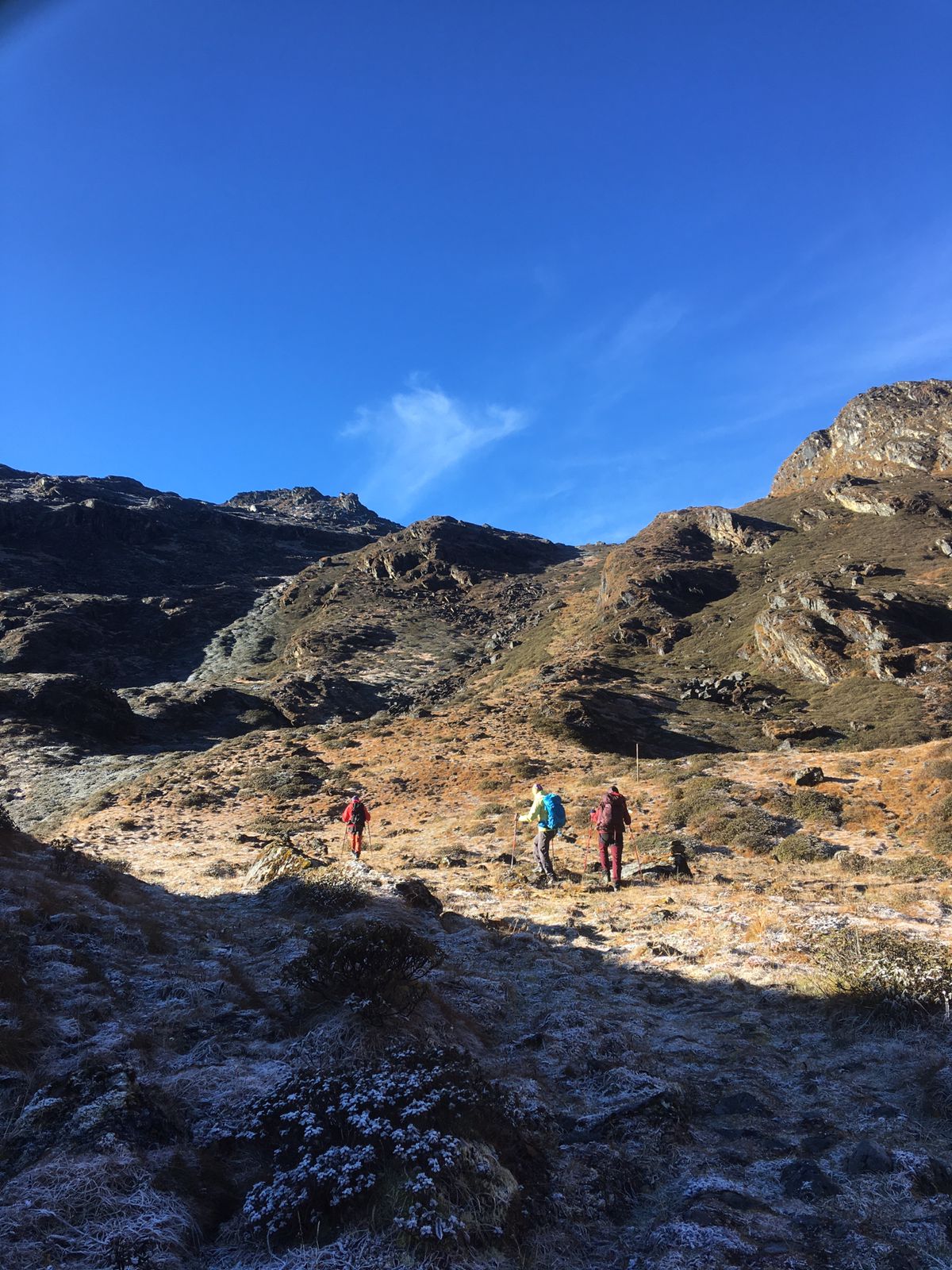
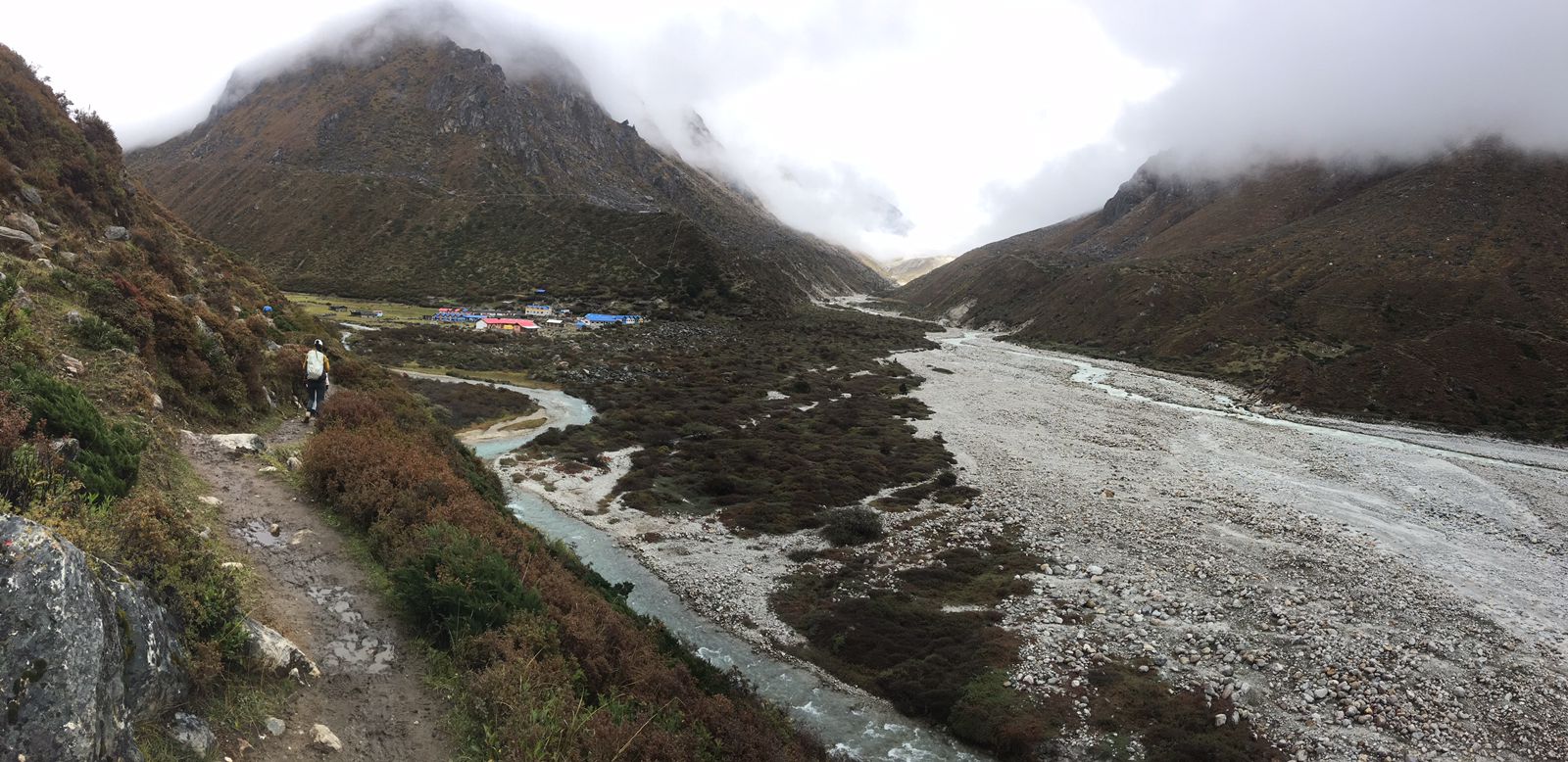
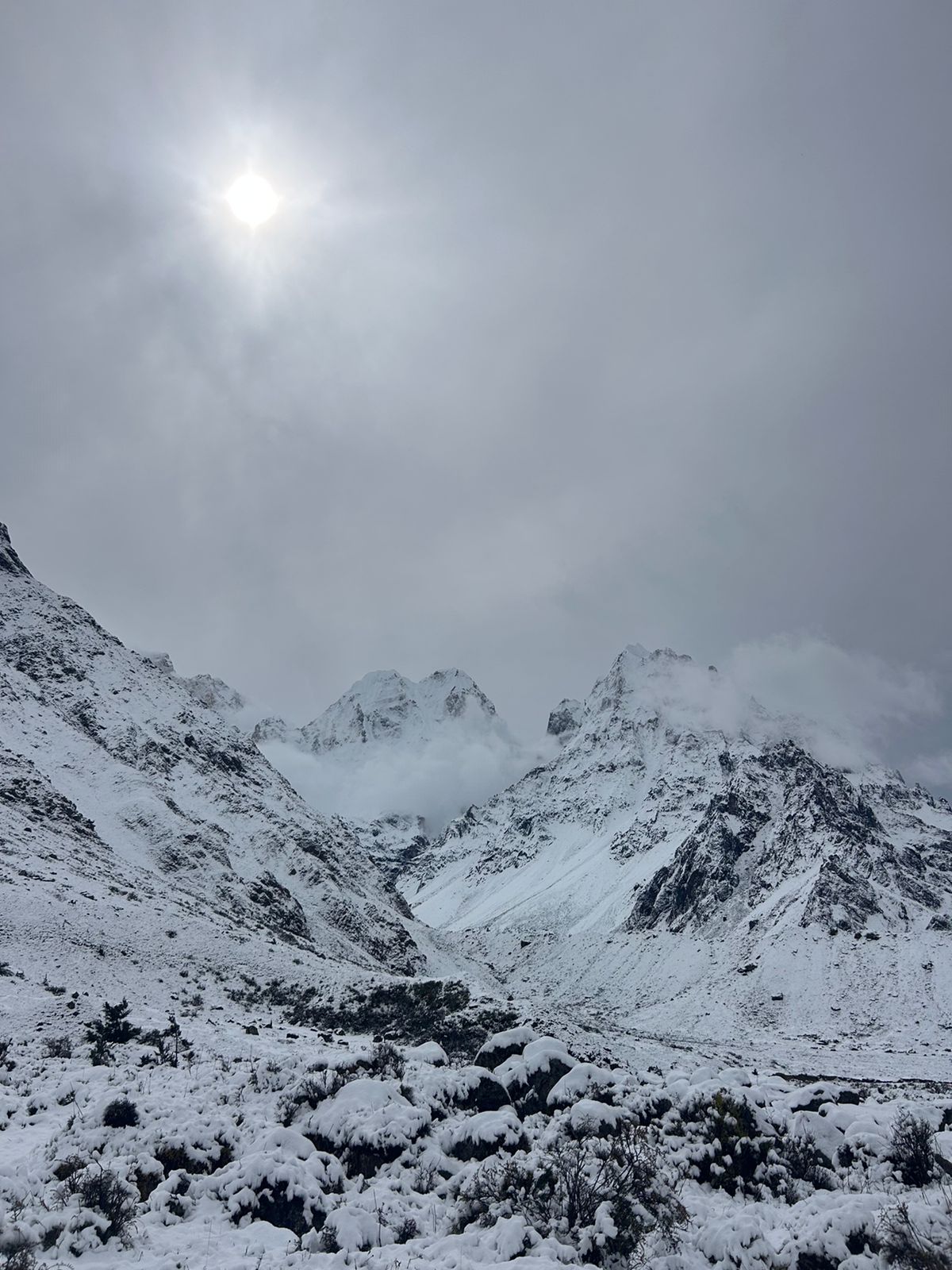
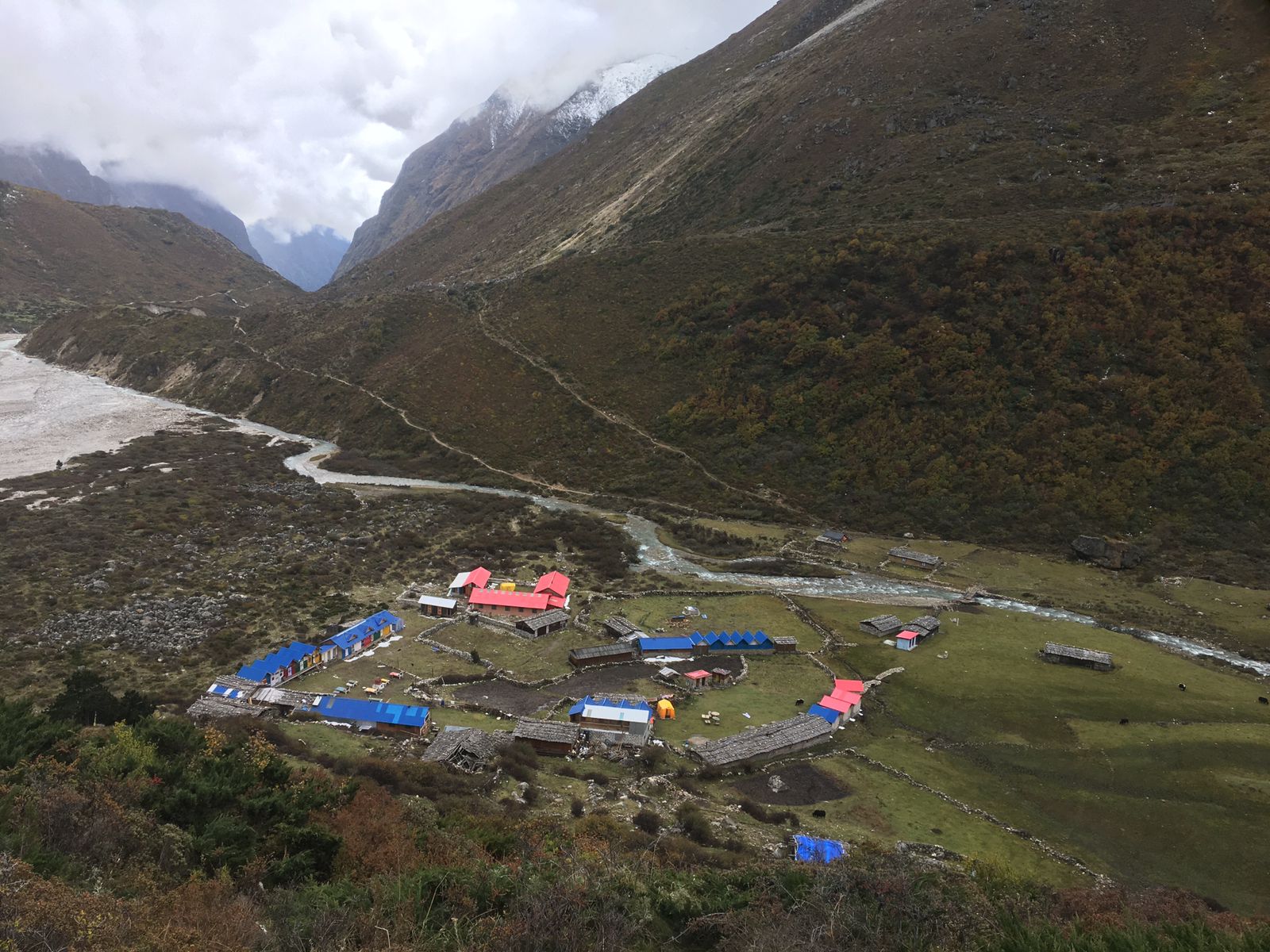
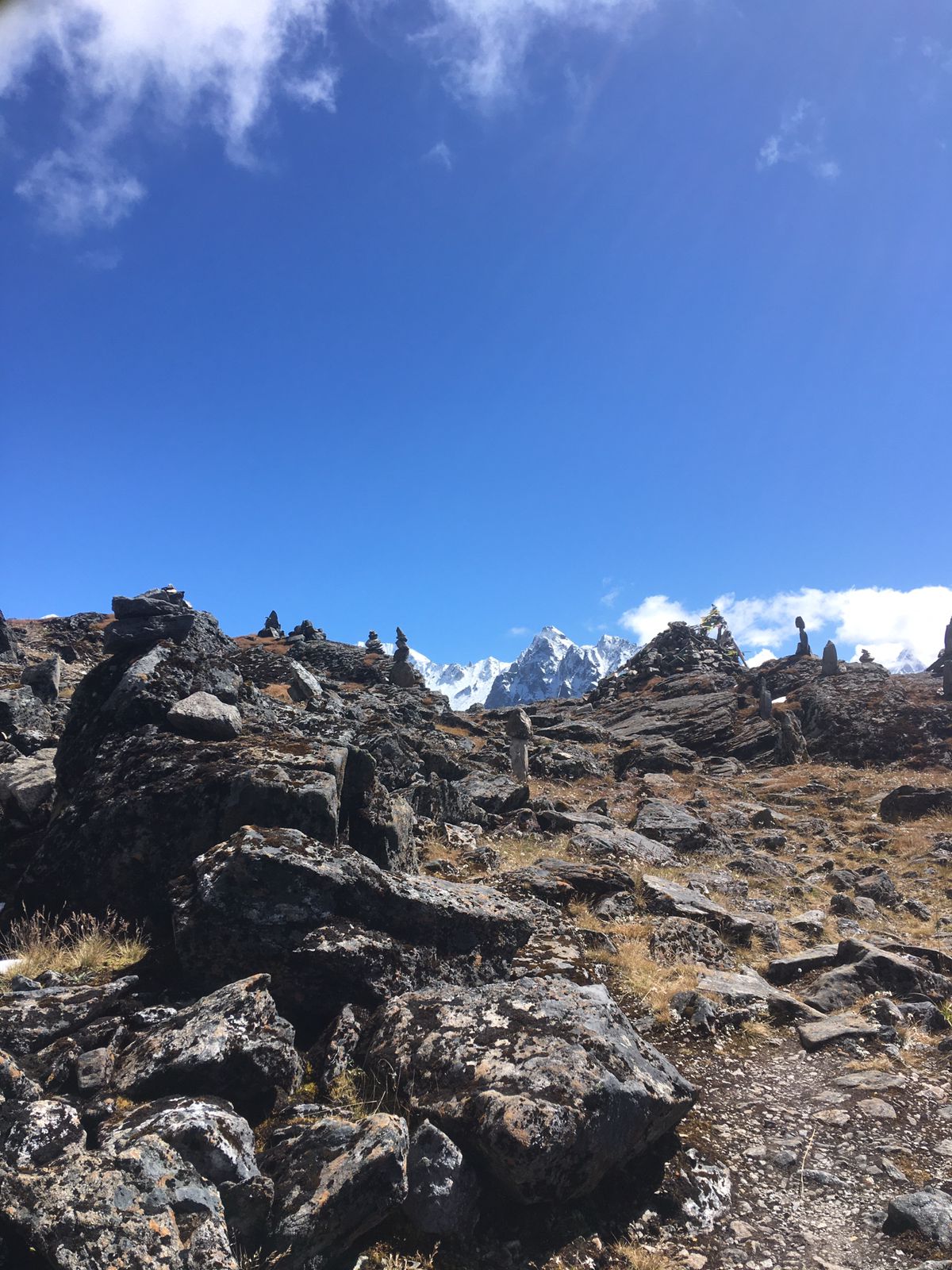
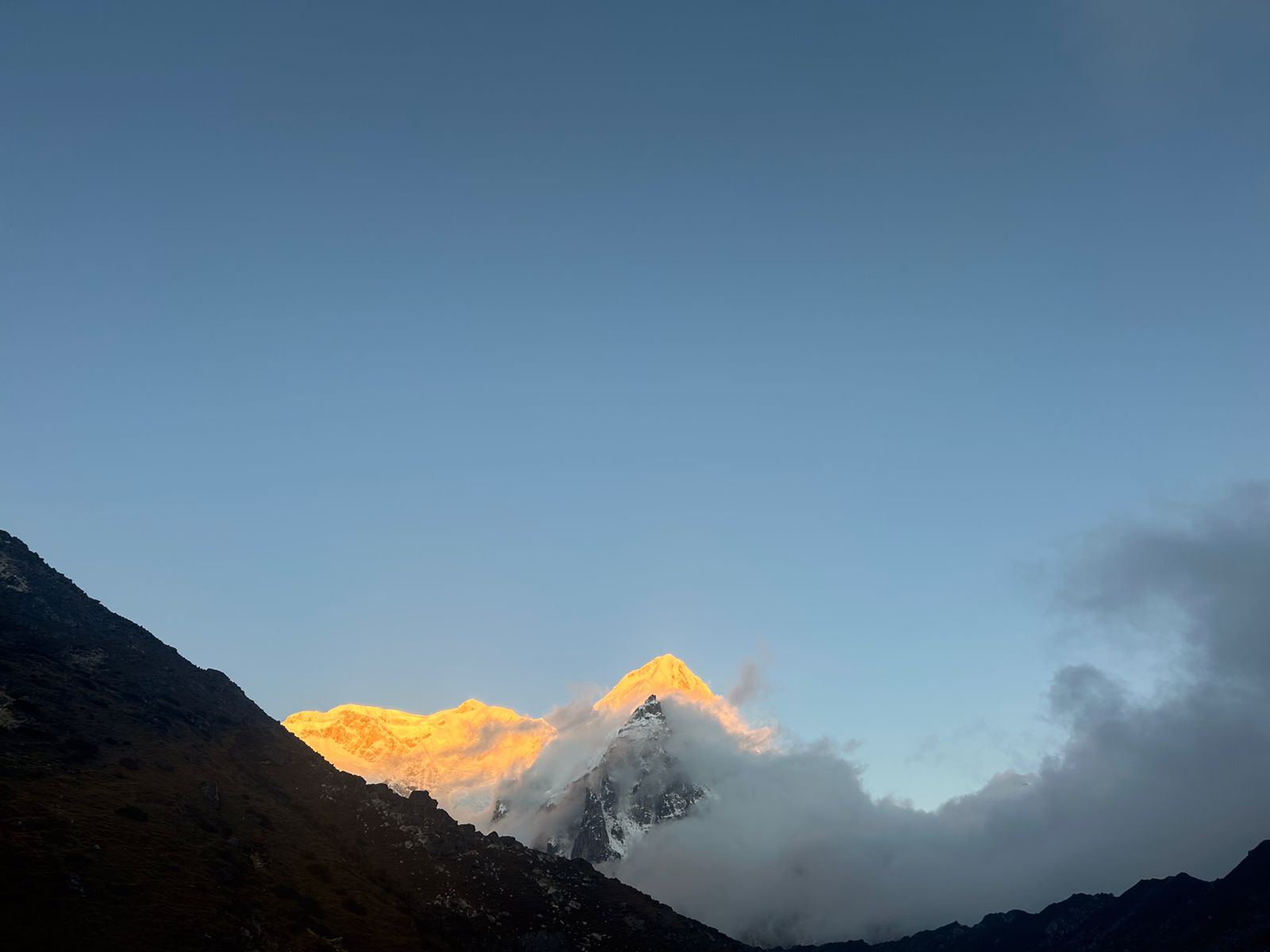
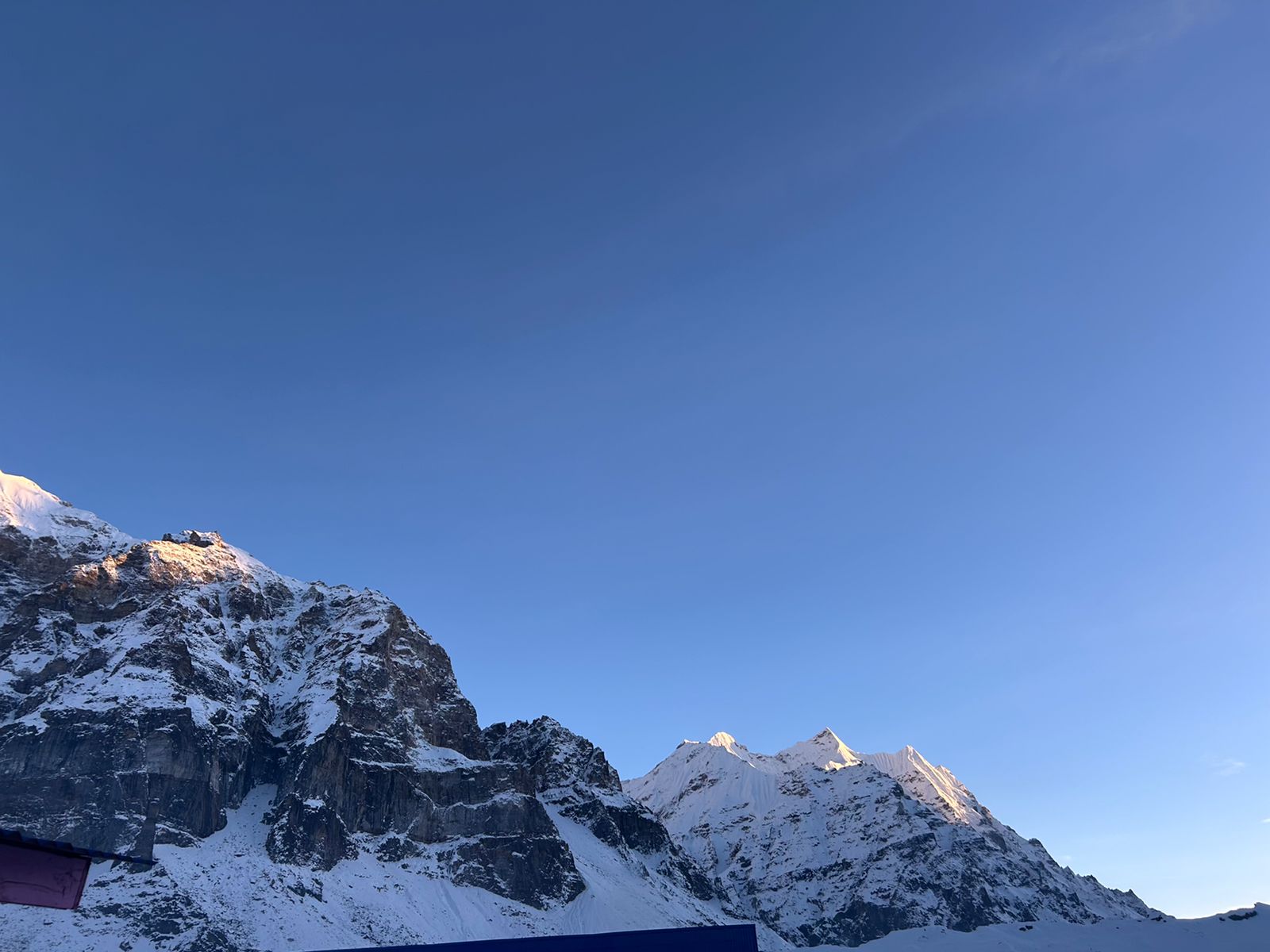
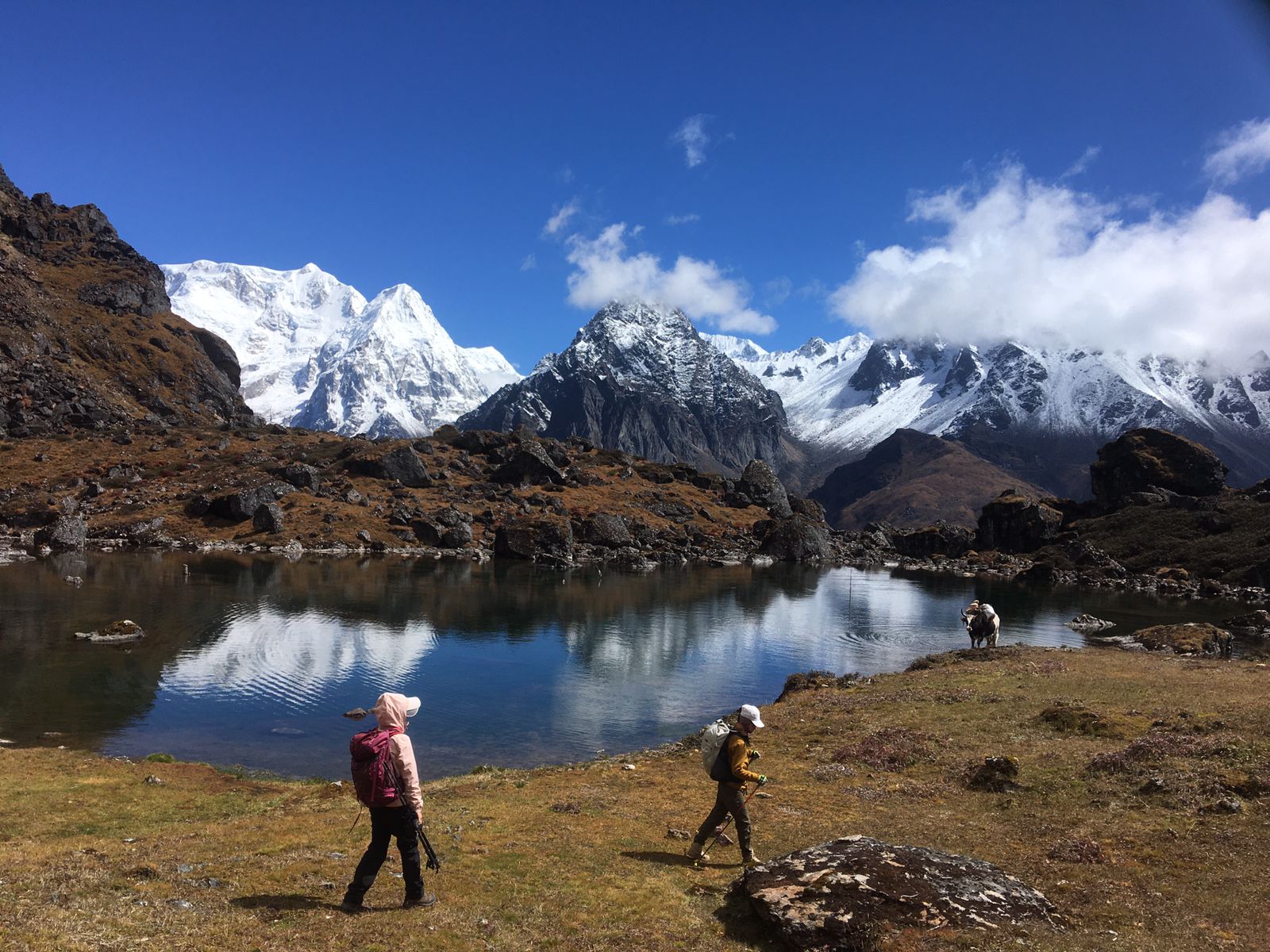
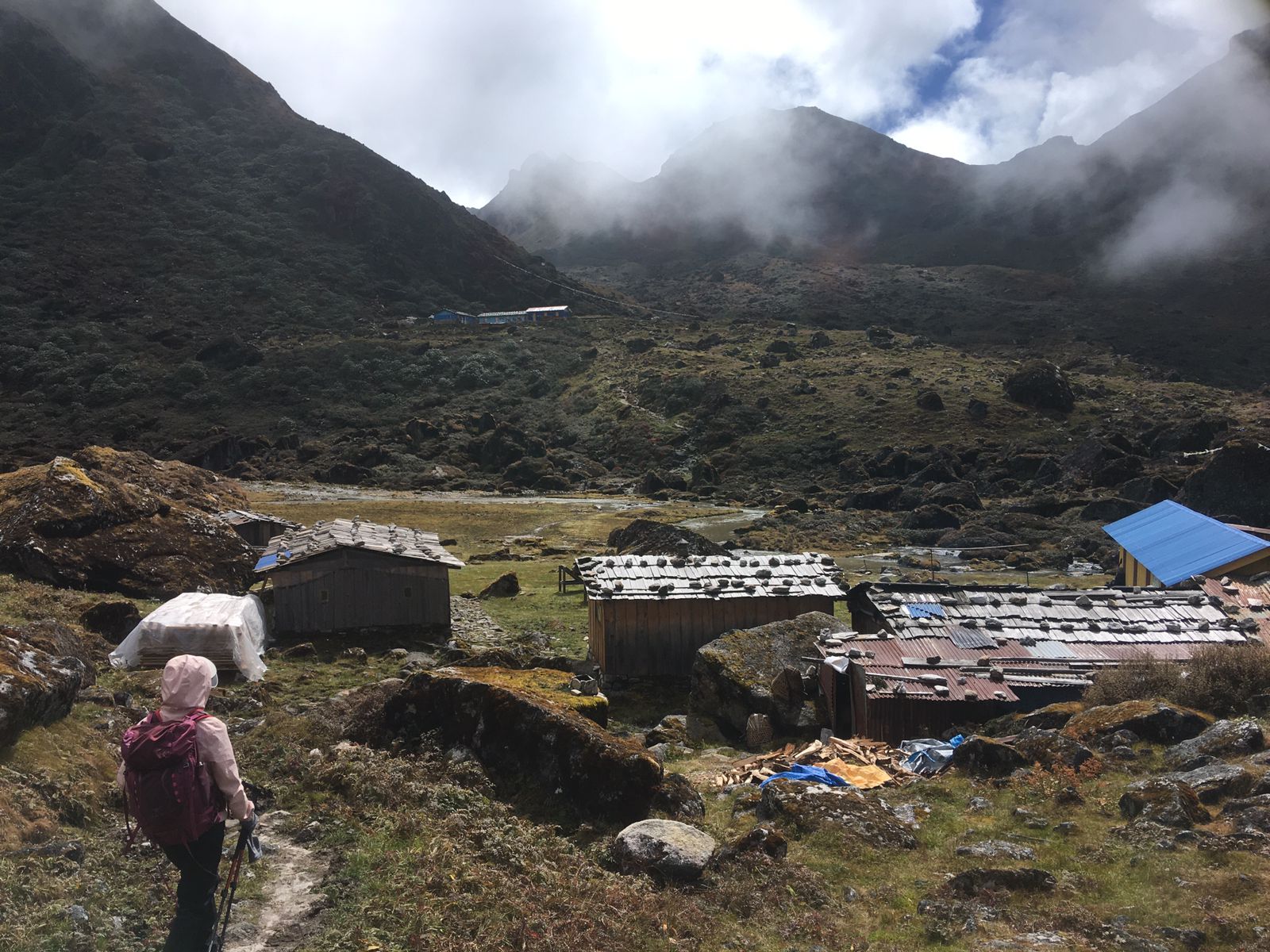
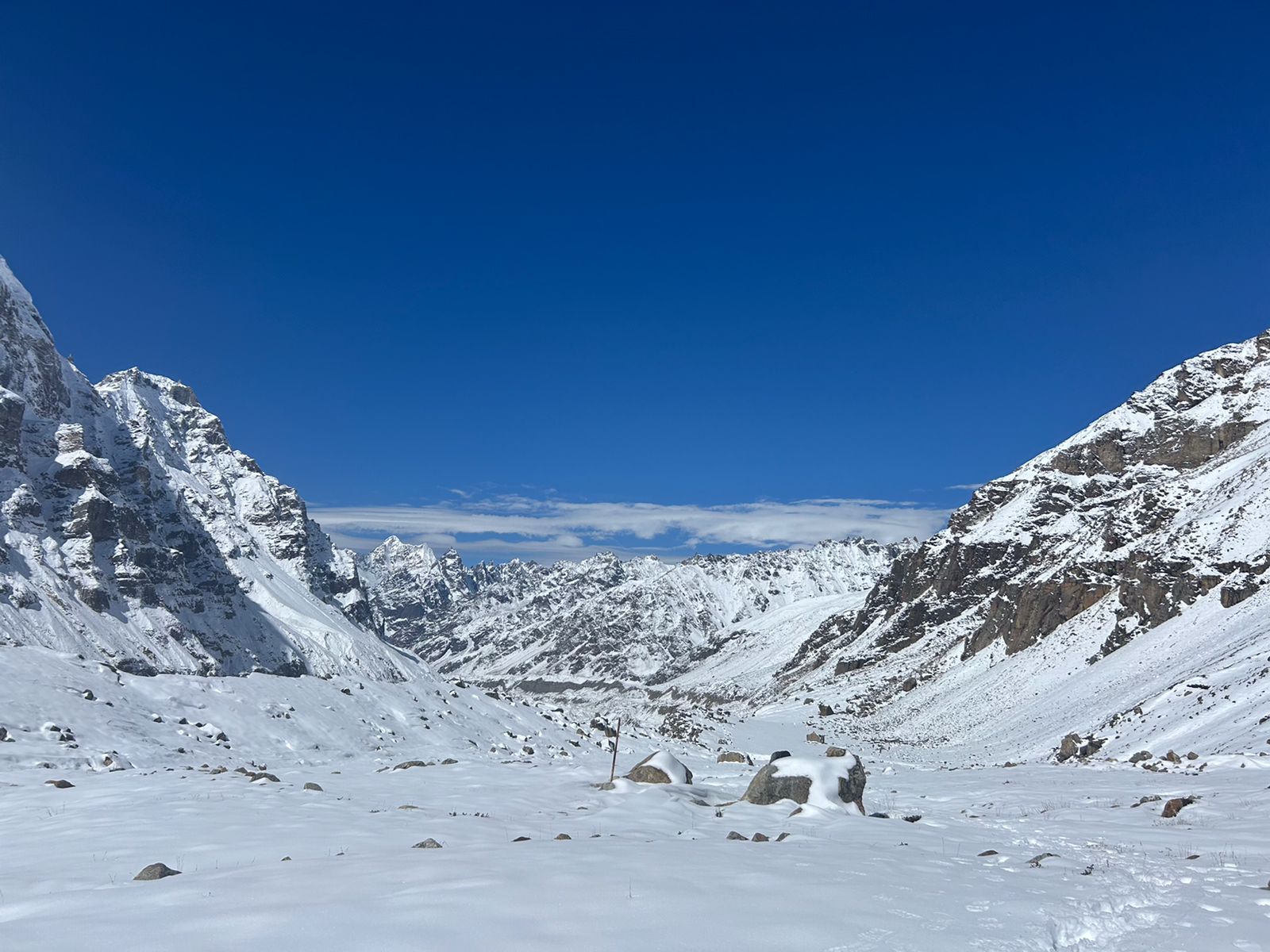
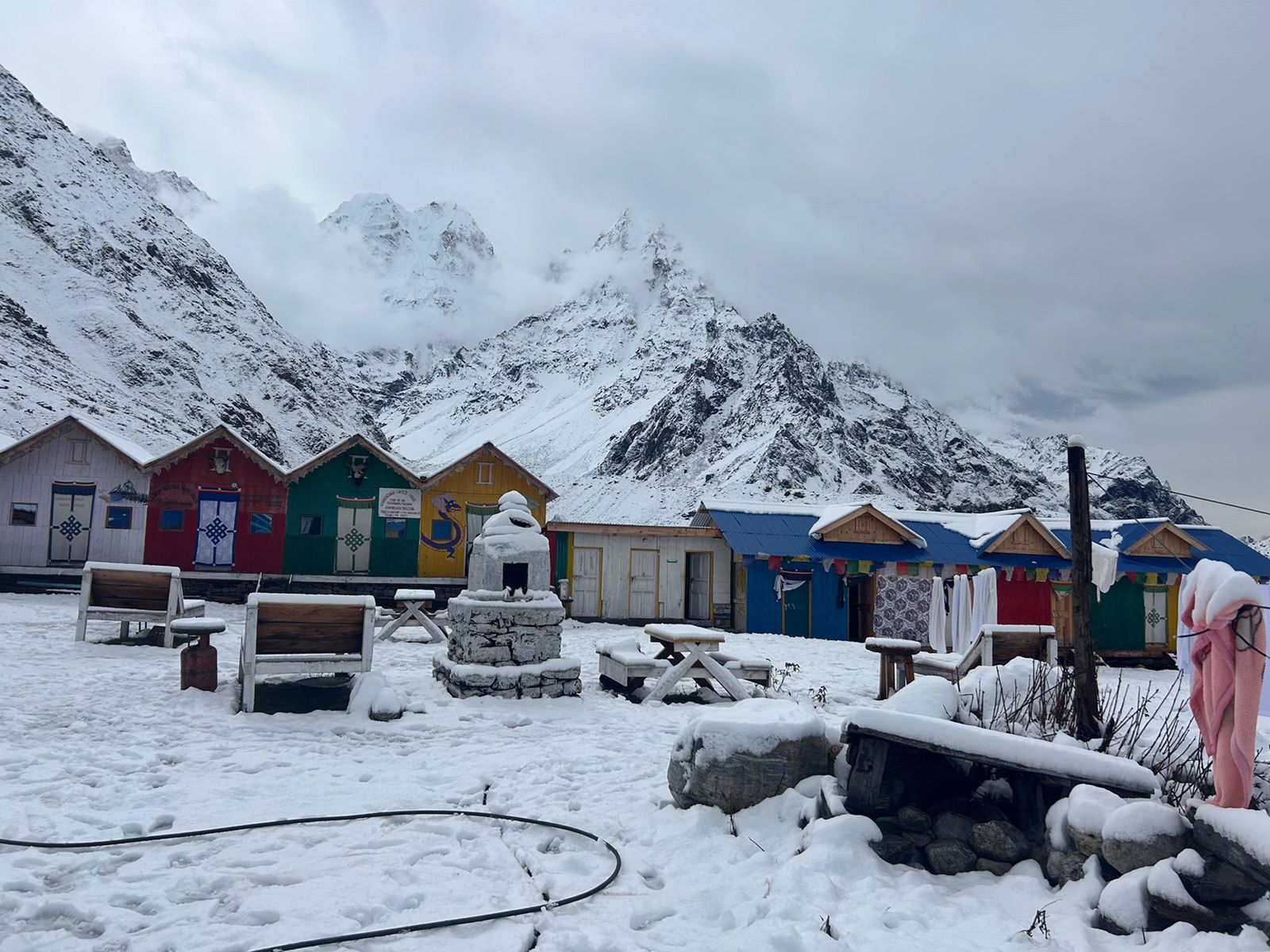
Leaving the tree line behind, we enter the high alpine zone. The trail climbs steadily through a landscape of juniper shrubs, rocky terrain, and glacial streams. The views become increasingly spectacular with massive peaks dominating the horizon. The air becomes noticeably thinner and the temperature cooler. Kambachen is a small settlement with basic stone lodges surrounded by towering mountains. From here, we have stunning views of Jannu (7,710m) and the Kanchenjunga massif.
Accommodation: Tea House
Meals: Breakfast, Lunch, Dinner
Walking Duration: 5-7 hours
Elevation Gain: 635m
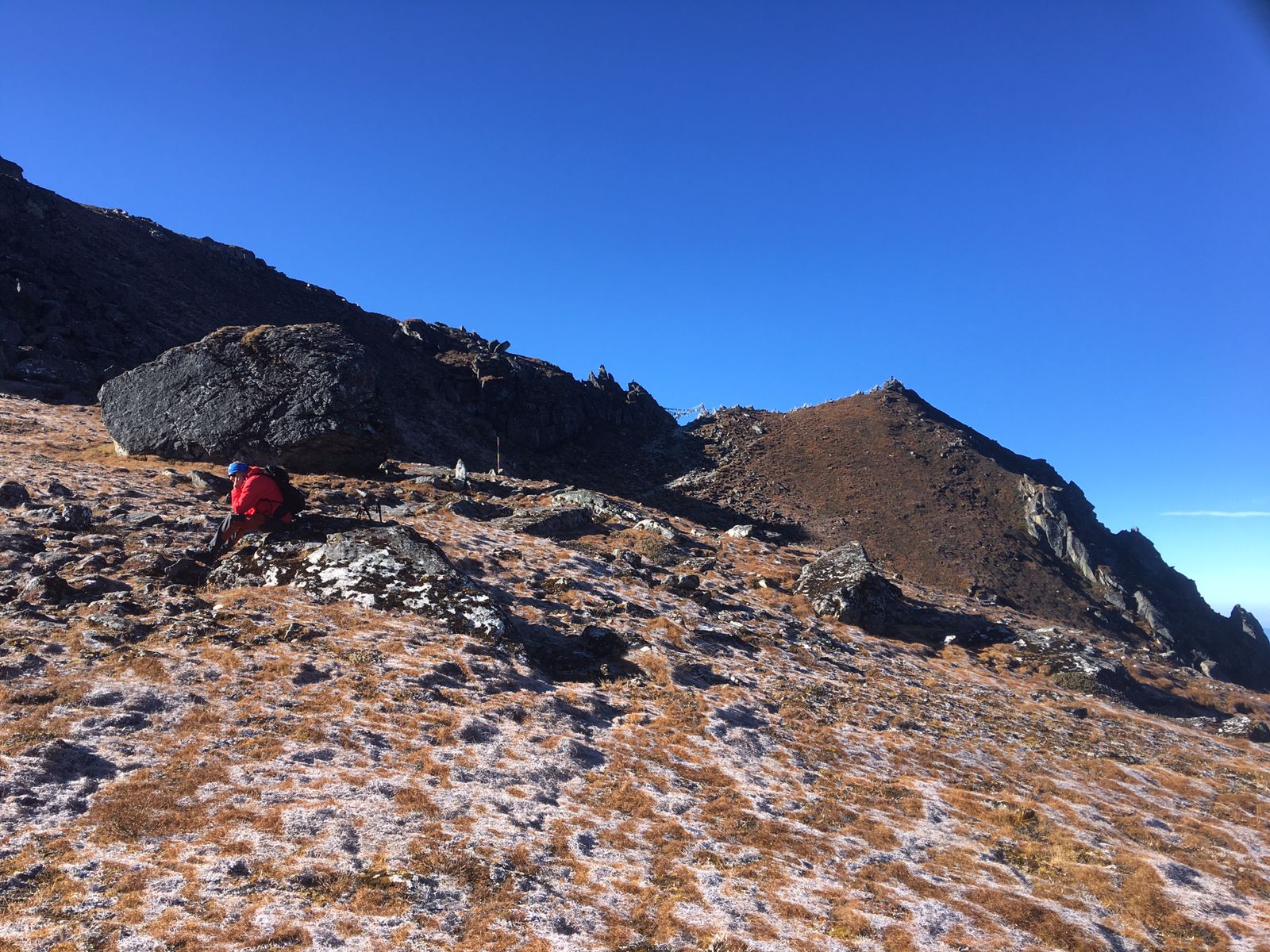
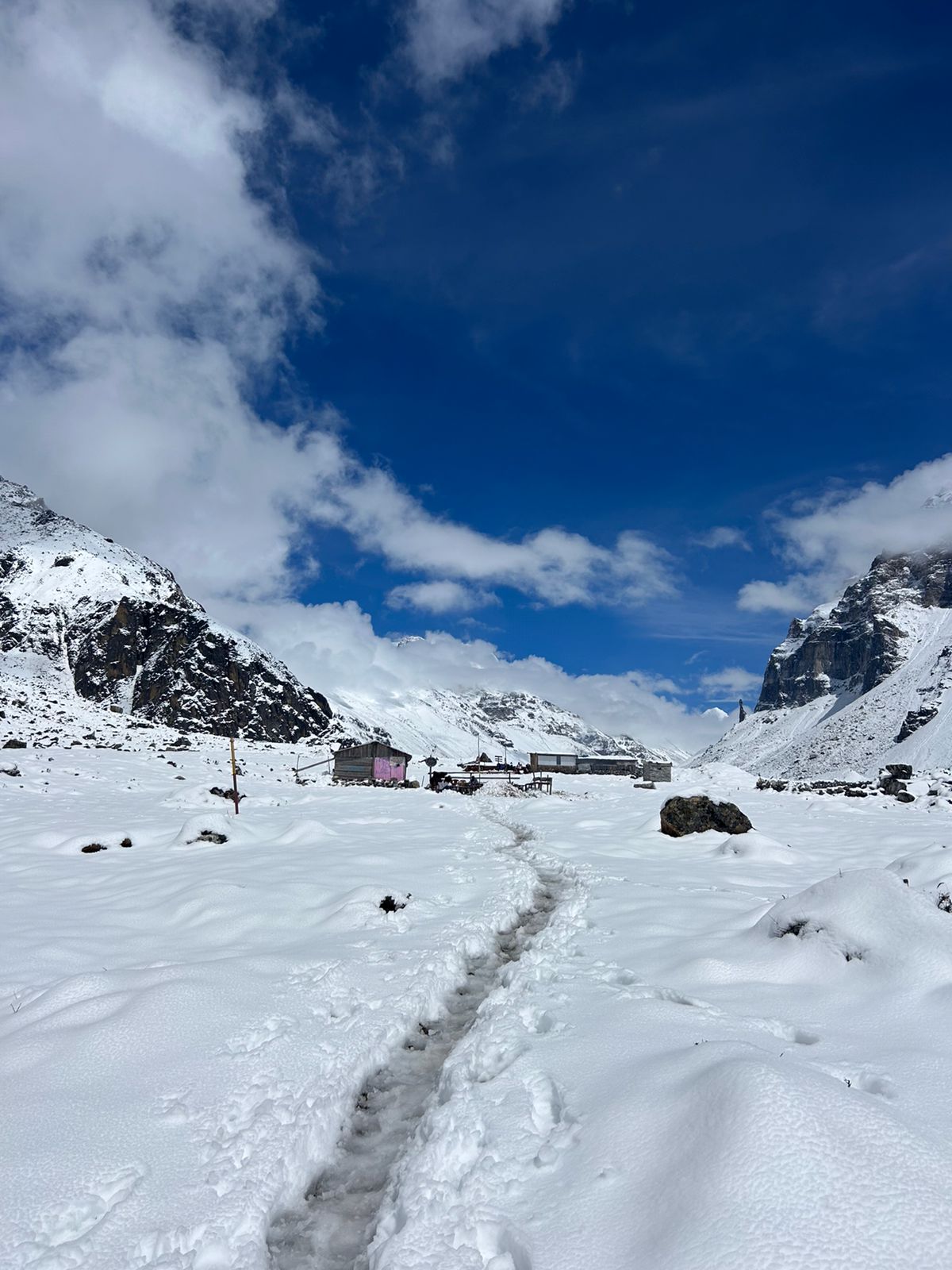
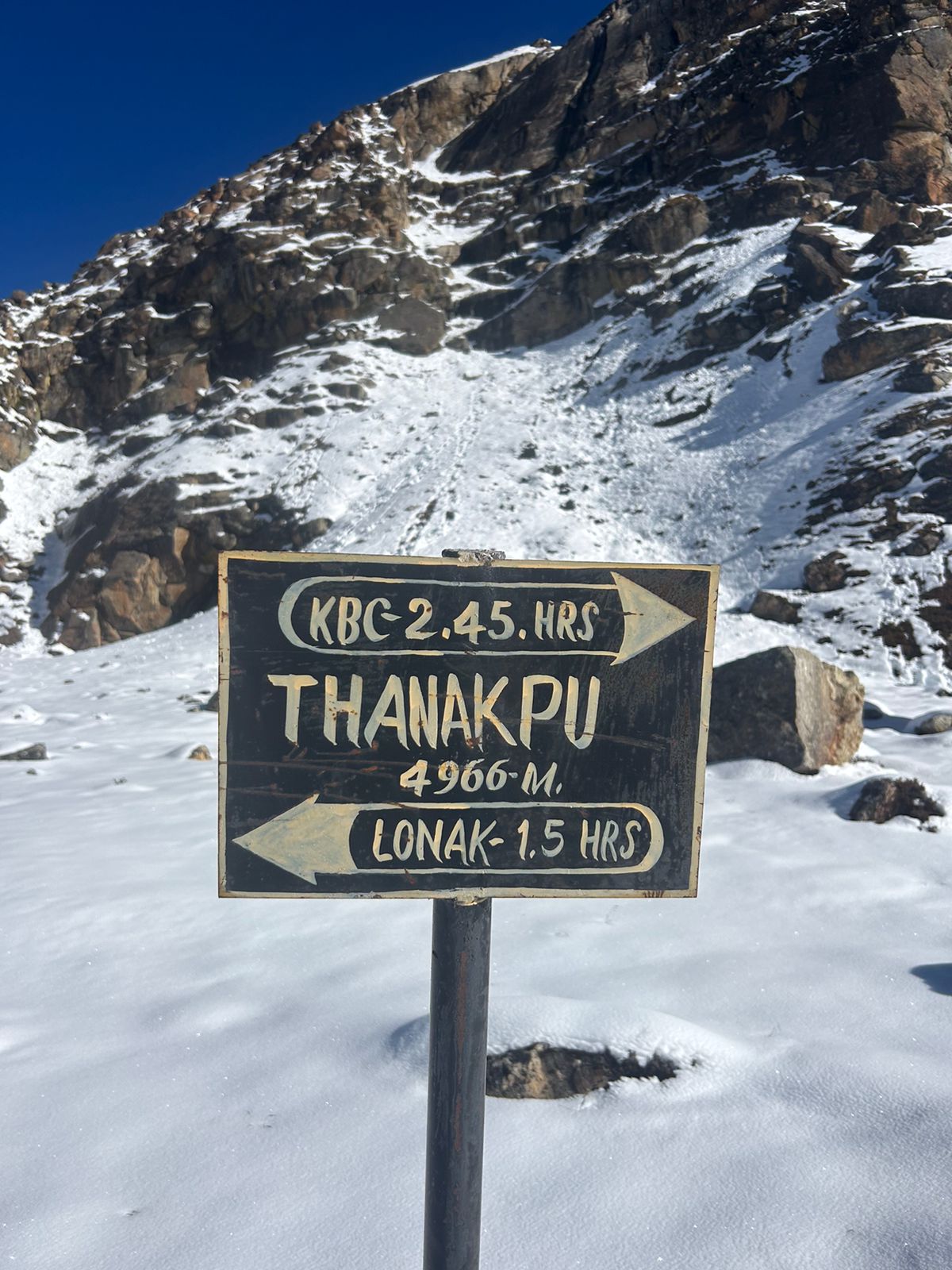
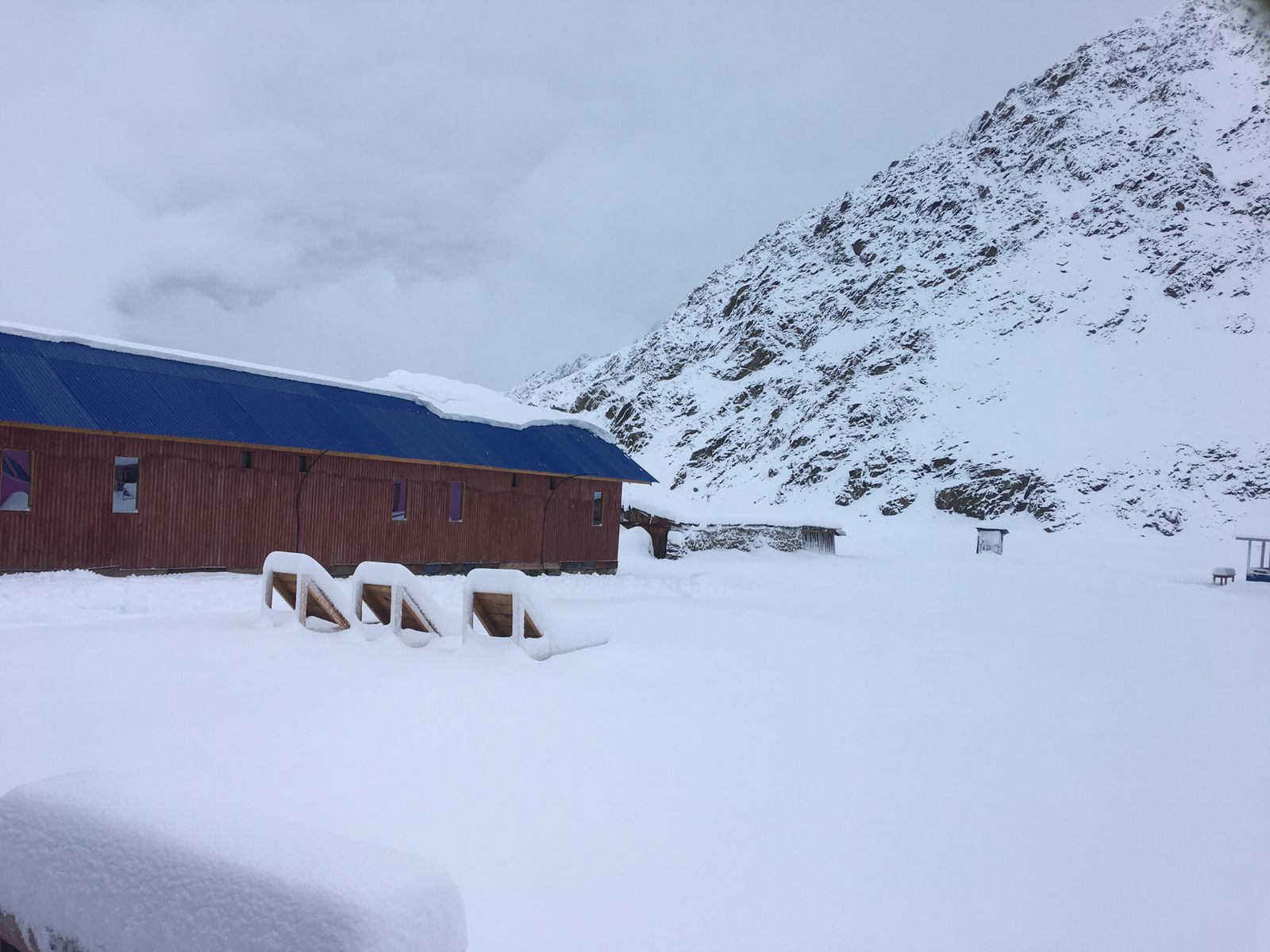
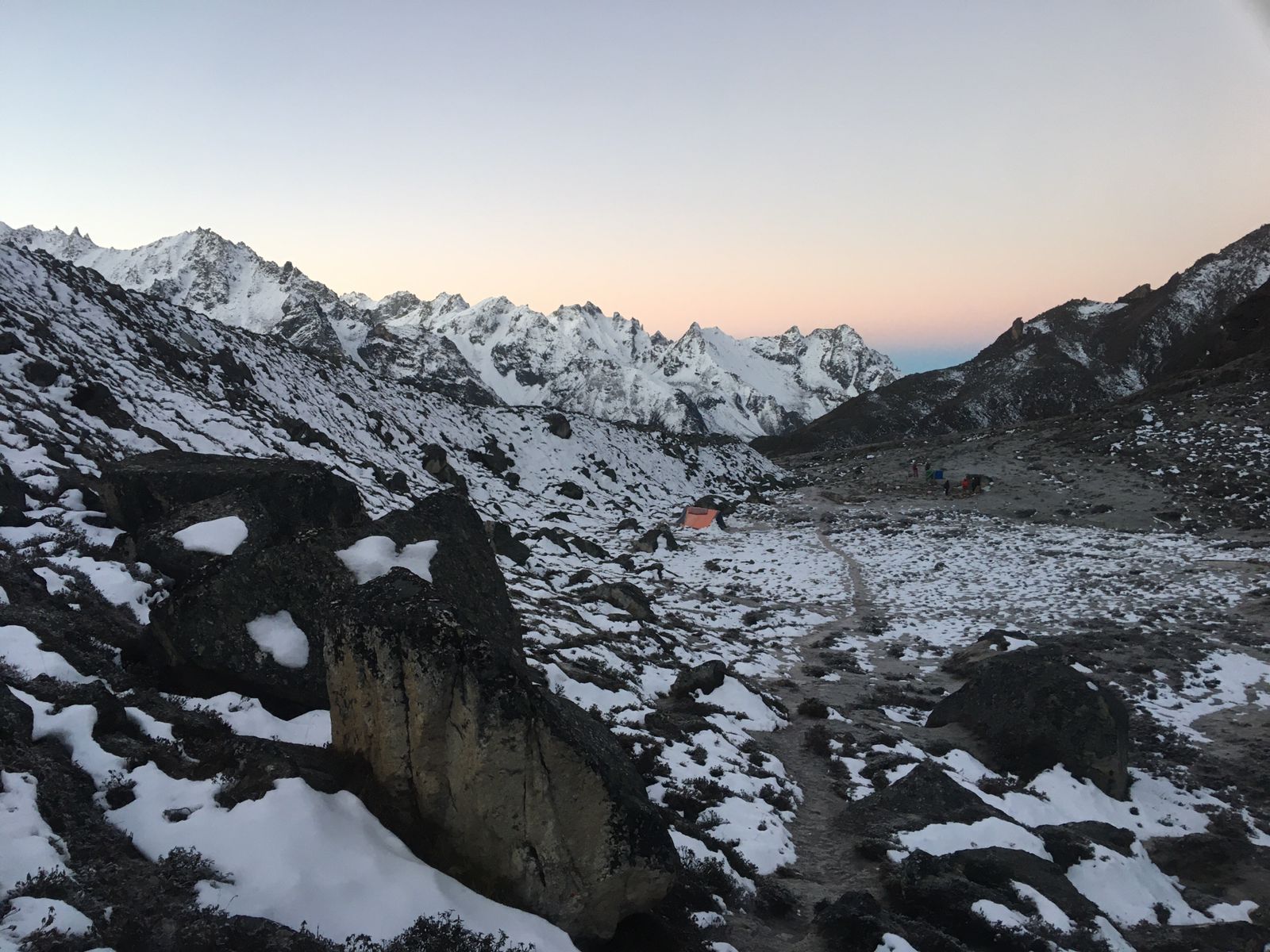
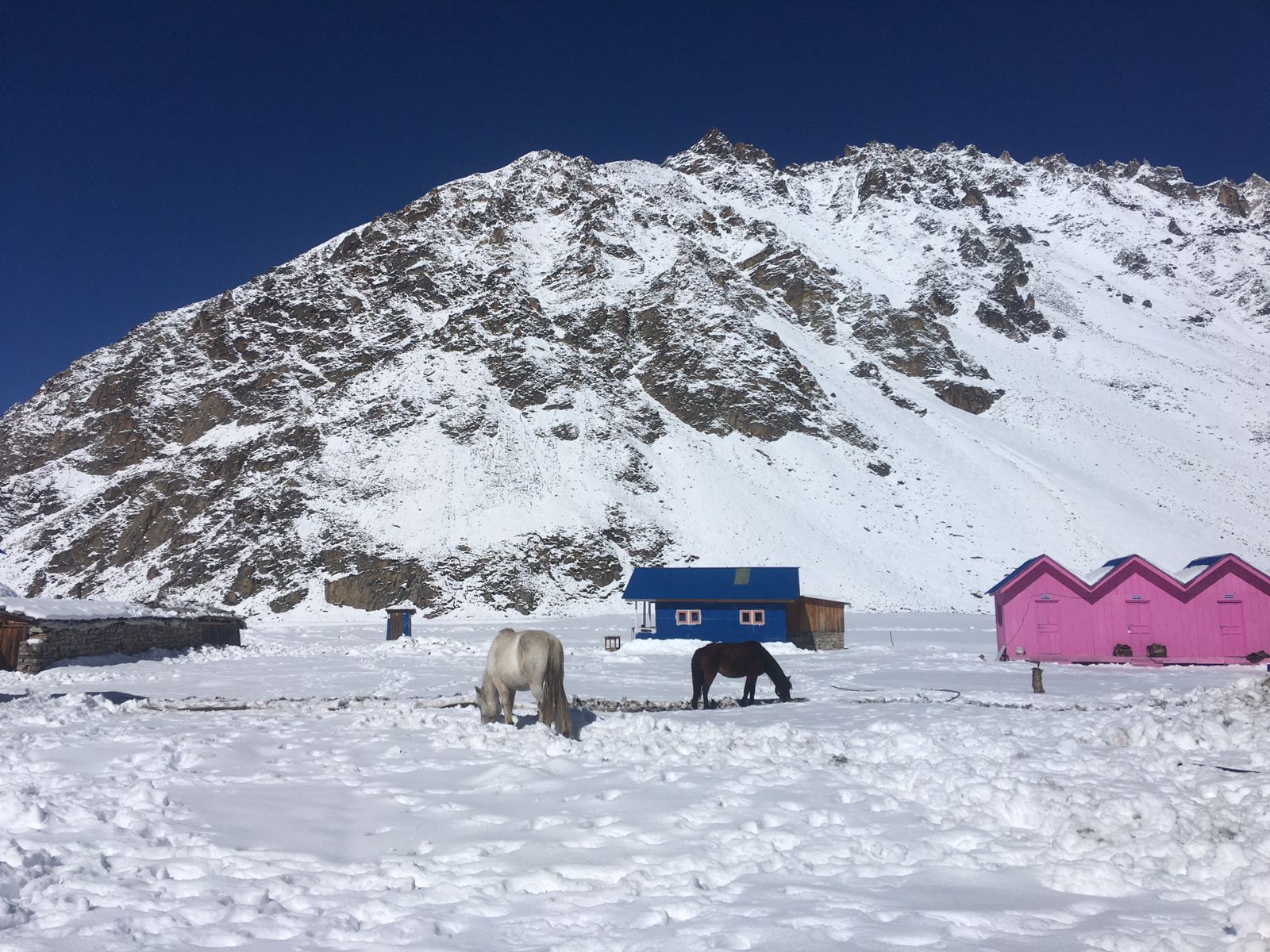
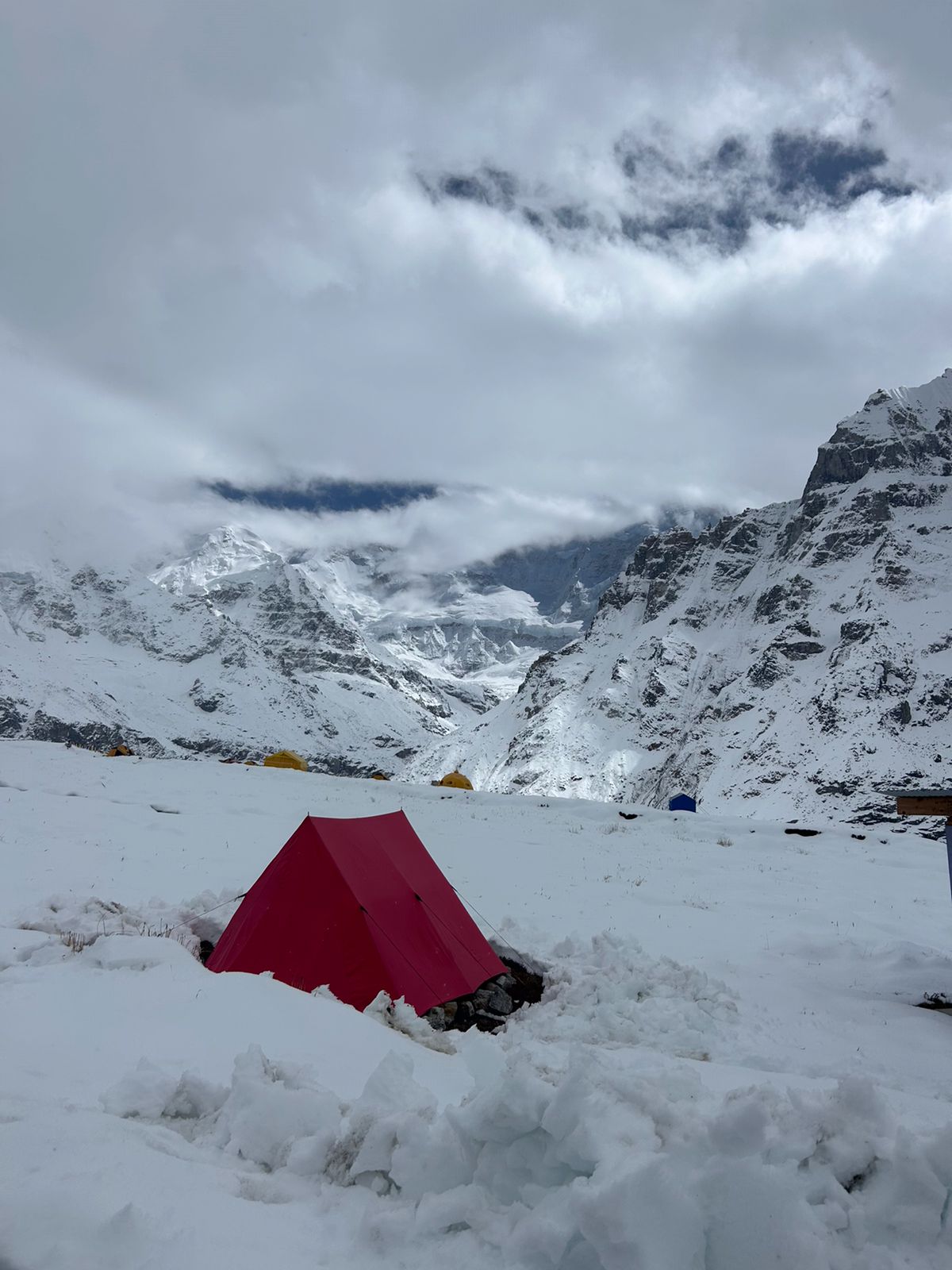
Today is a shorter but higher-altitude trek to help with acclimatization. The trail continues upward through barren, rocky terrain with yak pastures. We cross glacial streams and walk alongside moraines with incredible mountain views all around. The landscape becomes increasingly stark and dramatic. Lhonak is one of the highest settlements on the trek with very basic stone lodges. The facilities are minimal but the location is spectacular, surrounded by massive peaks and glaciers. Dress warmly as temperatures drop significantly at this altitude.
Accommodation: Basic Tea House/Stone Lodge
Meals: Breakfast, Lunch, Dinner
Walking Duration: 4-6 hours
Elevation Gain: 730m
Note: Very basic facilities, limited heating
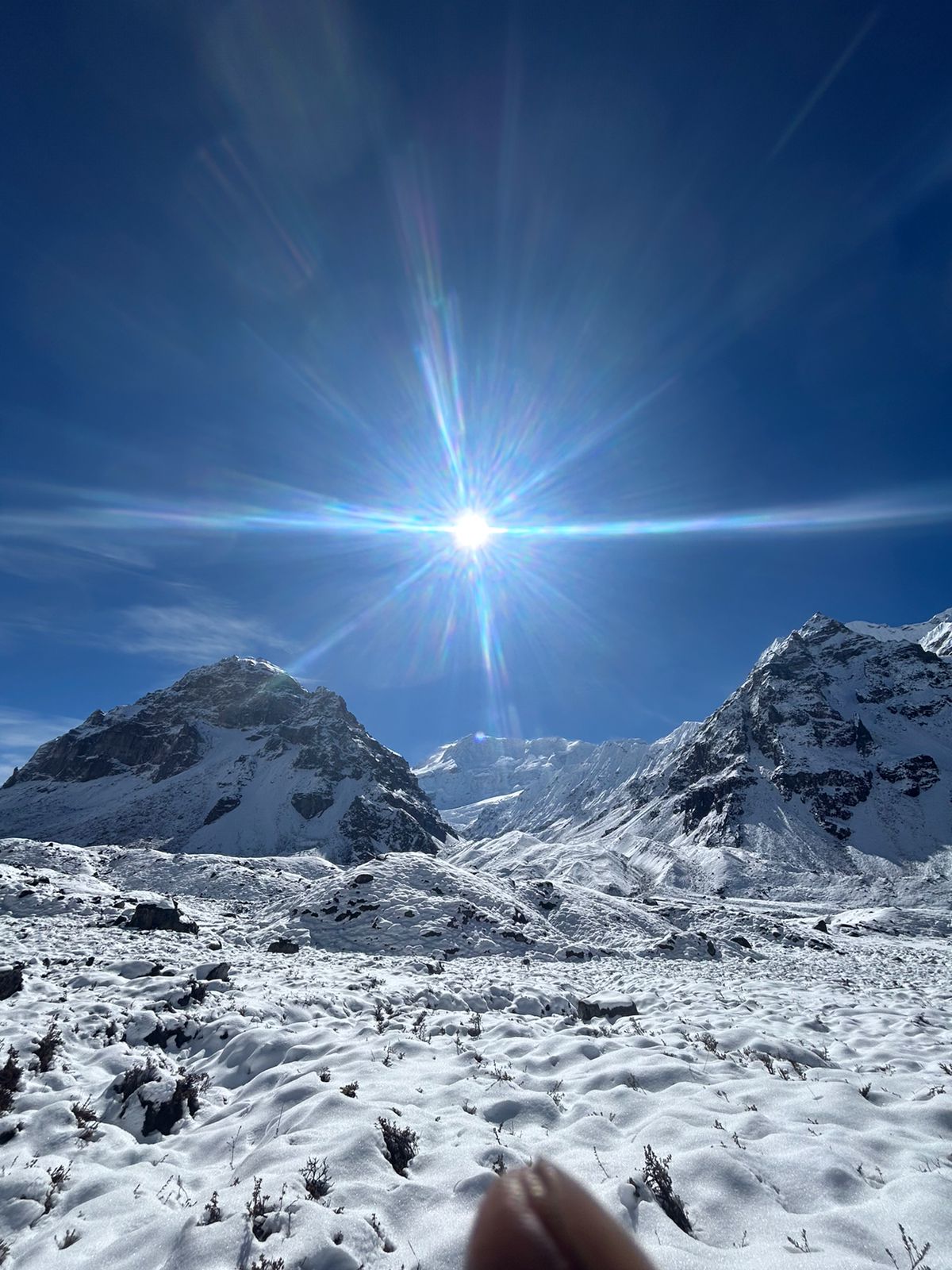
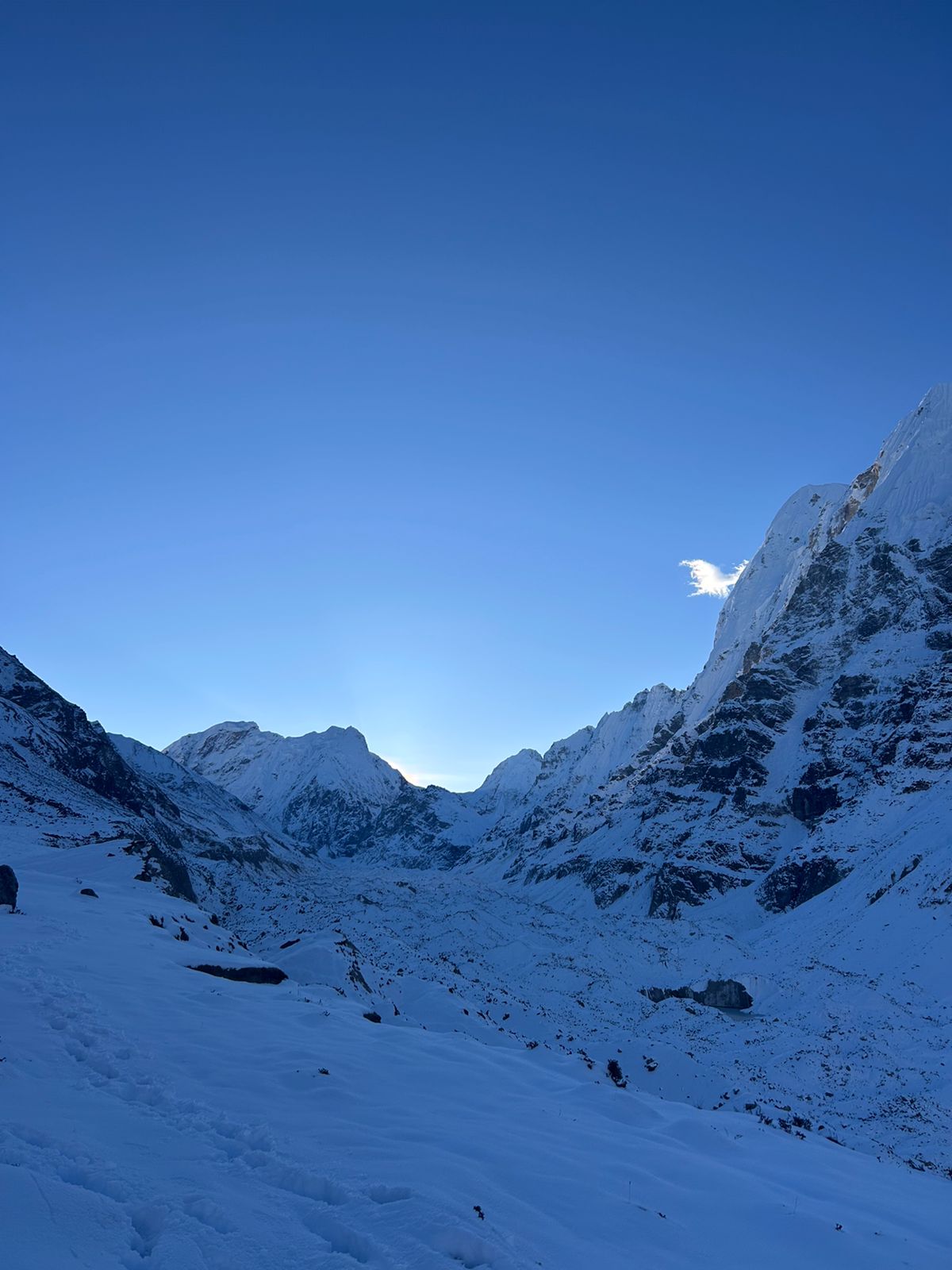
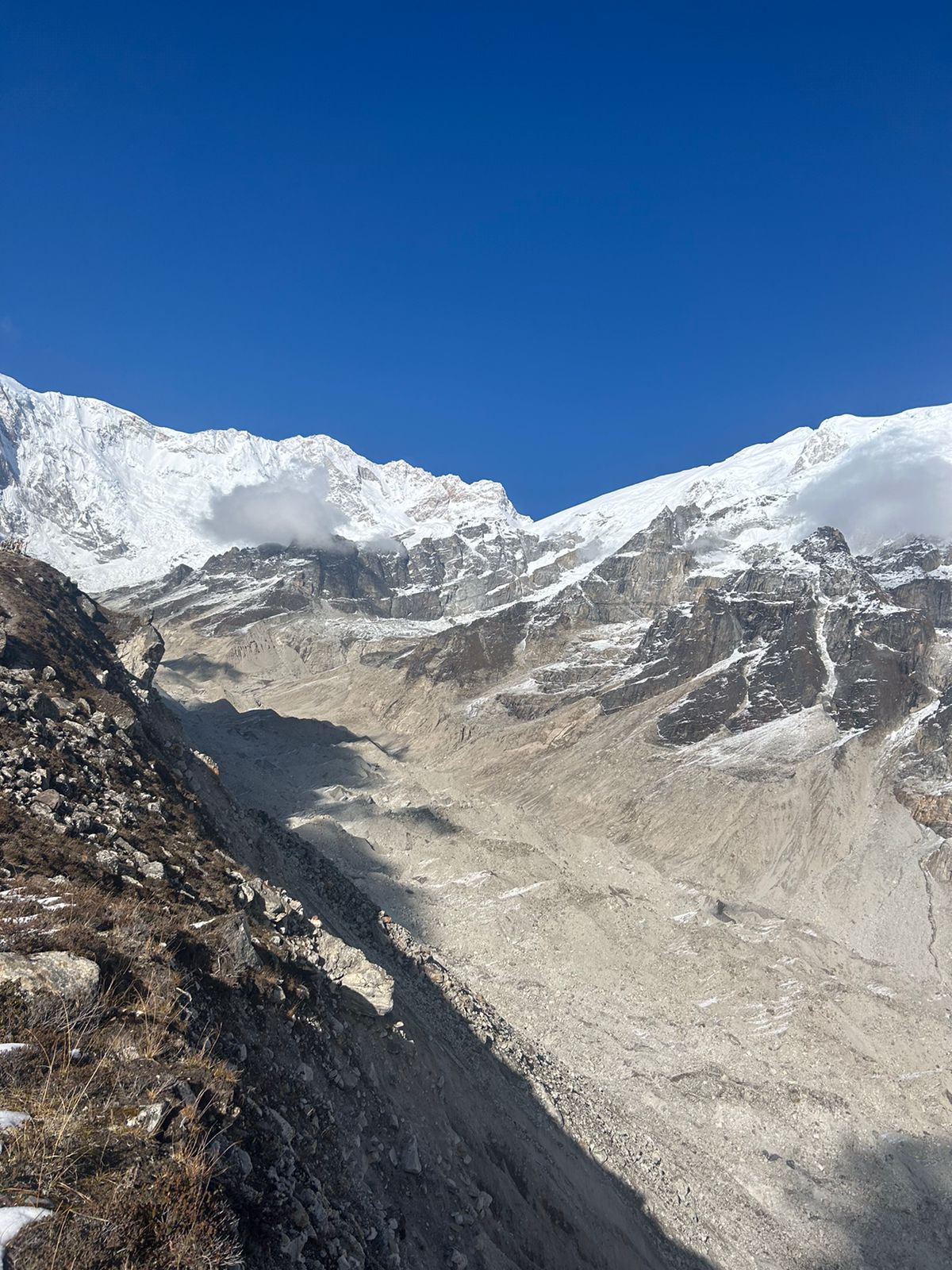
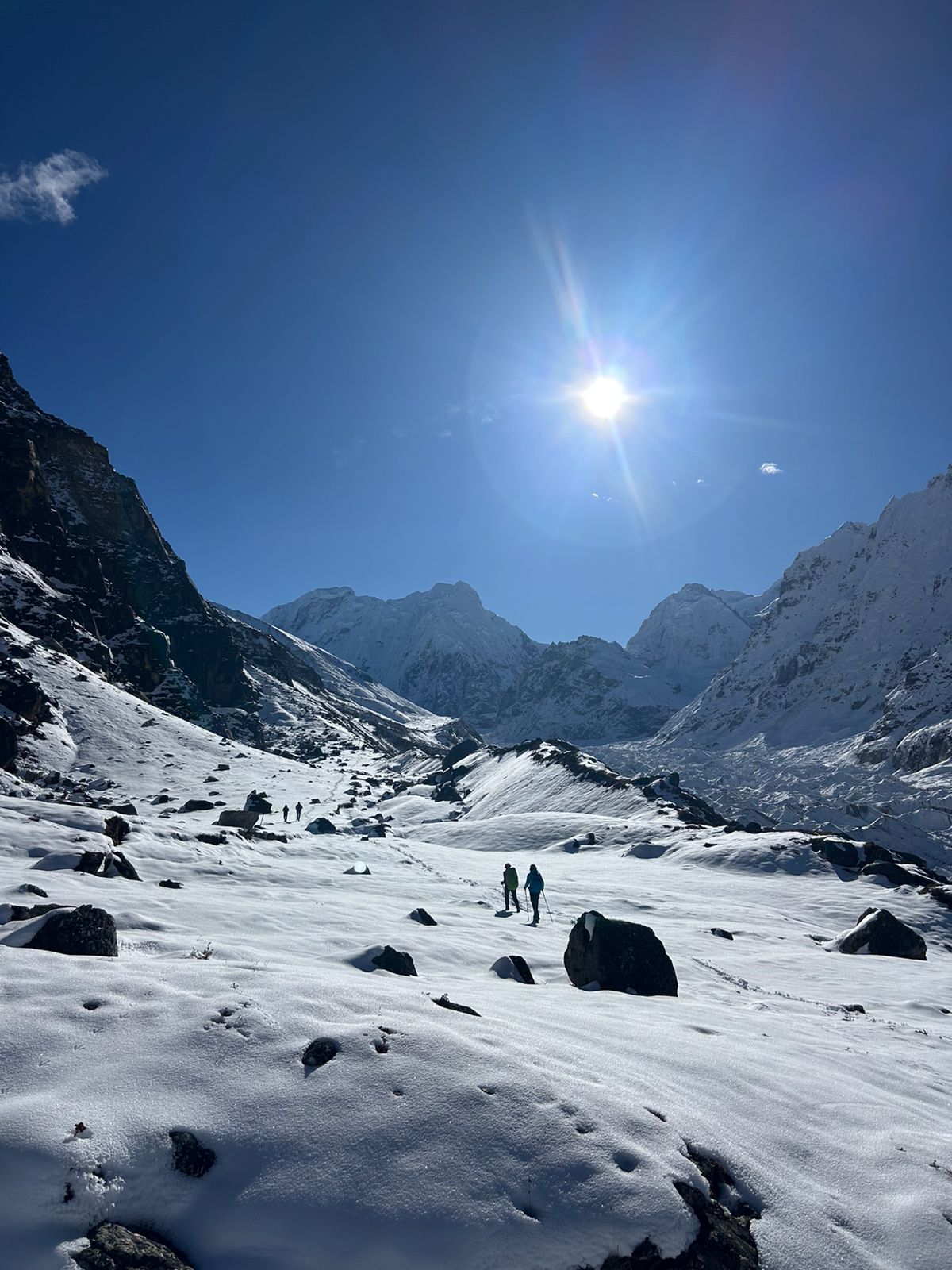
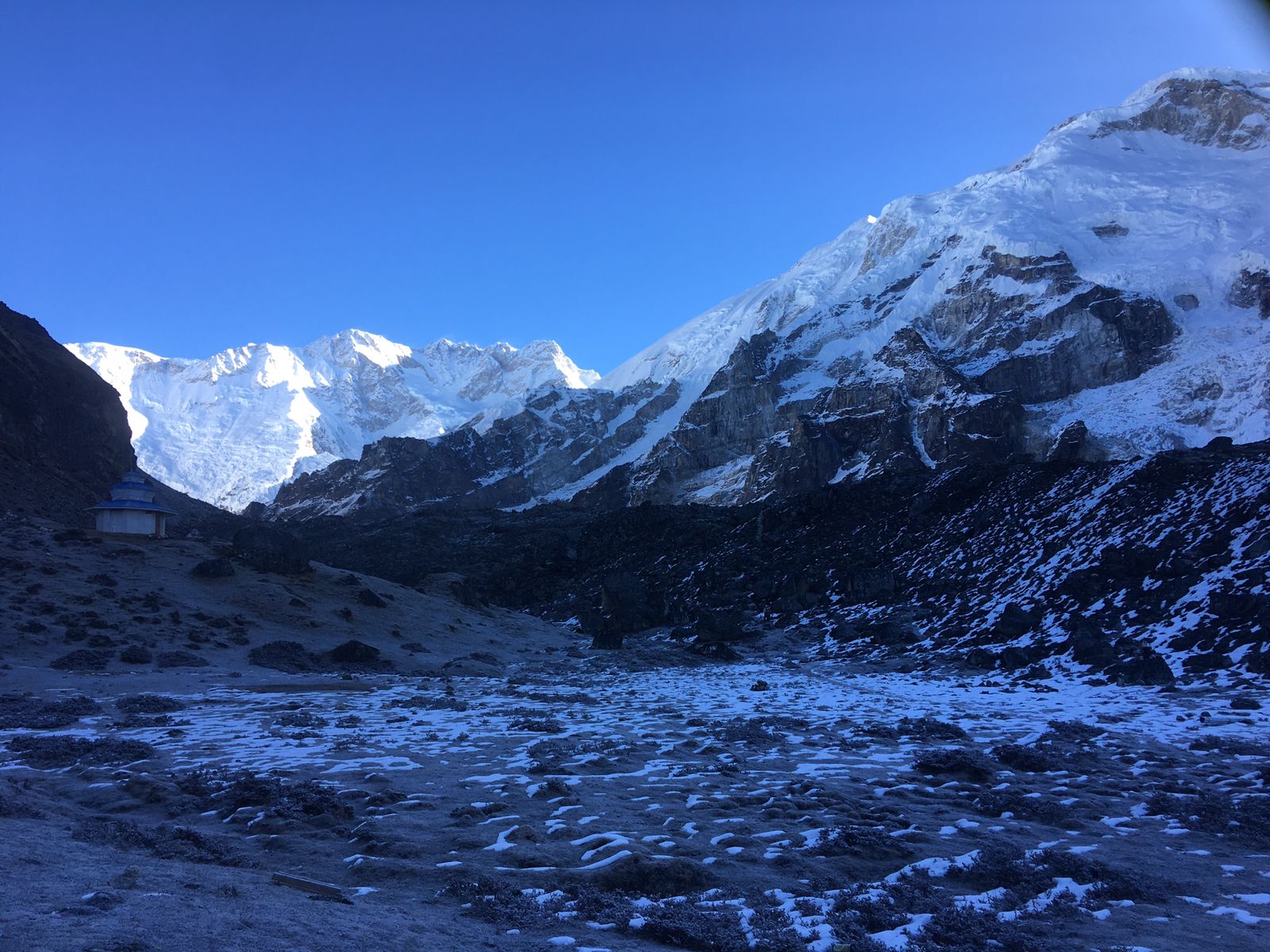
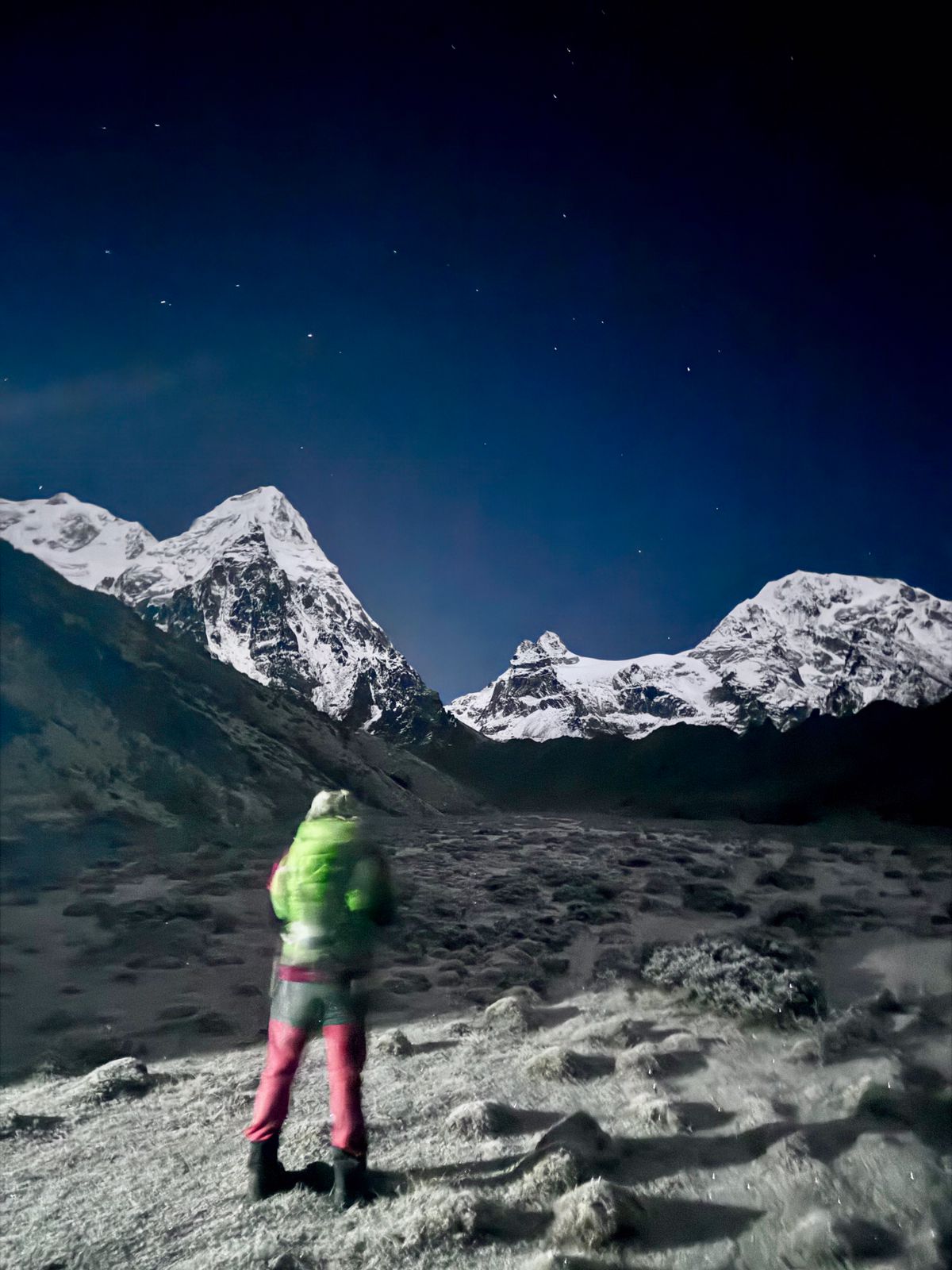
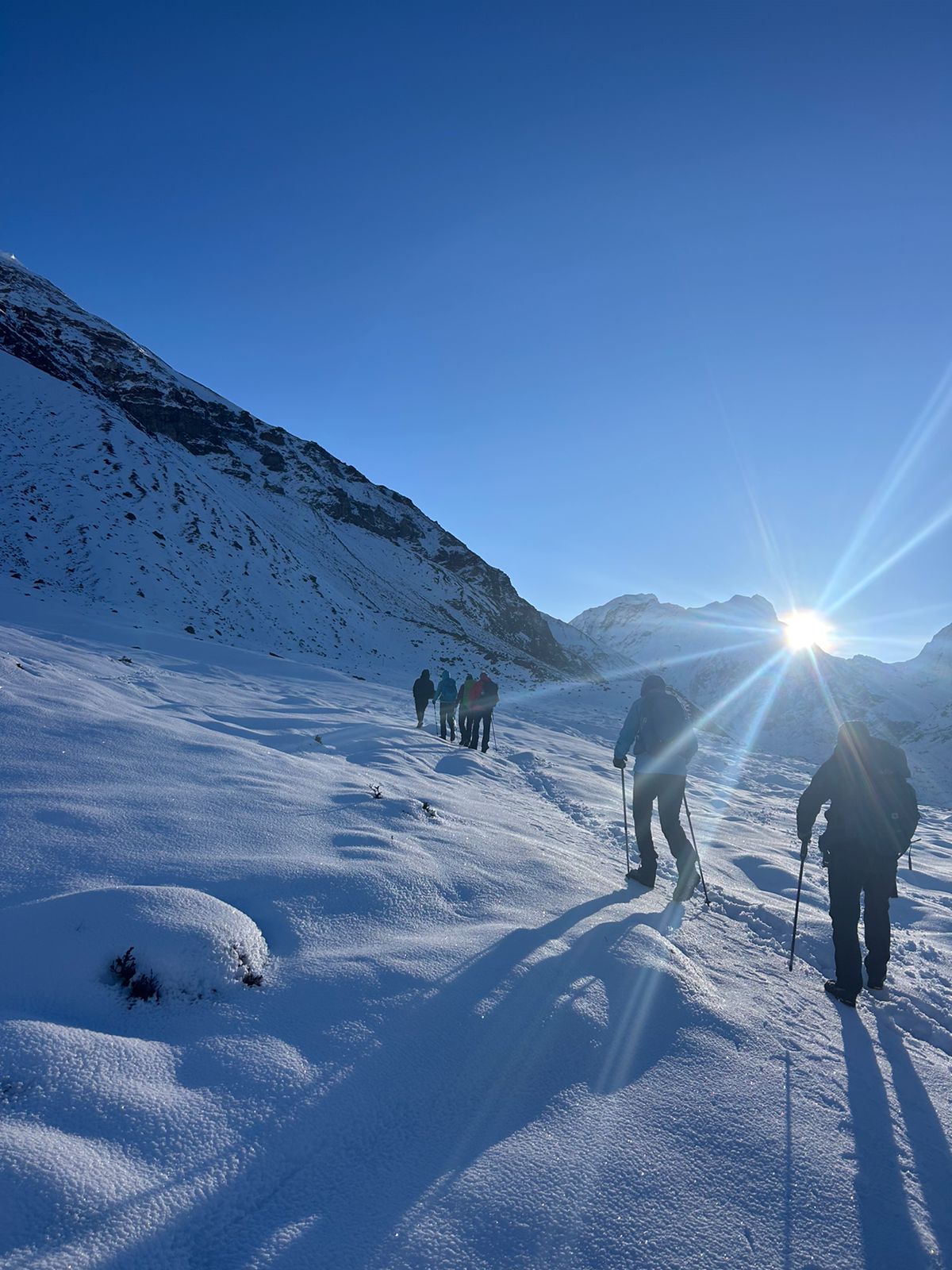
This is the highlight day of the entire trek. We start early in the morning for the hike to Pangpema, the North Base Camp of Kanchenjunga. The trail follows the lateral moraine of the Kanchenjunga Glacier with stunning views of ice seracs, crevasses, and towering ice walls. After 3-4 hours of steady climbing, we reach Pangpema (5,143m), standing at the foot of the world’s third-highest mountain.
The panoramic views are absolutely breathtaking—the five peaks of Kanchenjunga rise majestically before us, along with Wedge Peak, Mera Peak, and numerous other giants. We’ll spend time at base camp taking photos, absorbing the incredible scenery, and celebrating this achievement before descending back to Lhonak for the night. The descent takes approximately 2-3 hours.
Accommodation: Tea House in Lhonak
Meals: Breakfast, Lunch, Dinner
Walking Duration: 6-8 hours (round trip)
Maximum Elevation: 5,143m
Note: Early morning start, carry warm layers and water
After yesterday’s challenging day at base camp, today is a welcome descent back to Kambachen. The downhill trek is much easier on the lungs as we return to lower altitude. We retrace our steps through the glacial moraine and rocky terrain. The return journey allows us to appreciate the landscape from a different perspective and we can walk at a comfortable pace. Arriving back at Kambachen feels like returning to civilization after the stark high-altitude environment of Lhonak.
Accommodation: Tea House
Meals: Breakfast, Lunch, Dinner
Walking Duration: 5-6 hours
Elevation Loss: 730m
We continue our descent back to Ghunsa through familiar terrain. The landscape transitions back from barren alpine zones to areas with juniper and eventually back to the tree line. As we lose altitude, breathing becomes easier and the temperature more comfortable. We can enjoy the mountain views behind us as we descend. Ghunsa feels almost luxurious compared to the basic facilities we’ve experienced over the past few days. This is a good opportunity to enjoy a hot shower (if available) and a hearty meal.
Accommodation: Tea House
Meals: Breakfast, Lunch, Dinner
Walking Duration: 6-7 hours
Elevation Loss: 635m
This is a long descending day as we make our way back to Sekathum, retracing our route through forests and riverside trails. The descent is continuous but manageable, and the warmer temperatures and thicker air at lower altitude feel rejuvenating. We pass through Gyabla and Amjilosa, stopping for lunch along the way. The lush forests, blooming flowers (in season), and sound of rushing water provide a beautiful contrast to the stark high-altitude landscapes we’ve just left behind.
Accommodation: Lodge in Sekathum
Meals: Breakfast, Lunch, Dinner
Walking Duration: 6-8 hours
Elevation Loss: 1,755m
We say goodbye to the mountains and board our vehicle for the long drive back to Bhadrapur. The journey retraces our route through Taplejung and down the winding mountain roads, offering final views of the hills and valleys of eastern Nepal. We’ll stop for lunch en route and have opportunities to stretch our legs. The drive can be tiring but provides time to relax, reflect on the amazing adventure, and share stories with fellow trekkers. We arrive in Bhadrapur by evening.
Accommodation: Hotel in Bhadrapur
Meals: Breakfast, Lunch, Dinner
Drive Duration: 7-9 hours
Note: Road conditions variable depending on season
Morning flight from Bhadrapur back to Kathmandu, enjoying final aerial views of the eastern hills and mountains. Upon arrival in Kathmandu, transfer to your hotel. The rest of the day is free for rest, souvenir shopping in Thamel, or exploring any areas of Kathmandu you may have missed. In the evening, we’ll host a farewell dinner to celebrate the successful completion of your Kanchenjunga adventure.
Accommodation: Hotel in Kathmandu
Meals: Breakfast, Farewell Dinner
Flight Duration: 45-50 minutes
Activities: Free time, shopping, farewell dinner
Our representative will transfer you to Tribhuvan International Airport approximately 3 hours before your international flight departure. If you have extra time before your flight, you can do some last-minute shopping or sightseeing. We bid you farewell and hope to see you again for another adventure in the Himalayas.
Meals: Breakfast
Note: Airport transfer included

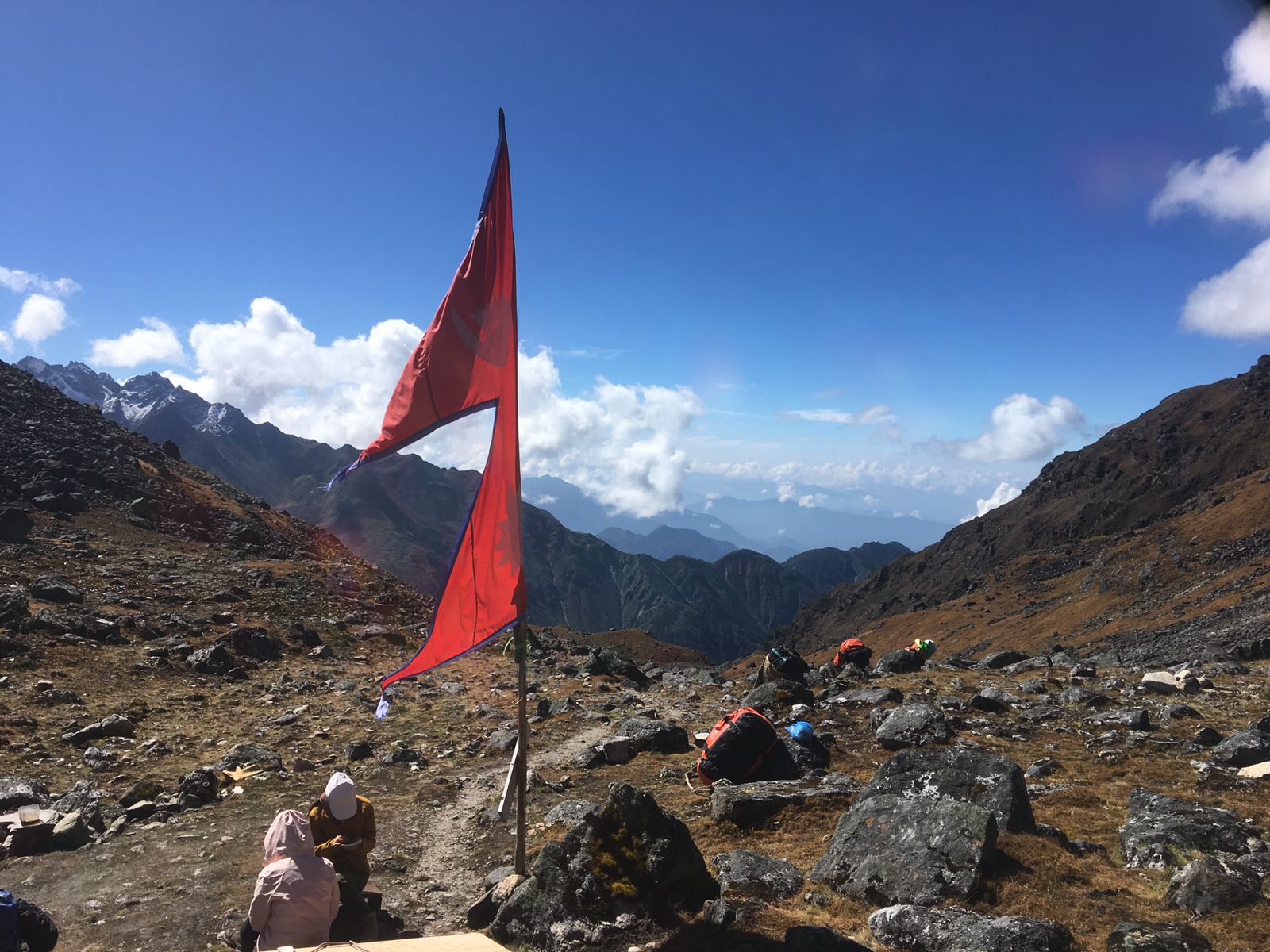
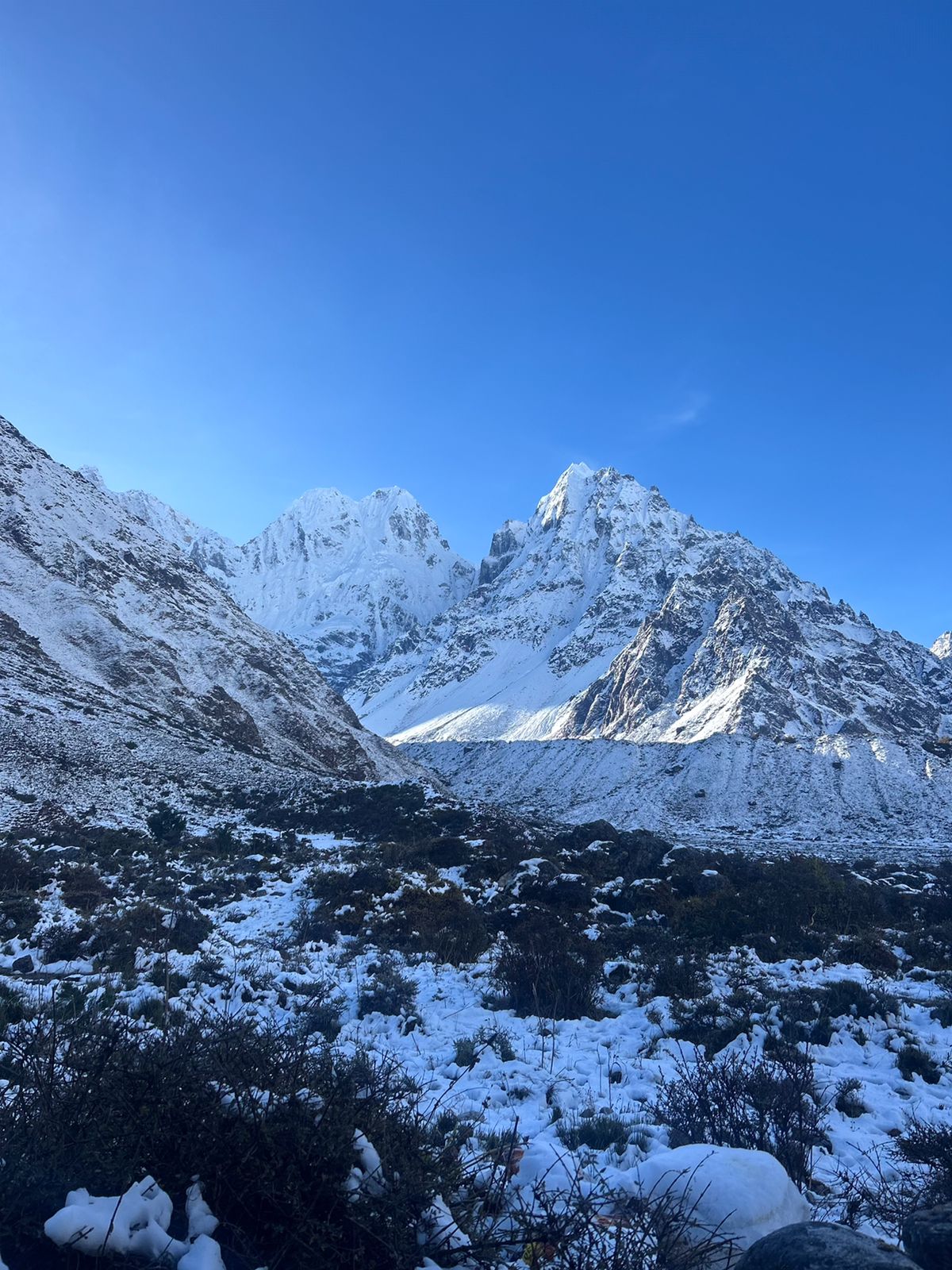
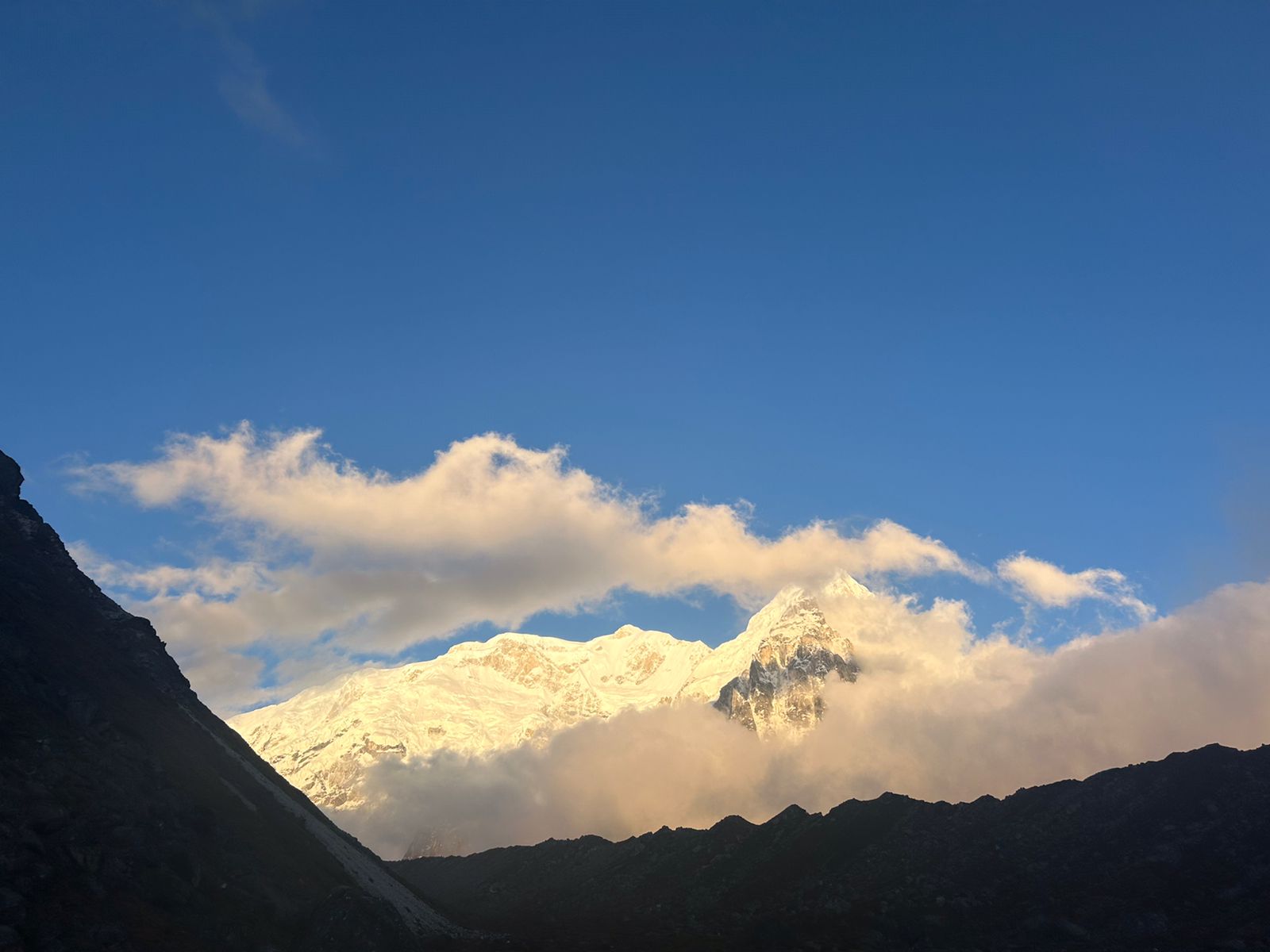
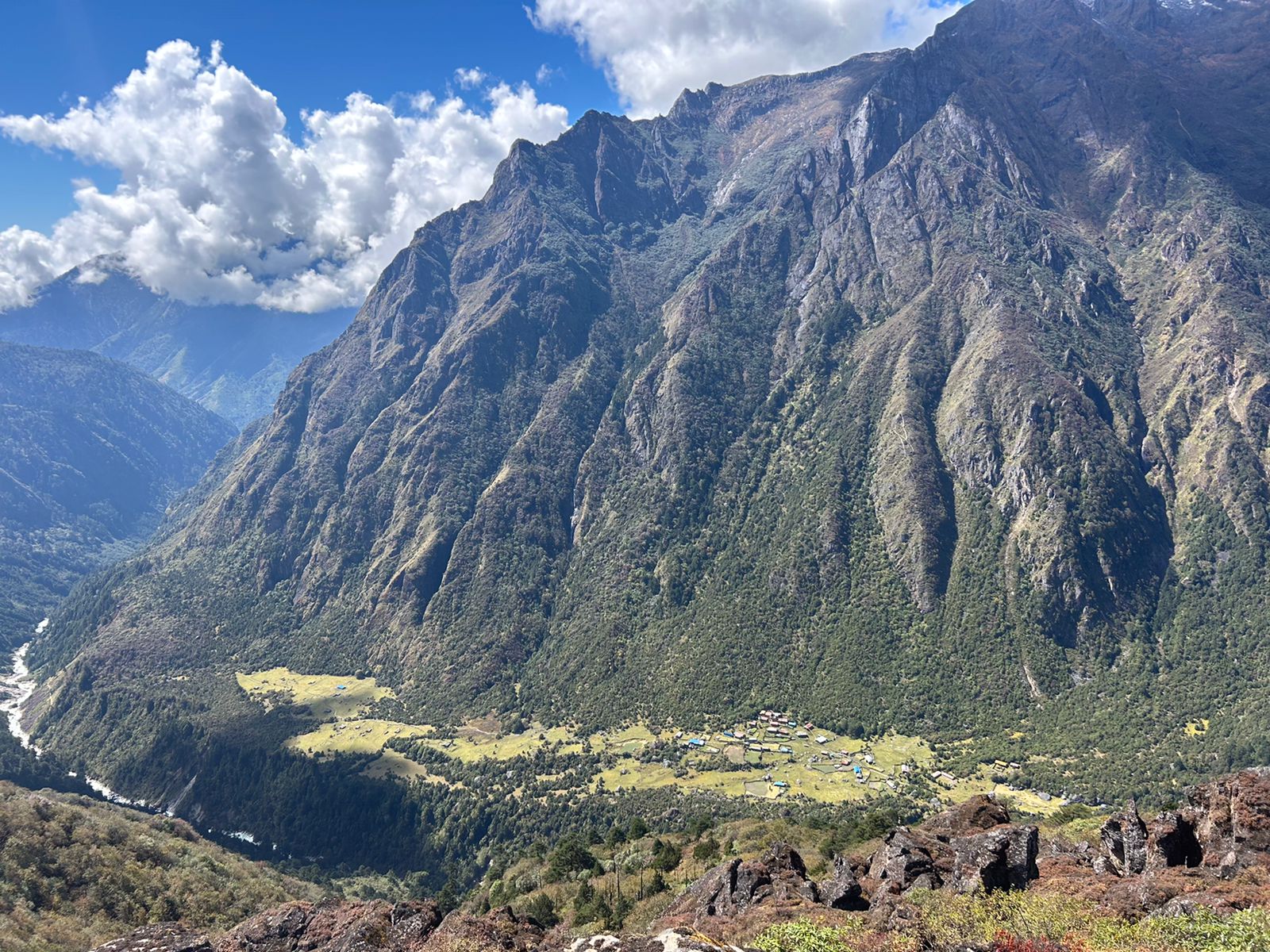
Spring (March–May)
The absolute best time for Kanchenjunga Circuit Trek. Warm days (10–20°C), endless rhododendron forests in full fiery bloom, crystal-clear views of Kanchenjunga & Jannu, and vibrant Limbu festivals along the trail.
Autumn (September–November)
Peak season for Kanchenjunga Circuit Trek. Zero rain, crisp air, perfect visibility from Lhonak La Pass, golden harvest terraces, and stable weather for both North & South Base Camps.
Winter (December–February)
Cold nights (down to –15°C at Lhonak), possible snow on high passes, but you’ll have the entire Kanchenjunga Circuit almost to yourself with razor-sharp Himalayan panoramas.
Monsoon (June–August)
Heavy rain & leeches below 3,000 m, slippery trails and clouded peaks — not recommended for Kanchenjunga Circuit Trek.
North & South Base Camps
Stand at Pangpema (5,143 m) and Oktang (4,730 m) beneath the world’s third-highest mountain.
Lhonak La Pass (5,200 m)
360° sunrise panorama of Kanchenjunga, Jannu, Makalu and distant Everest.
Snow Leopard Territory
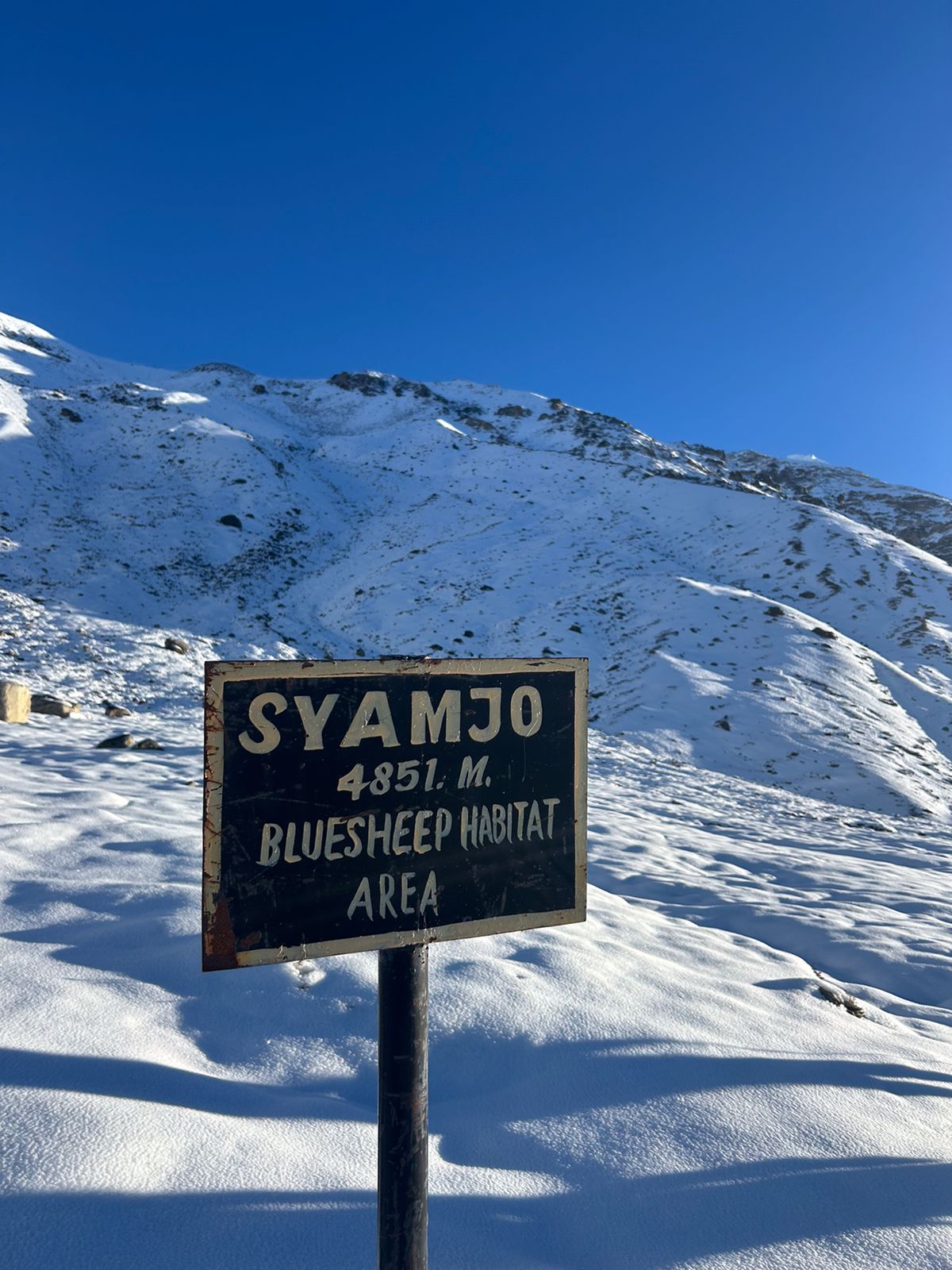
Trek inside Kanchenjunga Conservation Area – prime habitat for snow leopards, red pandas & blue sheep.
Sele La Pass & Rhododendron Forests
Cross dramatic high passes surrounded by blooming rhododendron jungles every spring.
Limbu & Tibetan Culture
Homestays, ancient monasteries, shaman rituals and hot springs in Ghunsa & Olangchung Gola.
• Waterproof broken-in trekking boots with ankle support
• Layering: thermal base + fleece + thick down jacket
• Gore-Tex jacket & pants (essential for high passes)
• Warm sleeping bag (–15°C comfort rating)
• Trekking poles (mandatory for moraine & passes)
• UV sunglasses, high-SPF sunscreen & lip balm
• Headlamp + spare batteries + power bank
• Water bottle + purification tablets/drops
• Personal first-aid + Diamox for altitude
• High-energy snacks & 35–45 L daypack
A challenging 18–22 day restricted-area trek that circles the world’s third-highest mountain (8,586 m), visiting both North (Pangpema) and South (Oktang) Base Camps through pristine Kanchenjunga Conservation Area.
Standard full circuit (North + South Base Camps) is 18–22 days from Kathmandu, with 15–18 actual trekking days covering 200–230 km.
Rated strenuous – requires excellent fitness, previous high-altitude experience, and ability to walk 6–8 hours daily over high passes (max 5,200 m at Lhonak La).
Spring (March–May) for rhododendron blooms and Autumn (September–November) for clear skies and stable weather are the two best seasons.
All-inclusive guided packages range from $1,799–$2,599 per person depending on group size; our 18-day full circuit starts at $2,199 (2+ pax) with 10% early-bird discount.
Yes – Kanchenjunga is a restricted area. You need Restricted Area Permit ($10/week), Kanchenjunga Conservation Permit, and TIMS card (all arranged by agency).
No – Nepal banned solo trekking in restricted areas since April 2023. You must hire a licensed guide (mandatory for safety and permit rules).
The highest sleeping point is Lhonak (4,790 m); highest pass walked is Lhonak La (5,200 m) on the acclimatization day.
Very limited – NTC/Ncell signal only up to Ghunsa; no reliable internet after Day 8. Satellite devices are recommended for emergencies.
Basic teahouses/lodges (twin-sharing rooms) with shared bathrooms; hot showers are rare after Ghunsa.
No ATMs after Taplejung. Carry enough Nepali rupees from Kathmandu (no cards accepted on trail).
Night temperatures drop to –10°C to –15°C at Lhonak (4,790 m) in spring/autumn; wind-chill on passes feels colder.
Moderate risk – itinerary includes proper acclimatization days at Ghunsa and Lhonak, plus oximeter monitoring and GAMOW bag available.
Prime snow-leopard habitat, red pandas, Himalayan black bear, blue sheep, danphe pheasant, and over 200 bird species.
Kanchenjunga Circuit is generally considered harder due to longer isolation, fewer escape routes, harsher weather windows, and more sustained high altitude.