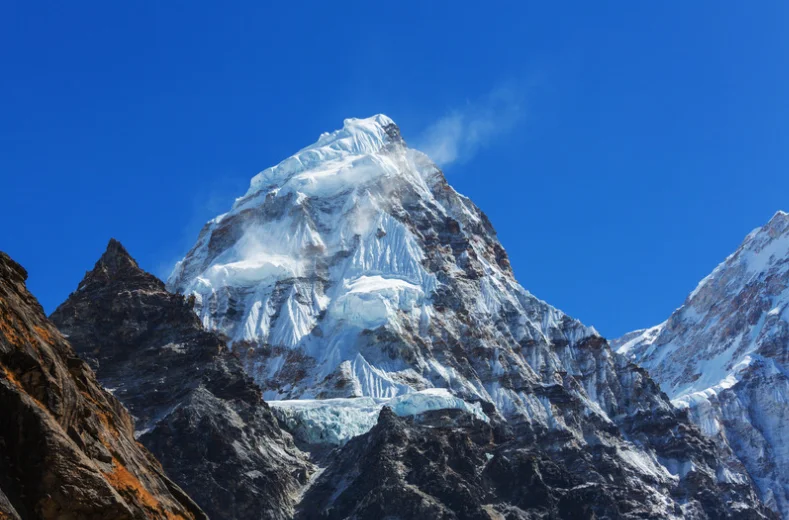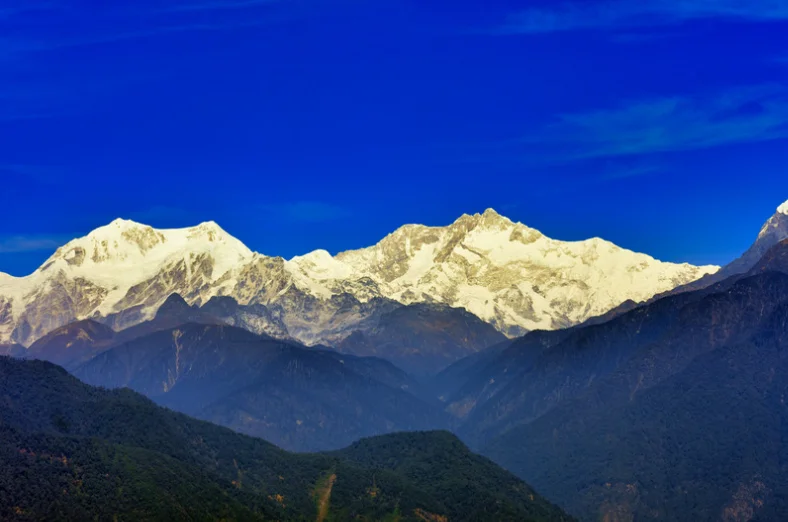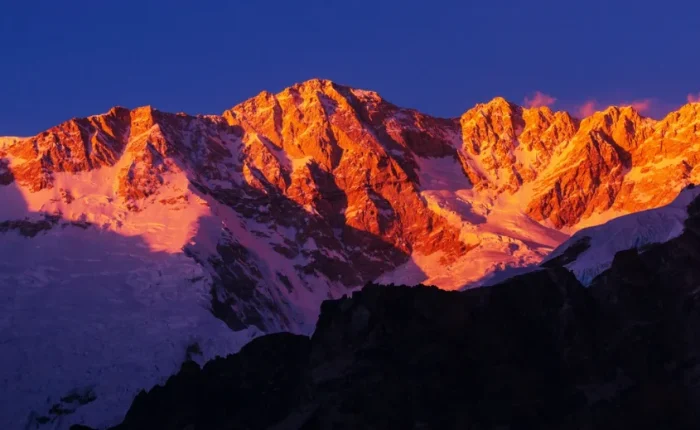
Craving a raw Kanchenjunga circuit trek that tests your limits in Nepal’s most isolated wilderness? This legendary route encircles the world’s third-highest peak (8,586m), weaving through the Kanchenjunga Conservation Area’s pristine trails—far from Everest’s bustle.
Our premium 18-day Kanchenjunga trek package delivers high-stakes thrills: conquer Lhonak La Pass at 5,200m for 360° glacier panoramas, explore Yalung’s icefalls, and immerse in Limbu shaman lore amid rhododendron superbloom.
Priced at $2,199 per person (group of 2+), this strenuous Kanchenjunga base camp trek demands strong fitness for 6-8 hour days up to 220km, but rewards with snow leopard sightings and sacred monasteries. Restricted permits keep it serene; sustainable homestays support remote villages.
Ideal for seasoned explorers eyeing remote trekking in Nepal—book 2026 dates for autumn clarity or spring blooms.
▶️Need help booking your trip? Watch our step-by-step video guide.
You land in Kathmandu, our team welcomes you at the airport and transfers you to a comfortable 3-star hotel in Thamel. Free afternoon to rest or explore the bustling streets. Evening welcome dinner with full trek briefing, gear check, and final preparations.
Overnight hotel.
Early morning flight to lowland Bhadrapur, then a scenic jeep ride through tea gardens and Limbu villages to Taplejung – the official gateway to Kanchenjunga. First taste of eastern Nepal culture. Overnight teahouse.
Start trekking! Gentle descent along the Tamor River through lush subtropical forests, cardamom plantations, and small Limbu settlements. Easy warm-up day with river views.
Overnight teahouse.
Cross suspension bridges over roaring gorges, walk through dense forests, and past waterfalls. Pass tiny Limbu hamlets and cardamom fields – classic eastern Nepal scenery.
Overnight teahouse.
Follow the Tamor Valley with constant river sounds, pass traditional wooden houses and terraced fields. A relaxing day with plenty of Limbu village interaction.
Overnight teahouse.
Walk through terraced millet and cardamom fields, passing welcoming Rai and Limbu villages. Steady climb with ever-expanding mountain views.
Overnight tented camp.
The longest but most rewarding day: sacred Handi Lake, Nikasa mani walls, high summer pastures, and endless cultural encounters along the way.
Overnight tented camp near historic Salpa Pass.
Pre-dawn start for the sunrise climb to Silichung Peak – the trek’s crown jewel. Enjoy a jaw-dropping 360° panorama of Everest, Lhotse, Makalu, Kanchenjunga, and more. Descend for a relaxed afternoon in nearby Guranse village.
Overnight same camp.
Essential rest day. Optional short hikes to nearby ridges, visit the 400-year-old monastery, or relax in natural hot springs. Perfect for Limbu cultural immersion.
Overnight teahouse.
Enter high alpine zone – meadows, moraines, and icefalls. Spectacular views of Jannu and the Kanchenjunga massif dominate the horizon.
Overnight teahouse with jaw-dropping mountain backdrop.
Rocky moraine trail beside the Kanchenjunga Glacier. The air thins and the landscape becomes stark and beautiful – pure high-Himalayan wilderness.
Overnight teahouse.
Short morning hike to Lhonak La for an unforgettable 360° panorama of the entire Kanchenjunga range. Afternoon free to rest and prepare for base camp.
Overnight Lhonak.
The trek’s crown jewel – walk on the glacier to North Base Camp. Stand directly beneath Kanchenjunga’s massive north face surrounded by ice and prayer flags.
Return to Lhonak.
Long but scenic descent through wildflower valleys and past summer yak pastures. The mountains stay in view almost all day.
Overnight Ghunsa.
Cross the dramatic Sele La Pass, draped in prayer flags – one of the trek’s most beautiful high points. Descend into rhododendron forests and spot blue sheep.
Overnight teahouse.
Walk through oak and rhododendron forests toward the Yalung Glacier. The landscape feels ancient and untouched.
Overnight teahouse.
Early start for sunrise at Oktang – breathtaking close-up views of Yalung Kang and the south face of Kanchenjunga. Return to Ramche for the night.
Final short trek to the roadhead, then jeep to Bhadrapur and evening flight back to Kathmandu. Farewell dinner and celebration. Trip ends with memories of Nepal’s wildest Himalayan circuit.
🌸 Spring (March–May)
The absolute best time for Kanchenjunga Circuit Trek. Warm days (10–20°C), endless rhododendron forests in full fiery bloom, crystal-clear views of Kanchenjunga & Jannu, and vibrant Limbu festivals along the trail.
🍂 Autumn (September–November)
Peak season for Kanchenjunga Circuit Trek. Zero rain, crisp air, perfect visibility from Lhonak La Pass, golden harvest terraces, and stable weather for both North & South Base Camps.
❄️ Winter (December–February)
Cold nights (down to –15°C at Lhonak), possible snow on high passes, but you’ll have the entire Kanchenjunga Circuit almost to yourself with razor-sharp Himalayan panoramas.
🌧️ Monsoon (June–August)
Heavy rain & leeches below 3,000 m, slippery trails and clouded peaks — not recommended for Kanchenjunga Circuit Trek.
North & South Base Camps
Stand at Pangpema (5,143 m) and Oktang (4,730 m) beneath the world’s third-highest mountain.
Lhonak La Pass (5,200 m)
360° sunrise panorama of Kanchenjunga, Jannu, Makalu and distant Everest.
Snow Leopard Territory
Trek inside Kanchenjunga Conservation Area – prime habitat for snow leopards, red pandas & blue sheep.
Sele La Pass & Rhododendron Forests
Cross dramatic high passes surrounded by blooming rhododendron jungles every spring.
Limbu & Tibetan Culture
Homestays, ancient monasteries, shaman rituals and hot springs in Ghunsa & Olangchung Gola.
• Waterproof broken-in trekking boots with ankle support
• Layering: thermal base + fleece + thick down jacket
• Gore-Tex jacket & pants (essential for high passes)
• Warm sleeping bag (–15°C comfort rating)
• Trekking poles (mandatory for moraine & passes)
• UV sunglasses, high-SPF sunscreen & lip balm
• Headlamp + spare batteries + power bank
• Water bottle + purification tablets/drops
• Personal first-aid + Diamox for altitude
• High-energy snacks & 35–45 L daypack
A challenging 18–22 day restricted-area trek that circles the world’s third-highest mountain (8,586 m), visiting both North (Pangpema) and South (Oktang) Base Camps through pristine Kanchenjunga Conservation Area.
Standard full circuit (North + South Base Camps) is 18–22 days from Kathmandu, with 15–18 actual trekking days covering 200–230 km.
Rated strenuous – requires excellent fitness, previous high-altitude experience, and ability to walk 6–8 hours daily over high passes (max 5,200 m at Lhonak La).
Spring (March–May) for rhododendron blooms and Autumn (September–November) for clear skies and stable weather are the two best seasons.
All-inclusive guided packages range from $1,799–$2,599 per person depending on group size; our 18-day full circuit starts at $2,199 (2+ pax) with 10% early-bird discount.
Yes – Kanchenjunga is a restricted area. You need Restricted Area Permit ($10/week), Kanchenjunga Conservation Permit, and TIMS card (all arranged by agency).
No – Nepal banned solo trekking in restricted areas since April 2023. You must hire a licensed guide (mandatory for safety and permit rules).
The highest sleeping point is Lhonak (4,790 m); highest pass walked is Lhonak La (5,200 m) on the acclimatization day.
Very limited – NTC/Ncell signal only up to Ghunsa; no reliable internet after Day 8. Satellite devices are recommended for emergencies.
Basic teahouses/lodges (twin-sharing rooms) with shared bathrooms; hot showers are rare after Ghunsa.
No ATMs after Taplejung. Carry enough Nepali rupees from Kathmandu (no cards accepted on trail).
Night temperatures drop to –10°C to –15°C at Lhonak (4,790 m) in spring/autumn; wind-chill on passes feels colder.
Moderate risk – itinerary includes proper acclimatization days at Ghunsa and Lhonak, plus oximeter monitoring and GAMOW bag available.
Prime snow-leopard habitat, red pandas, Himalayan black bear, blue sheep, danphe pheasant, and over 200 bird species.
Kanchenjunga Circuit is generally considered harder due to longer isolation, fewer escape routes, harsher weather windows, and more sustained high altitude.