

The Great Himalaya Trail is a complete Himalayan crossing that stretches from the far-western hills of Nepal to the foggy valleys of the east. It is the ultimate adventure for serious hikers, offering long wilderness days, isolated passes, unspoiled villages, and a close connection to Nepal’s untamed mountain landscape.
The purpose of this Great Himalaya Trail trekking guide Nepal is to help you comprehend what it actually takes to organise, get ready, and safely finish this fabled path.
Unlike classic teahouse treks like Everest Base Camp or the Annapurna Circuit, the Great Himalaya Trail requires patience, logistics planning, and mountain respect. It’s a journey that values preparation as much as physical strength.
Understanding the Great Himalaya Trail Route
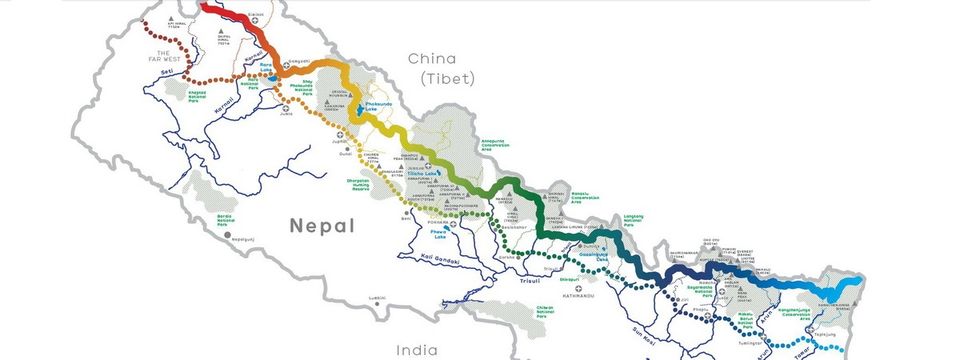
The Great Himalaya Trail runs across the entire length of Nepal, covering roughly 1,700 kilometers of high-altitude terrain. Trekkers can choose to complete the trail in sections or attempt the full traverse, which can take anywhere from three to five months depending on pace and route choices.
The trail links famous regions such as Humla, Dolpo, Manaslu, Annapurna, Langtang, Rolwaling, Makalu, and Kanchenjunga, while also passing through some of the most remote valleys in the country.
Many sections remain wild and rarely walked, with limited infrastructure and long distances between settlements.
This is not a single marked trail but a network of routes connected by high mountain passes, some exceeding 5,000 meters. Understanding regional variations is critical when developing logistics, resupply points, and safety strategies.
Planning the Logistics: What Makes or Breaks the Journey
Logistics are the backbone of a successful Great Himalaya Trail expedition. Even experienced trekkers underestimate how complex this trek can be without proper support and local knowledge.
Food planning is one of the first major considerations. While some sections pass through villages with basic supplies, others involve long stretches of wilderness where everything must be carried in. Trekking groups often rely on a combination of local teahouses, temporary camps, and porter-supported food supplies.
Accommodation varies widely. In eastern and central Nepal, you may find basic lodges in some villages, but western sections often require full camping setups. This means tents, cooking gear, fuel, and trained support staff are essential.
Transportation logistics are equally important. Many trail sections begin or end with flights to remote airstrips or long jeep journeys on rough mountain roads. Timing these connections carefully helps avoid weather delays and missed permits.
This is where experienced operators like Nepal Adventure Trail stand out. They can easily arrange flights, local transportation, porters, and supplies thanks to their extensive presence throughout Nepal’s trekking regions. This is a significant advantage on a trail where delays can quickly turn dangerous.
Permits and Paperwork You Cannot Ignore
One of the most overlooked aspects of the Great Himalaya Trail is the sheer number of permits required. Depending on your chosen sections, trekkers may need a combination of restricted area permits, national park permits, conservation area permits, and TIMS cards.
Regions like Humla, Upper Dolpo, Nar Phu, and Kanchenjunga fall under restricted zones and legally require licensed guides. Permit regulations also change frequently, making updated local knowledge essential.
Handling permits independently can be time-consuming and risky if paperwork is incorrect. Trekking with a reputable company ensures that all documents are arranged properly, allowing you to focus on the trail instead of bureaucracy.
Physical Preparation and Trekking Experience Required
The Great Himalaya Trail is not a beginner trek. Even seasoned hikers find it physically demanding due to its length, altitude, and isolation. Daily walking distances can be long, with frequent ascents and descents across rugged terrain.
Altitude acclimatization plays a critical role. Unlike popular trekking routes, medical help is rarely nearby, so a slow and steady ascent plan is essential. Rest days, flexible itineraries, and altitude awareness are non-negotiable.
Training beforehand should include endurance hiking, strength training, and multi-day trekking experience. Mental resilience is just as important — long days in remote environments test patience and adaptability.
Safety on the Great Himalaya Trail
Safety on the Great Himalaya Trail begins with preparation and ends with good decision-making on the ground. Weather conditions can change rapidly, especially at high passes where snow and wind can arrive unexpectedly.
Communication is limited in many sections. Satellite phones, GPS trackers, and emergency protocols are essential. Reliable trekking companies maintain communication systems and contingency plans for evacuation if needed.
Hiring experienced local guides dramatically improves safety. They understand weather patterns, trail conditions, and alternative routes, and they maintain strong relationships with mountain communities along the way.
Nepal Adventure Trail has earned its reputation by prioritizing safety above all else. Their guides are trained in wilderness first aid, altitude response, and emergency coordination, making them one of the most trusted adventure trekking companies for long-distance Himalayan routes.
Best Time to Trek the Great Himalaya Trail
Season timing can determine success or failure. Most trekkers aim for spring or autumn, when weather conditions are more stable and mountain passes are accessible.
Spring offers longer daylight hours and blooming alpine landscapes, while autumn provides clearer skies and cooler temperatures. Some western sections can also be trekked in early summer, but monsoon risks must be carefully managed.
Attempting the trail outside optimal seasons increases exposure to avalanches, landslides, and extreme cold, especially in high-pass regions.
Cultural Encounters Along the Way
Beyond the physical challenge, the Great Himalaya Trail offers deep cultural immersion. Trekkers pass through Tibetan-influenced villages, ancient monasteries, and communities that have remained unchanged for generations.
Respect for local customs, traditions, and daily life is essential. Responsible trekking practices help preserve these remote cultures while fostering meaningful connections with the people of the Himalayas.

Why Trek the Great Himalaya Trail with Nepal Adventure Trail
Choosing the right trekking partner is just as important as choosing the route itself. Nepal Adventure Trail combines deep local expertise with professional expedition planning, making them one of the most reliable choices for Great Himalaya Trail adventures.
Their ability to handle complex logistics, manage safety in remote regions, and provide experienced guides allows trekkers to focus on the journey rather than the challenges behind the scenes. From permit arrangements to emergency preparedness, they operate with the confidence of a company that truly understands Nepal’s mountains.
For trekkers seeking a once-in-a-lifetime Himalayan crossing, partnering with a team that knows the trail inside out makes all the difference.
Final Thoughts: Is the Great Himalaya Trail Worth It?
The Great Himalaya Trail is about perseverance, exploration, and strolling through the heart of the Himalayas rather than crossing off locations. It demands respect, preparation, and commitment, but rewards trekkers with solitude, unmatched scenery, and a profound sense of achievement.
With the right planning, safety awareness, and expert support, this trail becomes one of the most transformative trekking experiences on Earth. And with a seasoned adventure company like Nepal Adventure Trail by your side, conquering the Great Himalaya Trail becomes not just possible, but unforgettable.