
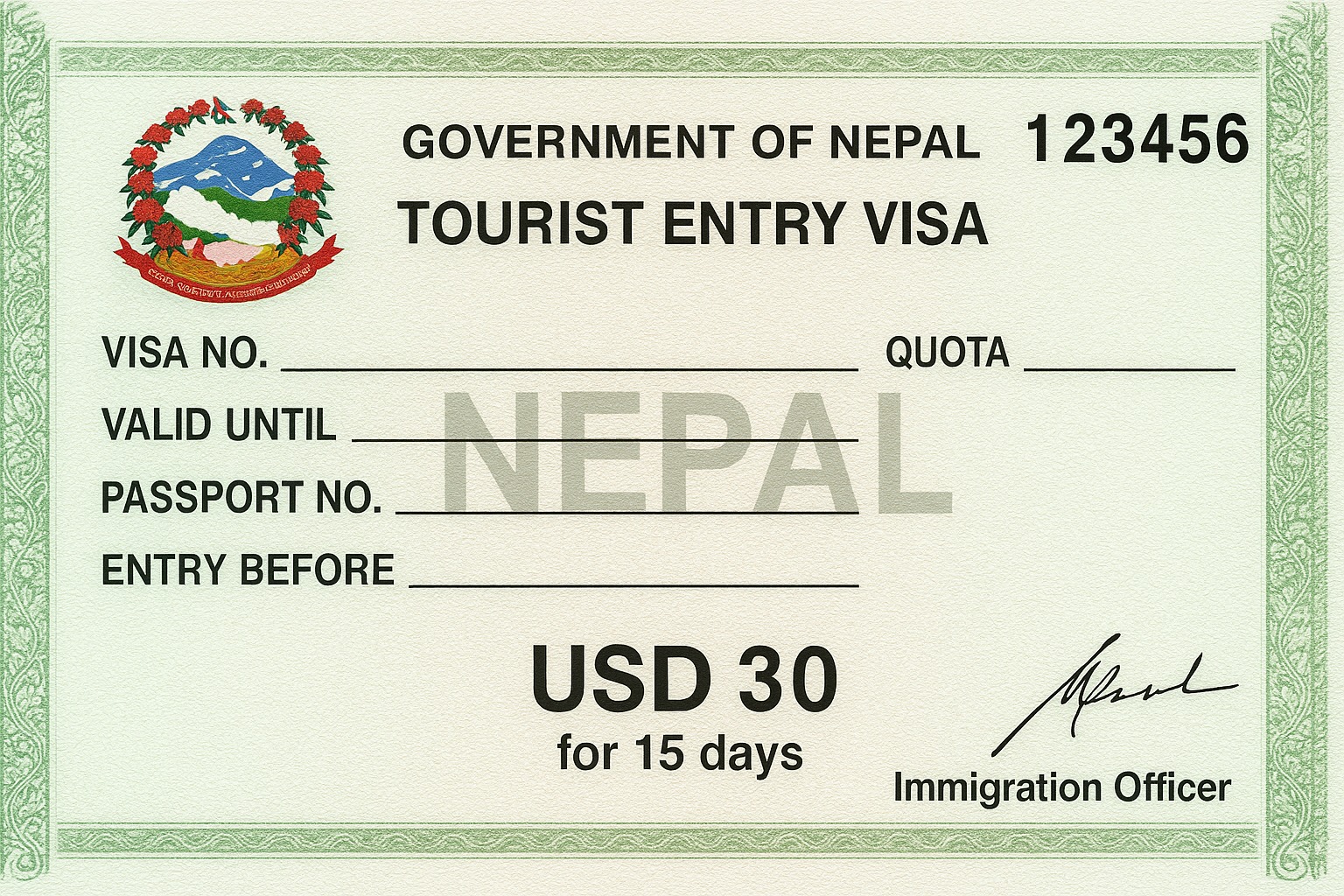
Are you planning a trip to the Himalayas? To properly budget for your flight, permits, and accommodation, it’s essential to know the Nepal visa cost before you go. Fees are reviewed periodically by the Nepali government, so having the most current Nepal visa cost figures helps you avoid surprises at immigration or the airport.
Quick answer: A Nepal tourist visa costs $30 for 15 days, $50 for 30 days, or $125 for 90 days, payable in cash on arrival at Tribhuvan International Airport, land borders, or via the online e-Visa. Indian citizens don’t need a visa. SAARC nationals, Chinese citizens, and children under 10 qualify for free or discounted entry. Extensions cost $45 for the first 15 days, then $3/day after that, capped at 150 days per calendar year.
This guide covers everything you need to know about Nepal visa cost in 2026: official fees, payment methods, exemptions, extension rules, nationality-specific costs, and the most common mistakes travelers make. Once you’ve got your visa sorted, take a look at our custom-built travel packages to Nepal’s mountains so you can spend less time on paperwork and more time on the trail.
Nepal Visa Cost for 2026 (15 / 30 / 90 Days)
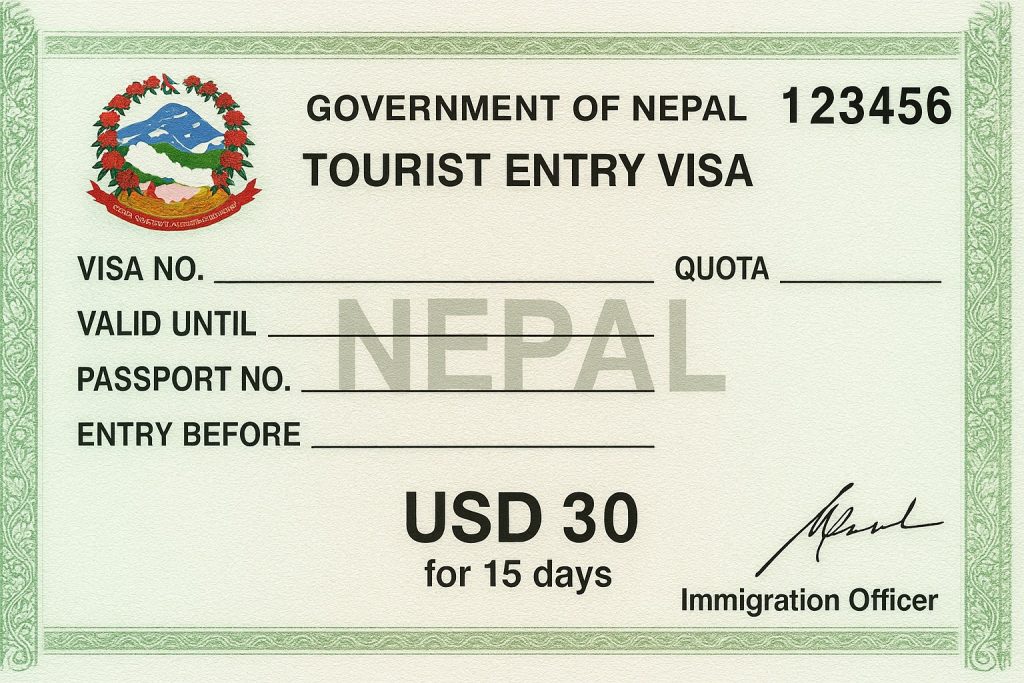
A visa is what lets you legally enter and stay in Nepal, so knowing the Nepal visa cost is the first real step in planning your Himalayan trip. Whether you’re here for a short cultural visit or a long trekking expedition, understanding the official Nepal visa cost up front means a smoother arrival.
Here’s the current Nepal visa cost breakdown for 2026, as set by the Department of Immigration, Nepal:
| Visa Duration | Fee (USD) | Approx. NPR | Best For |
|---|---|---|---|
| 15 days | $30 | ~NPR 4,000 | Short city visits, quick Kathmandu Valley trips |
| 30 days | $50 | ~NPR 6,700 | Most popular — light trekking + sightseeing |
| 90 days | $125 | ~NPR 16,700 | Long treks, volunteering, extended stays |
| Transit (24 hrs) | $5 | ~NPR 670 | Layovers at Tribhuvan International Airport |
All three tourist visa durations are issued as multiple-entry, so you can pop over the border to India or Tibet and return without buying a new visa. Fees must be paid in cash — USD is strongly preferred, though euros and pounds are usually accepted at major entry points.
Note that no tourist visa, regardless of type, can be stretched (through arrivals or extensions combined) beyond 150 days in a single calendar year (January–December). Keep this cap in mind if you’re planning multiple trips to Nepal in the same year.
Nepal Visa Cost by Nationality
The Nepal visa cost is the same standard fee for most nationalities, but a handful of countries get free or reduced entry. Here’s how it breaks down by passport:
| Nationality | Visa Cost | Notes |
|---|---|---|
| US citizens | $30 / $50 / $125 | Standard fee; children under 10 still pay (no US exemption) |
| UK citizens | $30 / $50 / $125 | Standard fee, no exemptions |
| Australian & Canadian citizens | $30 / $50 / $125 | Standard fee, no exemptions |
| EU citizens | $30 / $50 / $125 | Standard fee, no exemptions |
| Indian citizens | Free — no visa required | Valid passport or voter ID needed instead |
| SAARC citizens (Bangladesh, Bhutan, Maldives, Pakistan, Sri Lanka) | Free for 30 days | Once per calendar year only; standard fee applies after |
| Chinese citizens | Free (gratis) | Up to 150 days |
| Children under 10 | Free (most nationalities) | Exception: US citizen children still pay standard fee |
If your nationality isn’t listed above, assume the standard $30/$50/$125 fee applies — this covers the vast majority of travelers, including most of Asia, South America, and the Middle East.
Who Gets a Free (Gratis) Visa?
Not everyone pays the standard Nepal visa cost. The following travelers are exempt:
- Indian citizens — no visa required at all, under the Indo-Nepal Treaty of Peace and Friendship.
- SAARC nationals (Bangladesh, Bhutan, Maldives, Pakistan, Sri Lanka, except Afghanistan) — free 30-day visa, once per calendar year.
- Chinese nationals — gratis visa for up to 150 days.
- Children under 10 (except US citizens) — exempt from the fee, but still need a visa stamp.
Choose Your Visa Type
The right visa depends on how long you’re staying and what you’re doing in Nepal. Here’s a closer look at each option and how it affects your overall Nepal visa cost.
- 15-Day Visa
Ideal for short city tours, Kathmandu Valley sightseeing, or a quick hike close to the capital. If there’s any chance you’ll want more time, most travelers are better off with the 30-day option (see below).
- 30-Day Visa
The most popular choice, and for good reason: 30 days is enough time to combine Kathmandu, Pokhara, and Chitwan with a proper trek, without feeling rushed. Many travelers who book a 15-day visa “just in case” end up needing an extension anyway — applying for 30 days from the start is usually cheaper and simpler.
- 90-Day Visa
The longest tourist visa available, and the right pick for extended volunteer work, multi-region trekking, or a long-term Himalayan itinerary.
Nepal also offers a $5 transit visa for travelers making short connections through Tribhuvan International Airport.
Not sure which Nepal visa to get? Send us your travel dates and we’ll tell you exactly which visa and itinerary fits your trip.
How to Get a Nepal Visa on Arrival: Step-by-Step (2026)
Visa on arrival remains the easiest route for most nationalities, and a bit of prep can make it faster still. Here’s exactly how it works at Tribhuvan International Airport:
- Apply online before you fly (recommended). Complete the online visa application up to 15 days before you land, then print the confirmation receipt with its barcode — this lets you skip the kiosk queue and go straight to the payment counter. Make sure your passport is valid for at least 6 months and bring a passport-style photo.
- Land at Tribhuvan International Airport (TIA). Follow the visa-on-arrival signs, complete the form (or use the digital kiosks if you didn’t apply online), then head to the payment counter before joining the immigration desk.
- Pay your Nepal visa fee in cash. Bring clean, newer USD bills for your visa fee — card machines are unreliable due to network issues. Proof of onward travel isn’t always required but is worth having on hand.
- Get your passport stamped. Processing usually takes 15–30 minutes, but can stretch to an hour or two during peak trekking season (October–November and March–April).
At Nepal Adventure Trail, we help travelers navigate the visa-on-arrival process with minimal stress, so you can get straight to the adventure ahead.
Visa sorted? Now pick your trek.
Tell us your dates and we’ll send a custom itinerary and price within 24 hours. Airport pickup and permits are included.
Nepal e-Visa Cost and How It Works
Nepal’s online e-Visa costs the same as visa on arrival — $30, $50, or $125 depending on duration — but is approved digitally before you fly, so there’s no payment or paperwork needed at the airport. Applications are typically processed within 3–5 business days through the Department of Immigration’s official portal. If you’re approved through an embassy or the e-Visa system, you must enter Nepal within 6 months of the issue date, and your visa duration is counted from your actual arrival date, not the approval date.
Embassy Application vs. Visa on Arrival vs. e-Visa: Which Is Better?
Whether you apply at a Nepali embassy, get your visa on arrival, or use the e-Visa comes down to your travel style and timeline.
| Method | Pros | Cons |
|---|---|---|
| Visa on Arrival | Fast, available instantly at TIA and major land borders, no advance paperwork | Wait times vary with arrival volume; payment is effectively cash-only |
| e-Visa (online) | Approved before you fly, skip payment counters entirely, same cost as arrival | Takes 3–5 business days to process; must enter within 6 months of approval |
| Embassy Application | Good for special requirements or restricted nationalities; visa pre-approved | Requires advance planning and in-person document submission |
Bottom line: for most short trips, visa on arrival or the e-Visa (ideally with online pre-registration) is the simplest option. If you have specific requirements or hold a restricted-nationality passport, an embassy application may serve you better.
Extending Your Nepal Visa (Costs, Where to Apply & Penalties)
Staying longer than planned? Here’s how the Nepal visa cost changes if you need an extension in 2026:
- Minimum extension: 15 days for $45
- Each additional day: $3
- Late/overstay fine: $5 per day
- Maximum stay including extensions: 150 days per calendar year
Extensions are processed through the Department of Immigration in Kathmandu or authorized offices like Pokhara — airport immigration counters generally cannot extend visas, so plan ahead if your departure is approaching. Applications are typically started online via the immigration portal before you visit an office in person.
To extend a Nepal visa in Kathmandu, bring your original passport, your current visa, and any supporting documents requested. Knowing these figures up front means no surprises when it comes to your final Nepal visa cost or overstay fines — always check the latest updates before making stay changes.
Common Visa Mistakes Travelers Make
Avoid these common Nepal visa cost mistakes for a smoother entry and stay:
- Arriving without a passport photo, or with a passport valid for less than 6 months.
- Relying only on a credit or debit card — visa fees are effectively cash-only, ideally in US dollars.
- Assuming visa rules are identical for every nationality — always confirm your country’s specific requirements with an official source.
- Waiting too long to apply for an extension, and getting hit with the $5/day overstay fine.
- Booking a 15-day visa “to save money,” then needing (and paying more for) an extension anyway — a 30-day visa is often the smarter default.
- Forgetting that a visa alone isn’t enough for trekking — regions like Annapurna, Everest, and Langtang require separate permits and a TIMS card.
Don’t want to handle permits yourself?
We arrange your TIMS card, national park permits, guide, porter and airport pickup. Just tell us which trek you have in mind.
Quick Answers: Nepal Visa Cost FAQs
How much does a Nepal visa cost? A Nepal tourist visa costs $30 for 15 days, $50 for 30 days, or $125 for 90 days, payable in cash on arrival or in advance through the e-Visa system.
Do Indian citizens need a Nepal visa? No — Indian nationals can enter visa-free with a passport or valid photo ID.
Is the Nepal visa cost the same for everyone? No — Indian citizens, SAARC nationals, Chinese nationals, and children under 10 either pay nothing or receive reduced/gratis visas. Everyone else, including US, UK, EU, Australian, and Canadian citizens, pays the standard $30/$50/$125 fee based on duration.
Can I get a visa on arrival at land borders? Yes, at major crossings such as Sunauli and Kakarbhitta — though not every border crossing offers it, so stick to the main ones.
What happens if I overstay? You’ll be fined $5 per day and, in serious cases, may face difficulty obtaining future Nepal visas.
Is the online e-Visa application mandatory? No, but it’s strongly recommended — it saves time at the kiosk, especially in peak season, and costs the same as visa on arrival.
Can I pay the Nepal visa fee with a credit card? Some kiosks accept cards, but network issues are common. Cash in clean USD bills is the most reliable payment method at every entry point.
Does the Nepal visa cost include trekking permits? No. Tourist visa fees are separate from trekking permits and the TIMS card, which are required for regions like Everest, Annapurna, and Langtang.
Final Tips: Stay Updated and Plan Ahead
Double-check the current Nepal visa cost and entry policies 24–72 hours before you travel. The official Department of Immigration website is the most reliable source — save a screenshot or printout for offline reference.
We also recommend travel insurance that covers visa delays and entry disruptions, just to be safe.
Need help with your visa and arrival requirements? Nepal Adventure Trail can handle your airport pickup and walk you through every step of the visa process. From flights to permits to custom itineraries, our team can take care of everything — so all you have to think about is the mountains ahead.
Planning a trek in Nepal? Get a free itinerary.
Licensed Kathmandu team, 25+ years of experience, clear pricing. We reply within 24 hours.
[…] most nationalities can get a multiple-entry tourist visa on arrival. Reported 2026 fees are USD 30 for 15 days, USD 50 for 30 days and USD 125 for 90 days. […]
[…] Visa fee: the amounts above. […]