
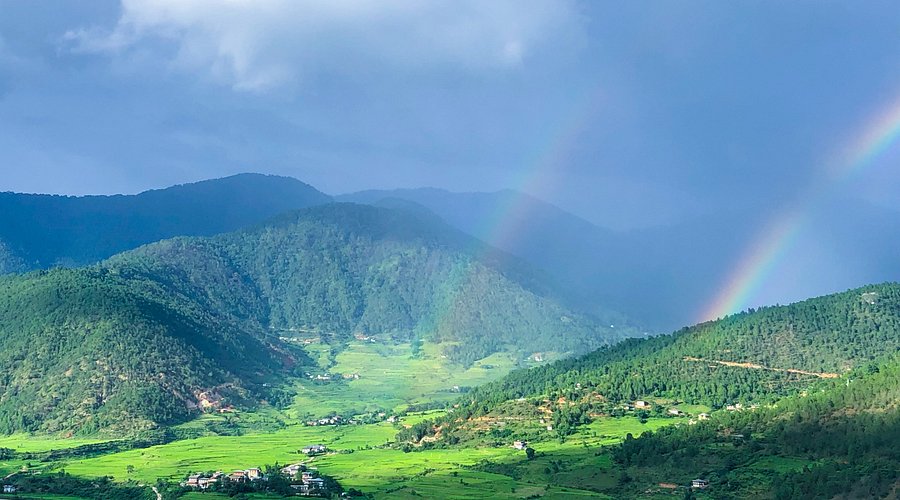
We at Nepal Adventure Trail believe that the Punakha Valley Tour is the most fulfilling way for visitors from Nepal to get a taste of Bhutan. Formerly the capital of Bhutan, Punakha continues to be the country’s spiritual and agricultural centre, shaped by sacred rivers, royal history, and a climate that is noticeably warmer than Thimphu. The valley is perfect for both first-time visitors and returning travellers due to its lower elevation, mild winters, lush farmlands, and longer walking days.
Punakha has a subtropical character in contrast to higher Himalayan towns. The Mo Chhu and Pho Chhu rivers are framed by orange groves, rice terraces, and jacaranda trees, which create a more serene and open atmosphere. Punakha frequently becomes the highlight for visitors taking a tour of Bhutan from Kathmandu because it strikes a balance between comfort, heritage, and leisure time.
Additionally, the Punakha Valley Tour aids visitors in comprehending Bhutan’s regulated tourism model. Bhutan restricts the number of visitors by using professional guides, structured pricing, and the Sustainable Development Fee. Although this increases expenses, it guarantees uncrowded locations, well-preserved culture, and a better travel experience. This balance is clearer than ever for 2026 and 2027.
Understanding Bhutan’s Sustainable Development Fee (SDF) in 2026
Every Punakha Valley Tour is shaped by Bhutan’s Sustainable Development Fee. In 2026, the SDF for non-regional visitors is $100 USD per night, which must be paid for each night spent in the nation. Regardless of the type of hotel, this charge is required.
Healthcare, education, infrastructure, environmental conservation, and cultural preservation are all directly supported by the SDF. In rural valleys like Punakha, it also provides funding for community development initiatives, waste management systems, and road upkeep. Travellers can easily see where this money is going, based on our experience. Monasteries are safeguarded, trails are kept clean, and visitor numbers are kept under control.
All visitors must obtain a Bhutan visa for 2026 in addition to the SDF. Only authorised Bhutanese tour operators are able to process the $40 USD visa fee. Travelling on your own is not allowed. As part of our Bhutan tour packages from Kathmandu, Nepal Adventure Trail arranges this procedure, making sure that approvals are obtained well in advance of departure.
Depending on the type of hotel and the time of year, the daily cost of the Punakha Valley Tour, including lodging, transportation, meals, and guide services, usually falls between $250 and $400 USD per person. This pricing structure fosters a travel environment where quality is valued more highly than quantity.
Punakha Dzong and the Political Soul of Bhutan
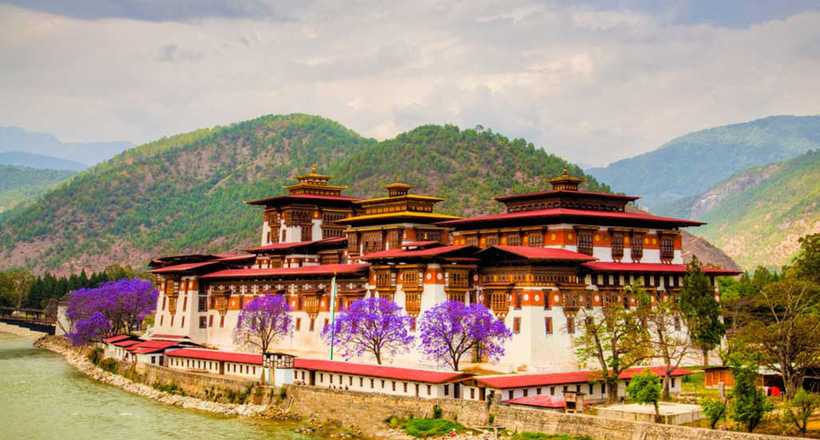
Punakha Dzong stands at the meeting point of the Mo Chhu and Pho Chhu rivers and remains the most important fortress-monastery in Bhutan. Known as the Palace of Great Happiness, it was built in 1637 and served as the seat of government until the capital moved to Thimphu.
The Punakha Dzong history is closely tied to Bhutan’s monarchy. All kings of Bhutan have been crowned here, and the original royal wedding ceremonies took place within its courtyards. The dzong still hosts the winter residence of the Je Khenpo, Bhutan’s chief abbot, along with hundreds of monks.
Architecturally, Punakha Dzong represents classical Bhutanese design. Whitewashed walls, golden spires, carved wooden windows, and expansive courtyards create a sense of scale without feeling imposing. Visitors must cross a traditional cantilever bridge before entering, reinforcing the dzong’s symbolic role as both protector and spiritual centre.
Punakha Dzong admission is 1,000 Ngultrum, or about $12 USD, and must be paid in person. Proper dress is required, and our guides ensure guests understand etiquette and photography rules. For most visitors, Punakha Dzong becomes the emotional anchor of the Punakha Valley Tour.
Chimi Lhakhang and the Legacy of the Divine Madman
Chimi Lhakhang fertility temple sits on a hill surrounded by rice fields and small villages. Dedicated to Lama Drukpa Kunley, known as the Divine Madman, this temple represents one of Bhutan’s most unique spiritual traditions.
Drukpa Kunley challenged rigid religious norms through humor, satire, and unconventional teachings. His stories remain deeply woven into Bhutanese culture. The temple associated with him has become a pilgrimage site for couples seeking blessings for fertility and childbirth.
Reaching Chimi Lhakhang involves a gentle walk through farming communities, offering insight into daily rural life. Prayer flags, painted houses, and seasonal crops frame the path. Inside the temple, wooden phallus symbols reflect ancient beliefs tied to protection and prosperity, a cultural detail often misunderstood but deeply respected locally.
Our clients often describe this visit as enlightening rather than surprising. The experience adds depth to the Punakha Valley Tour by showing how Bhutan balances spirituality with everyday life.
The Punakha Suspension Bridge over the Pho Chhu River
The Punakha suspension bridge stretches across the Pho Chhu river and connects villages that still rely on foot travel. Decorated with prayer flags, the bridge sways gently and offers open views of farmland, riverbanks, and distant hills.
Crossing the bridge is safe and maintained year-round. For visitors, it provides a sense of movement through the valley rather than observation from a distance. The bridge is especially appreciated by photographers and travelers who enjoy light walking without altitude strain.
This experience fits naturally into a Punakha Valley Tour itinerary and pairs well with visits to nearby monasteries or riverside walks.
Dochula Pass and the 108 Memorial Chortens
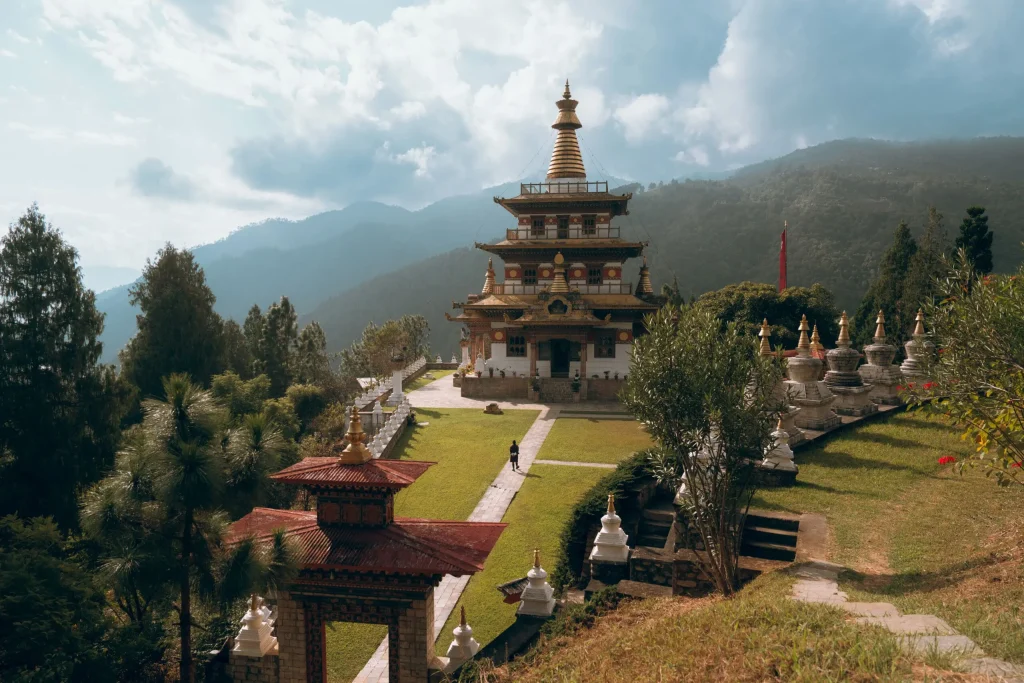
Dochula Pass sits at 3,100 meters and marks the transition from Thimphu to Punakha. The pass is home to the Dochula Pass 108 chortens, built to honor Bhutanese soldiers and symbolize peace.
On clear days, the pass offers views of the eastern Himalaya. The chortens themselves are arranged in three layers, creating a sense of symmetry and calm. A short stop here allows travelers to adjust to changing landscapes before descending into Punakha’s warmer climate.
At Nepal Adventure Trail, we schedule Dochula visits strategically to avoid peak traffic and ensure time for quiet exploration.
Best Time to Visit Punakha Valley in 2026 and 2027
Spring, from March to May, brings blooming jacaranda trees and mild temperatures. This period aligns well with cultural tours and walking activities. Autumn, from September to November, offers clear skies and post-harvest scenery, making it popular for photography-focused travelers.
Winter, from December to February, is often overlooked but ideal for a Punakha Valley Tour. At lower elevation, Punakha remains comfortable while higher regions experience colder conditions. The Punakha Tshechu festival, which is set for February 27–March 1, 2026, is also part of this season.
Traveling from Nepal to Punakha Valley
Most travelers begin with a Bhutan tour from Kathmandu, flying from Kathmandu to Paro. Flights offer mountain views and land in one of the world’s most controlled airports. From Paro, the drive to Thimphu takes about one hour, followed by a three-hour journey to Punakha via Dochula Pass.
Nepal Adventure Trail manages all logistics across borders, coordinating flights, ground transport, permits, and guides. This dual-country expertise reduces delays and ensures continuity throughout the journey.
Luxury Hotels and Authentic Stays in Punakha
Luxury hotels in Punakha, such as Uma Punakha and Dhensa Boutique Resort, focus on privacy, architecture, and valley views. These properties offer spacious rooms, wellness facilities, and curated dining experiences.
Authentic farmhouses provide a different perspective, allowing guests to stay with local families. Rooms are simple but clean, and meals are home-cooked. Both options align with Bhutan’s tourism policies, and we help travelers choose based on comfort preferences and travel goals.
Punakha Valley for Couples and Families
For couples, the Punakha Valley Tour offers quiet walks, riverside views, and slower days that suit honeymoon travel. For families, the lower elevation and short walking distances reduce fatigue, while cultural sites remain engaging for all ages.
The valley’s pace encourages connection without pressure, making it suitable for multigenerational travel.
A Detailed 3-Day Punakha Valley Tour Segment
Day one includes the drive from Thimphu, a stop at Dochula Pass, and an evening walk along the Mo Chhu river. Day two focuses on Punakha Dzong, the suspension bridge, and Chimi Lhakhang. Day three allows for village walks, optional rafting on the Mo Chhu, and return travel planning.
This segment integrates smoothly into longer Bhutan itineraries.
Conclusion
A Punakha Valley Tour offers insight into Bhutan’s history, beliefs, and landscape without physical strain. It rewards travelers who value meaning, structure, and thoughtful travel design.
At Nepal Adventure Trail, we specialize in crafting Bhutan journeys that begin smoothly from Nepal and respect every regulation for 2026 and 2027. We invite you to contact our team for a personalized Bhutan–Nepal itinerary that reflects your pace, interests, and expectations.