
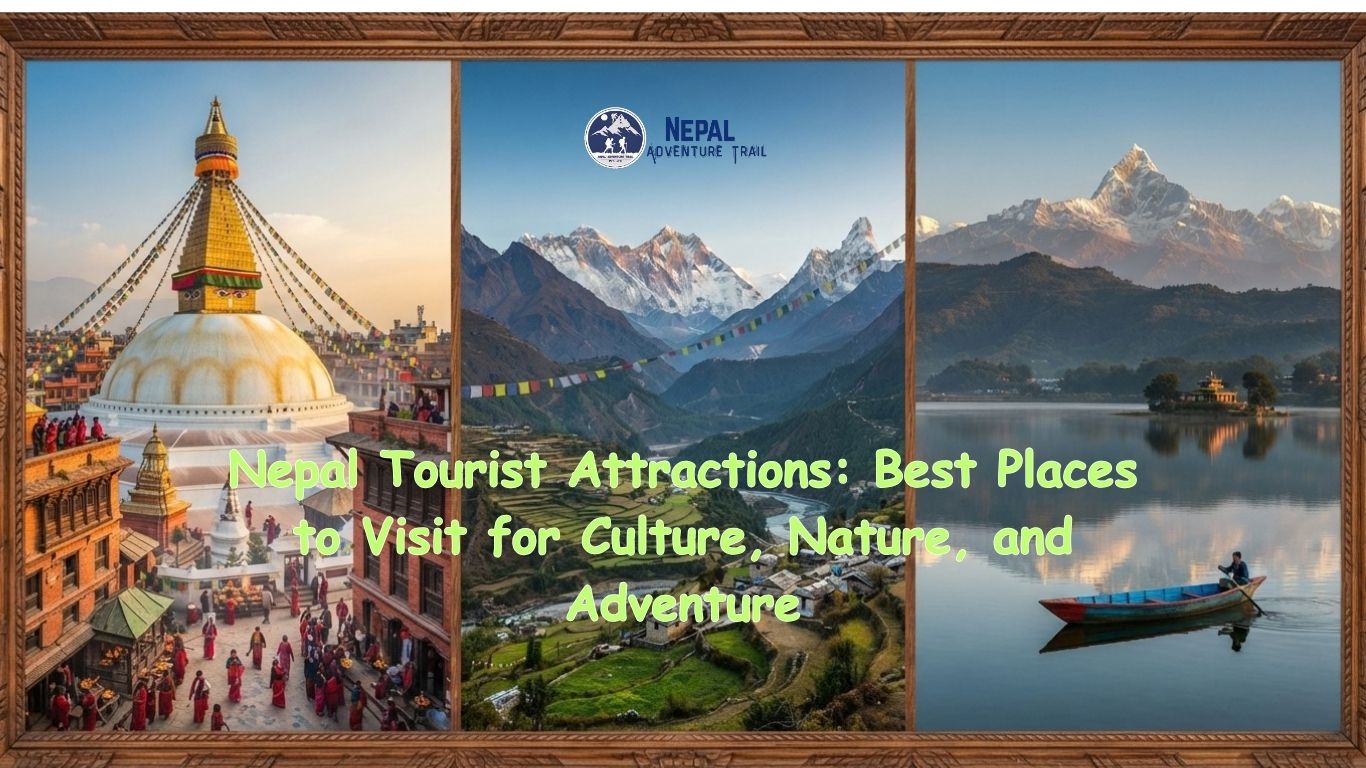
In a few hundred kilometres, Nepal moves from subtropical jungle to the highest mountains on earth. Rhinos graze on river plains within a day’s travel of snow peaks. A medieval brick city sits a short drive from a lakeside town where paragliders drift over water. The Buddha’s birthplace lies in the southern lowlands, while Sherpa villages cling to ridges above 3,000 metres.
That range is why Nepal tourist attractions are hard to summarise and easy to plan badly. Many first-time visitors think of Everest and stop there. Everest matters, but the country also holds ancient temple squares, sacred pilgrimage sites, national parks, hill towns and valleys that few visitors ever reach.
This guide groups the main attractions by region and by traveler type, so you can decide where to go, how long you need and which season suits which place. Figures such as fees and permits are given as they were reported in 2026 and should be confirmed before you travel.
Quick Overview of Nepal Tourist Attractions
| Category | Key attractions |
|---|---|
| Heritage | Kathmandu, Patan and Bhaktapur Durbar Squares |
| Hindu heritage | Pashupatinath, Janaki Mandir (Janakpur), Muktinath |
| Buddhist heritage | Boudhanath, Swayambhunath, Lumbini |
| Himalayan regions | Everest, Annapurna, Langtang |
| Lakes and nature | Pokhara and Phewa Lake, Rara Lake |
| Wildlife | Chitwan National Park, Bardia National Park |
| Adventure | Everest Base Camp, Annapurna treks, rafting, paragliding |
| Scenic hill towns | Nagarkot, Bandipur, Dhulikhel, Sarangkot |
Kathmandu Valley Attractions
The valley is where much of Nepal’s urban heritage is concentrated. Its monuments reflect the Malla-era city kingdoms of Kathmandu, Patan and Bhaktapur, and the craftsmanship of the Newar people, known for carved timber, brick, stone and bronze work. UNESCO inscribed the valley in 1979 under seven monument zones (more on that below).
Kathmandu
Pashupatinath Temple sits on the Bagmati River and is among the most important Hindu sites in Nepal. Entry to the main temple is restricted to Hindus, but visitors can walk the surrounding grounds and view the riverside ghats from the opposite bank. Cremations take place here, so photograph with restraint.
Boudhanath Stupa is one of the largest stupas in the world and the centre of Tibetan Buddhist life in Kathmandu. The best time to see it is early morning or around dusk, when pilgrims circle the dome in a clockwise flow.
Swayambhunath Stupa stands on a hilltop west of the city, reached by a long stone stairway. It offers a wide view over the valley on clear days and is also known for the monkeys that live around it.
Kathmandu Durbar Square is the old royal square, with temples, the Hanuman Dhoka palace complex and the Kumari Ghar. Parts of the square were damaged by the 2015 earthquake and have been under repair, so some structures may be scaffolded. The Garden of Dreams, a restored early 20th century garden near Thamel, is a quiet break from city noise.
Patan
Patan (Lalitpur) is the valley’s most artisan-focused city. Patan Durbar Square has a dense cluster of temples and a well-regarded museum in the former palace. The Golden Temple (Hiranya Varna Mahavihar) is a short walk away, a Buddhist monastery with ornate metalwork. Patan’s workshops still produce bronze statues and thangka paintings.
Bhaktapur
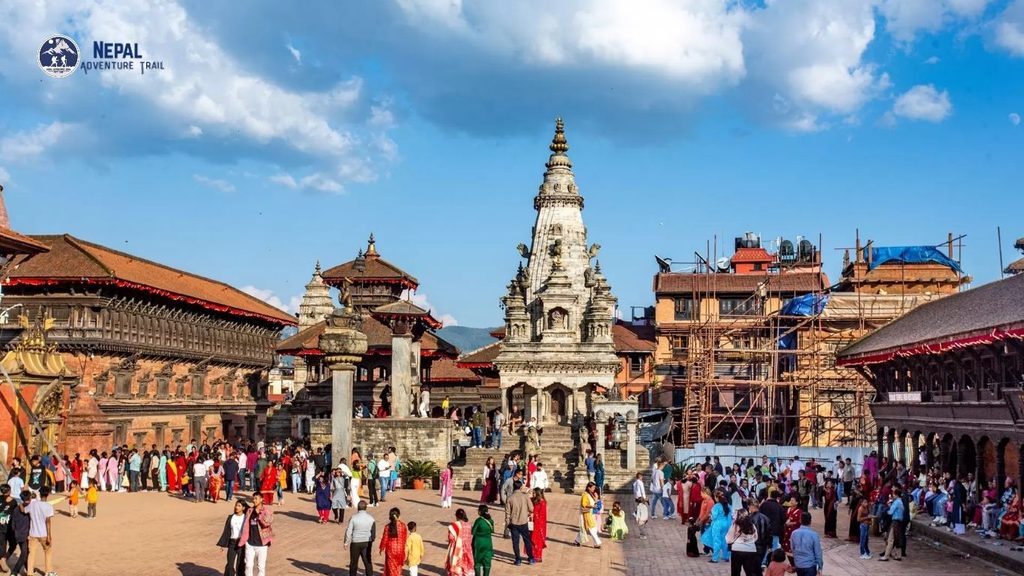
Bhaktapur feels the most intact of the three. Bhaktapur Durbar Square, the five-tier Nyatapola Temple, Pottery Square and the brick-paved lanes around them show the medieval city plan clearly. Many visitors spend a half day here and wish they had allowed more.
Reported entrance fees for foreign visitors in 2026 are around NPR 1,000 for Kathmandu and Patan Durbar Squares and around NPR 1,800 for Bhaktapur, though published figures differ slightly between sources. SAARC nationals pay less. Tickets often include extended-stay options with a passport.
Pokhara and Its Attractions
Pokhara combines scenery, relaxation and activity better than any other Nepali town. Phewa Lake sits at the centre, with the Annapurna range and the pointed peak of Machhapuchhre rising behind it, so the mountains appear to float above the water on clear mornings.
- Phewa Lake and Tal Barahi Temple: boating on the lake, with the island temple a short paddle from the shore.
- Sarangkot: a hilltop viewpoint for sunrise over the Annapurna and Dhaulagiri ranges and a popular launch point for paragliding.
- World Peace Pagoda: a white stupa on a ridge above the lake, reached by boat and a walk or by road.
- Davis Falls and Gupteshwor Mahadev Cave: short stops, with the waterfall disappearing into a gorge and a cave temple beside it.
- International Mountain Museum: a useful introduction to Himalayan geography, climbing history and mountain cultures.
Pokhara is also the gateway for Annapurna treks, including Ghorepani Poon Hill and Annapurna Base Camp. It suits travelers who want gentle days between more demanding parts of a trip.
Everest Region and Mountain Attractions
Everest is not only a mountaineering destination. For most visitors it is a landscape of Sherpa villages, monasteries, suspension bridges and high valleys within Sagarmatha National Park.
Three experiences are often confused:
- Seeing Everest: possible from a mountain flight, from viewpoints near Namche Bazaar, and clearly from Kala Patthar on the trek.
- Trekking toward Everest Base Camp: a multi-day walk, usually 12 to 14 days including travel, to around 5,364 m. It does not go to the summit.
- Mountaineering: expeditions that continue from Base Camp through the Khumbu Icefall toward the summit at about 8,849 m. This is a separate, technical undertaking.
Key places along the way include Namche Bazaar, the Sherpa market town; Tengboche Monastery, with views of Ama Dablam; and Khumjung, a village with a monastery and a school. Altitude is the main practical issue. Itineraries need acclimatization days, and trekkers should not rush above Namche. Licensed guide and permit requirements apply, so confirm them before booking.
Annapurna Region
The Annapurna region is among the most varied mountain areas in Nepal, with subtropical valleys, rhododendron forest, high desert and glaciers within a short distance.
- Ghorepani and Poon Hill: a short trek known for sunrise over Annapurna and Dhaulagiri, suitable for those with limited time.
- Annapurna Base Camp: a longer trek into a glacial basin ringed by high peaks.
- Annapurna Circuit: a classic long route over a high pass, with road development having changed parts of the lower sections.
- Manang and Mustang: drier, Tibetan-influenced landscapes on the rain-shadow side of the range.
- Muktinath: a pilgrimage site sacred to both Hindus and Buddhists, reachable by trek or by road and flight to Jomsom, depending on conditions.
The region rewards variety. One day may include rice terraces and the next a barren high valley with Buddhist monasteries and apple orchards.
Lumbini: Birthplace of the Buddha
Lumbini, in the southern plains, is where Siddhartha Gautama is traditionally held to have been born. It is a UNESCO World Heritage Site and one of the world’s main Buddhist pilgrimage sites.
The core area includes the Maya Devi Temple, which marks the birth site, the Ashoka Pillar with its ancient inscription, the Sacred Garden and a sacred pond. Nearby, the monastic zone hosts monasteries built by Buddhist communities from different countries, so you can compare architectural styles from Asia within a single walk or cycle ride.
Lumbini attracts pilgrims, history enthusiasts and travelers who want a quiet counterpart to Kathmandu. Reaching it is easier than it once was: there is a regional airport at Bhairahawa, and road travel from Kathmandu or Pokhara takes much longer. Check current flights and road conditions.
Chitwan National Park
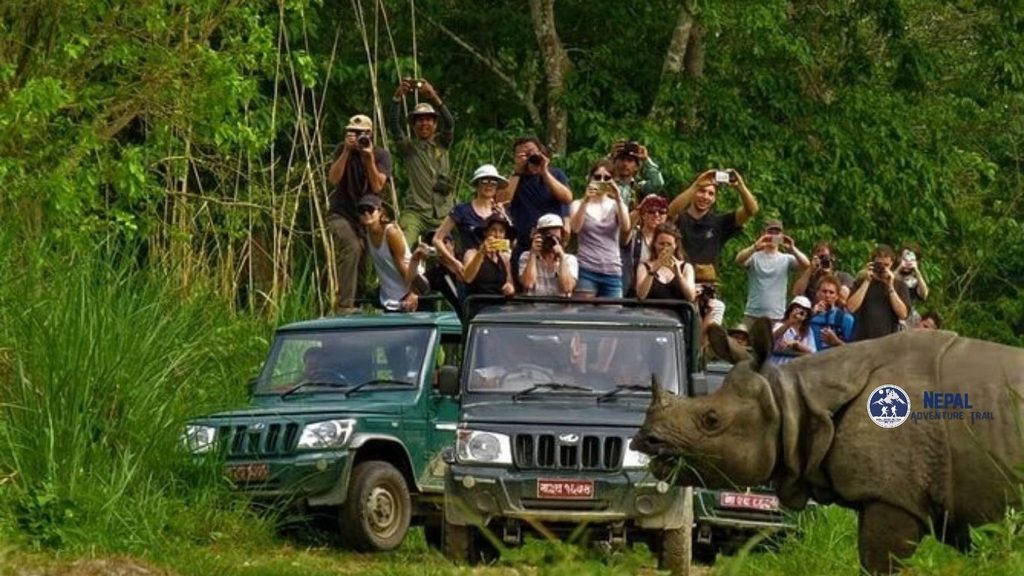
Chitwan is Nepal’s best-known wildlife destination, in the Terai lowlands. It is one of the few places in South Asia where one-horned rhinoceros can be seen in the wild, and it also supports Bengal tigers, though tiger sightings are rare, along with crocodiles, deer and a large range of birds.
Typical activities are jeep safaris, guided jungle walks, canoe rides on the river and visits to Tharu villages to learn about local culture and food. Availability of specific activities depends on park rules and the season, so ask your lodge. Chitwan runs on a very different rhythm from the mountains. Mornings are for wildlife. Afternoons are warm and slow.
It is also a UNESCO site, listed in 1984, and a reminder that Nepal’s attractions extend from glaciers to subtropical forest.
Bandipur and Hill Towns
Hill towns provide a slower pace between major destinations.
- Bandipur: a Newar trading town on a ridge, with a preserved bazaar and views toward the Himalaya. Best for quiet evenings and walking.
- Nagarkot: a viewpoint near Kathmandu, popular for sunrise and clear-day panoramas. Convenient but busier.
- Dhulikhel: an old Newar town east of Kathmandu with mountain views and a base for short hikes.
- Tansen: a hill town in Palpa district with traditional architecture, textiles and views across the lowlands.
Choose Bandipur or Tansen for atmosphere, Nagarkot or Dhulikhel for convenience.
Lesser-Known Nepal Tourist Attractions
Beyond the main circuit, Nepal has regions that need more time, effort or permits. They fall into different categories.
Accessible with planning:
- Rara Lake in the far northwest, the country’s largest lake, set in a national park. Reaching it involves flights or long road journeys.
- Khaptad in the far west, a high plateau of meadows and religious sites.
- Ilam in the east, known for tea gardens and hill scenery.
Trekking destinations:
- Gosaikunda in Langtang National Park, a sacred lake group visited by pilgrims.
- Panch Pokhari, a high-altitude lake area northeast of Kathmandu.
- Langtang Valley and the Manaslu Circuit, which lie in mountain regions of rich Tamang and Tibetan-influenced culture.
Restricted or permit-controlled areas: Upper Mustang, Nar Phu, Upper Dolpo and parts of the Manaslu region require restricted-area permits arranged through a registered agency, with a licensed guide. Permit fees and group-size rules have been revised recently and sources disagree, so check the current position before planning.
These places are not for every visitor. They suit travelers with extra time and a tolerance for basic facilities.
Nepal’s Natural Attractions
Nepal’s geography is the real attraction behind many others. The country climbs from lowland plains near sea level to peaks above 8,000 m, which creates distinct ecological zones: tropical forest in the Terai, mid-hill terraces and rhododendron woodland, alpine meadows, high-altitude lakes and glacial valleys.
Eight of the world’s fourteen peaks above 8,000 m are in Nepal or on its borders, including Everest, Kanchenjunga, Lhotse, Makalu, Dhaulagiri, Manaslu, Cho Oyu and Annapurna. Rivers such as the Trishuli and Bhote Koshi support rafting. National parks and conservation areas protect habitat for rhino, tiger, snow leopard and many bird species, while waterfalls and lakes dot the middle hills. Few countries compress this much variety into so short a distance.
Cultural and Historical Attractions
Culture in Nepal is not limited to Kathmandu.
- Newar heritage shapes the Kathmandu Valley’s architecture, festivals and food.
- Hindu pilgrimage runs from Pashupatinath to Janakpur’s Janaki Mandir, a major site linked to the Ramayana.
- Buddhist heritage spans Lumbini, the great stupas and mountain monasteries.
- Sherpa, Tamang and Gurung communities have distinct traditions, languages and festivals in the mountains and hills.
- Tharu culture in the Terai is closely connected to the forests and rivers of Chitwan and Bardia.
- Magar communities and historic trade settlements in the hills and along old trans-Himalayan routes add further layers.
Treat these as living communities, not performances. Ask before photographing people, dress modestly at religious sites and follow local customs at monasteries and temples.
UNESCO World Heritage Sites in Nepal
UNESCO lists four properties in Nepal:
- Kathmandu Valley (1979): seven monument zones: Kathmandu (Hanuman Dhoka) Durbar Square, Patan Durbar Square, Bhaktapur Durbar Square, Swayambhunath, Boudhanath, Pashupatinath and Changu Narayan.
- Sagarmatha National Park (1979): the Everest region protected area.
- Chitwan National Park (1984): the Terai lowland ecosystem.
- Lumbini, the Birthplace of the Lord Buddha (1997).
Some sources count the seven valley zones separately and talk about “ten” sites, which is not how UNESCO inscribes them. Not every famous landmark is a World Heritage Site. For example, the Garden of Dreams and the Golden Temple are important but are not themselves listed monument zones. The valley was on UNESCO’s danger list from 2003 to 2007, and conservation after the 2015 earthquake remains ongoing.
Best Nepal Tourist Attractions by Travel Style
First-time visitors: Kathmandu, Pokhara and Chitwan give a broad introduction to culture, scenery and wildlife.
Mountain lovers: Everest, Annapurna, Langtang and Manaslu, depending on time and fitness.
Culture lovers: Kathmandu Valley, Patan, Bhaktapur, Lumbini and Janakpur.
Wildlife lovers: Chitwan and Bardia. Bardia is quieter and more remote.
Adventure travelers: trekking, white-water rafting, paragliding in Pokhara, mountain biking and canyoning in some areas.
Families: Kathmandu sightseeing, Pokhara, Chitwan and easy walks. Altitude and long drives matter more than distance when children are involved.
Spiritual travelers: Pashupatinath, Boudhanath, Swayambhunath, Lumbini and Muktinath.
Best Time to Visit Nepal’s Tourist Attractions
There is no single best season. It depends on the attraction.
Spring (March to May): rhododendron blooms in mid-elevations, warm days and good trekking. Haze can soften distant views.
Monsoon (June to September): heavy rain, leeches on lower trails and cloudy mountains in most regions. Rain-shadow areas such as Upper Mustang and parts of Manang are drier, and cultural tours in the valley remain possible with flexible plans.
Autumn (October to November): the clearest skies and peak trekking season, plus major festivals. Also the busiest period.
Winter (December to February): cold at altitude but clear. Good for lowland sightseeing, Chitwan and cultural tours, with fewer trekkers. High routes are cold and some lodges close.
How Many Days Do You Need to See Nepal?
- 5 to 7 days: Kathmandu plus Pokhara, or Kathmandu plus Chitwan.
- 8 to 12 days: Kathmandu, Pokhara and Chitwan, with breathing room.
- 12 to 16 days: add a short trek or additional cultural destinations such as Lumbini.
- 2 to 3 weeks or more: combine major cities with a longer trek, wildlife, pilgrimage or remote regions.
No itinerary sees all of Nepal. Choose a few places and give them time.
Sample Nepal Tour Itineraries
Classic Nepal tour (about 8 to 10 days): Kathmandu (heritage sites), Pokhara (lake and mountain views), Chitwan (safari), back to Kathmandu.
Culture and heritage: Kathmandu, Patan, Bhaktapur, then Lumbini and Pokhara, adding extra days for travel between them.
Adventure-focused: Kathmandu, Pokhara, then a trekking region such as Annapurna or Everest.
Mountain and wildlife: Kathmandu, a mountain region, then Chitwan to finish with warm lowland days.
Travel time between regions can take longer than the map suggests, so build in a spare day where possible.
Getting Around Nepal
Nepal is compact on a map, but mountain terrain and road conditions stretch journey times.
- Domestic flights: useful for Pokhara and some trekking gateways and remote areas, but weather delays are common.
- Tourist buses: a low-cost option between Kathmandu, Pokhara and Chitwan, usually taking many hours.
- Private vehicles: more comfortable and flexible, particularly with a driver.
- Local transport: inexpensive but crowded and slow.
- Trekking routes: often start at roadheads or airstrips and continue on foot.
Do not judge a day by distance alone. A 150 km road journey can take much of a day.
Practical Travel Tips
- Visa: most nationalities can get a multiple-entry tourist visa on arrival. Reported 2026 fees are USD 30 for 15 days, USD 50 for 30 days and USD 125 for 90 days. Citizens of India enter visa-free, SAARC nationals are generally eligible for a free 30-day visa, and a short list of nationalities must apply in advance. Confirm with the Department of Immigration.
- Insurance: get travel insurance that covers trekking and evacuation if you go above about 3,000 m.
- Altitude: ascend gradually and take rest days. Descend if symptoms worsen.
- Clothing: layers for hills and mountains, modest clothing for temples.
- Cash: carry cash for small towns and treks. ATMs are limited outside cities.
- Weather: check forecasts, especially for flights and passes.
- Respect: remove shoes where required, walk clockwise around stupas and ask before taking photos of people or ceremonies.
- Environment: carry a refillable bottle and avoid single-use plastic.
Which Attractions Should You Prioritize?
| If you want… | Prioritize… |
|---|---|
| Culture | Kathmandu Valley, Lumbini |
| Mountains | Everest, Annapurna, Langtang |
| Wildlife | Chitwan, Bardia |
| Relaxation | Pokhara, Bandipur |
| Adventure | Treks, rafting, paragliding |
| Spiritual travel | Lumbini, Pashupatinath, Muktinath |
| Photography | Pokhara, hill towns, Everest and Annapurna regions |
| Family travel | Kathmandu, Pokhara, Chitwan |
Plan Your Nepal Trip with Nepal Adventure Trail
Planning a Nepal route involves flights, permits, accommodation and seasonal timing, and the details change from year to year. Nepal Adventure Trail, a local trekking and tour operator, can help arrange itineraries, transport, accommodation, guides and permits, and tailor a trip to your interests, season and pace.
Frequently Asked Questions
What are the most popular tourist attractions in Nepal?
The most visited places include the Kathmandu Valley’s temples and Durbar Squares, Pokhara and Phewa Lake, Chitwan National Park, Lumbini and the Everest and Annapurna trekking regions. Together they cover heritage, scenery, wildlife and pilgrimage. Popularity depends on season and travel style, and many travelers combine two or three of these rather than trying to see everything in one trip.
What is Nepal best known for as a tourist destination?
Nepal is best known for the Himalaya, including Everest, and for trekking, but it is equally known for its UNESCO-listed heritage in the Kathmandu Valley and as the birthplace of the Buddha. It also offers lowland wildlife in Chitwan and Bardia, lakeside Pokhara and a range of adventure activities. That variety is its main strength.
Which places should first-time visitors see in Nepal?
Kathmandu, Pokhara and Chitwan make a balanced first trip, combining heritage sites, mountain views and wildlife. Add Bhaktapur or Patan for more culture, or a short trek such as Ghorepani Poon Hill if you want to experience the mountains on foot. Eight to twelve days allows you to do this without rushing, though shorter versions are possible.
What are the best natural attractions in Nepal?
Highlights include Himalayan regions such as Everest, Annapurna and Langtang, Chitwan National Park, Phewa Lake, Rara Lake, high-altitude lakes such as Gosaikunda and the river valleys used for rafting. Nepal’s natural variety comes from its steep change in altitude, so the best choice depends on whether you prefer mountains, forest, lakes or wildlife viewing.
What are the best cultural attractions in Nepal?
The Kathmandu Valley is the main cultural centre, with Durbar Squares, Pashupatinath, Boudhanath and Swayambhunath. Lumbini adds Buddhist heritage, Janakpur is important for Hindu pilgrims, and mountain regions offer Sherpa, Tamang and Gurung culture. Hill towns such as Bandipur show Newar architecture beyond the capital. Respectful behaviour at religious sites matters.
Which UNESCO World Heritage Sites can I visit in Nepal?
UNESCO lists four properties: the Kathmandu Valley, Sagarmatha National Park, Chitwan National Park and Lumbini. The Kathmandu Valley includes seven monument zones, namely three Durbar Squares, Swayambhunath, Boudhanath, Pashupatinath and Changu Narayan. All four properties are open to visitors, though access and fees vary, and some monuments are still being restored after earthquake damage.
Is Nepal good for family holidays?
It can be, with the right itinerary. Kathmandu sightseeing, Pokhara’s lake and easy walks, and a Chitwan wildlife stay suit many children. Long road journeys and altitude need thought. High treks are better saved for older, fit children. Choose shorter days and flexible plans, and check lodging and food options with a local operator.
What are the best places to visit in Nepal besides Kathmandu?
Pokhara is the most popular alternative, followed by Chitwan, Lumbini and the Everest and Annapurna regions. Hill towns such as Bandipur, Dhulikhel and Tansen offer quieter stops, while Rara Lake and Khaptad suit travelers with more time. Which you choose depends on whether you want scenery, culture, wildlife or trekking.
Which Nepal tourist attractions are best for adventure travelers?
Trekking in Everest, Annapurna, Langtang and Manaslu is the core adventure activity, along with peak climbing for experienced travelers. Rafting on rivers such as the Trishuli, paragliding in Pokhara, mountain biking and canyoning add variety. Availability depends on the season, and some activities need a licensed guide or operator for safety and permits.
What is the best time to visit Nepal’s tourist attractions?
Autumn and spring are the most popular for trekking and mountain views, with autumn usually the clearest. Winter suits lowland sightseeing and wildlife, though high routes are cold. Monsoon is wet, but rain-shadow regions and cultural tours can still work. The best time depends on the attraction, so match your season to your main priority.
How many days are enough for a Nepal tour?
Five to seven days covers Kathmandu with Pokhara or Chitwan. Eight to twelve days allows Kathmandu, Pokhara and Chitwan at an easier pace. With twelve to sixteen days you can add a short trek or Lumbini, and three weeks or more suits longer treks or remote regions. No trip sees all of Nepal, so focus on a few places.
Can I combine cultural sightseeing with trekking in Nepal?
Yes, and many itineraries do. A common pattern is a few days in the Kathmandu Valley, then a trek in Annapurna, Langtang or Everest, followed by Pokhara or Chitwan for rest. Allow buffer days for flights and weather, and plan acclimatization on the trek. This blend gives both Nepal’s heritage and its mountain landscapes.
Conclusion
Nepal’s appeal lies in how much it holds within a small area: ancient squares and sacred sites, national parks, lakes, hill towns and the highest mountains in the world. The best plan is rarely to see everything. Pick the regions that match your interests and the season, leave room for travel delays and let a few places take your time. If you want help shaping that route, Nepal Adventure Trail can arrange the logistics.