
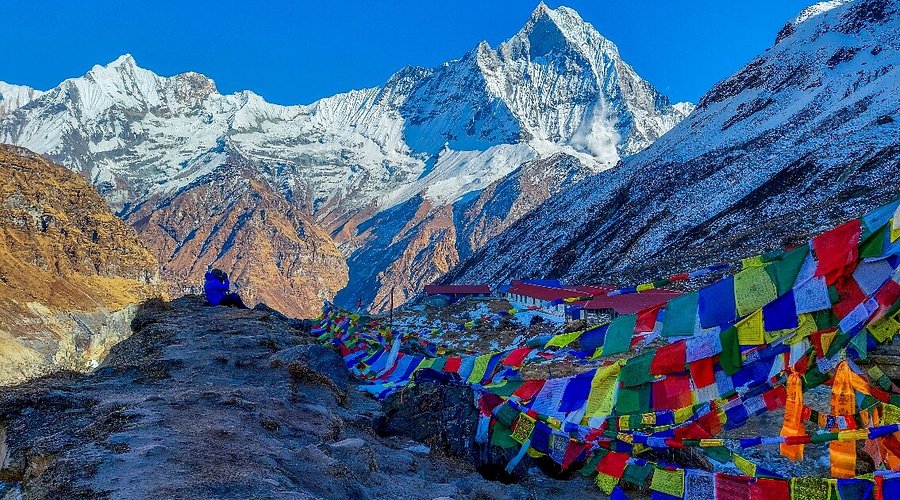
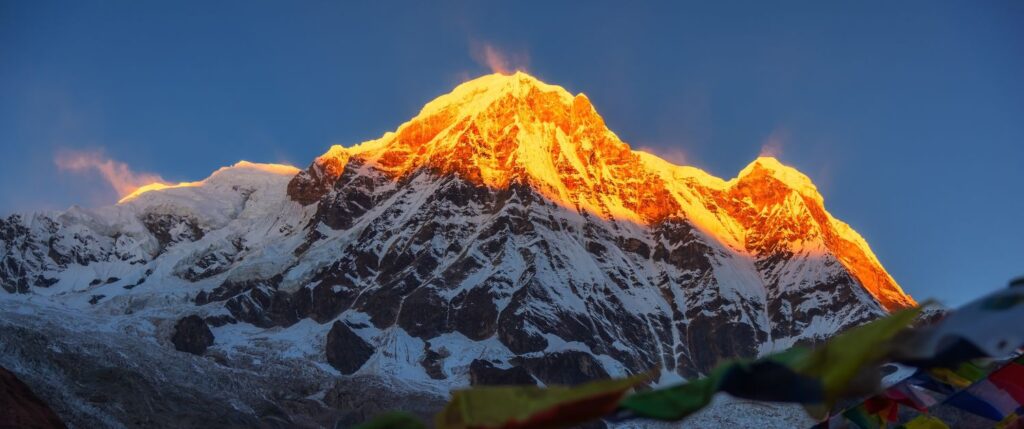
The first rays of sunlight hitting Annapurna I at dawn are something photographs never fully capture. Standing at Annapurna Base Camp, surrounded by a ring of towering Himalayan peaks, feels less like reaching a destination and more like stepping into a natural amphitheatre built by the mountains themselves. Snow-covered giants rise from every direction, while the silence of the high Himalayas settles over the valley.
The ABC trek, also known as the Annapurna Base Camp trek, is one of Nepal’s most rewarding trekking adventures. Unlike many high-altitude Himalayan journeys, this route combines dramatic mountain scenery with traditional villages, terraced farmland, rhododendron forests, waterfalls, and welcoming teahouses. Within a relatively short timeframe, trekkers can experience a complete transition from subtropical landscapes to the heart of the Annapurna Sanctuary.
Whether you are planning your first trek in Nepal or returning for another Himalayan adventure, this guide covers everything you need to know about the ABC trek map and itinerary, route logistics, permits, altitude, difficulty, and the best time to visit.
Where is the ABC Trek Located?
The Annapurna Base Camp trek is located within the Annapurna Conservation Area, Nepal’s largest protected region. This vast conservation zone lies in Gandaki Province and covers more than 7,600 square kilometres of mountains, forests, rivers, and traditional settlements.
The trail leads deep into the famous Annapurna Sanctuary, a glacial basin surrounded by some of the world’s highest Himalayan peaks. The sanctuary is enclosed by Annapurna I (8,091m), Annapurna South (7,219m), Hiunchuli (6,441m), Gangapurna (7,455m), and the iconic Machhapuchhre (6,993m), often called Fishtail Mountain.
Access from Kathmandu
Most trekkers begin their journey in Kathmandu before travelling to Pokhara.
- Kathmandu to Pokhara: Approximately 200 km
- Tourist bus journey: 6–8 hours
- Domestic flight: Around 25 minutes
Access from Pokhara
Pokhara serves as the main gateway for Annapurna trekking adventures.
Depending on the chosen route, trekkers typically drive to the following:
- Nayapul
- Kimche
- Siwai
- Jhinu Danda
These trailheads are located roughly 1.5 to 3 hours from Pokhara by road.
For travelers searching for a short ABC trek route, modern road access allows many itineraries to begin closer to the mountains, reducing overall trekking days while preserving the core experience.
The Ultimate ABC Trek Route Map & Itinerary
One of the most common questions is: how long is the ABC trek?’
The answer depends on your starting point and pace. Most itineraries range between 7 and 11 days, while some experienced trekkers complete shorter variations.
Below is a standard Annapurna Base Camp trek itinerary that balances acclimatisation, scenery, and trekking comfort.
ABC Trek Map and Itinerary
Day 1: Pokhara → Nayapul/Kimche → Ghandruk (1,940m)
Day 2: Ghandruk → Chhomrong (2,170m)
Day 3: Chhomrong → Bamboo → Dovan (2,600m)
Day 4: Dovan → Himalaya → Deurali (3,230m)
Day 5: Deurali → Machhapuchhre Base Camp (3,700m) → Annapurna Base Camp (4,130m)
Day 6: Sunrise at ABC → Return to Bamboo
Day 7: Bamboo → Jhinu Danda
Day 8: Jhinu Danda → Pokhara
Ghandruk Village
The journey often begins in Ghandruk village, one of the most beautiful settlements in the Annapurna region. Stone-paved alleys, traditional Gurung homes, and panoramic mountain views make it an ideal introduction to the trek.
Chhomrong
Chhomrong acts as the gateway to the Annapurna Sanctuary. Reaching it requires descending and climbing thousands of stone steps. Many trekkers discover here that downhill sections can be tougher on the knees than uphill climbs.
The famous Chhomrong staircase is often remembered long after the trek ends.
Dovan and Deurali
The trail narrows as it follows the Modi Khola valley. Dense forests gradually give way to alpine terrain. Waterfalls cascade down steep cliffs, while the mountains begin to close in around the valley.
Machhapuchhre Base Camp
Machhapuchhre Base Camp, commonly known as MBC, sits at 3,700 meters and offers the first truly dramatic mountain panorama of the journey.
Many trekkers pause here for lunch before continuing higher.
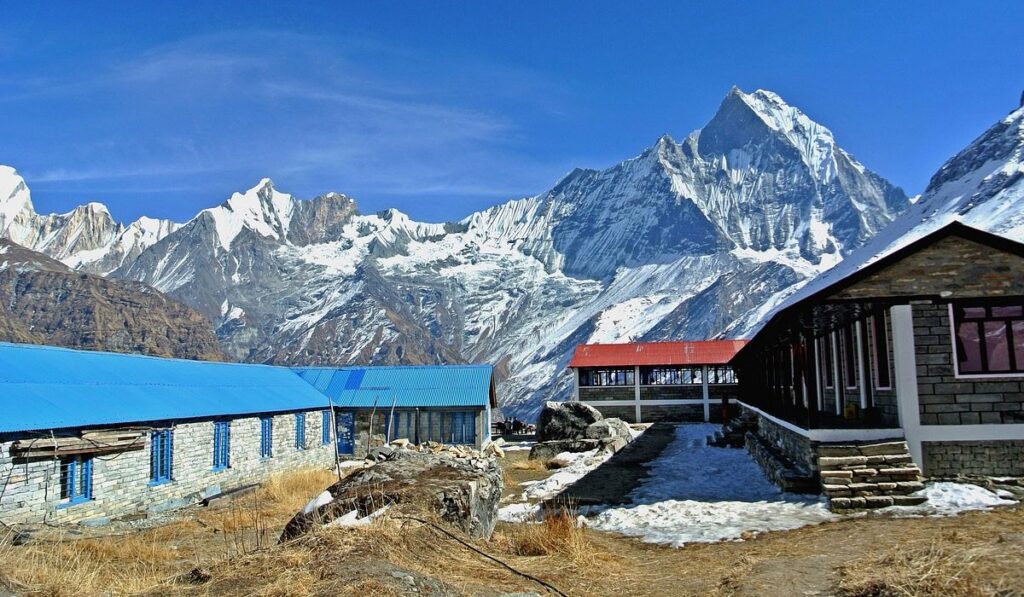
Annapurna Base Camp
The final push from MBC to ABC is relatively gradual. As you enter the Annapurna Sanctuary, the landscape opens dramatically.
Soon, the signboard at Annapurna Base Camp appears.
At 4,130 metres, you are standing at the foot of some of the highest mountains on Earth.
Key Highlights & Elevation Profile
The Annapurna Base Camp trek delivers constant variety. Every day feels different from the last.
Terraced Hillsides and Traditional Villages
The lower sections feature:
- Rice terraces
- Traditional Gurung settlements
- Suspension bridges
- Agricultural landscapes
Villages such as Ghandruk provide cultural insight alongside mountain scenery.
Rhododendron Forests
Spring trekkers pass through forests bursting with rhododendron blooms. Red, pink, and white flowers transform entire hillsides into colorful corridors.
Deep River Gorges
The Modi Khola valley creates dramatic terrain. Steep cliffs rise above the trail while rivers roar far below.
Machhapuchhre Base Camp
One of the trek’s standout viewpoints, MBC offers close-up views of the following:
- Machhapuchhre
- Annapurna South
- Hiunchuli
- Gangapurna
Annapurna Sanctuary
The Annapurna Sanctuary is the defining highlight of the trek.
Unlike Everest Base Camp, which follows a broad valley, ABC places trekkers inside a circular mountain basin surrounded by Himalayan walls.
The sense of scale is difficult to describe until you experience it firsthand.
Elevation Profile
| Location | Elevation |
|---|---|
| Pokhara | 822m |
| Ghandruk | 1,940m |
| Chhomrong | 2,170m |
| Dovan | 2,600m |
| Deurali | 3,230m |
| Machhapuchhre Base Camp | 3,700m |
| Annapurna Base Camp | 4,130m |
The altitude of Annapurna Base Camp reaches 4,130 meters (13,549 feet), making it significantly lower than Everest Base Camp. This is one reason many trekkers consider it a more accessible Himalayan adventure.
Essential Logistical Information
Best Time to Visit
The best time for Annapurna base camp trekking falls during two primary seasons.
Spring (March to May)
Spring offers:
- Stable weather
- Rhododendron blooms
- Mild temperatures
- Excellent mountain visibility
This is arguably the most colourful season on the trail.
Autumn (September to November)
Autumn remains the most popular trekking period.
Benefits include:
- Crystal-clear skies
- Dry conditions
- Outstanding Himalayan views
- Comfortable daytime temperatures
Many guides consider October and November the ideal months for the ABC trek.
Winter Trekking
December through February remains possible for experienced trekkers. Snow occasionally affects higher sections near Deurali, MBC, and ABC.
Monsoon Season
June through August brings heavy rainfall, slippery trails, leeches, and limited mountain views. Trekking is still possible but less enjoyable for most visitors.
Permits Required
All trekkers entering the Annapurna Conservation Area must carry the required permits.
Annapurna Conservation Area Permit (ACAP)
The ACAP permit supports conservation and trail management within the protected area.
TIMS Card
Trekkers are also generally required to obtain a TIMS (Trekkers’ Information Management System) card or follow the latest trekking registration requirements introduced by local authorities.
Permit regulations occasionally change, so it is wise to confirm current requirements before departure.
When budgeting, travellers often ask about the ACAP permit cost. Fees can vary depending on nationality and government updates, so checking the latest official rates before your trek is recommended.
Difficulty & Fitness Level
The difficulty level of the ABC trek is generally rated as moderate to challenging.
The challenge comes less from technical terrain and more from the following:
- Daily walking hours
- Continuous ascents and descents
- Thousands of stone steps
- Increasing altitude
Most trekkers walk.
- 5–8 hours per day
- 10–15 kilometers daily
You do not need mountaineering experience. However, a reasonable level of fitness makes the journey far more enjoyable.
Regular hiking, stair climbing, cycling, or running in the weeks leading up to the trek can make a noticeable difference.
Altitude Sickness (AMS)
Although lower than many Himalayan treks, altitude remains a factor.
Symptoms of Acute Mountain Sickness may include:
- Headache
- Nausea
- Fatigue
- Dizziness
- Loss of appetite
The risk increases above 3,000 metres, particularly between Deurali and Annapurna Base Camp.
Helpful precautions include:
- Walking slowly
- Staying hydrated
- Avoiding alcohol at higher elevations
- Eating well
- Reporting symptoms early
Most trekkers who maintain a steady pace complete the journey without serious altitude issues.
Teahouse Trekking Nepal Experience
The ABC route is one of the best examples of teahouse trekking Nepal has to offer.
Accommodation is available throughout the trail.
Expect:
- Simple twin-sharing rooms
- Communal dining halls
- Hot meals
- Charging facilities (often for an extra fee)
- Wi-Fi in many locations
Popular meals include the following:
- Dal Bhat
- Fried rice
- Noodles
- Pasta
- Pancakes
- Soups
- Tea and coffee
Don’t Miss Jhinu Danda Hot Springs
Many trekkers save one final reward for the descent.
Near Jhinu Danda hot springs, a short walk leads to natural riverside pools. After several days of trekking, soaking tired legs in warm mineral water feels incredibly satisfying.
It is one of the most appreciated stops on the return journey.
Conclusion
The ABC trek combines everything that distinguishes Himalayan trekking: traditional mountain villages, changing landscapes, cosy teahouses, and an unforgettable journey into the heart of the Annapurna Sanctuary. Every day brings a new perspective on Nepal’s mountain wilderness, from the terraced hills around Pokhara to the towering Himalayan peaks surrounding Annapurna Base Camp.
Whether you choose a short ABC trek route or a longer adventure through the Annapurna region, careful planning makes all the difference. If you’re ready to experience one of Nepal’s most iconic trekking routes, the team at Nepal Adventure Trails can help you organise permits, transportation, guides, and a customised itinerary tailored to your travel style.