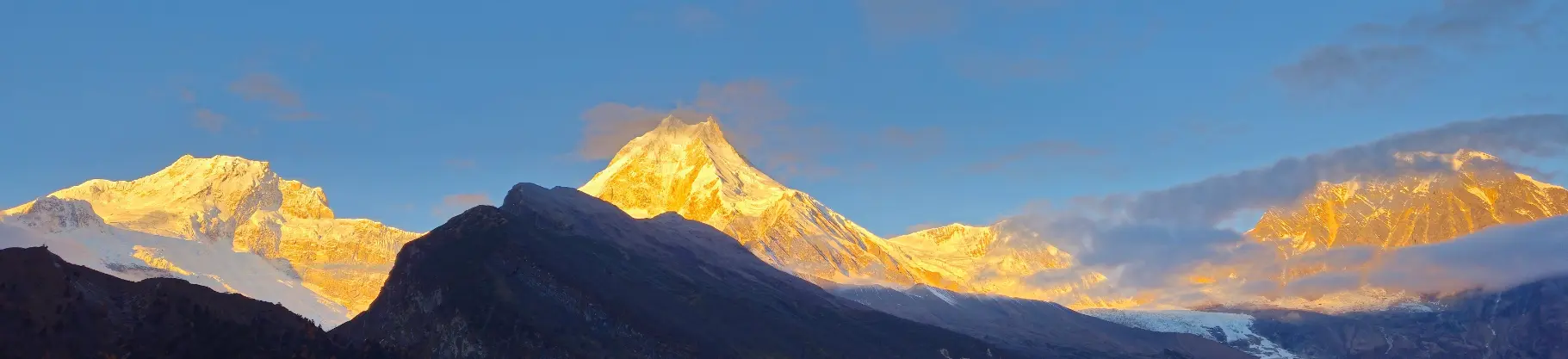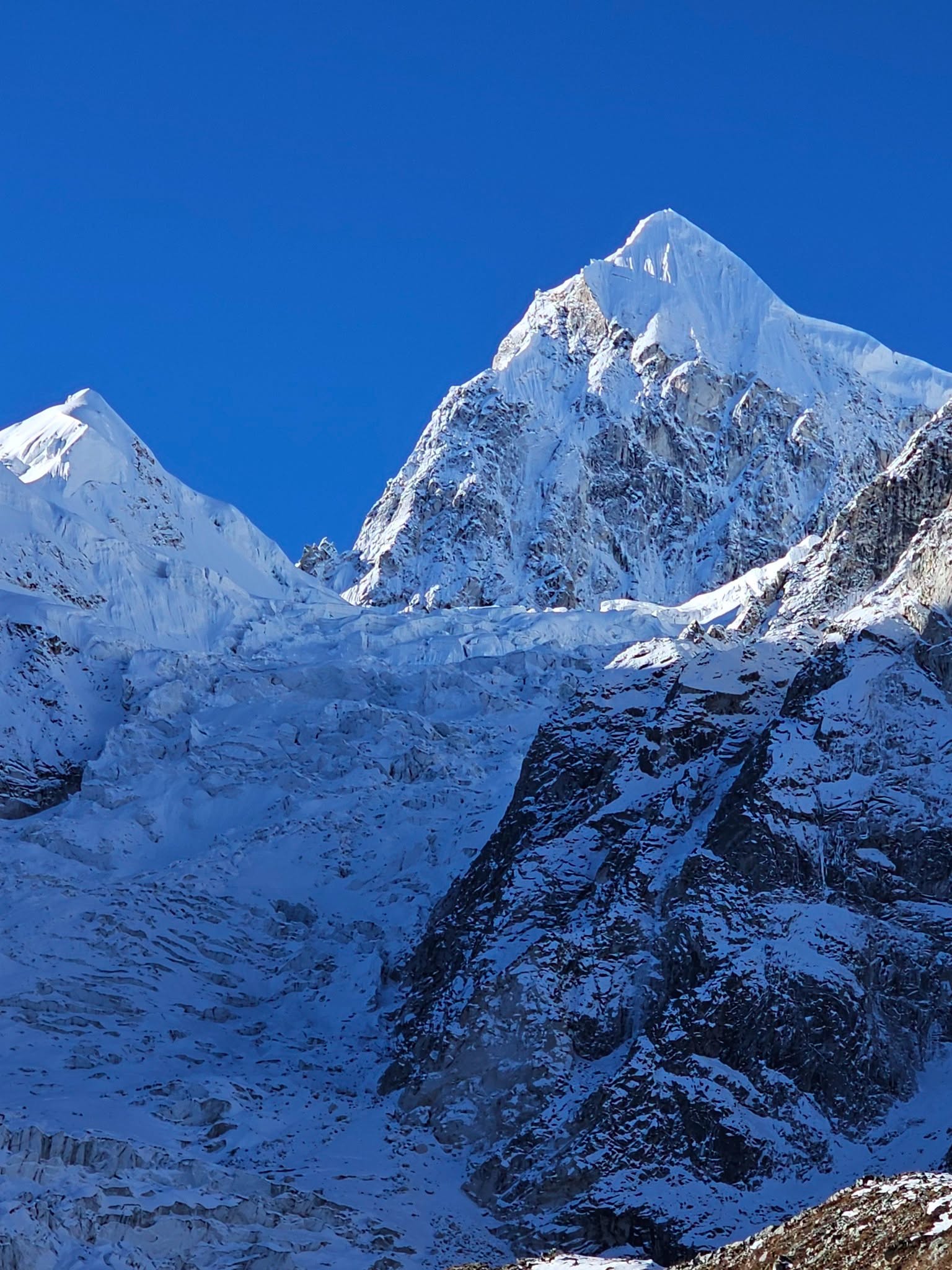
The Manaslu Circuit Trek & Larkya Peak Climbing combines Nepal’s most rewarding restricted-area trek with a genuine Himalayan summit. Over 14 days, you circle Mount Manaslu (8,163m), the world’s eighth-highest peak, through the Budhi Gandaki gorge and Tibetan-influenced highland villages, then climb beyond the classic Larkya La trekking route to stand on top of Larkya Peak (6,249m).
Most trekkers who visit this region cross the Larkya La Pass (5,106m) and turn back toward the Annapurna side. This itinerary goes further. After acclimatizing through Samagaon and Samdo, you continue to Larkya Peak Base Camp (5,135m), spend several days on climbing training and summit preparation with a certified climbing Sherpa, then push for the summit before descending to Bhimtang and exiting via Tilje.
The trek begins with a long drive from Kathmandu to Jagat via Machha Khola, following the Budhi Gandaki River past suspension bridges, waterfalls, and terraced hillsides. Beyond Namrung, the trail enters the high Manaslu Conservation Area, where Samagaon and Samdo sit beneath towering peaks including Manaslu, Himlung Himal, and Cheo Himal. From Larkya Phedi, the route breaks away from the standard circuit and climbs toward the base camp, training grounds, and summit ridge of Larkya Peak.
This is a serious undertaking that pairs trekking endurance with basic mountaineering skills: use of crampons, an ice axe, fixed ropes, and a harness. No prior climbing experience is required, but a certified 1:1 peak climbing Sherpa trains and accompanies every climber from base camp to summit and back.
Your Manaslu Circuit Trek & Larkya Peak Climbing begins with an early departure from Kathmandu by private jeep. The route follows the Prithvi Highway before turning north into the Budhi Gandaki valley, passing Arughat and Soti Khola en route to Machha Khola and on to Jagat. Overnight at a lodge in Jagat.
The trail follows the Budhi Gandaki River through forested gorges and past small riverside settlements, crossing several suspension bridges before reaching Deng, the gateway into the higher Manaslu villages. Overnight at a lodge.
Beyond Deng, the trail passes through pine and rhododendron forest and villages with growing Tibetan Buddhist influence, reaching Namrung, where mani walls and monastery views begin to appear. Overnight at a lodge.
The trail climbs steadily into alpine terrain, with views opening up toward Manaslu itself as you approach Samagaon, a traditional Tibetan-style village that also serves as the gateway to Manaslu Base Camp. Overnight at a lodge.
A rest day built in for altitude acclimatization. Many climbers use this day for a short hike to Birendra Lake or toward Manaslu Base Camp viewpoint before continuing higher the next day. Overnight at a lodge.
A shorter, gradual trekking day to Samdo, the last permanent settlement before the high pass region, surrounded by peaks and offering a clear look at traditional Tibetan-influenced mountain life. Overnight at a lodge.
The trail ascends toward the base of the high pass, with the terrain becoming increasingly alpine and rugged. Dharamshala (Larkya Phedi) serves as the staging point before turning off toward Larkya Peak Base Camp. Overnight at a teahouse.
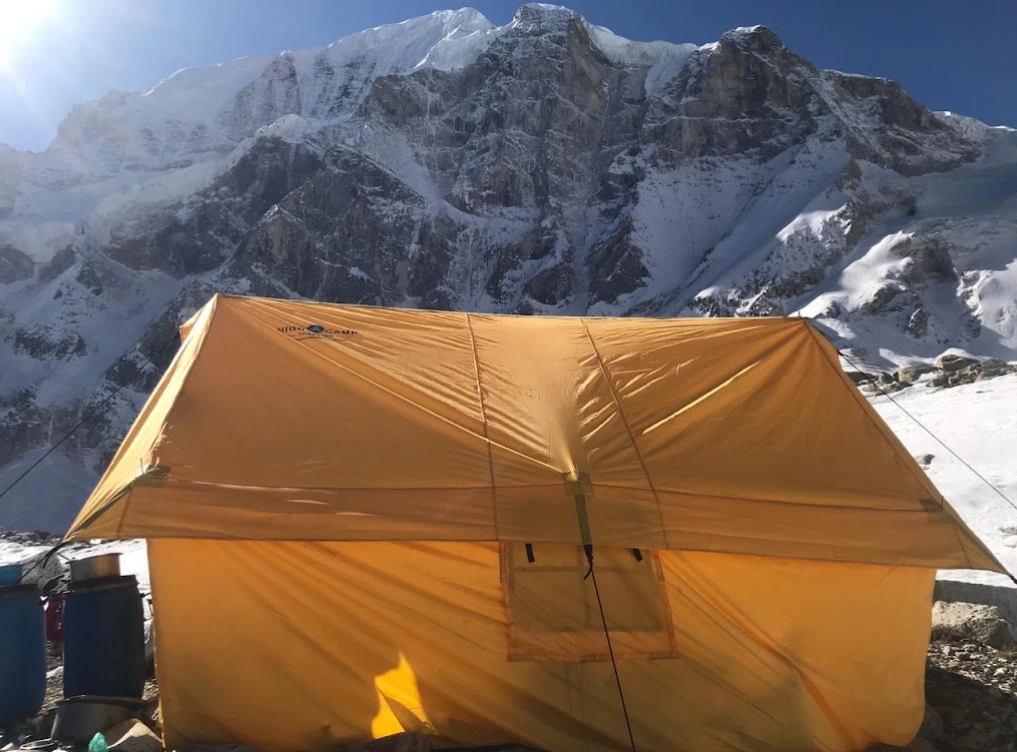
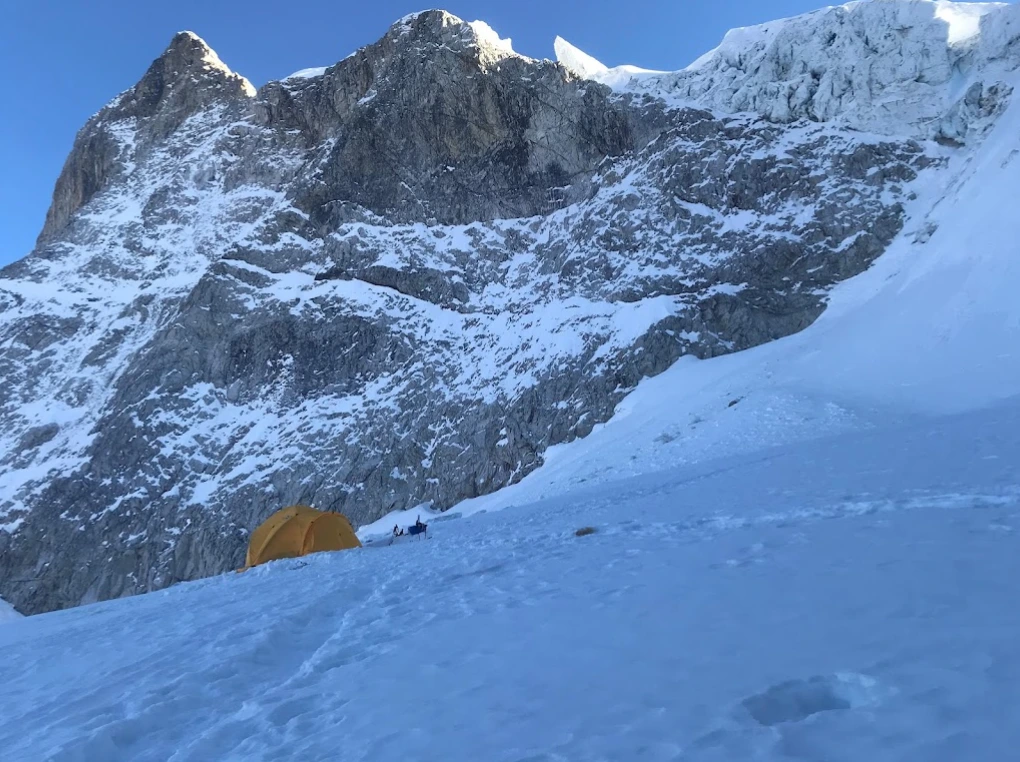
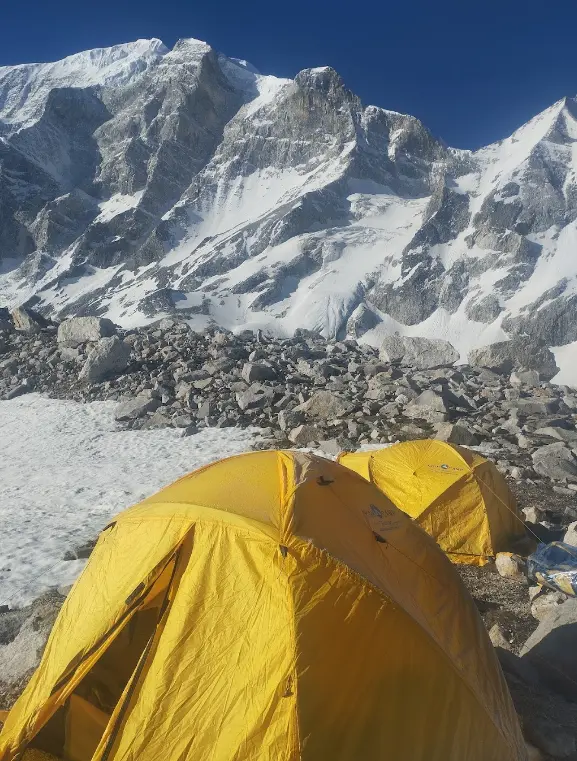
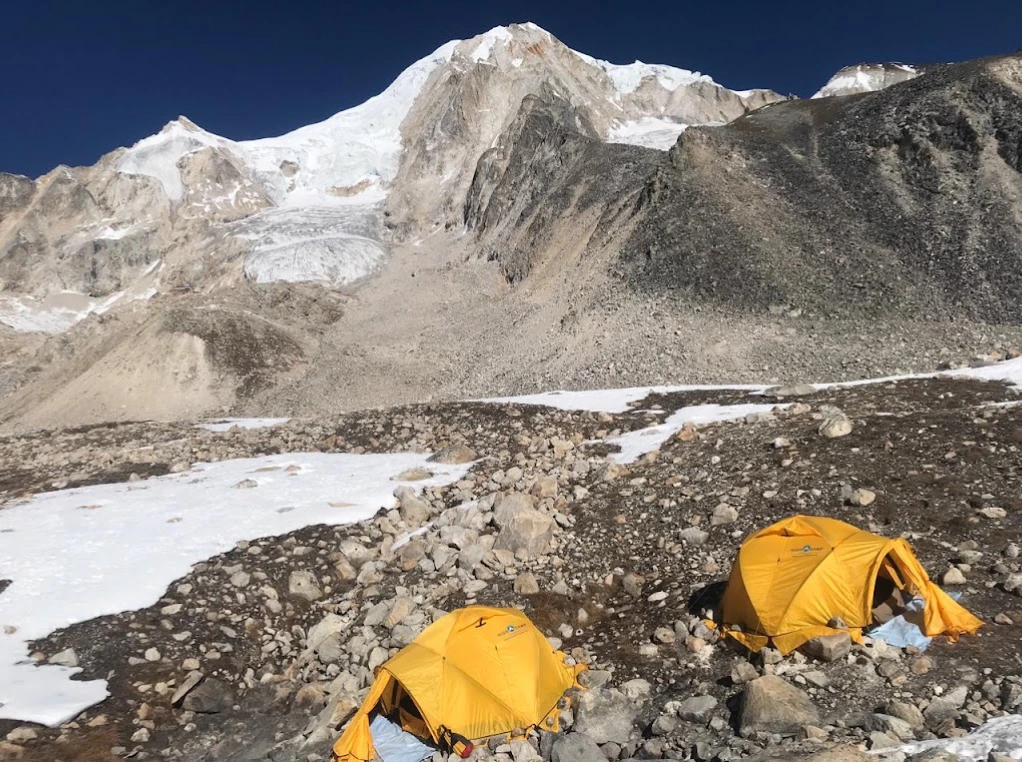
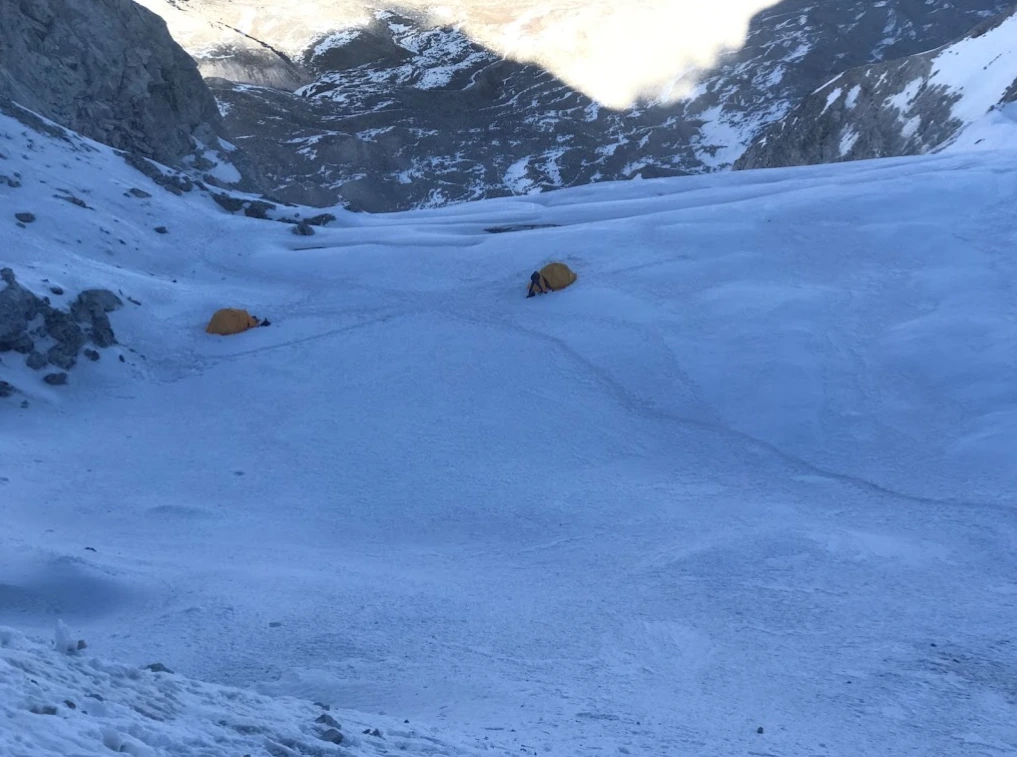
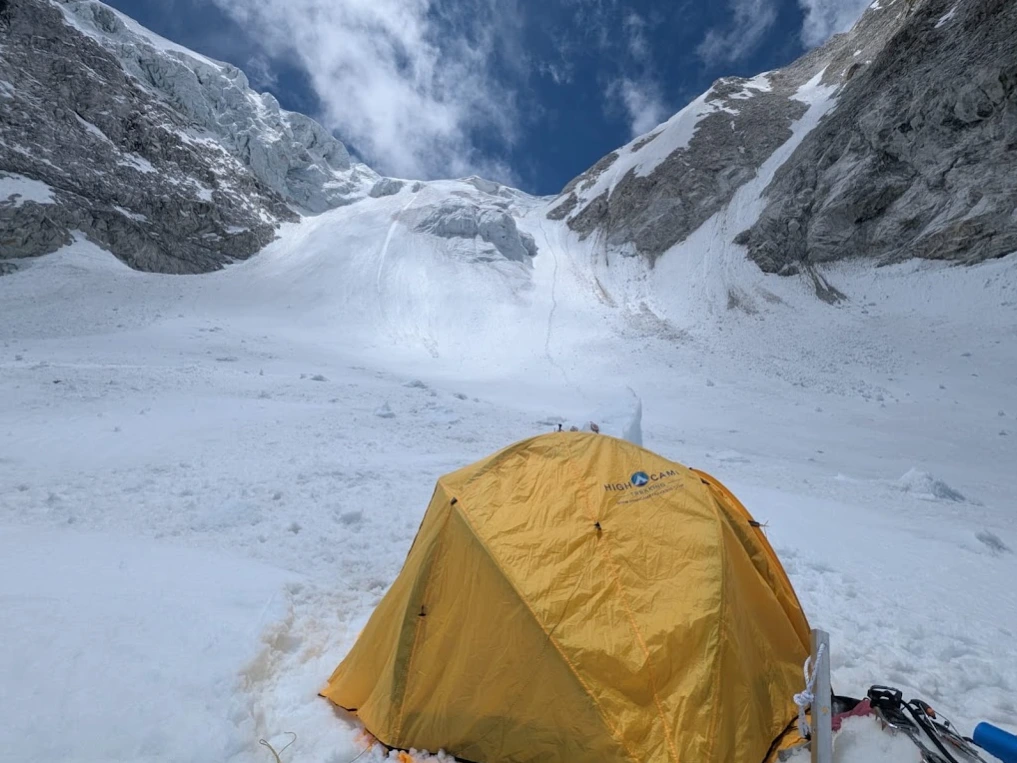
From Larkya Phedi, the route diverges from the standard Larkya La crossing and climbs toward Larkya Peak Base Camp, where tented camp is established for the climbing phase of the trip.
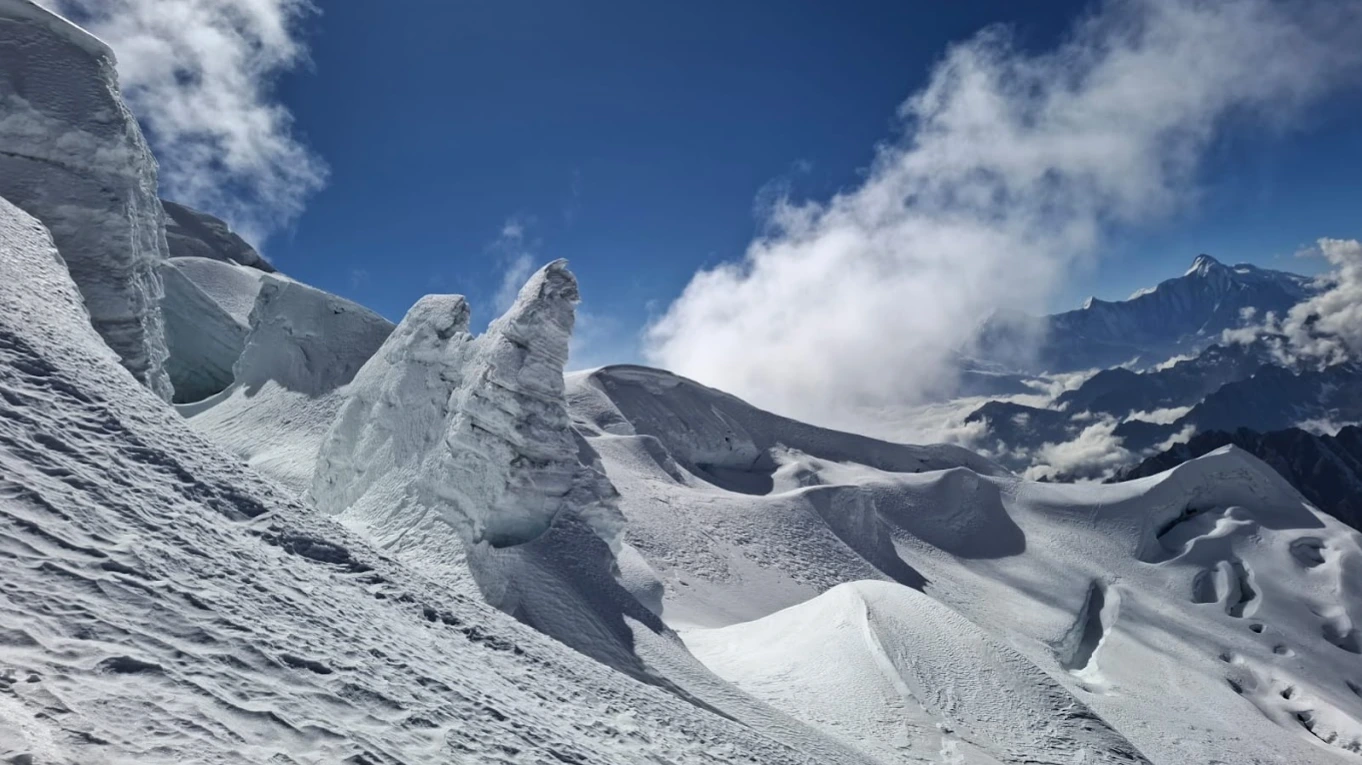
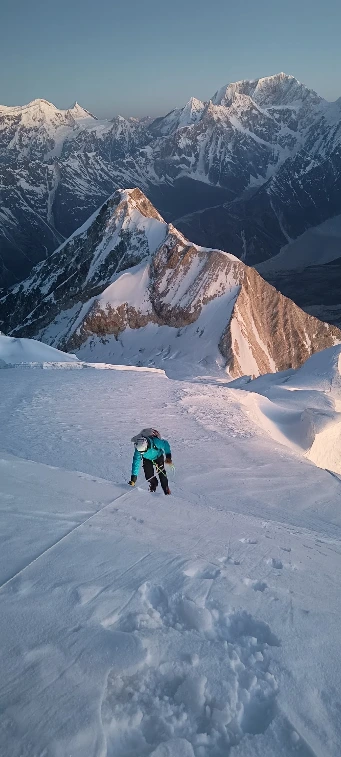
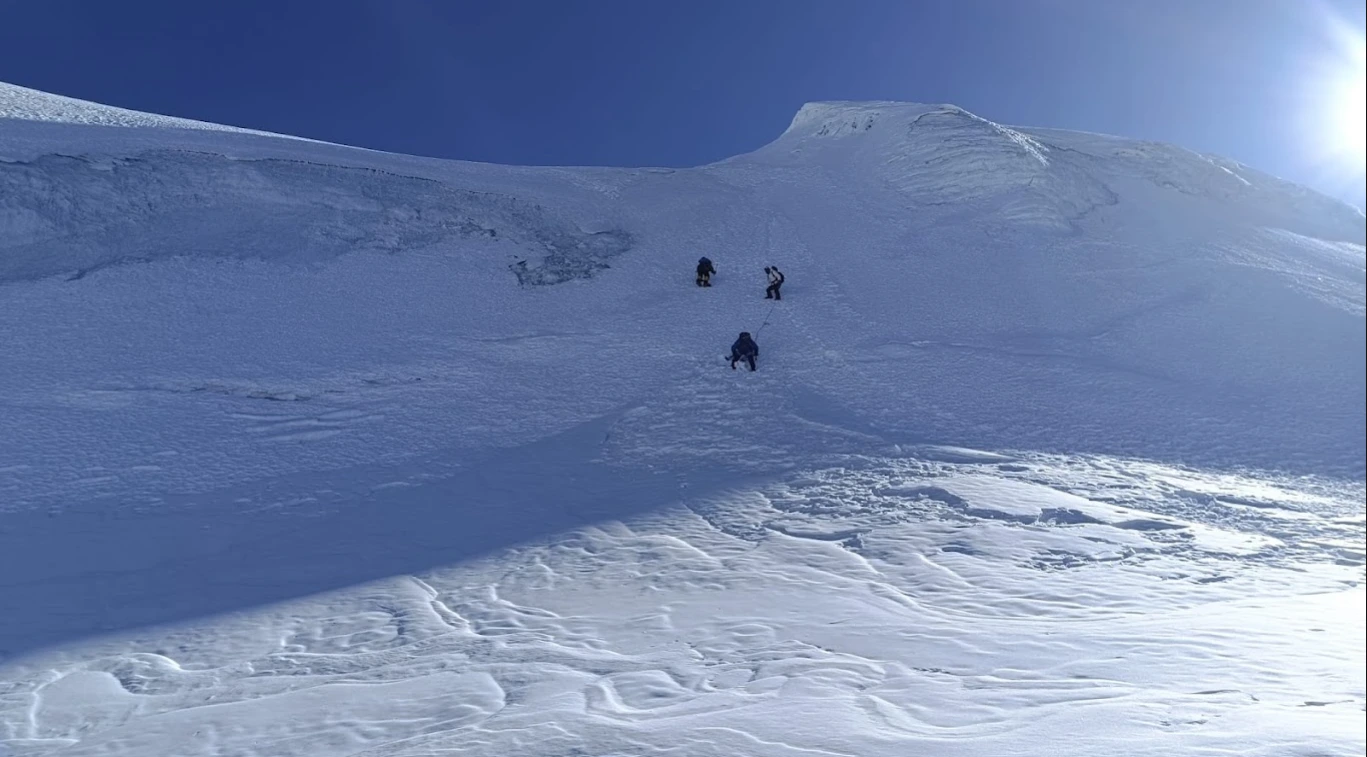
Your certified climbing Sherpa leads training sessions covering crampon technique, ice axe use, fixed-rope movement, and rope team travel. A rotation to a higher camp helps with final acclimatization. One day is reserved as a weather contingency buffer ahead of the summit push.
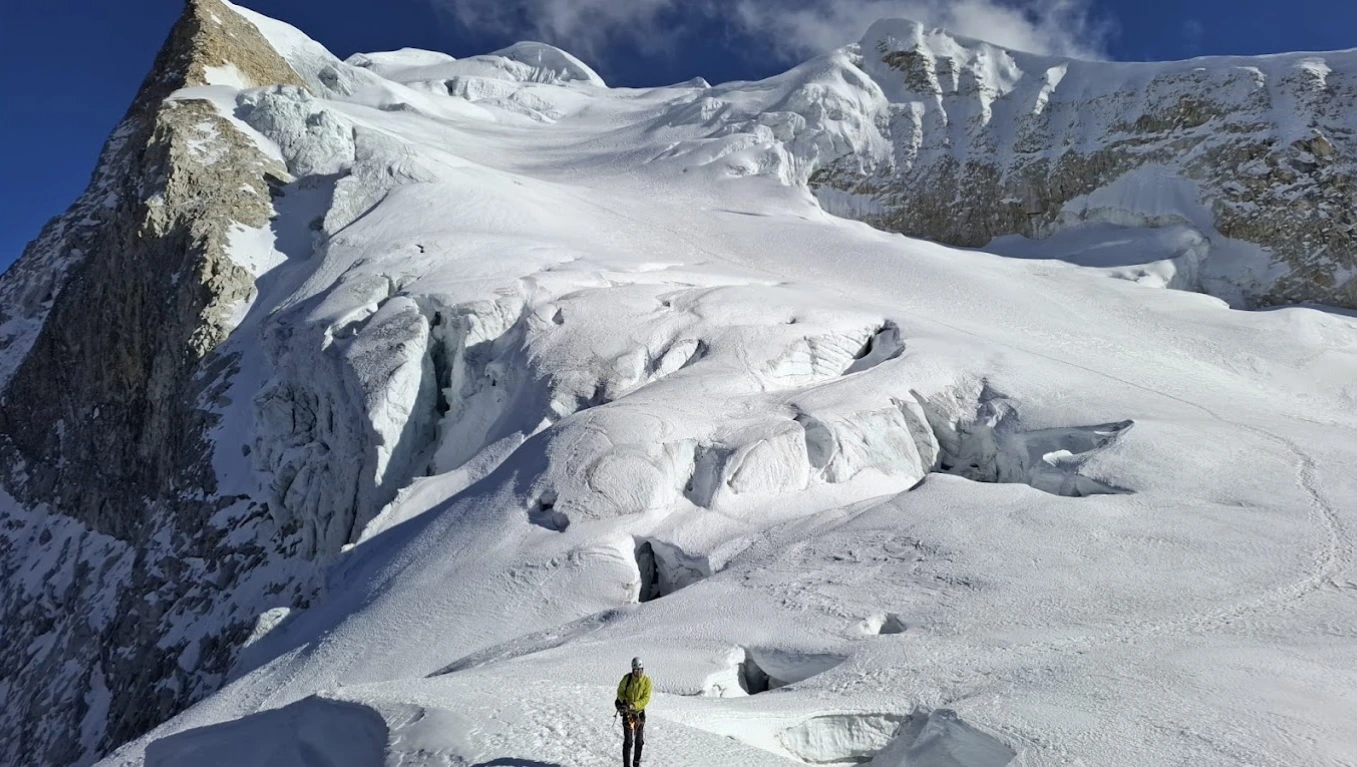
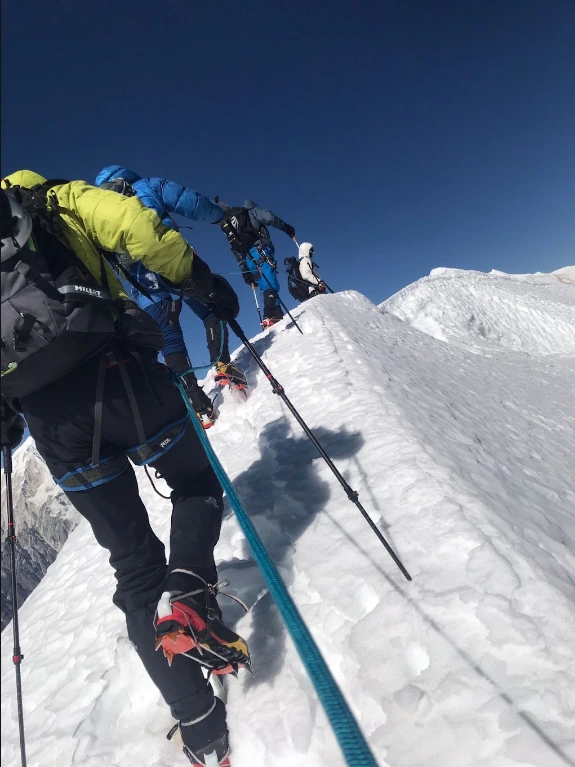
An early alpine start for the summit push, moving on fixed ropes with your climbing Sherpa to the summit of Larkya Peak at 6,249m. From the top, expect sweeping views across Himlung Himal, Cheo Himal, and Annapurna II. After summiting, the group descends the full distance to Bhimtang the same day, a long but rewarding descent day.
The trail drops through pine and rhododendron forest from Bhimtang, passing through Goa and into Tilje, a village known for its apple orchards, where the route rejoins the lower Manaslu Circuit trail.
A scenic private jeep transfer back to Kathmandu. After checking in to your hotel, join the team for a farewell dinner to celebrate the summit before your onward departure.
Cost depends on group size and season. Because permit fees, the NMA climbing permit, and the 1:1 Sherpa ratio are fixed costs per climber, larger groups share these costs and pay less per person.
What drives the price:
Group size: Fixed costs such as permits, the climbing Sherpa, and jeep transfers are shared across the group, so solo climbers pay the highest per-person rate.
Season: Autumn pricing runs lower than spring across every group size, though both seasons offer stable climbing conditions on Larkya Peak.
Climbing support: The 1:1 peak climbing Sherpa ratio and NMA climbing permit are the main costs that separate this package from a standard Manaslu Circuit trek without a summit.
Note: Dates are flexible and quoted costs are payable net to Nepal Adventure Trail. A single supplement is available subject to teahouse availability. Get in touch on WhatsApp for a tailored quote for your group size and season.
This package runs only in the Spring and Autumn climbing windows, when Larkya La and the Larkya Peak summit ridge are most likely to be clear of heavy snow.
Snow loading, avalanche risk, and unstable trail conditions make the summit route unsafe outside spring and autumn, so this package is not scheduled during those months
This list adds mountaineering-specific gear on top of a standard Manaslu trekking packing list.
Note: Technical climbing gear can be rented in Thamel, Kathmandu, and the climbing Sherpa will check all personal gear at base camp before the summit push.
Larkya La Pass (5,106m) is the trekking pass that all Manaslu Circuit trekkers cross. Larkya Peak (6,249m) is a separate, higher summit near the pass, classified as a trekking peak by the Nepal Mountaineering Association. Reaching it requires a climbing permit, climbing gear, and a certified climbing Sherpa, on top of the standard trekking permits.
No prior technical climbing experience is required, but you do need strong trekking fitness and stamina. Climbing training days at Base Camp cover crampon use, ice axe technique, and fixed-rope movement before the summit push, under the direct supervision of your 1:1 climbing Sherpa.
Pricing for 2026 ranges from $2,750 per person for a solo climber in spring down to $1,750 per person for groups of 11 or more in autumn. See the group discount table above for the full breakdown by group size and season.
Four permits: the Manaslu Restricted Area Permit, Manaslu Conservation Area Project (MCAP) permit, Annapurna Conservation Area Project (ACAP) permit, and a Larkya Peak climbing permit issued by the Nepal Mountaineering Association (NMA). All are arranged by Nepal Adventure Trail on your behalf.
Spring (March-May) and Autumn (September-November) only. This package is not offered during monsoon or winter months, when snow and avalanche risk on the summit ridge make the climb unsafe.
Yes. You need comprehensive travel and medical insurance that specifically covers high-altitude trekking and peak climbing up to at least 6,500m, including helicopter rescue evacuation. This is not included in the package price.
After reaching Larkya Peak Base Camp on Day 8, three days (Days 9-11) are used for climbing training and a weather contingency buffer, with the summit push scheduled for Day 12. This buffer protects the summit attempt if weather delays training or the first summit window.
Every climber is paired 1:1 with a certified peak climbing Sherpa from Base Camp through to the summit and back down, which is a higher support ratio than most standard trekking-peak packages offer.
Yes, solo climbers are welcome, though the per-person price is highest for a single climber since fixed costs like the climbing permit and Sherpa support are not shared across a group.
The itinerary includes a built-in contingency day (Day 11). If weather still prevents a safe summit attempt, your guide and climbing Sherpa will make the final safety call. Refund and rescheduling terms depend on your booking agreement and travel insurance coverage.