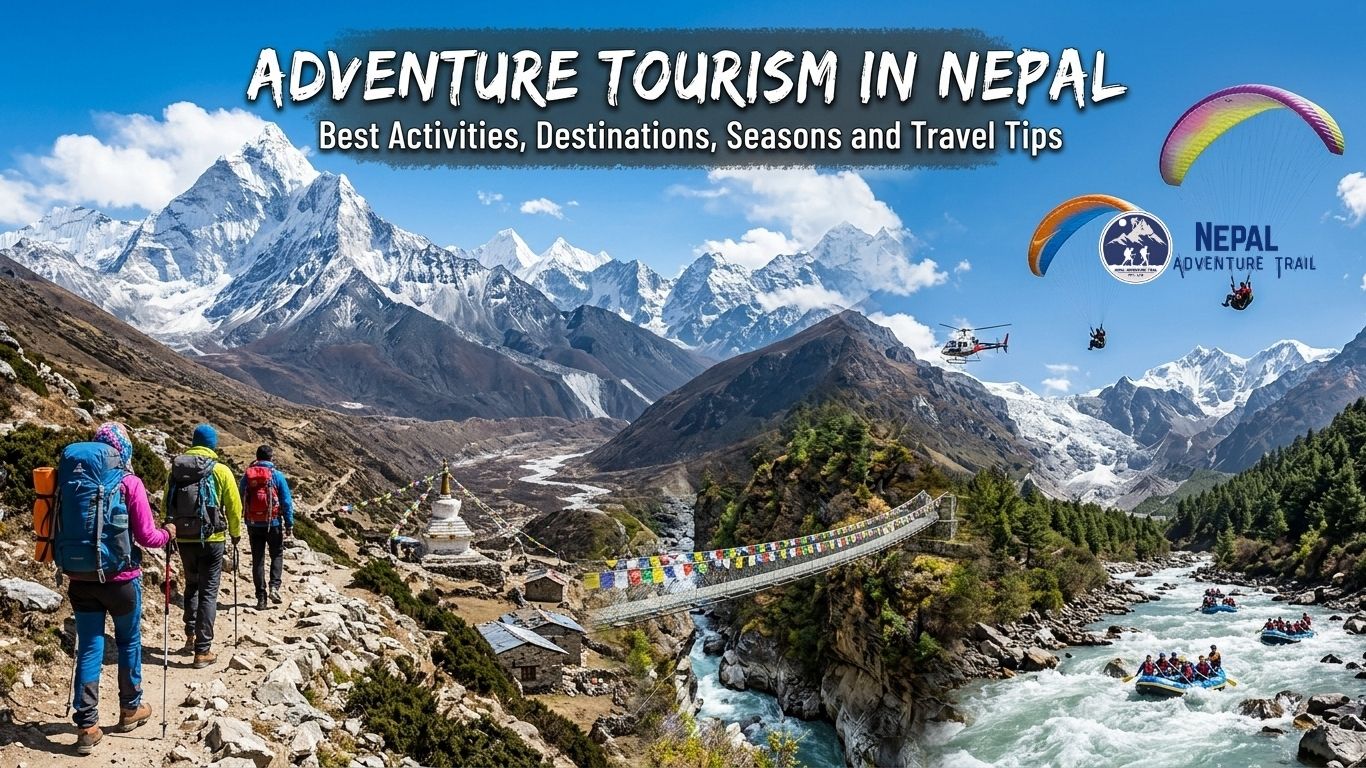
Start at a lakeside café in Pokhara at dawn. Fishing boats slide across Phewa Lake. Behind them, the Annapurna range turns pink, then white. A few hours’ drive east, a river that began as Himalayan meltwater is pushing a raft through grade-four rapids. A day’s flight north-east, a line of trekkers is already climbing toward Everest Base Camp.
That compression of terrain is what makes adventure tourism in Nepal unlike almost anywhere else. Elevation changes from the subtropical lowlands of the Terai to the highest point on Earth within a few hundred kilometers. Each band of altitude has its own rivers, forests, villages and risks.
It also means the country is not only for elite mountaineers. A family can take a short guided hike above Kathmandu. A first-time visitor can paraglide above Pokhara. A fit walker can spend three weeks on the Annapurna Circuit. A technical climber can apply for a permit on a 6,000-meter peak. The skill is choosing the right one.
This guide covers the main adventure activities in Nepal, the regions where they work best, how seasons change the answer, what to expect on cost and safety, and how permits and responsible travel fit in. Facts that change are dated, and where the rules are unclear, the article says so.
Why Nepal Works So Well for Adventure Travel
Geography does most of the work. The Himalayan arc along Nepal’s northern border holds eight of the world’s fourteen peaks above 8,000 metres. Snowmelt and monsoon rain feed rivers that drop steeply through gorges on their way to the Ganges plain. Between the two, mid-hills carry terraced farms, rhododendron forest and ridgelines that suit walking, cycling and flying.
The second ingredient is the trail network. Many routes follow trade and pilgrimage paths that villagers still use. Teahouses give trekkers a bed and a meal at the end of most days on the main routes, so a multi-day walk does not require carrying a tent and food. Away from the main corridors, camping and remote village stays are still the norm.
The third is people. Sherpa, Gurung, Tamang, Thakali, Rai and many other communities live along the main adventure routes. Culture is not a side attraction on a Nepali trek. It shapes the daily rhythm: prayer flags on suspension bridges, mani walls to pass on the left, yak caravans that have right of way.
Finally, range. Nepal offers a half-day river trip and a 40-day expedition in the same country, often within a day’s travel of each other.
Best Adventure Activities in Nepal
Trekking in the Himalayas
Trekking is the backbone of adventure travel in Nepal, and the routes differ more than most visitors expect.
Everest Base Camp follows the Dudh Koshi valley through Sherpa villages toward the foot of the Khumbu Icefall. Base Camp sits at about 5,364 metres. Many trekkers also climb Kala Patthar, around 5,545 metres, for the clearest view of Everest itself. Most itineraries run 12 to 14 days including acclimatisation. The route is well supplied, but altitude is the real obstacle, and the Lukla flight can be delayed by weather.
The Annapurna Circuit crosses Thorong La, about 5,416 metres, and moves from green lowland valleys to the dry, wind-scoured landscape of Manang and Mustang. Road construction has changed parts of the lower route, so many trekkers now combine sections of the walk with jeep rides. Its appeal is variety. In a single trek you pass through rice terraces, pine forest, alpine meadow and high desert.
Annapurna Base Camp is shorter, typically seven to ten days, and ends at about 4,130 metres inside a ring of peaks. It suits fit first-time Himalayan trekkers who want a high-mountain finish without a high pass.
The Manaslu Circuit is quieter and more remote. It runs around the eighth-highest mountain on the planet and crosses Larkya La, about 5,160 metres. It requires a restricted-area permit and, under current rules, travel through a registered agency. Teahouses are simpler than on the Everest and Annapurna routes.
Not every trek suits every traveller. Duration, daily ascent and the altitude profile matter more than the name on the brochure.
Mountaineering and Peak Climbing
Nepal’s climbing identity is tied to the expeditions on its giants, Everest, Lhotse, Makalu and Annapurna among them. Those climbs involve months, large budgets and regulated permits.
Most visitors who want a summit experience look at trekking peaks. These are lower and less technical than expedition mountains, though they still involve glaciers, fixed ropes, crampons and altitude. Names such as Island Peak and Mera Peak are common starting points.
Rules differ by peak. In January 2025 the Department of Tourism announced that the Everest royalty for foreigners on the standard south route in spring would rise from US$11,000 to US$15,000 per person from 1 September 2025, and that expeditions to peaks above 8,000 metres would need at least one guide for every two climbers (Kathmandu Post, 22 January 2025). Other peaks have separate fee schedules, and these have been revised more than once. Confirm the current schedule with the Department of Tourism or the Nepal Mountaineering Association before planning.
White-Water Rafting and Kayaking
Nepal’s rivers range from gentle float trips to technical multi-day runs. Historically, the Trishuli has been the most popular rafting river because it is close to Kathmandu and Pokhara. The Bhote Koshi is steeper and more demanding. The Seti, near Pokhara, offers a milder alternative. Multi-day trips on rivers such as the Sun Koshi and Kali Gandaki appeal to experienced paddlers and keen beginners who want camping on sandbanks.
An important correction for anyone planning now: a flash flood on 26 August 2026 struck the Bhote Koshi basin in Rasuwa and travelled downstream along the Trishuli and Narayani river system. At the time of writing, travel operators were describing Trishuli rafting and some riverside camps as suspended or uncertain. Treat any Trishuli or Bhote Koshi trip as unconfirmed until your operator gives written confirmation of river conditions, access and safety arrangements.
River choice depends on water level, season and your experience. A river that is a grade-three splash in the dry season can be a different proposition in monsoon.
Paragliding in Pokhara
Pokhara is the country’s paragliding hub. Pilots launch from the Sarangkot ridge above the lake and spiral down on thermals with the Annapurna and Machapuchare massif in front of them.
Almost all flights are tandem, with a registered pilot. Clear mornings and afternoons give the best conditions. Cloud, wind and haze can cancel flights, so building a spare day into your Pokhara stay is sensible. Ask who the operator is, what insurance applies, and how weight limits and pilot experience are handled.
Bungee Jumping and Swing Adventures
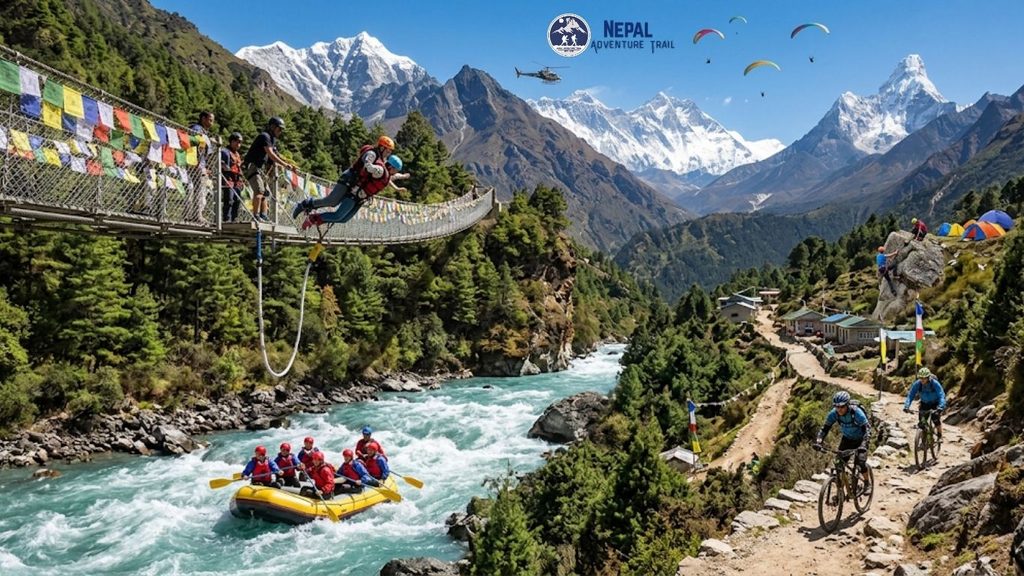
Nepal’s best-known bungee site is in the Bhote Koshi gorge east of Kathmandu, where a suspension bridge sits high over the river. Gorge swings and similar activities have operated in the same area. Because that corridor was directly affected by the August 2026 flood, anyone planning to jump should first confirm whether the site is open, who has inspected it, and what safety procedures apply.
Age and weight limits vary by operator. Health conditions matter too, so ask for the written rules before paying a deposit.
Mountain Biking and Cycling
Cycling in Nepal runs from easy lakeside rides in Pokhara to gruelling high-altitude routes. Around Kathmandu, trails climb to ridgelines such as Shivapuri, Nagarkot and Kakani, with village descents on the way back. Pokhara has lake paths, forest tracks and climbs toward Sarangkot. Mustang is the long-distance classic, with a landscape of eroded cliffs and wind, but it needs fitness, bike skills and acclimatisation.
Day rides suit most active travellers. Multi-day routes should be treated as expeditions, with spare parts, support vehicles or guides depending on the route.
Canyoning, Zip-Lining and Rock Climbing
These are shorter, activity-led options. Canyoning in Nepal has been concentrated in the steep tributary gorges east of Kathmandu, where abseiling and waterfall descents were offered on guided trips. Because that region overlaps with the flood-affected corridor, check availability. Pokhara has one of the longer zip-lines in the country, and it can be added to a lake day. Rock climbing options exist on outcrops around the Kathmandu Valley rim, with guided sessions for beginners.
In all three cases, equipment condition, instructor experience and rescue planning matter more than the novelty of the activity.
Jungle Safaris and Wildlife Adventures
In the Terai, Chitwan and Bardia national parks protect rhinoceros, tiger, elephant, sloth bear and hundreds of bird species. Guided jungle walks, jeep drives, canoe trips on rivers and birdwatching are the main ways to see them.
Seasonality matters. In-park safaris in Chitwan are normally suspended during the monsoon and reopen around the festival of Dashain, though the exact date depends on park management and conditions. Sauraha, the main base, sits on the Rapti River, which is a different system from the Trishuli. Even so, confirm the current status of park access and lodge operations before booking.
Follow the park rules. Keep your voice low, never leave the group, and do not pressure guides to approach animals. A good guide reads animal signs and keeps a safe distance.
Hiking, Camping and Off-the-Beaten-Path Adventures
Not everyone wants a high-altitude trek. Shorter hikes in the Kathmandu Valley, the Pokhara hills or the lower reaches of the Annapurna region offer a mountain atmosphere without the altitude risk. Village homestay circuits, such as those organised by community tourism groups, offer a slower alternative.
Remote areas, including far-western Nepal, offer quieter trails. They also have weaker infrastructure, so these routes require careful local planning, flexible schedules and realistic expectations about road conditions and food.
Best Places for Adventure Tourism in Nepal
Kathmandu Valley. Day hikes, cycling and rock climbing sit within an hour or two of the city. Most visitors use it as a base, not a destination, for outdoor activity.
Pokhara. Paragliding, boating, cycling and easy hikes cluster around a lake with a mountain backdrop. It is also the gateway to the Annapurna region, with road and flight connections to Kathmandu.
Everest region. Trekking, Sherpa culture and mountaineering support services come together here. Access is usually by flight to Lukla, and itineraries need enough rest days for acclimatisation.
Annapurna region. This region offers the widest range of trek lengths, from short Poon Hill walks to the Circuit. Teahouse infrastructure is well developed.
Manaslu region. It is quieter and more remote than Everest or Annapurna, with a restricted-area permit and a more demanding trail.
Chitwan and Bardia. Wildlife and guided nature experiences, subject to seasonal access rules. Bardia is less visited and more remote than Chitwan.
Mustang. A high, dry landscape with Tibetan-influenced culture. Upper Mustang requires a restricted-area permit. The Lower Mustang and Kali Gandaki valley are easier to reach.
Trishuli and Bhote Koshi corridor. Historically a river and bungee hub. After the August 2026 flood, treat it as an area where conditions and access are changing. Check with your operator, and avoid committing to non-refundable bookings without written confirmation.
Far-western Nepal. Trails such as the Badimalika trek offer a rarely visited alternative. Expect limited infrastructure and plan with a local operator.
Best Time for Adventure Travel in Nepal
No season is best for everything.
Spring (March to May). Rhododendrons flower on mid-altitude trails. Temperatures rise, and afternoon haze can dull distant views. It is the main season for expedition climbing.
Autumn (September to November). Many trekkers choose it because the post-monsoon air is generally clearer, and daytime temperatures are comfortable in the hills. It is also the busiest season, so book flights and lodges early. Conditions still vary from year to year.
Monsoon (June to August). Rain brings landslides, leeches on lower trails and swollen rivers. Some activities, such as in-park safaris in Chitwan, are normally paused. Rain-shadow regions such as Upper Mustang and Manang receive far less rain than the south side of the range.
Winter (December to February). High routes can be cold, snowbound or closed. Lower treks, lake activities in Pokhara and jungle visits in the Terai are more comfortable. Skies can be very clear.
Activity changes the answer. Rafting depends on river flow. Paragliding depends on weather on the day. Climbing depends on the mountain, the route and the expedition season. Check conditions close to your departure date.
How Much Does Adventure Tourism in Nepal Cost?
Costs vary more by style than by activity. A guided day hike, a Pokhara paraglide, a two-week Himalayan trek and a peak-climbing trip are different products and should not be compared directly.
The main factors:
- Trip length and group size. Private trips cost more per person than group departures.
- Guide and porter services, including wages, insurance and equipment for staff.
- Accommodation and meals, which become more expensive at altitude because supplies are carried in.
- Transport, including domestic flights such as Kathmandu to Lukla.
- Permits and park fees, which differ by region.
- Equipment rental, from sleeping bags to climbing hardware.
- Travel insurance with emergency evacuation cover.
- A contingency fund for weather delays and unplanned extra nights.
Some fees are published. Operators report Sagarmatha National Park and Annapurna Conservation Area entry at NPR 3,000 per foreign visitor, and a TIMS fee of NPR 2,000 per person on routes where it applies, though you should confirm these figures with the Nepal Tourism Board and the park authorities, because fees and local charges change. The Everest climbing royalty rose to US$15,000 for foreigners on the standard south route in spring, effective September 2025.
When comparing quotes, check what is included: permits, meals, guide and porter wages, flights, insurance and equipment. A low price that excludes half of these can cost more in the end. Travellers who want help assembling and costing a trip can ask Nepal Adventure Trail about options for their dates and activity level.
Is Adventure Tourism in Nepal Safe?
The honest answer is that it depends on the activity, the operator and the conditions. A short guided walk, a tandem paraglide, a white-water raft trip, a high-altitude trek and a technical climb carry very different risks.
What reduces risk in practice:
- Choose a registered operator. Ask about licences, guide training, safety equipment and emergency plans.
- Match difficulty to fitness. Read daily distances, ascent and altitude profiles.
- Listen to briefings. On rivers and in the air, instructions are not optional.
- Watch the weather and river levels. Delays are better than forced decisions.
- Understand altitude illness. Headache, nausea, dizziness and poor sleep above 2,500 metres can be early signs of acute mountain sickness. Worsening symptoms, confusion or loss of balance mean descent and medical help. Do not ignore them to keep to a schedule.
- Carry proper clothing and footwear. Mountain weather changes quickly.
- Understand evacuation limits. Helicopter rescue depends on weather and location, and mobile coverage is patchy on many routes.
- Buy insurance that names your activity and maximum altitude. Many standard policies exclude trekking above a set elevation or climbing and rafting.
Nothing removes risk entirely. A guide improves safety but cannot control weather or altitude. Insurance pays for evacuation and treatment but cannot prevent an accident.
Natural hazards deserve extra respect after the 2026 flood. River corridors, steep valleys and glacial lakes can change quickly. Follow current advisories from the Nepal government and your embassy.
Permits, Guides, Insurance and Essential Planning
Requirements depend on where you go and what you do.
Trekking permits. Most treks require an entry permit for the national park or conservation area, such as Sagarmatha National Park or the Annapurna Conservation Area. Some regions also require a TIMS card, while the Everest region uses a local municipality permit system in place of or alongside it. Check the current requirement for your route.
Restricted areas. Places such as Manaslu, Upper Mustang and Nar Phu require special permits, usually arranged through a registered agency, with minimum group sizes and guide requirements.
Guides. Reports about guide rules are inconsistent. A 2023 Nepal Tourism Board announcement said solo trekking would be banned and guides made compulsory for foreign trekkers. Operator websites since then disagree on how it applies by region, and some claim it was later relaxed. Do not rely on a blog. Ask the Nepal Tourism Board or the Department of Tourism directly, or ask a registered agency to confirm in writing.
Mountaineering permits. Peak climbing and expedition permits are issued through the Nepal Mountaineering Association or the Department of Tourism, depending on the peak.
Activity operators. Rafting, paragliding, bungee and canyoning operators have their own requirements, including age, weight and health declarations.
Insurance. Look for cover that includes emergency evacuation, high-altitude trekking and your specific activity.
Fitness and kit. Train for the trip, and break in boots before you leave. Rent or buy gear that matches the season.
Contingency. Add buffer days for flight delays, weather or road closures, especially in the Everest region and anywhere affected by monsoon damage.
Responsible and Sustainable Adventure Tourism in Nepal
Adventure travel only lasts if trails, rivers and villages stay in good shape.
On trek, carry out non-biodegradable waste, and refill a bottle with treated water instead of buying bottled water that arrives on a porter’s back. Stay on the main trail to limit erosion. Ask before photographing people, and dress modestly in villages and near monasteries.
Support local owners. Eat in family-run teahouses, buy crafts from the people who made them, and tip guides and porters fairly. Check that your operator provides porters with suitable clothing, insurance, weight limits and wages. A porter carrying an overloaded pack in sandals is a sign of a poor operator.
In national parks, keep the distance from wildlife that guides recommend. Do not feed animals. Do not buy souvenirs made from wildlife parts.
Conservation and livelihood are linked. Park entry fees fund management. Local employment gives villages a reason to protect forest and wildlife. Respectful travellers keep that arrangement working.
How to Choose the Right Adventure in Nepal
Start with honest answers to five questions. How many days do you have? How fit are you? Have you been above 3,000 metres? What is your budget? Do you want comfort, solitude or a challenge?
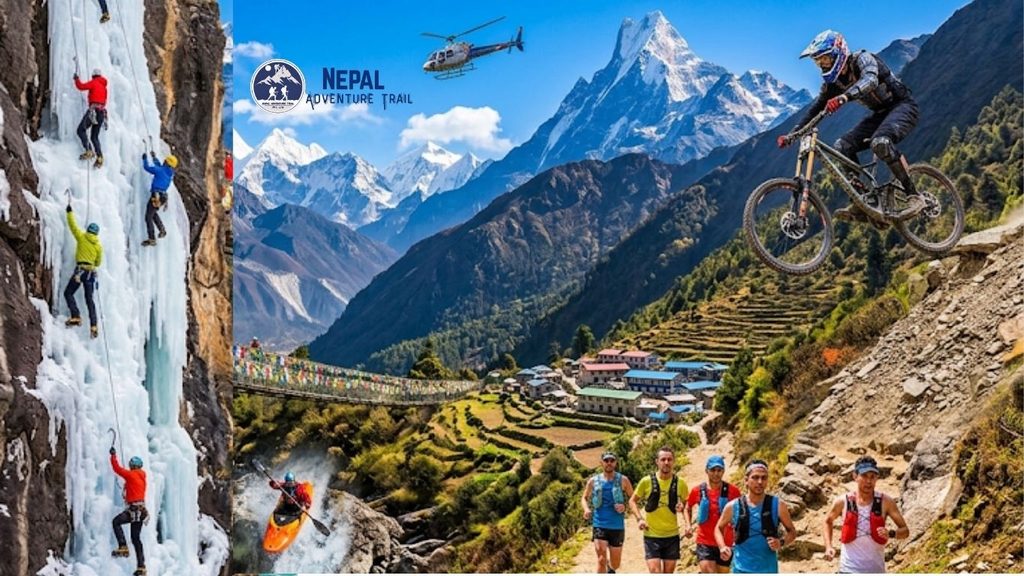
A first-time visitor with a few days can combine a Kathmandu Valley hike with a paraglide in Pokhara and a lakeside rest day. Someone with two weeks and good fitness can consider Annapurna Base Camp or Everest Base Camp with proper acclimatisation. An experienced trekker may prefer Manaslu for quiet trails. A confident cyclist or climber can explore technical routes with specialist support. Families should pick activities with clear age limits, and confirm those limits before booking.
Popular does not mean suitable. A crowded trek at the wrong time of year with too few rest days can be worse than a quieter route that fits your fitness.
Plan Your Adventure Trip in Nepal with Nepal Adventure Trail
Good planning shortens the gap between what you imagine and what you can safely do. Nepal Adventure Trail can help travellers compare destinations, understand permits and logistics, and shape an itinerary around fitness, dates and group size.
If you are weighing trips, send your travel dates, group size, experience level and the type of adventure you want. Ask what is included in any quote, which permits apply, and how weather or access changes are handled. Contact the team through the Nepal Adventure Trail website to discuss your plans.
Frequently Asked Questions About Adventure Tourism in Nepal
What is adventure tourism in Nepal?
Adventure tourism in Nepal covers outdoor activities that involve physical effort, natural terrain and some level of risk. It includes trekking, peak climbing, rafting, paragliding, cycling, canyoning and wildlife experiences. The range runs from half-day activities to multi-week expeditions, so there are options for different budgets and fitness levels.
What are the best adventure activities in Nepal?
Trekking is the most popular, followed by paragliding in Pokhara, rafting, jungle safaris in the Terai and peak climbing. The best choice depends on your fitness, time and interests. Check the current status of any river or gorge activity in the Bhote Koshi and Trishuli corridor before booking.
Which places are best for adventure tourism in Nepal?
Pokhara suits shorter activities and the Annapurna region. Everest and Manaslu suit high-altitude trekking. Chitwan and Bardia suit wildlife. Mustang offers dry, high-altitude landscapes. Kathmandu works as a base for day hikes and cycling. Each region has a different season and difficulty.
What is the best time for adventure travel in Nepal?
Spring and autumn are the most reliable seasons for trekking and climbing. Winter suits lower-altitude activities, and monsoon requires flexibility. Rafting depends on water levels, paragliding on weather, and in-park safaris in Chitwan on the monsoon closure schedule. Check conditions close to your dates.
Is Nepal suitable for adventure tourism for beginners?
Yes, with the right choices. Guided day hikes, a Pokhara paraglide, gentle river trips and lower-altitude treks suit first-timers. Avoid high passes, technical climbs and demanding rivers unless you have experience or a qualified guide. Ask operators about their briefing and rescue arrangements.
How much does an adventure trip in Nepal cost?
It depends on activity, length, group size and services. Day activities, multi-day treks and climbing expeditions are priced very differently, and comparisons only make sense when inclusions match. Ask for a written breakdown covering permits, guides, transport, meals, accommodation and insurance.
Is adventure tourism in Nepal safe?
Risk varies by activity. Choose registered operators, match the difficulty to your fitness, follow safety briefings and take altitude seriously. Natural hazards such as landslides, floods and weather changes are real, especially in monsoon. Insurance and guides help but do not remove risk.
Can beginners go trekking in the Himalayas?
Yes. Many treks suit fit beginners, particularly shorter routes with gradual ascent such as Poon Hill. Allow time for acclimatisation, train beforehand and avoid itineraries with rapid altitude gain. A longer, slower itinerary is usually safer and more enjoyable than a rushed one.
Do I need a guide for adventure activities in Nepal?
Rules depend on the activity, region and current regulations. Restricted areas require registered agency arrangements. For other treks, operator websites disagree, so confirm with the Nepal Tourism Board or Department of Tourism. Rafting, paragliding and climbing are normally done with qualified instructors or guides anyway.
Which adventure activities can I try in Pokhara?
Pokhara offers tandem paragliding, boating on Phewa Lake, cycling, hiking, a long zip-line and access to the Annapurna region. Weather affects flights, so keep a spare day. Check operator registration, insurance and weight limits before booking.
What permits are required for trekking and climbing in Nepal?
Most treks need a national park or conservation area permit, and some need a TIMS card or local permit. Restricted areas need special permits through registered agencies. Climbing needs permits through the Nepal Mountaineering Association or Department of Tourism. Fees and rules change, so confirm current details with official sources.
How can I book an adventure trip with Nepal Adventure Trail?
Contact the team through the Nepal Adventure Trail website with your travel dates, group size, experience and the activity you are considering. Ask for a written itinerary and a clear list of inclusions, exclusions and permit arrangements before confirming. Check which trips and regions are currently available.