
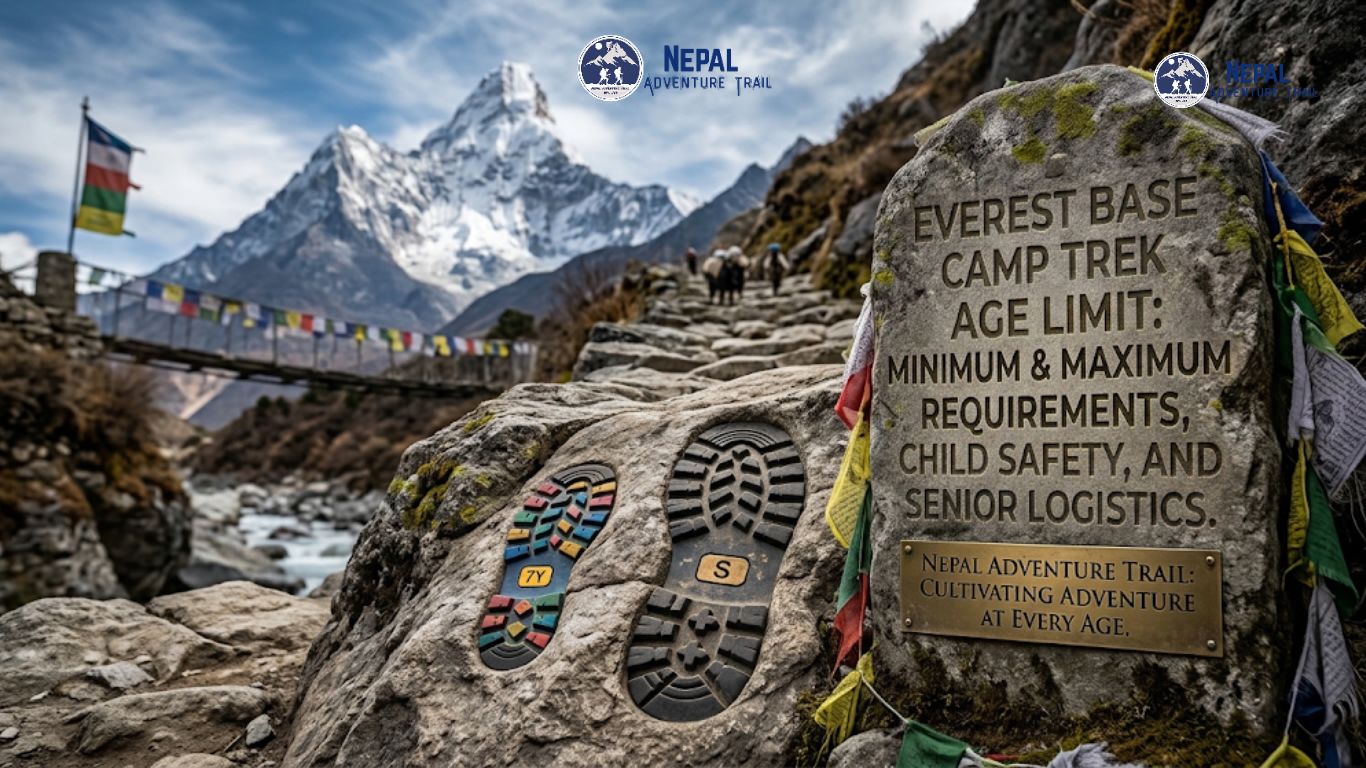
The Everest Base Camp trek age limit, officially, does not exist. Nepal attaches no minimum or maximum age to the trekking permits for the route to 5,364 meters. That silence is not permission, though.
The mountain applies its own limits. Oxygen sets them, not paperwork. A seven-year-old and a seventy-year-old breathe the same thin air at Dingboche, 4,410 meters up.
Here is how to judge it honestly. This guide covers the permit rules, the physiology, and the itinerary changes that matter most for families and older trekkers. Expect realism, not reassurance.
Official Rules vs. Physical Reality: Is There an EBC Age Limit?
Is there an age limit for Everest Base Camp trek permits? Not on paper. The trail has its own opinion.
The Everest Base Camp trek age limit people imagine is really three limits: legal, medical, and logistical. Only one is written down.
Government Regulations (Trekking Permits vs. 16+ Climbing Permits)
Trekkers heading up the Khumbu from Lukla, at 2,860 meters, need a Sagarmatha National Park entry permit and a local municipality permit, and neither sets an age bracket. Children and seniors walk the same trail. Rules change, so confirm current requirements with your agency before booking.
Climbing is different. Nepal’s mountaineering rules set a minimum age of 16 for climbing permits on peaks above 6,000 meters, and that line has nothing to do with the Base Camp trek. Base Camp sits below it.
No one screens trekkers by birthday on the trail. Your guide, though, holds a veto. A responsible guide will turn any trekker around, whatever the age, the moment the signs turn bad.
Why Physiology Matters More Than Your Birth Certificate
Altitude does not sort people by age. Studies of trekkers have generally found that older adults are no more prone to acute mountain sickness than younger ones, and that fitness offers little protection. Speed of ascent matters more.
What age does change is everything around the sickness. A child cannot always describe a headache. A senior’s heart and lungs carry less reserve, and older knees absorb every steep step of the descent.
The real Everest Base Camp trek age limit is therefore personal. It is set by health, pacing, and the quality of your safety net.
Trekking to Everest Base Camp with Children (Minimum Age Guidelines)
Children are the harder case. The trail starts gently at Phakding, 2,610 meters, and then climbs to Namche Bazaar, 3,440 meters, where the first real stone staircases begin.
Recommended Minimum Age (Why 10 to 12 Years Is the Practical Baseline)
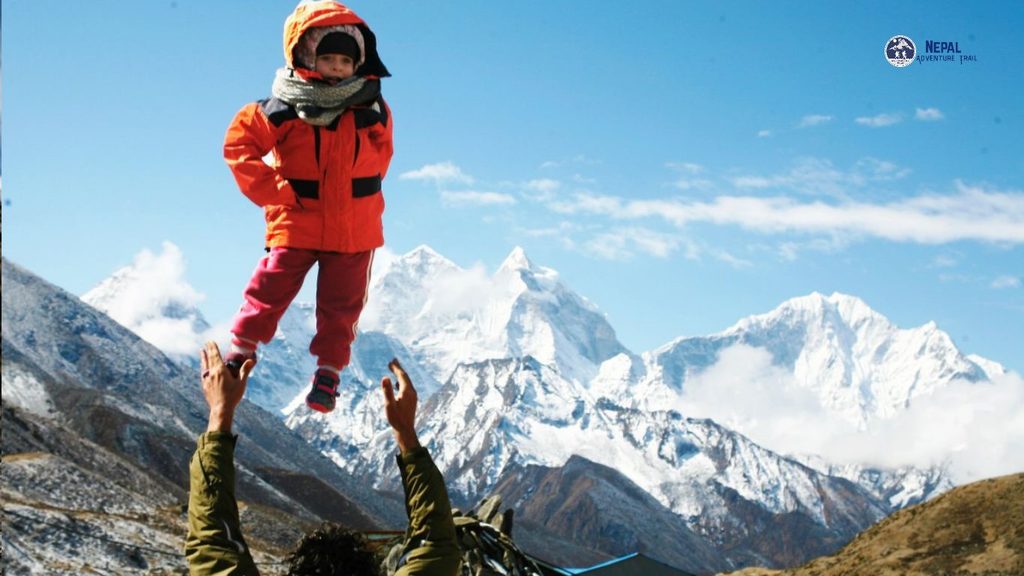
What is the youngest age to hike Everest Base Camp? No rule answers it. Experienced guides and many agencies treat 10 to 12 as the practical baseline for the full route.
The Everest Base Camp trek age limit for children is a judgment call. It is not a medical law. Younger children have made the walk, but their margin for error is thin.
Think about what the days demand. Small boots step up giant stone staircases near Namche. They keep stepping for five to seven hours.
Nights in unheated teahouse rooms at Dingboche, 4,410 meters up, fall below freezing. A child who cannot explain a pounding head is hard to read.
Book a pediatric check first. Mention asthma, heart conditions, and any past altitude trouble.
Recognizing Acute Mountain Sickness (AMS) in Young Trekkers
EBC altitude sickness in children rarely announces itself in a clear sentence. A child just goes quiet.
Watch for refused snacks, unexplained vomiting, clinginess, unusual sleepiness, or a night of crying with no other cause. Treat each as altitude until proven otherwise. Do not climb higher while symptoms last.
Stumbling, confusion, breathlessness at rest, or a persistent cough means descend now. Those signs point toward cerebral or pulmonary edema, which can kill. Speed matters.
A pulse oximeter clipped onto a small, cold finger at Dingboche gives shaky numbers. Use it to start a conversation, never to settle one.
Whether a child should carry acetazolamide, and at what dose, is a question for a pediatrician before departure. Guides cannot answer it on the trail.
Pacing, Porters, and Hydration Strategies for Families
Add days. A family itinerary of 12 to 14 days, with two nights each at Namche (3,440 meters) and Dingboche (4,410 meters), keeps sleeping altitude gains well under 500 meters per day. Slow is the safety margin.
Plan short days around the big jumps. Dingboche (4,410 meters) to Lobuche (4,940 meters) gains roughly 530 meters in one day. The final push to Gorak Shep (5,164 meters) follows.
Porters carry the duffel bags. A child’s day pack should hold water, a jacket, and snacks, roughly a tenth of body weight at most. The slowest walker sets the pace.
Sip steadily and watch for pale urine. Water keeps trekkers comfortable, but it does not prevent altitude sickness, so a full bottle never replaces slow pacing.
Pack layers, sunscreen, and familiar snacks. Appetite fades with height.
Everest Base Camp for Seniors (Trekking in Your 60s, 70s, and 80s)
Can a 70 year old trek to Everest Base Camp? Many do. No office sets a maximum age for Everest Base Camp.
Success depends on clearance, pacing, and a plan for retreat. The Everest Base Camp trek age limit for seniors is a medical question, answered one person at a time.
Cardiovascular Fitness, Joint Strain, and Pre-Trip Medical Clearances
Everest Base Camp for seniors starts at a doctor’s office, not at Lukla. Book a full check two to three months out. Ask specifically about heart disease, blood pressure, lung conditions, diabetes, and how each medication behaves at altitude.
Carry extra supplies of everything. Keep a written medication list in your daypack.
Seniors often hide symptoms to avoid being the reason a group turns back. Agree on a rule before leaving Lukla (2,860 meters). Any trekker can call a stop, and the guide’s order to descend is final.
Train for six months if you can: loaded-pack hikes, stair repeats, and long downhill sessions. Trekking poles save knees. They also save balance on the loose moraine near Gorak Shep.
Descents punish older knees. Tengboche (3,867 meters) drops steeply to the river near Phunki Tenga.
That is only the warm-up. The long walk down from Gorak Shep (5,164 meters) tests everything again.
Customizing Itineraries: Extra Acclimatization Days and Helicopter Returns
A senior itinerary adds time, not speed. Aim for 14 days or more, with acclimatization stops at Namche (3,440 meters) and Dingboche (4,410 meters), and a spare day for weather at Lukla (2,860 meters). Weather does not negotiate.
Then there is the helicopter return. Flying out from Gorak Shep (5,164 meters) or Lobuche (4,940 meters) skips days of knee-punishing descent.
It does nothing for the climb up. Weather can ground the aircraft for a day or more.
Treat a planned helicopter return as a booked option, separate from an emergency evacuation. The first is a convenience. The second is a medical decision made by a guide, a doctor, and your insurer.
Kala Patthar, around 5,600 meters, is optional. Base Camp itself, at 5,364 meters, does not even show Everest’s summit. Skipping the viewpoint costs a view, not the trek.
High-Altitude Travel Insurance Age Caps and Evacuation Coverage
In practice, insurers set the Everest Base Camp trek age limit that binds older trekkers. Many standard policies cap age, raise premiums sharply, or exclude trekking above a set altitude. Read the wording.
The travel insurance age limit for Nepal varies by company. Compare policies line by line.
The cover must reach the altitudes you will actually visit, including Kala Patthar at roughly 5,600 meters. Ask for that in writing.
Check helicopter evacuation, emergency medical treatment, and pre-existing conditions. Buy early. Disclosing a heart condition at purchase beats discovering the exclusion at Dingboche.
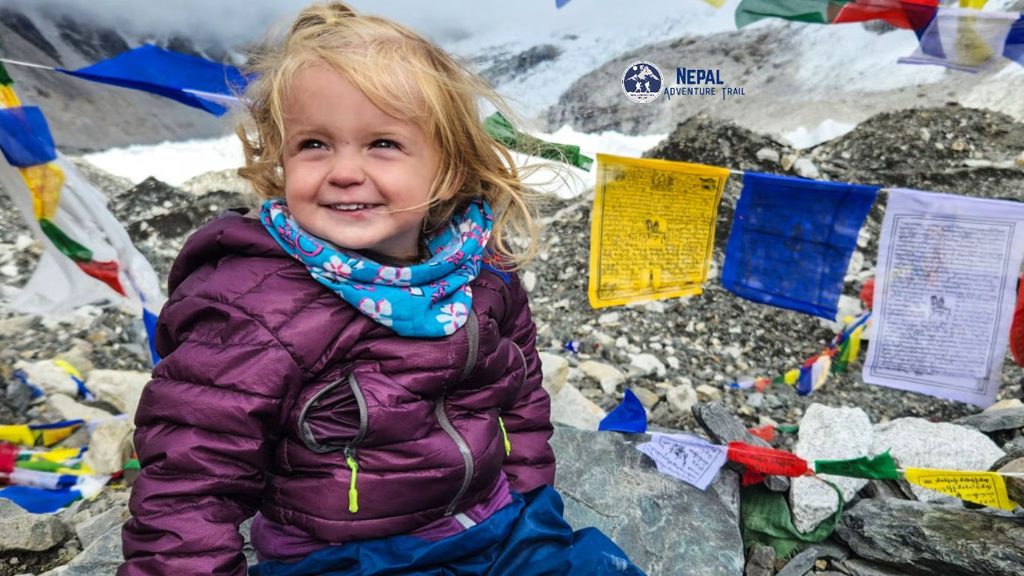
Side-by-Side Comparison: Planning Across Age Groups
This table shows the Everest Base Camp trek age limit in practice. It is a planning starting point, not a medical assessment.
| Age Group | Practical Readiness | Key Risks | Recommended Itinerary Adjustments |
|---|---|---|---|
| Under 10 | Not advised for the full route | Cannot report symptoms; cold nights; long days | Choose a short Khumbu walk to Namche (3,440 m) or Tengboche (3,867 m) instead |
| 10 to 15 | Possible with a fit, experienced child and a pediatric check | Missed AMS signs; fatigue; cold | 12 to 14 days; two nights each at Namche and Dingboche (4,410 m); porter for bags |
| 16 to 39 | Good for most healthy trekkers | Overconfidence and fast pace | Standard 12 days; keep the acclimatization stops |
| 40 to 59 | Good with training | Undetected heart issues; knee strain | 12 to 13 days; medical check; trekking poles |
| 60 to 69 | Good with preparation | Heart and lung reserve; joints; insurance caps | 14 days; spare weather day at Lukla (2,860 m); consider a helicopter return from Gorak Shep (5,164 m) |
| 70 to 79 | Possible with medical clearance | Cardiovascular strain; mobility; insurance limits | 14+ days; planned helicopter return; close guide support |
| 80+ | Case by case | High medical risk; difficult descent | Specialist clearance; consider Everest View or Tengboche instead of Base Camp (5,364 m) |
Frequently Asked Questions (FAQ)
What is the official Everest Base Camp trek age limit?
Nepal sets none for the trek itself. The Everest Base Camp trek age limit that matters is physical, not legal. Climbing permits above 6,000 meters carry a minimum age of 16, but that does not apply to the 5,364-meter Base Camp trail.
What is the youngest age a child can safely trek to Everest Base Camp?
No official minimum exists, and many guides treat 10 to 12 as the practical baseline. Younger children cannot report symptoms well. Get a pediatric check and plan extra days.
Can a 70-year-old or 80-year-old complete the Everest Base Camp trek?
Yes, many do. No Everest Base Camp trek age limit applies in your 70s or 80s, but medical clearance and a 14-day itinerary matter. Eighty is case by case, so plan a helicopter return from Gorak Shep (5,164 meters).
Does altitude sickness affect children and seniors differently than young adults?
Age alone is a weak predictor. Children are harder to read, and seniors have less cardiovascular reserve. For everyone, speed of ascent matters most.
Is it hard to get high-altitude travel insurance if you are over 65 or 70?
It is harder, not impossible. Many standard policies cap age or exclude altitude. Compare the altitude limit, helicopter evacuation, and pre-existing condition terms in the policy wording.
Are there easier alternative treks in the Everest region for families or seniors?
Yes. The Everest View route climbs to Namche (3,440 meters) and the Everest View Hotel, near 3,880 meters, for big mountain views. Tengboche (3,867 meters) works too.
Pikey Peak, around 4,065 meters in the Solu region, is another option.
Plan the Trek Around the Trekker
Age is rarely the deciding factor on the Khumbu trail; smart pacing, honest preparation, and the right logistical safety net make all the difference. At Nepal Adventure Trail, we design custom Everest Base Camp itineraries tailored to families and older trekkers, building in extra acclimatization days, experienced guides trained in high-altitude first aid, and flexible helicopter return options. Let us plan a safe, well-supported journey for your group.