
Last updated: July 2, 2026 | By Nepal Adventure Trail Team (NMA Certified) | Reading time: 12 minutes
Table of Contents: What is a Nepal Trek Challenge? | Top Challenge Routes | Difficulty Comparison | Why It’s Challenging | Preparation Guide | Cultural Experiences | Risks & Safety | Costs & Logistics | Eco-Trekking | Why Nepal Adventure Trail | FAQs
Nepal Trek Challenge: Ultimate Guide to Nepal’s Most Demanding Himalayan Adventures
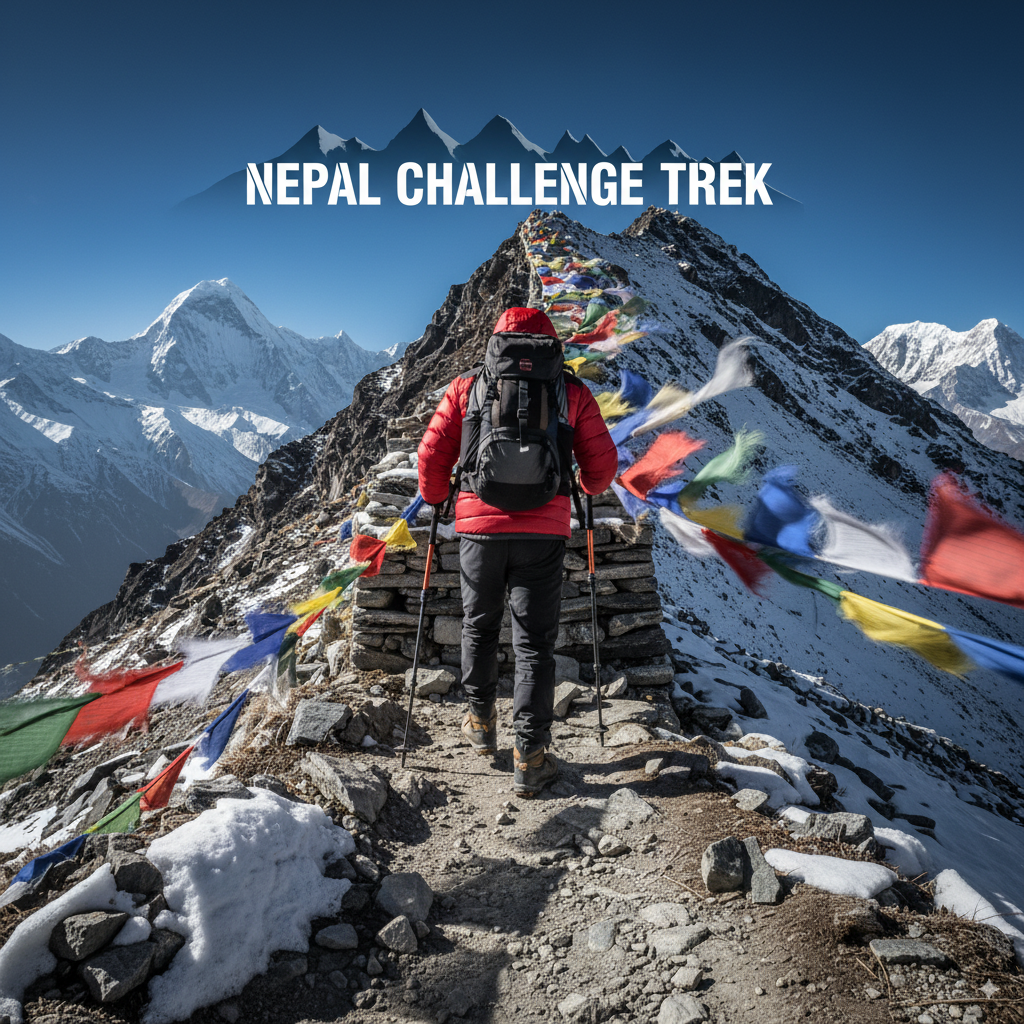
The Nepal trek challenge is not just another Himalayan trail — it is a journey designed to test human spirit, endurance, and resilience. Unlike standard Everest Base Camp treks or Annapurna Sanctuary routes that follow well-trodden paths, a true Nepal trek challenge pushes adventurers beyond their physical and mental limits while immersing them in Nepal’s most breathtaking landscapes and diverse cultures.
For adventurers who crave more than just reaching a viewpoint or crossing a high pass, the Nepal Challenge Trek offers an unparalleled combination of extreme physical demand, mental growth, and deep cultural discovery. This comprehensive 2026 guide covers everything you need to know — from the hardest routes and difficulty ratings to preparation tips, costs, safety protocols, and FAQs.
What is a Nepal Trek Challenge? Understanding the Difference
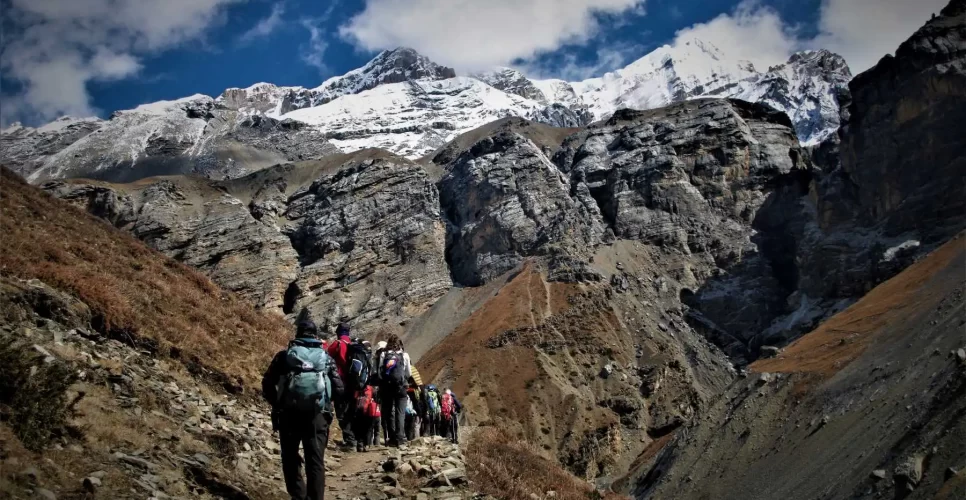
At its core, a Nepal trek challenge is crafted for those who refuse the ordinary. While traditional treks like Everest Base Camp or the Annapurna Circuit focus primarily on scenic rewards, a challenge trek blends these rewards with demanding trails, longer hiking days (8–10 hours), extreme altitude gains, and off-the-beaten-path routes where facilities are minimal.
On a Nepal Challenge Trek, you may find yourself ascending near-vertical ridges at 5,000+ meters, crossing glacial moraines, or navigating remote trails where the nearest medical facility is a helicopter evacuation away. But this difficulty is precisely what makes the experience transformative. Each breath in thin air, each step on unstable terrain, and each night in sub-zero temperatures contributes to an unmatched sense of achievement.
Key differences between standard treks and Nepal trek challenges:
- Daily hiking duration: 6–10 hours vs. 4–6 hours on standard treks
- Maximum altitude: 5,000m–6,500m vs. 4,000m–5,500m
- Terrain difficulty: Technical scree, glacial crossings, and exposed ridges vs. well-maintained trails
- Self-sufficiency: Camping required on some routes vs. teahouse-only standard treks
- Physical demand: Requires pre-trek training program vs. moderate fitness acceptable
Top Nepal Trek Challenge Routes: From Everest to the Wild West
One of the most appealing aspects of the Nepal trek challenge is its flexibility. Instead of a fixed itinerary, the challenge can take place across multiple regions depending on your fitness level, time availability, and appetite for risk. Here are the most demanding routes that define the ultimate Nepal trek challenge experience:
1. Everest Three Passes Trek (5,550m) — The Ultimate Test
The Everest Three Passes Trek is widely regarded as the hardest teahouse trek in Nepal. This 18–21 day Nepal trek challenge crosses three high passes over 5,000 meters — Renjo La (5,360m), Cho La (5,420m), and Kongma La (5,535m) — while also visiting Everest Base Camp and Kala Patthar. Trekkers face extreme altitude, unpredictable weather, and physically demanding days of 8–10 hours on rugged terrain.
Highlights: Gokyo Lakes, Everest Base Camp, Kala Patthar sunrise, remote Nangpa La valley, Sherpa culture in Thame and Marlung.
2. Annapurna Circuit with Tilicho Lake (5,416m) — High & Remote
The classic Annapurna Circuit becomes a true Nepal trek challenge when combined with a side trip to Tilicho Lake (4,919m), the world’s highest lake. Crossing Thorong La Pass at 5,416m — one of the highest trekking passes globally — this route delivers dramatic contrasts: subtropical forests, terraced fields, barren alpine landscapes, and Tibetan-influenced villages.
Highlights: Thorong La Pass, Tilicho Lake, Muktinath Temple, Manang acclimatization, diverse ecosystems.
3. Manaslu Circuit Trek (5,160m) — Wild & Restricted
The Manaslu Circuit offers a raw, uncrowded Nepal trek challenge around the world’s eighth-highest peak (8,163m). Crossing Larkya La Pass at 5,160m, this restricted area trek requires special permits and a minimum of two trekkers. The trail passes through remote Tibetan-influenced villages with minimal infrastructure, demanding self-sufficiency and mental toughness.
Highlights: Larkya La Pass, Manaslu Base Camp, Samagaon village, ancient Buddhist monasteries, pristine wilderness.
4. Upper Dolpo Trek (5,360m) — The Hidden Kingdom
For the ultimate Nepal trek challenge, Upper Dolpo remains one of the most remote and demanding treks on Earth. Crossing multiple 5,000m+ passes including Numa La (5,360m) and Baga La (5,170m), this trek traverses the arid Tibetan plateau landscape featured in Peter Matthiessen’s “The Snow Leopard.” Camping is mandatory, and facilities are virtually nonexistent.
Highlights: Shey Gompa (Crystal Mountain), Phoksundo Lake, ancient Bon-Po monasteries, snow leopard territory, zero crowds.
5. Dhaulagiri Circuit Trek (5,360m) — Technical & Dangerous
The Dhaulagiri Circuit is considered the most technically demanding Nepal trek challenge. Trekkers cross French Pass (5,360m) and Dhampus Pass (5,200m) while navigating the Dhaulagiri Icefall — a treacherous glacial section requiring fixed ropes and crampon experience. This is not for beginners; previous high-altitude trekking experience is essential.
Highlights: Dhaulagiri I (8,167m) close-up views, Hidden Valley, French Pass, true wilderness camping.
Nepal Trek Challenge Difficulty Comparison Table
| Trek | Max Altitude | Duration | Difficulty | Best Season | Permits Needed | Teahouse/Camp |
|---|---|---|---|---|---|---|
| Everest Three Passes | 5,535m | 18–21 days | ⭐⭐⭐⭐⭐ Extreme | Mar–May, Sep–Nov | Sagarmatha NP, TIMS | Teahouse |
| Dhaulagiri Circuit | 5,360m | 18–21 days | ⭐⭐⭐⭐⭐ Extreme | Mar–May, Sep–Oct | ACAP, TIMS | Camping |
| Upper Dolpo | 5,360m | 24–28 days | ⭐⭐⭐⭐⭐ Extreme | May–Oct | Restricted Area, NP | Camping |
| Annapurna Circuit + Tilicho | 5,416m | 16–18 days | ⭐⭐⭐⭐ Hard | Mar–May, Sep–Nov | ACAP, TIMS | Teahouse |
| Manaslu Circuit | 5,160m | 14–18 days | ⭐⭐⭐⭐ Hard | Mar–May, Sep–Nov | MCAP, Restricted, TIMS | Teahouse |
| Kanchenjunga Base Camp | 5,140m | 20–24 days | ⭐⭐⭐⭐ Hard | Mar–May, Sep–Nov | Restricted Area, TIMS | Teahouse/Camp |
| Makalu Base Camp | 4,870m | 18–22 days | ⭐⭐⭐⭐ Hard | Mar–May, Sep–Nov | Makalu Barun NP, TIMS | Teahouse/Camp |
Why Is It Called a “Challenge Trek”? The Real Difficulty Explained
The word challenge in a Nepal trek challenge is no exaggeration. Unlike leisurely hikes where the focus is photography and comfort, these treks demand serious physical and mental preparation. Here’s what makes them genuinely demanding:
Extreme Physical Demands
- Daily hiking: 6–10 hours on steep, uneven terrain with elevation gains of 800–1,500m per day
- Pack weight: 8–12kg daypack with water, layers, and emergency supplies
- Technical sections: Scree slopes, glacial moraines, fixed rope sections, and exposed ridges
- Repeated altitude exposure: Sleeping above 4,000m for multiple consecutive nights
Altitude: The Silent Enemy
Altitude is the defining factor of any Nepal trek challenge. Many routes rise above 5,000 meters where oxygen levels drop to less than 50% of sea level. At these elevations, breathing becomes labored, appetite disappears, and symptoms of Acute Mountain Sickness (AMS) can appear within hours. Severe cases progress to HAPE (High Altitude Pulmonary Edema) or HACE (High Altitude Cerebral Edema) — both life-threatening without immediate descent or evacuation.
Unpredictable Himalayan Weather
Weather on a Nepal trek challenge can shift violently. Clear morning skies may give way to afternoon blizzards above 4,000m. Temperatures at night regularly drop to -15°C to -25°C in high camps, even during peak trekking seasons. Wind chill on exposed passes can make conditions feel significantly colder. This unpredictability demands proper gear, flexible itineraries, and experienced guides who can make safety-critical decisions.
Remote & Minimal Facilities
On the hardest Nepal trek challenge routes — Upper Dolpo, Dhaulagiri, and parts of Kanchenjunga — teahouses don’t exist. Trekkers camp in tents, carry all supplies, and rely on satellite communication for emergencies. The nearest medical facility may be days away, making self-sufficiency and guide expertise absolutely critical.
Preparing for Your Nepal Trek Challenge: 12-Week Training Plan
Success on a Nepal trek challenge begins months before you land in Kathmandu. Physical preparation is non-negotiable — the Himalayas do not forgive the unprepared.
Physical Training (Start 12 Weeks Before Departure)
- Cardiovascular endurance: Run, cycle, or swim 4–5 times per week. Build to 90-minute sessions at 70–80% max heart rate.
- Leg strength: Squats, lunges, step-ups, and calf raises 3x per week. Add weighted pack training (10–15kg) on weekends.
- Core stability: Planks, Russian twists, and dead bugs 3x per week. Uneven terrain demands strong core engagement.
- Hiking practice: Minimum two 6–8 hour hikes per month with full pack on varied terrain. Include steep ascents and descents.
- Stair climbing: Simulate altitude gain with weighted stair sessions. Target 1,000m elevation gain per session.
Mental Preparation
Mental resilience often separates those who complete a Nepal trek challenge from those who turn back. Prepare yourself for:
- Discomfort: Basic teahouses, cold showers (or none), and shared sleeping spaces
- Exhaustion: Days where every step feels like a battle against gravity and thin air
- Isolation: Limited or no connectivity for days in remote regions
- Uncertainty: Itinerary changes due to weather, landslides, or health issues
Essential Gear Checklist
- Footwear: Broken-in, waterproof trekking boots with ankle support + camp shoes
- Clothing layers: Merino base layers, fleece mid-layer, 800-fill down jacket, hardshell jacket
- Sleeping system: -20°C rated sleeping bag + insulated sleeping pad
- Trekking poles: Carbon fiber, collapsible — reduces knee impact by 25%
- Headlamp: 300+ lumens with extra batteries for pre-dawn summit pushes
- Sun protection: Glacier glasses (Cat 4), SPF 50+ sunscreen, lip balm with SPF
- Water purification: SteriPen or filter + purification tablets backup
- First aid: Diamox (acetazolamide), blister kit, pain relievers, anti-diarrheal, electrolytes
- Emergency gear: Whistle, space blanket, fire starter, satellite communicator (for remote routes)
Pro tip: Most gear can be rented in Kathmandu or Pokhara, but never rent boots — poorly fitting boots cause blisters that can end your Nepal trek challenge prematurely. Invest in quality, broken-in footwear.
Cultural Immersion on Nepal’s Hardest Treks
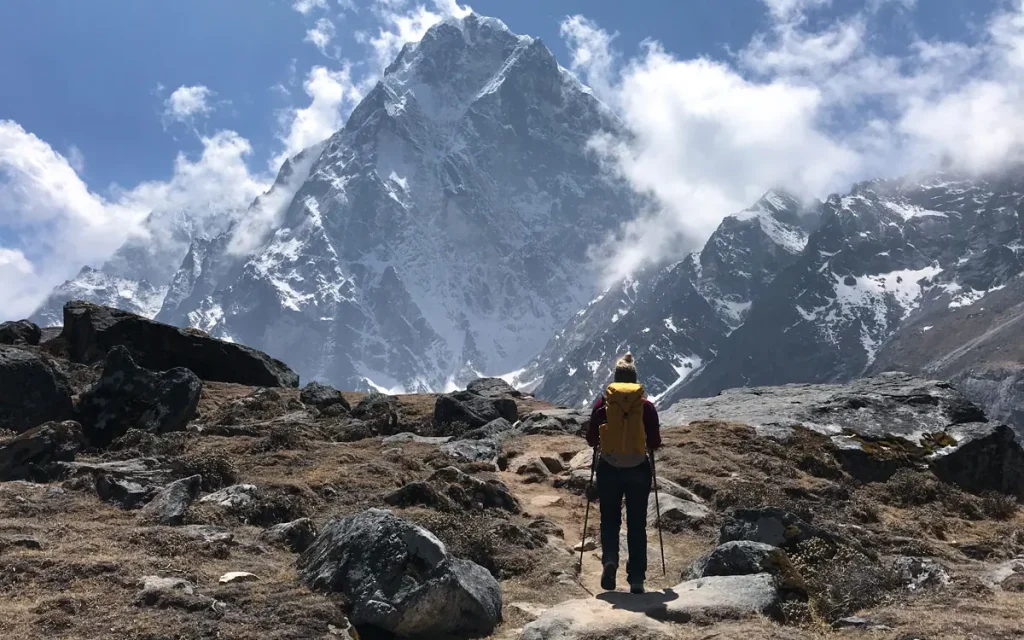
A Nepal trek challenge is not only about conquering mountains — it is equally about connecting with people. Nepal’s remote trekking regions are home to diverse ethnic groups, each with distinct traditions, festivals, and ways of life that have endured for centuries.
In the Everest region, trekkers encounter the legendary Sherpas, renowned for their mountaineering prowess and warm hospitality. Their Buddhist monasteries — like Tengboche — offer spiritual refuge amid physical hardship. In the Annapurna region, Gurung and Magar villages provide authentic homestay experiences, with opportunities to learn about terraced farming, traditional weaving, and ancient rituals.
The Langtang Valley and Manaslu regions are heavily influenced by Tibetan Buddhism, where prayer flags flutter across high passes and ancient monasteries like Mu Gompa welcome weary trekkers. Staying in teahouses adds authenticity — meals of dal bhat (lentils and rice), Tibetan bread, and steaming noodle soup are often shared with local families around a wood stove.
These cultural encounters provide essential mental breaks from the physical demands of a Nepal trek challenge and remind adventurers that the Himalayas are as much about human connection as they are about natural grandeur.
Risks, Safety & Emergency Protocols on Nepal Trek Challenges
It is essential to be realistic about the risks of a Nepal trek challenge. These are not casual holidays — they are serious undertakings in one of Earth’s most unforgiving environments.
Primary Risks
- Altitude sickness (AMS/HAPE/HACE): Affects 30–40% of trekkers above 4,000m. Symptoms include headaches, nausea, dizziness, and shortness of breath. Severe cases require immediate descent and possible helicopter evacuation.
- Weather hazards: Sudden snowstorms can block high passes for days. Avalanche risk exists on certain routes after heavy snowfall.
- Terrain injuries: Sprained ankles, knee injuries, and falls on scree or ice are common.
- Dehydration & exhaustion: Easy to underestimate fluid needs at altitude. Exhaustion compounds all other risks.
Safety Protocols
- Choose an experienced trekking company with certified guides trained in wilderness first aid and altitude medicine
- Never trek alone on challenge routes — minimum group of two for restricted areas
- Carry comprehensive travel insurance covering trekking up to 6,000m with helicopter evacuation included
- Follow acclimatization protocols: “Climb high, sleep low” — gain no more than 500m sleeping altitude per day above 3,000m
- Monitor health daily: Use pulse oximeters and symptom checklists. Descend immediately if severe symptoms develop
- Carry satellite communication on remote routes where cell coverage is nonexistent
With proper preparation, professional guidance, and respect for the mountains, these risks are manageable. The key is not to underestimate the challenge.
Nepal Trek Challenge Costs, Permits & Logistics
The cost of a Nepal trek challenge varies significantly depending on the route, duration, and level of support. Here is a realistic breakdown:
| Cost Component | Budget Trek | Standard Package | Premium Package |
|---|---|---|---|
| Guide & Porter | $25–35/day | $40–60/day | $70–100/day |
| Permits | $50–150 | $50–150 | $50–150 |
| Accommodation | $5–10/night | $10–20/night | $20–40/night |
| Meals | $15–25/day | $25–40/day | $40–60/day |
| Transport | $20–50 | $50–100 | $100–200 |
| Equipment Rental | $5–10/day | $10–15/day | $15–25/day |
| Insurance | $100–150 | $150–250 | $250–400 |
| Total (14-day trek) | $800–1,200 | $1,500–2,500 | $3,000–5,000 |
Permits required by route:
- Everest region: Sagarmatha National Park permit + TIMS card
- Annapurna region: Annapurna Conservation Area Permit (ACAP) + TIMS card
- Manaslu: Manaslu Conservation Area Permit (MCAP) + Restricted Area Permit + TIMS
- Upper Dolpo / Mustang / Kanchenjunga: Restricted Area Permit (minimum 2 trekkers + licensed guide mandatory)
While independent trekking is possible on some routes, a Nepal trek challenge is best undertaken with professional support due to its demanding nature. Since 2023, Nepal mandates licensed guides for all treks in conservation and restricted areas.
Environmental Responsibility: Leave No Trace on Nepal’s Sacred Trails
Trekking in the Himalayas is a profound privilege, and with that comes deep responsibility. Waste management has become a critical issue, particularly on popular routes where plastic bottles and food packaging accumulate.
Responsible trekking practices for every Nepal trek challenge:
- Pack out all waste — including biodegradable items that decompose slowly at altitude
- Use reusable water bottles with purification instead of single-use plastic
- Stay on designated trails to prevent erosion and protect fragile alpine vegetation
- Respect wildlife — observe from distance, never feed animals
- Support local conservation through the National Trust for Nature Conservation and eco-friendly lodges
- Choose carbon-neutral operators who offset trek emissions
By trekking responsibly, participants in the Nepal trek challenge ensure these sacred mountains remain pristine for future generations of adventurers and the communities who call them home.
Why Choose Nepal Adventure Trail for Your Challenge Trek?
When undertaking a Nepal trek challenge of this magnitude, your choice of trekking partner is literally a life-or-death decision. Nepal Adventure Trail stands apart through:
- 15+ years of Himalayan expertise: Our founding guides have led over 500 challenge treks across all major routes
- NMA-certified guides: All lead guides hold Nepal Mountaineering Association certification and Wilderness First Responder (WFR) credentials
- Personalized itineraries: No generic packages — we tailor every trek to your fitness level, experience, and goals
- 24/7 emergency support: Satellite communication, helicopter evacuation coordination, and medical oxygen on all remote routes
- Sustainable practices: Carbon-neutral treks, fair wages for porters, and community investment in trail villages
- Small group guarantee: Maximum 8 trekkers per guide for personalized attention and safety
We do not just guide you through the mountains — we ensure you return transformed, with stories that last a lifetime and a deep respect for the Himalayas.
Nepal Trek Challenge: Frequently Asked Questions
What is the hardest trek in Nepal?
The Dhaulagiri Circuit Trek is widely considered the most technically demanding Nepal trek challenge, requiring experience with crampons, fixed ropes, and glacial travel. The Everest Three Passes Trek is the hardest teahouse-based trek, while Upper Dolpo is the most logistically challenging due to extreme remoteness.
How fit do I need to be for a Nepal trek challenge?
You need above-average fitness. Most challenge treks require 6–10 hours of daily hiking on steep, uneven terrain at altitude. We recommend 12 weeks of preparation including cardio (running/cycling 4x/week), leg strength training, and weighted pack hiking. You should be able to hike 8+ hours with a 10kg pack before departure.
Is altitude sickness common on Nepal challenge treks?
Yes — approximately 30–40% of trekkers experience mild AMS symptoms above 4,000m. Proper acclimatization, hydration, and gradual ascent reduce risk significantly. Our itineraries include mandatory rest days and our guides carry pulse oximeters and emergency oxygen. Severe cases require immediate descent and possible helicopter evacuation.
How much does a Nepal trek challenge cost?
Costs range from $800 (budget independent) to $5,000+ (premium guided with full support) for a 14–21 day trek. Standard guided packages with Nepal Adventure Trail run $1,500–$2,500 including permits, guide, porter, accommodation, meals, and emergency support. Restricted areas (Manaslu, Dolpo, Kanchenjunga) cost more due to special permits.
Do I need a guide for Nepal challenge treks?
Yes — and it is mandatory. Since April 2023, Nepal requires all trekkers in national parks and conservation areas to be accompanied by a licensed guide. For restricted areas (Manaslu, Upper Dolpo, Mustang, Kanchenjunga), a minimum of two trekkers plus a licensed guide is required by law. Beyond legal requirements, challenge treks are genuinely dangerous without professional guidance.
What is the best time for a Nepal trek challenge?
Spring (March–May) and autumn (September–November) offer the most stable weather and clearest mountain views. Spring brings blooming rhododendrons; autumn provides crisp air and optimal visibility. Winter (December–February) is possible for lower-altitude challenges but brings extreme cold and snow-blocked passes. Monsoon (June–August) is unsuitable due to landslides, leeches, and poor visibility.
Can beginners do a Nepal trek challenge?
Not recommended. Nepal trek challenges are designed for experienced trekkers with prior high-altitude experience. Beginners should start with moderate treks like the Annapurna Sanctuary Trek (4,130m) or Ghorepani Poon Hill (3,210m) before attempting extreme routes. If you are a fit beginner determined to try a challenge, we recommend the Manaslu Circuit with extended acclimatization days.
What insurance do I need for Nepal challenge treks?
You need comprehensive travel insurance that explicitly covers trekking up to 6,000 meters with emergency helicopter evacuation. Standard travel insurance does NOT cover high-altitude trekking. Recommended providers include World Nomads, IMG, and Global Rescue. Verify coverage details before booking — helicopter evacuations in Nepal can cost $5,000–$15,000 without insurance.
How do I book a Nepal trek challenge with Nepal Adventure Trail?
Booking is simple: fill out our inquiry form with your preferred route, dates, group size, and fitness level. Our team will respond within 24 hours with a personalized itinerary, cost breakdown, and preparation guide. We recommend booking 3–6 months in advance for peak seasons (October, April) as permits and flights fill quickly.
Ready for the Ultimate Nepal Trek Challenge?
The Nepal trek challenge is not for everyone — and that is precisely what makes it extraordinary. It is for those who refuse to settle for ordinary, who seek transformation through adversity, and who understand that the greatest rewards lie just beyond the edge of comfort.
Whether you dream of crossing the Everest Three Passes, standing at the foot of Dhaulagiri, or discovering the hidden valleys of Upper Dolpo, Nepal Adventure Trail has the expertise, safety protocols, and passion to guide you there.
🎒 Take the challenge. Transform your limits. Book your Nepal trek challenge today.
Get Your Free Personalized Itinerary →
Questions about routes, fitness requirements, or preparation? Contact our Nepal trekking experts for a no-obligation consultation.
About Nepal Adventure Trail: We are a locally-owned, licensed trekking company based in Kathmandu with 15+ years of experience guiding challenge treks across Nepal. All lead guides are certified by the Nepal Mountaineering Association (NMA) and hold Wilderness First Responder (WFR) credentials. We are committed to sustainable tourism, fair porter wages, and community investment in Himalayan villages. Learn more about us | Read trekker reviews | Explore our trekking blog