The cold hits harder than most people expect. Not dramatic movie-scene cold. Dry, creeping cold that gets into your fingers while you tighten boot laces at 5 AM in Dingboche. The kind that drains batteries, cracks lips, and makes a simple water break feel like work.
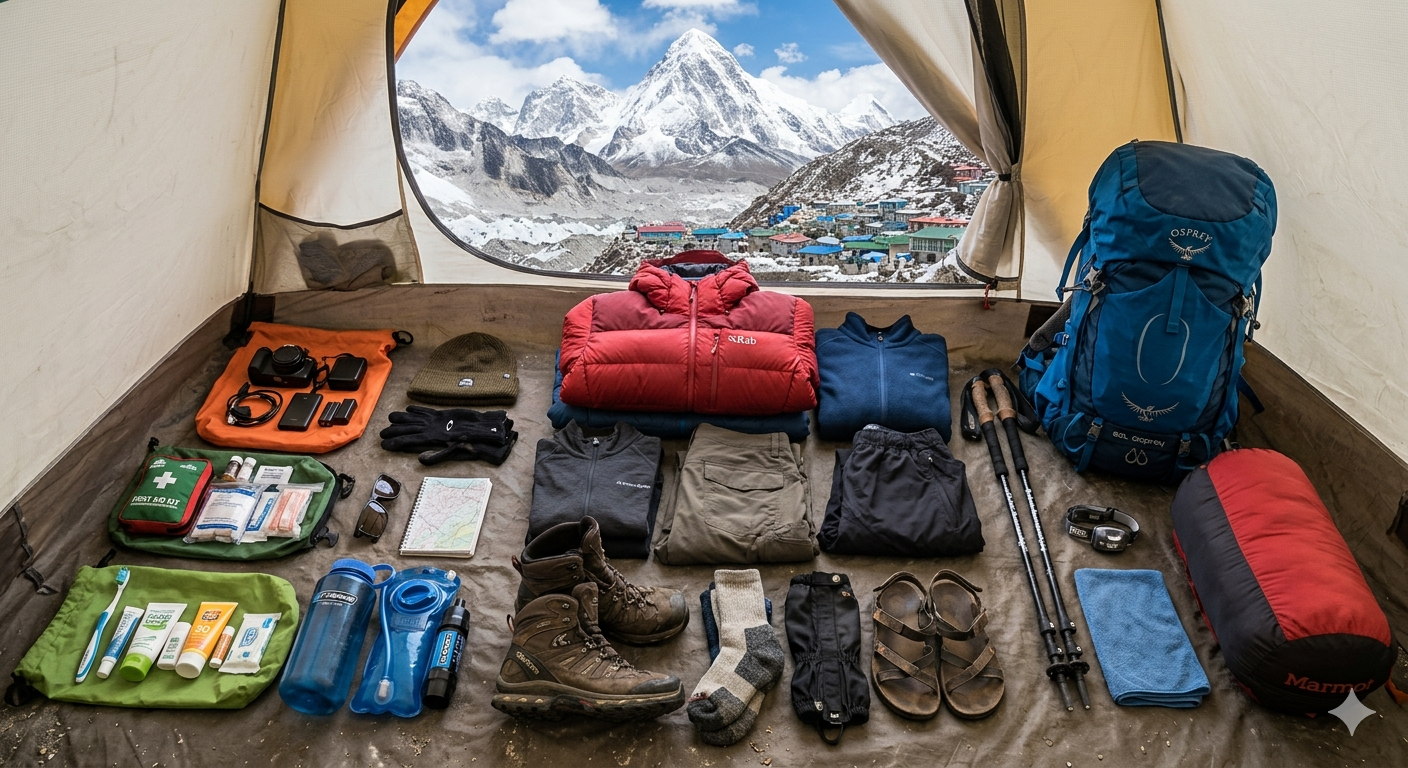
That is why your Everest Base Camp Trek packing list matters.
The Khumbu region does not care how expensive your jacket is or how good your Instagram photos look. If your gear fails, the trek gets miserable fast. You will deal with freezing mornings, sharp sun, dust, wind, thin air, and long uphill days carrying the same backpack over suspension bridges and rocky trails for nearly two weeks.
Pack smart and the trek becomes manageable.
Pack badly and every kilometre feels twice as long.
This guide cuts out the nonsense. No luxury packing advice. No “must-have” gadgets you will never use. Just practical, field-tested advice from what actually works during trekking in Nepal.
The Layering System: Learn This Before You Pack
Forget giant heavy jackets. The mountains work better with layers.
Your body temperature changes constantly on the trail. You start cold in the morning, sweat during climbs, then freeze the second you stop moving. Layering lets you adjust fast without soaking your clothes in sweat.
Base Layer
This sits against your skin.
Pack:
- Merino wool thermal top
- Merino wool thermal bottom
- Synthetic moisture-wicking shirts
Avoid cotton. Completely.
Cotton traps sweat. Sweat becomes cold. Cold becomes misery at altitude.
Mid Layer
This keeps warmth trapped.
Pack:
- Fleece jacket
- Lightweight insulated jacket
- Warm trekking hoodie
You will wear this layer constantly in the evenings and mornings.
Outer Layer
This blocks wind and snow.
Pack:
- Waterproof shell jacket
- Waterproof shell pants
Cheap rain jackets fail fast in the Himalayas. Wind near Lobuche and Gorakshep cuts through weak fabric like nothing.
Everest Base Camp Trek Packing List: Clothing
Most beginners overpack clothes and underpack functional gear.
You are not changing outfits every day up there. Nobody cares what you look like after Namche Bazaar.
Pack gear that dries fast and handles repeated use.
Upper Body
- 2–3 synthetic trekking shirts
- 1–2 thermal base layers
- 1 fleece jacket
- 1 down jacket
- 1 waterproof shell jacket
- 1 lightweight t-shirt for tea houses
A proper down jacket matters above 4,000 meters. Even dining halls get brutally cold after sunset.
Lower Body
- 2 trekking pants
- 1 thermal bottom
- 1 waterproof shell pant
- 1 comfortable lodge pant
Softshell trekking pants work well because they cut wind better than thin hiking pants.
Underwear and Accessories
- 4–5 underwear pairs
- 3–4 wool trekking socks
- Warm beanie
- Sun cap
- Buff or neck gaiter
- Waterproof gloves
- Inner liner gloves
The buff earns its place every single day. Dust, wind, cold air, sunburn — it handles all of it.
Guide’s Pro-Tip
Do laundry before the trek, not during it. Wet clothes do not dry properly at altitude. Bring enough socks and base layers to rotate instead.
Footwear: Don’t Gamble With Your Feet
Bad footwear ends treks early.
Your hiking boots for Everest need three things:
- Ankle support
- Waterproofing
- Comfort after long hours
That is it.
Ignore flashy marketing. Focus on fit.
What to Pack
- Waterproof trekking boots
- Camp shoes or sandals
- Wool trekking socks
- Blister tape or moleskin
You will walk rocky trails for days. Downhill sections punish knees and toes. Cheap boots collapse fast under pressure.
Break boots in before the trek. Not during it.
Blisters at 5,000 meters are a serious problem.
Should You Use Trail Runners?
Only experienced trekkers should attempt it. The trail includes snow, loose rock, freezing mornings, and icy sections depending on season.
Boots remain the safer choice for most people.
Guide’s Pro-Tip
Trim your toenails before the trek. Long descents destroy untrimmed nails inside boots.
Sleeping Gear: Nights Are Worse Than Days
Most people fear the walking. The cold nights surprise them more.
Tea houses get colder as altitude increases. Dining halls may have a stove for a few hours, but bedrooms are unheated.
Your sleeping bag for EBC matters.
What to Pack
- Down sleeping bag rated around -10°C to -15°C
- Sleeping bag liner
- Inflatable pillow if you care about comfort
- Earplugs
The liner helps keep the bag cleaner and adds warmth.
Renting sleeping bags in Kathmandu is possible if you do not want to buy one.
Down vs Synthetic
Down:
- Lighter
- Packs smaller
- Warmer
Synthetic:
- Cheaper
- Performs better when wet
For Everest Base Camp, most trekkers choose down.
Guide’s Pro-Tip
Keep tomorrow’s batteries and electronics inside your sleeping bag overnight. Cold kills battery life fast.
Daypack Setup: Keep It Simple
Your porter carries the large duffel if you hire one. Your daypack stays with you every hour on the trail.
Keep it light.
Ideal Daypack Size
- 25–35 liters
Carry These Daily
- Water bottles
- Water purification tablets
- Snacks
- Down jacket
- Rain shell
- Sunscreen
- Sunglasses
- Gloves
- Camera or phone
- Toilet paper
- Small first aid kit
Hydration matters more at altitude than most people realize. Dry air and constant movement dehydrate trekkers quickly.
Drink even when you are not thirsty.
Guide’s Pro-Tip
Use two water bottles instead of hydration bladders during colder months. Tubes freeze.
First Aid and Toiletries
Keep this section practical.
Nobody needs a giant pharmacy on the trail.
Toiletries
- Toothbrush
- Small toothpaste
- Wet wipes
- Sunscreen SPF 50+
- Lip balm
- Hand sanitizer
- Quick-dry towel
- Toilet paper
Sunburn happens fast at altitude. Snow reflection makes it worse.
First Aid
- Personal medication
- Diamox if approved by your doctor
- Ibuprofen or paracetamol
- Blister kit
- Electrolyte packets
- Bandages
- Antiseptic cream
- Water purification tablets
Altitude sickness is real. No gear prevents it completely.
Go slow. Drink water. Respect the mountain.
Guide’s Pro-Tip
Pack medicines in clear ziplock bags. Finding tablets with frozen fingers in the dark is harder than people think.
Electronics: Bring Less Than You Think
Charging gets more expensive higher on the trail.
Cold drains power fast.
You do not need a full filming setup unless you are making professional content.
What Actually Helps
- Power bank
- Charging cables
- Universal adapter
- Headlamp
- Phone or camera
- Spare camera battery
A headlamp matters more than many trekkers expect. Tea house power cuts happen.
Optional
- Solar charger
- Kindle
- Trekking watch
Skip These
- Laptop
- Hair dryer
- Heavy speakers
- Drone unless permitted
Guide’s Pro-Tip
Carry a large power bank instead of multiple small ones. Fewer devices. Less cable mess.
Leave These at Home
Beginners pack fear. Experienced trekkers pack function.
Your EBC packing list should stay lean.
Common Mistakes
Too Many Clothes
You will repeat outfits. Everyone does.
Cotton Shirts
Bad in cold weather. Slow to dry.
Heavy Toiletries
Transfer soap and shampoo into travel bottles.
Jeans
Heavy, uncomfortable, useless on the trail.
Hard-Cover Books
Too heavy. Use your phone or a Kindle.
Extra Shoes
One trekking boot and one camp shoe setup is enough.
Massive Camera Kits
You are trekking, not opening a studio in the Himalayas.
“Just in Case” Items
These pile up fast and usually never leave the bag.
Guide’s Pro-Tip
Lay everything out before packing. Remove one-third of it. You probably still packed too much.
Can You Buy Gear in Kathmandu?
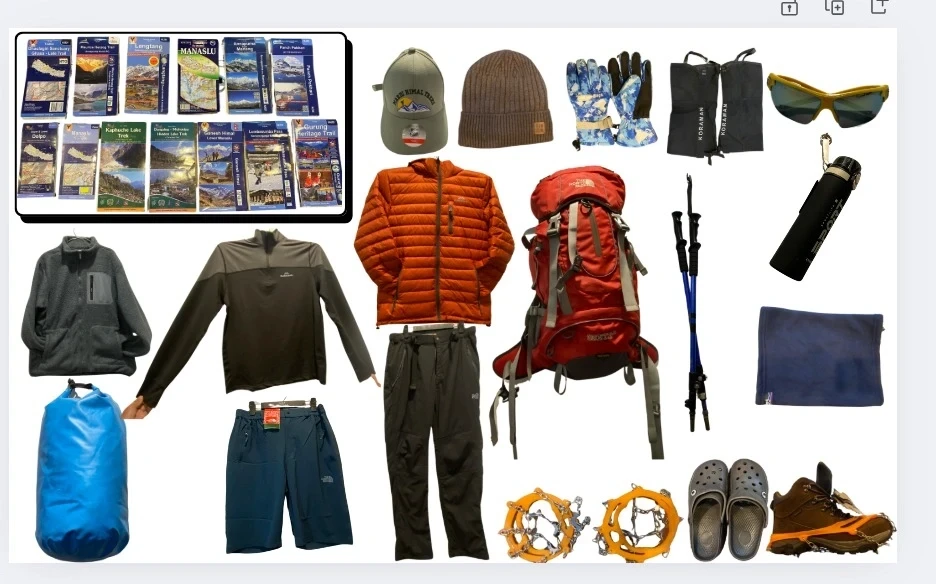
Yes. Kathmandu has plenty of trekking stores selling Himalayan trekking gear. You can rent or buy:
- Down jackets
- Sleeping bags
- Trekking poles
- Duffel bags
- Gloves
- Buffs
Good for last-minute items.
Bad for boots.
Buy your hiking boots for Everest before arriving in Nepal and test them properly.
🎒 Essential Everest Preparation Guides:
- Main Trek Page: 14-Day Everest Base Camp Trek (Sherpa Guided Tour)
- Flight Info: Kathmandu to Lukla Flights & Ramechhap Guide
FAQ
How heavy should my bag be?
Your daypack should stay around 5–8 kg. Porter duffels are usually limited to 10–15 kg depending on the company.
If your bag feels heavy in Kathmandu, it will feel brutal above Tengboche.
Can I get good gear in Kathmandu?
Yes, especially for jackets, poles, and sleeping bags.
But do not rely on Kathmandu for properly fitted boots. Break those in at home first.
How do I charge electronics on the trail?
Tea houses offer charging for a fee. Prices increase with altitude.
Bring:
- A large power bank
- Spare batteries
- Charging cables
Do not expect unlimited electricity.
Do I need water purification?
Yes.
Buying bottled water the whole trek becomes expensive and creates waste.
Use:
- Water purification tablets
- UV purifier
- Filter bottle
Most experienced guides avoid untreated water completely.
How fit should I be for Everest Base Camp?
Fit enough to walk uphill for several hours a day while carrying weight.
You do not need mountaineering experience. But you do need endurance.
Train before the trek:
- Stair climbing
- Long walks
- Hiking with a loaded backpack
- Cardio workouts
The mountain punishes poor preparation quickly.
Final Thoughts
The Everest trail is not luxury travel. It is cold mornings, dusty boots, thin air, and long climbs. Some days feel incredible. Some days feel hard. Good gear does not remove the challenge, but it makes the challenge manageable.
Pack for function first. Forget fashion. Keep weight low. Respect the altitude.
Most importantly, test your gear before arriving in Nepal. The Khumbu region is a terrible place to discover your boots hurt or your jacket leaks.
Packing for the Himalayas is a balancing act between comfort and weight. If you’d rather spend your energy focused on the mountain instead of logistics, the team at Nepal Adventure Trail handles the gear management and local permits so you can focus on the trail ahead.